Iglesia-Fortaleza de Santa María
Dentro de los robustos muros de la iglesia fortaleza de Ujué yace un secreto real, testimonio de la perdurable devoción de un rey.
La historia completa se desbloquea en el tour
 Adbar / CC BY-SA 3.0, via Wikimedia Commons
Tour de audio autoguiado de Ujué — ruta GPS a pie, reproducción offline, narración en 32 idiomas.
“Donde reposa el corazón de un rey y persisten antiguas leyendas.”
No las postales. Las historias que ni los locales conocen — al oído, justo donde ocurrieron.
Dentro de los robustos muros de la iglesia fortaleza de Ujué yace un secreto real, testimonio de la perdurable devoción de un rey.
Se dice que el mismo nombre de Ujué proviene de un inesperado amigo alado.
Cada primavera, los peregrinos emprenden un viaje a Ujué, algunos en una llamativa tradición centenaria que podría ser la más antigua de su tipo en Europa.
Descubre todos los secretos de Ujué
Cada dirección, cada revelación al completo — a tu oído, justo donde ocurrió.
Eliges tus paradas. Caminas. La voz te revela lo que los demás ignoran.


Tu tour de audioguía por Ujué te espera — elige tus lugares, tu idioma y empieza al llegar.
ComprarLume incluye una guía de realidad aumentada. Levanta el móvil y su cámara muestra la calle que tienes delante, con una flecha luminosa sobre la imagen real que siempre apunta a tu próxima parada — sin mapas que descifrar, sin giros equivocados. Como todo en Lume, funciona completamente sin conexión.
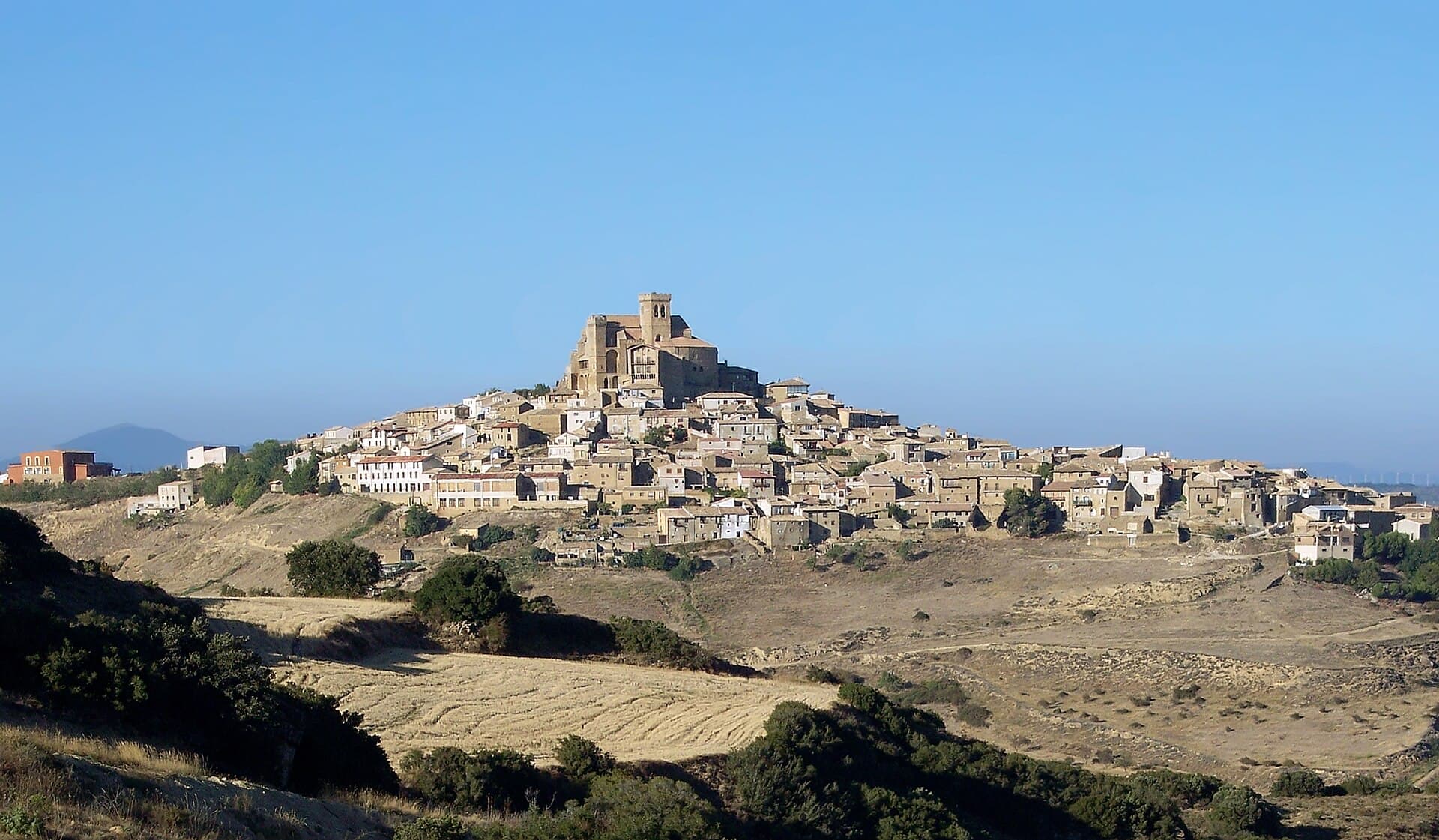
Un pueblo medieval en Navarra, España, Ujué (Uxue en euskera) se asienta sobre una cresta montañosa a 840 metros sobre el nivel del mar, sintiéndose suspendido en el tiempo. Sus estrechas calles empedradas se retuercen alrededor de casas tradicionales, todas convergiendo hacia la formidable Iglesia-Fortaleza de Santa María en su punto más alto. Este antiguo asentamiento ofrece amplias vistas que se extienden desde los Pirineos al norte hasta la Ribera del Ebro y la sierra del Moncayo al sur.
Ujué es más que un pueblo agradable; es un testimonio vivo de siglos de historia, un puesto fronterizo que guardaba el Reino de Pamplona. Con una población de menos de 200 residentes, mantiene su auténtico carácter de pueblo trabajador, en lugar de parecer un decorado conservado para el turismo. Una visita aquí es una invitación a retroceder a un pasado medieval, donde cada piedra parece guardar una historia, y el aroma de las tradicionales 'migas al pastor' flota en el aire.
Los orígenes de Ujué están algo envueltos en el tiempo, con evidencia arqueológica que sugiere asentamientos vascos dispersos en las colinas circundantes incluso antes del período romano. El pueblo tal como existe hoy comenzó a tomar forma a finales del siglo VIII o principios del IX, cuando los habitantes se reunieron alrededor de una fortaleza construida como torre de vigilancia defensiva contra las incursiones musulmanas. La tradición local atribuye a Íñigo Arista, el primer rey del Reino de Pamplona, el establecimiento de esta fortaleza inicial.
En el siglo XII, Ujué fue reconocido como un pueblo propiamente dicho bajo la protección del primer rey de Navarra, Sancho Ramírez, quien le concedió privilegios y supervisó la construcción de la Iglesia de Santa María. Esta iglesia románica fue construida sobre un templo más antiguo. Más tarde, el rey Carlos II de Navarra, conocido como 'Carlos el Malo', amplió significativamente la iglesia, transformando su nave central al estilo gótico y añadiendo torres almenadas, dándole su distintiva apariencia de fortaleza. Tanto Carlos II como su hijo, Carlos III el Noble, sentían una profunda devoción por la Virgen de Ujué, organizando frecuentes peregrinaciones al santuario. Fue Carlos II quien solicitó que su corazón fuera enterrado dentro de la iglesia, un deseo que se le concedió tras su muerte en 1387.
A pesar de períodos de declive, Ujué recuperó importancia y en 1482, comenzó un período de estabilidad y crecimiento. En el siglo XVI, después de la conquista de Navarra por Fernando el Católico, se dio una orden de demoler las fortalezas restantes de Navarra, incluido el castillo de Ujué. Sin embargo, esta orden nunca se llevó a cabo por completo, y las dos torres almenadas de la iglesia se salvaron, erigiéndose hoy como una clara huella física del pasado militar del sitio. A finales del siglo XVIII, las murallas medievales fueron demolidas para permitir la expansión, reflejando el crecimiento continuo del pueblo. Hoy, Ujué se erige como una ciudad moderna que ha conservado su identidad única y su legado histórico.
El elemento central de Ujué es la Iglesia-Fortaleza de Santa María. Esta maravilla arquitectónica románica y gótica, Monumento Nacional, domina el perfil del pueblo. Explore su interior para descubrir la venerada estatua de la Virgen María del siglo XII, revestida de plata, y el arca de madera que contiene el corazón del rey Carlos II. Si tiene suerte, podrá ascender a la torre para disfrutar de amplias vistas de los Pirineos, el valle del Ebro y el campo circundante.
Más allá de la iglesia, pasee por el barrio medieval de Ujué, un laberinto de calles empinadas, estrechas y empedradas, flanqueadas por casas de piedra tradicionales. Descubra la Plaza Pilarraña y la Plaza Mayor, y esté atento a las casas nobles adornadas con escudos de armas. Al norte de la iglesia, encontrará el Castillazo, donde son visibles los restos de una universidad que Carlos II tenía la intención de construir y una cisterna. En la parte baja del pueblo se encuentran las ruinas de la Ermita de San Miguel del siglo XIII, y en las afueras, la Ermita de La Blanca. No se pierda la Cruz del Saludo del siglo XIV a la entrada del pueblo. Ujué también forma parte de la Ruta del Vino de Navarra, con viñedos visibles en las laderas circundantes.
La mejor época para visitar Ujué para actividades de clima cálido es desde finales de junio hasta mediados de septiembre. Durante este período, los veranos son generalmente cálidos, secos y mayormente despejados, con temperaturas máximas diarias promedio superiores a 24°C (75°F). El mes más caluroso suele ser agosto, con una máxima promedio de 27°C (81°F). Finales de primavera (abril a mayo) y principios de otoño (septiembre a octubre) también ofrecen un clima agradable y menos multitudes. Ujué experimenta su clima más frío de noviembre a principios de marzo, con temperaturas máximas diarias promedio inferiores a 12°C (53°F).
Ujué se encuentra a 53 kilómetros al sur de Pamplona. La mejor manera de llegar a Ujué es en coche, tomando la AP-15 hasta Tafalla y luego la carretera regional NA 5300. Si bien Ujué es un pueblo pequeño con alojamiento limitado, la cercana Pamplona (a unos 50 km) ofrece una gama más amplia de opciones de alojamiento, como el hotel Occidental Pamplona. Para comer, Ujué es famoso por su cocina tradicional navarra, en particular sus famosas migas al pastor, que no debe irse sin probar. Restaurantes como Asador Las Torres y Asador Uxue son conocidos por este plato, así como por las chuletas de cordero y la cuajada casera. No olvide probar las deliciosas almendras garrapiñadas, una especialidad local.
Ujué celebra varias festividades a lo largo del año, incluyendo sus fiestas patronales del 4 al 8 de septiembre, y el popular 'Día de las Migas' el tercer domingo de septiembre, que celebra su herencia culinaria.
Ujué en coreano, en chino o en hebreo — y 29 idiomas más, cada parada narrada por una voz nativa. La mayor variedad de idiomas de cualquier audioguía autoguiada.
Disponible en: