Collégiale Royale de Santa María
Cette imposante église abrite le tombeau d'un roi navarrais, mais l'histoire de sa présence ici est moins celle d'un règne paisible que d'une victoire stratégique.
L'histoire complète se débloque dans le tour
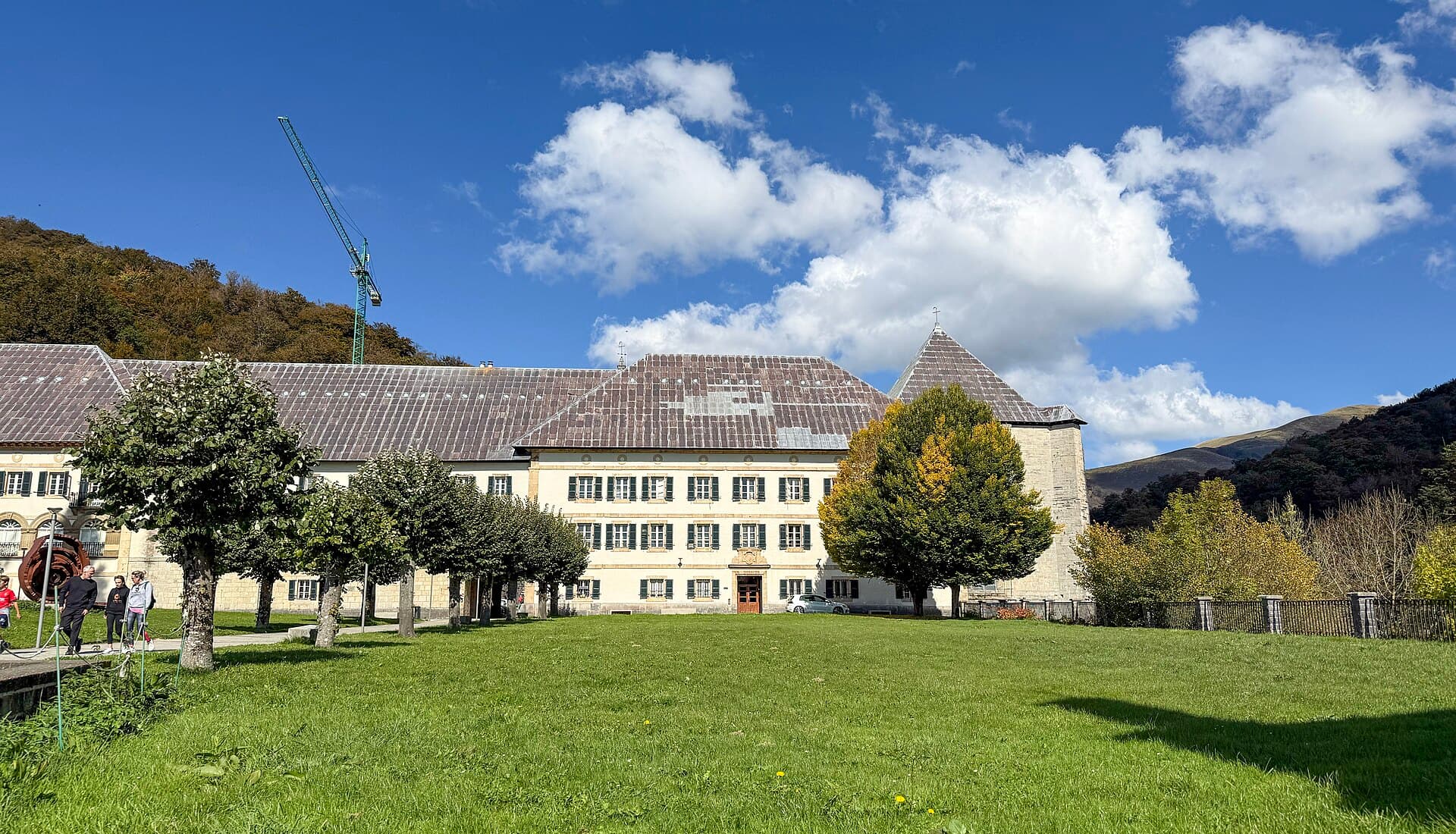 Hayden Soloviev / CC BY 4.0, via Wikimedia Commons
Visite audio autoguidée de Roncevaux — parcours GPS à pied, lecture hors ligne, narration en 32 langues.
“Là où les échos des batailles anciennes rencontrent le début de nouvelles aventures.”
Pas les cartes postales. Les histoires que même les habitants ignorent — soufflées à l'oreille, là où elles se sont passées.
Cette imposante église abrite le tombeau d'un roi navarrais, mais l'histoire de sa présence ici est moins celle d'un règne paisible que d'une victoire stratégique.
Cette modeste chapelle romane porte un nom qui évoque une défaite épique, pourtant son véritable but était bien plus pratique pour le voyageur fatigué.
Parmi les précieux artefacts du musée, un jeu d'échecs en particulier a un lien surprenant, presque poétique, avec un moment de grande tristesse historique.
Découvrez tous les secrets de Roncevaux
Chaque adresse, chaque révélation en entier — dans ton oreille, là où elle s'est passée.
Tu choisis tes lieux. Tu marches. La voix te révèle ce que les autres ignorent.

Votre visite audioguidée de Roncevaux vous attend — choisissez vos lieux, votre langue, et lancez-vous dès votre arrivée.
AcheterLume intègre un guide en réalité augmentée. Levez votre téléphone : sa caméra montre la rue devant vous, avec une flèche lumineuse posée sur l'image réelle qui pointe toujours vers votre prochain arrêt — aucune carte à déchiffrer, aucun mauvais virage. Comme tout dans Lume, ça fonctionne entièrement hors-ligne.
Roncesvalles, ou Orreaga en basque, est un petit village des Pyrénées navarraises, à seulement 4 kilomètres de la frontière française. Il est situé à une altitude d'environ 900 mètres, ce qui en fait une porte d'entrée importante vers la péninsule ibérique, un passage utilisé depuis la préhistoire. Ce site historique et spirituel est reconnu comme un point de départ crucial pour le Camino Francés, une route majeure du pèlerinage de Saint-Jacques-de-Compostelle.
Au-delà de son rôle de havre pour les pèlerins, Roncesvalles est un lieu de légende et de résonance historique. Il est célèbrement associé à la bataille de Roncesvalles en 778 de notre ère, un événement immortalisé dans l'épopée médiévale, La Chanson de Roland. Ce mélange d'histoire ancienne, de beauté naturelle et de signification spirituelle fait de Roncesvalles une destination captivante, offrant une expérience unique tant aux pèlerins qui commencent leur voyage qu'aux visiteurs explorant le paysage culturel du nord de l'Espagne.
L'histoire de Roncesvalles est profondément liée à sa position géographique en tant que passage naturel à travers les Pyrénées. Depuis la préhistoire, ce col a facilité les mouvements vers la péninsule ibérique, témoignant de l'entrée des Celtes, des barbares en 409 de notre ère, et des Goths. Au VIIIe siècle, ce fut la route empruntée par la puissante armée de Charlemagne.
L'événement le plus célèbre du passé de Roncesvalles est la bataille de Roncesvalles en 778 de notre ère. Alors que l'armée de Charlemagne revenait d'une campagne en Espagne, son arrière-garde, dirigée par son neveu Roland, fut prise en embuscade et anéantie par des guerriers basques. Cette défaite écrasante, bien qu'initialement un revers pour Charlemagne, fut romancée au fil des siècles dans la tradition orale et plus tard immortalisée dans La Chanson de Roland, transformant Roland en un héros chevaleresque.
Au début du Xe siècle, avec la consolidation de la monarchie chrétienne, le flux de pèlerins le long du Chemin de Saint-Jacques s'intensifia et devint plus sûr. Reconnaissant la nécessité de prendre soin de ces voyageurs, l'évêque de Pampelune, Sancho de la Rosa, promut la création d'un hôpital près de Roncesvalles au début du XIIe siècle. La construction du monastère-hôpital commença vers 1127, initiée par l'évêque de Pampelune à la demande du roi Alphonse Ier 'le Batailleur'. Cette institution fut ensuite déplacée à son emplacement actuel.
Le XIIIe siècle marqua une période de grande importance et de splendeur pour la Navarre, et l'hôpital de Roncesvalles devint l'un des plus riches et des plus généreux de toute la route jacobéenne. C'est à cette époque que le roi Sancho VII 'el Fuerte' (1194-1234) fit construire la Collégiale Royale de Santa María, la choisissant comme lieu de sépulture. L'église, consacrée en 1219, est considérée comme l'un des premiers temples gothiques d'Espagne, inspirée par Notre-Dame de Paris.
Au fil des siècles, Roncesvalles a continué à servir de refuge et de lieu de repos crucial pour d'innombrables pèlerins. Malgré les bouleversements politiques du XIXe siècle, sa signification historique et spirituelle perdure, la vie et l'histoire coexistant avec l'afflux quotidien de pèlerins et de visiteurs.
Roncesvalles, bien que petit, offre une concentration de sites historiques et spirituels. La Collégiale Royale de Santa María est un excellent exemple de l'architecture gothique navarraise, datant du XIIIe siècle. À l'intérieur, vous trouverez le tombeau du roi Sancho VII 'el Fuerte' et une magnifique image gothique du XIVe siècle de la Vierge de Roncesvalles. Le complexe de l'église comprend également un cloître et une crypte avec des peintures murales du XIIIe siècle.
Adjacente à la Collégiale se trouve la Chapelle de San Agustín, également connue sous le nom de Chapelle Royale, qui abrite le tombeau du roi Sancho VII depuis 1912. La Chapelle du Saint-Esprit, ou 'Silo de Charlemagne', est considérée comme le plus ancien bâtiment de Roncesvalles, une structure romane du XIIe siècle. Pour ceux qui s'intéressent au passé de la région, le Musée de Roncesvalles (également connu sous le nom de Musée-Bibliothèque ou Musée-Trésor) expose une collection de peintures, sculptures et orfèvrerie, y compris un jeu d'échecs attribué à Charlemagne et l'émeraude de Miramamolin.
Au-delà du complexe monumental, le Col d'Ibañeta offre des vues panoramiques et marque un point important sur le Camino Francés, avec un monument commémorant la bataille de Roncesvalles. La région environnante, faisant partie des Pyrénées navarraises et proche de la Forêt d'Irati, offre de charmantes routes pour la marche et l'exploration du paysage naturel.
La météo la plus agréable à Roncesvalles pour les activités de plein air se situe généralement de mai à octobre, avec des températures confortables allant de 18°C à 26°C. Juin, juillet, août et septembre offrent généralement les conditions les plus optimales. Bien qu'il puisse y avoir une météo variée avec quelques précipitations pendant cette période, cela offre un bon équilibre entre jours ensoleillés et pluvieux. Le mois le plus chaud est généralement août, avec des maximales diurnes moyennes de 26°C. Inversement, janvier, février, novembre et décembre ont tendance à avoir des conditions moins favorables en raison des températures plus froides et des précipitations plus élevées.
Roncesvalles, bien que petit, offre des services essentiels pour les pèlerins et les visiteurs. Les options d'hébergement comprennent le grand Albergue de Peregrinos de Roncesvalles, une auberge de pèlerins avec 183 lits (34 en hiver), et plusieurs hôtels et maisons d'hôtes comme l'Hôtel Roncesvalles, La Posada de Roncesvalles, Casa Sabina et Casa de los Beneficiados. Il est fortement recommandé de réserver votre hébergement à l'avance, surtout pendant les saisons de pointe du pèlerinage, car les lits peuvent se remplir rapidement.
Pour la restauration, Casa Sabina et La Posada de Roncesvalles proposent des 'Menus du Pèlerin' et des plats typiques basques et locaux. L'Hôtel Roncesvalles dispose également d'un restaurant. Ces établissements proposent des options pour le petit-déjeuner, le déjeuner et le dîner. Bien que Roncesvalles même ait des choix de restauration limités, la ville voisine de Burguete (à environ 30 minutes à pied) offre des restaurants supplémentaires et un supermarché.
Le transport vers Roncesvalles se fait principalement en bus depuis Pampelune, avec des services exploités par des compagnies comme Artieda. Certains services de minibus pour pèlerins sont également disponibles. Si vous commencez le Chemin de Saint-Jacques ici, rappelez-vous que Roncesvalles est le deuxième village après Saint-Jean-Pied-de-Port et la première étape en territoire espagnol.
Roncevaux en coréen, en chinois ou en hébreu — et dans 29 autres langues, chaque étape narrée par une voix native. La plus large gamme de langues de tous les audioguides autoguidés.
Disponible en :