Collégiale Notre-Dame
Observez les visages sculptés ornant le triforium de l'église.
L'histoire complète se débloque dans le tour
 Rolf Kranz Camera location47° 29′ 24.12″ N, 4° 19′ 50.96″ E View this and other nearby images on: OpenStreetMap 47.490032; 4.330823 / CC BY-SA 4.0, via Wikimedia Commons
Visite audio autoguidée de Semur-en-Auxois — parcours GPS à pied, lecture hors ligne, narration en 32 langues.
“Là où la pierre ancienne rencontre l'étreinte de la rivière.”
Pas les cartes postales. Les histoires que même les habitants ignorent — soufflées à l'oreille, là où elles se sont passées.
Observez les visages sculptés ornant le triforium de l'église.
Une inscription au-dessus de la porte principale offre un accueil vieux de plusieurs siècles.
Le nom de cette formidable tour murmure sa splendeur d'antan.
Découvrez tous les secrets de Semur-en-Auxois
Chaque adresse, chaque révélation en entier — dans ton oreille, là où elle s'est passée.
Tu choisis tes lieux. Tu marches. La voix te révèle ce que les autres ignorent.
Lume intègre un guide en réalité augmentée. Levez votre téléphone : sa caméra montre la rue devant vous, avec une flèche lumineuse posée sur l'image réelle qui pointe toujours vers votre prochain arrêt — aucune carte à déchiffrer, aucun mauvais virage. Comme tout dans Lume, ça fonctionne entièrement hors-ligne.
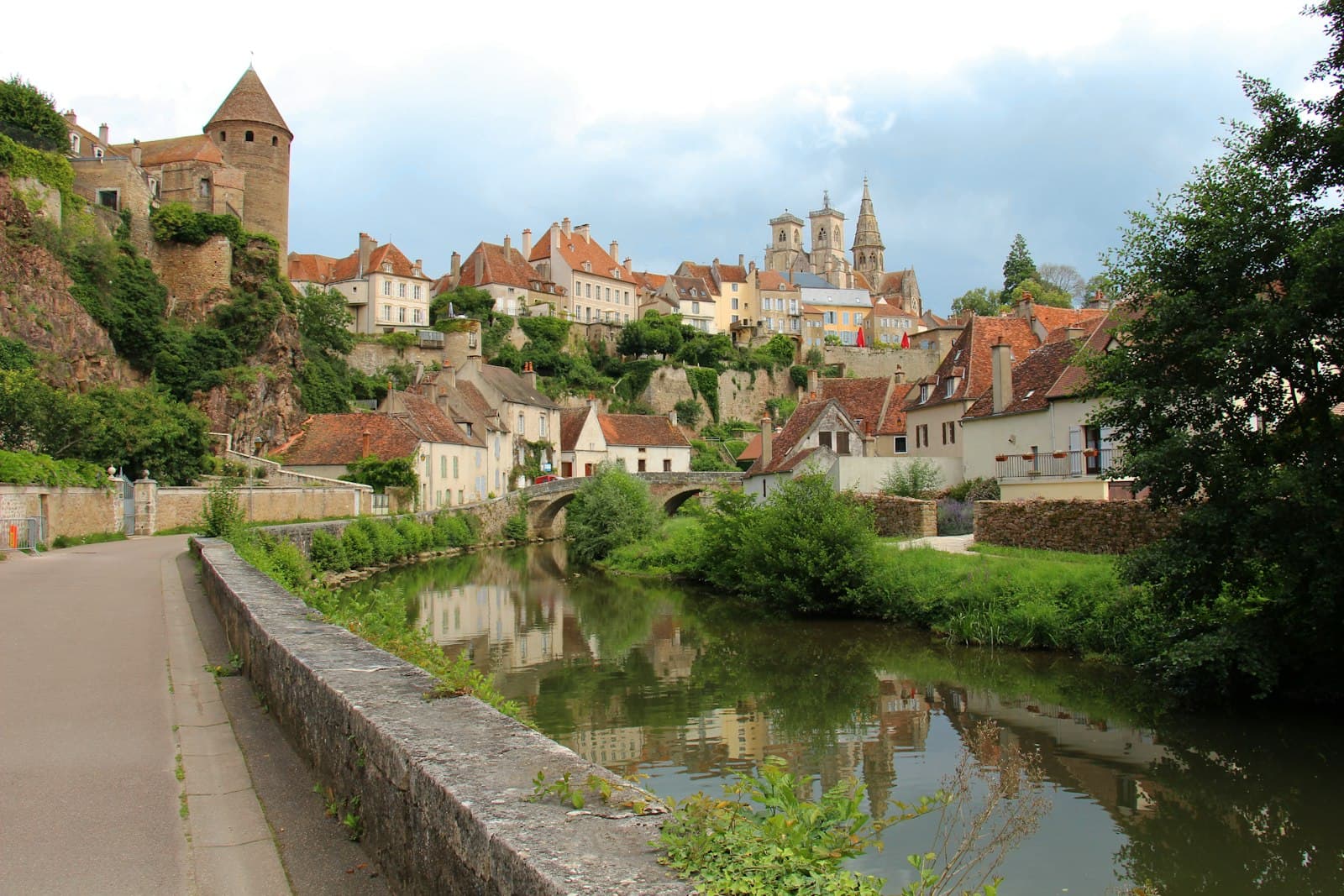
Semur-en-Auxois, ville médiévale de Bourgogne, en France, s'élève de manière spectaculaire d'une falaise de granit rose, presque entièrement encerclée par le cours sinueux de l'Armançon. Cette cité fortifiée, avec une population estimée à environ 4 000 habitants, offre un voyage dans le temps à travers son architecture bien préservée et ses ruelles pavées. Son profil distinctif, défini par d'imposants remparts et des tours rondes, dont la Tour de l'Orle d'Or de 44 mètres de haut, témoigne de son passé protecteur.
La fondation géologique unique de la ville – un affleurement de granit rose – a même donné son nom à une période du Jurassique inférieur, connue sous le nom d'étage Sinémurien, un détail présenté par le paléontologue français Alcide d'Orbigny en 1842. Au-delà de sa signification géologique, Semur-en-Auxois invite les visiteurs à flâner dans sa vieille ville piétonne, à découvrir des ponts historiques et à s'imprégner de l'atmosphère d'un lieu qui est resté en grande partie à l'écart des sentiers touristiques principaux, permettant une exploration plus sereine.
Semur-en-Auxois n'est pas seulement un ensemble de vieilles pierres ; c'est une ville vivante où l'histoire est palpable, des détails complexes de sa collégiale gothique au marché dominical animé. Que vous soyez attiré par ses fêtes médiévales, l'attrait de la cuisine bourguignonne ou simplement le charme tranquille d'une ville apparemment figée dans le temps, Semur-en-Auxois offre une expérience distinctive et mémorable.
L'histoire de Semur-en-Auxois remonte à l'époque romaine, avec des mentions d'un établissement sur sa colline stratégique dès 606 après J.-C. Le nom même de la ville, apparaissant au VIIIe siècle dans le document fondateur de l'abbaye de Flavigny, proviendrait des mots latins « senes muros », signifiant « les vieux murs », faisant allusion à ses premières fortifications. Dès sa création, Semur-en-Auxois a joué un rôle défensif, évoluant progressivement en un important et bien protégé centre commercial.
Au IXe siècle, Semur-en-Auxois était une communauté urbaine animée. La première référence à son église principale, la Collégiale Notre-Dame, apparaît dans une charte de 879, l'identifiant comme un prieuré dépendant de l'abbaye bénédictine de Flavigny. Le XIIe siècle a été le théâtre d'une intense activité religieuse, la Collégiale Notre-Dame, initialement fondée en 1123, servant à la fois de prieuré pour les moines et d'église paroissiale pour la population croissante dès 1154. L'église, un chef-d'œuvre du gothique bourguignon, a vu sa structure principale achevée dans la première moitié du XIIIe siècle, avec la façade et les tours ajoutées au XIVe siècle, et le porche et les chapelles latérales aux XVe et XVIe siècles. Elle a ensuite été restaurée au XIXe siècle par le célèbre architecte Viollet-le-Duc.
Au XIVe siècle, les Ducs de Bourgogne ont considérablement renforcé les défenses de Semur, construisant un donjon et un château. Le château, bâti sur la partie la plus étroite du méandre de l'Armançon, fermait efficacement la crête. Sa disposition rectangulaire comportait quatre tours d'angle rondes, la tour nord servant de donjon, d'environ 40 mètres de haut avec des murs allant jusqu'à 5 mètres d'épaisseur à sa base. Cette conception serait inspirée du style « philippien » de l'architecture militaire française. Semur-en-Auxois est restée fidèle aux Ducs de Bourgogne, une loyauté qui a conduit à son occupation par les troupes françaises en 1478. La vie économique de la ville a également prospéré grâce à ses foires annuelles, pour lesquelles des structures permanentes ont été construites. Au fil des siècles, la rivière Armançon a été vitale, alimentant tanneries et moulins, bien que son débit ait été réduit plus tard par le barrage du Lac de Pont au XIXe siècle. Aujourd'hui, bien qu'une grande partie du château original du XVe siècle ait été démantelée au XVIIe siècle, les impressionnantes tours et remparts continuent de définir le caractère médiéval de la ville.
Commencez votre exploration à la Collégiale Notre-Dame, un exemple frappant d'architecture gothique bourguignonne datant du XIIIe au XVe siècle. Admirez sa nef haute et élancée, sa façade ouest détaillée et ses portails sculptés, et cherchez les gargouilles médiévales et les animaux imaginaires ornant ses corniches supérieures. À l'intérieur, découvrez des vitraux du XIIIe siècle, un retable peint du XVIe siècle représentant l'Arbre de Jessé, et une Mise au tombeau polychrome du XVe siècle.
Parcourez les remparts qui encerclent la ville, offrant des vues panoramiques sur la vallée de l'Armançon et la falaise de granit rose sur laquelle Semur est bâtie. Quatre impressionnantes tours rondes subsistent du château du XIIIe siècle, dont la Tour de l'Orle d'Or, qui abrite un musée avec des collections historiques, de sciences naturelles et technologiques. Les ponts Pont Joly et Pont Pinard offrent des vues emblématiques de carte postale sur les tours de la ville se reflétant dans la rivière, particulièrement captivantes à la lumière du soir.
Flânez dans les rues pavées de la vieille ville, le long des maisons à colombages et des portes historiques comme la Porte Sauvigny. Le Musée Municipal, installé dans l'ancien couvent des Jacobins du XVIIe siècle, présente des collections archéologiques, géologiques, d'histoire naturelle et de beaux-arts. Ne manquez pas le Parc Joly, un parc public récemment accessible. Pour une perspective unique, envisagez une promenade le long du chemin de halage du Canal de Bourgogne, qui relie l'Yonne à la Saône et offre des paysages pittoresques pour la marche ou le vélo.
La période la plus agréable pour visiter Semur-en-Auxois pour les activités par temps chaud s'étend de fin juin à début septembre, lorsque les températures sont confortables et le ciel souvent dégagé. Juillet est généralement le mois le plus ensoleillé, avec une température maximale moyenne de 24°C. Mai et septembre offrent également des conditions météorologiques favorables.
Pour ceux qui s'intéressent aux festivités locales, mai est un mois animé. La Fête de la Bague, la plus ancienne course hippique de France datant de 1639, a lieu chaque année le 31 mai. Le Festival Médiéval transforme également la ville en un site de reconstitution historique, généralement organisé du 8 au 10 mai. Ces événements peuvent rendre les hébergements très demandés, il est donc conseillé de réserver à l'avance.
Semur-en-Auxois, avec une population d'environ 4 000 habitants, se visite facilement à pied, car de nombreuses rues à l'intérieur des murs médiévaux sont réservées aux piétons. Des parkings gratuits sont disponibles autour de la périphérie de la vieille ville. L'office de tourisme local, situé près de l'une des portes historiques de la ville, peut fournir des cartes et des informations.
La ville est située sur l'ancienne route nationale 80 (aujourd'hui RD 980) et dispose d'une sortie de l'autoroute A6, ce qui la rend accessible en voiture. Pour ceux qui voyagent en train, la gare la plus proche est Montbard, sur la ligne Paris-Dijon, d'où un bus ou un taxi peut compléter le trajet jusqu'à Semur-en-Auxois.
Manger à Semur-en-Auxois offre un avant-goût de la gastronomie bourguignonne, avec des restaurants locaux servant des plats comme les œufs en meurette et le bœuf bourguignon. Le marché dominical, qui se tient de 8h à 13h, est un lieu de rassemblement local pour les produits frais et les spécialités régionales comme le fromage Époisses.
Semur-en-Auxois en coréen, en chinois ou en hébreu — et dans 29 autres langues, chaque étape narrée par une voix native. La plus large gamme de langues de tous les audioguides autoguidés.
Disponible en :