Serpa Castle walls
The dramatic, cracked archway leading into Serpa Castle isn't just old; it's a permanent scar from a fiery 18th-century conflict.
Full story unlocks in the tour
 Bunks / CC BY 3.0, via Wikimedia Commons
Self-guided audio walking tour of Serpa — GPS route, offline playback, story-driven narration in 32 languages.
“Where ancient walls guard slow time and rich flavors.”
Not the postcards. The stories even locals don't know — whispered in your ear, right where they happened.
The dramatic, cracked archway leading into Serpa Castle isn't just old; it's a permanent scar from a fiery 18th-century conflict.
Serpa maintains one of Portugal's oldest public timekeepers, a quadrangular tower that has been marking hours since the 15th century.
Look closely at the western town walls, and you'll spot an unexpected architectural feature integrated right into the ancient defenses.
Discover every secret of Serpa
Every address, every reveal in full — in your ear, right where it happened.
You pick your stops. You walk. The voice reveals what the others miss.

Your self-guided audio tour of Serpa is ready — pick your landmarks, choose your language, and start the moment you arrive.
BuyLume has a built-in augmented-reality guide. Hold your phone up and its camera shows the street ahead of you, with a glowing arrow laid over the real view that always points to your next stop — no map to puzzle over, no wrong turns. Like everything in Lume, it works fully offline.
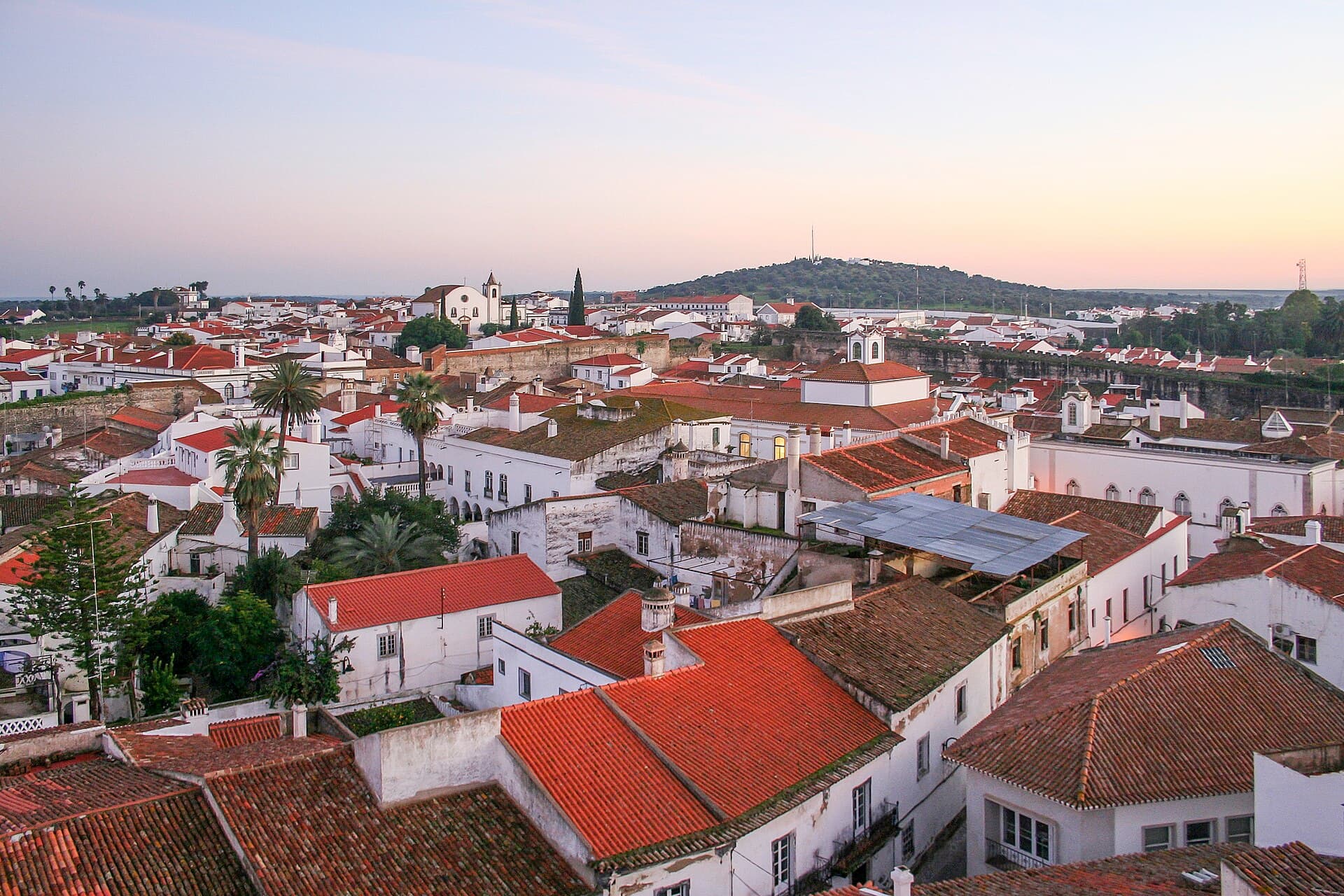
Serpa, a fortified sentinel in Portugal's Baixo Alentejo, rises from sun-drenched plains just a few kilometers from the Guadiana River and the Spanish border. This whitewashed medieval town, with its red-sloped roofs and narrow, cobbled streets, offers a journey into a slower pace of life, seemingly untouched by the rush of modern tourism. Its ancient walls, castle, and historic buildings speak of a past shaped by Moorish occupation, Christian reconquest, and centuries of border skirmishes.
Beyond its historical charm, Serpa is a town that engages all the senses. The air carries the scent of olive groves and, in spring, wildflowers. The taste of its renowned Queijo Serpa, a creamy sheep's cheese, is a testament to the region's agricultural traditions. Serpa's commitment to preserving its authentic Portuguese culture is evident in its designation as a 'slow city,' inviting visitors to linger, listen to the haunting melodies of cante alentejano, and connect with a place that values heritage and the human pace of life.
The site of Serpa has been a strategic point for millennia, with archaeological evidence indicating human occupation since prehistoric times. The first defensive structures here are attributed to the Celts in the 4th century BC, followed by Roman and Visigothic presence. However, it was the Moors, in the 8th century, who significantly fortified Serpa, naming it Scheberim.
The Christian Reconquista brought centuries of conflict. Serpa and its castle were first taken by Christian forces in 1166 under King Afonso I, only to be lost again to the Almohad Caliphate in 1191. King Sancho II finally recovered Serpa for Portugal in 1232. The ownership of the castle remained a point of contention between the kings of Portugal and Castile until 1285, when it was definitively assigned to the Portuguese Crown.
Under the reign of King Dinis, from 1295 onwards, a significant reconstruction of the old Muslim fortress began, incorporating some of the original rammed earth walls. The town's walls were remodeled, and the castle was rebuilt, forming the oval perimeter typical of medieval fortifications. However, Serpa's proximity to the Spanish border continued to make it a vulnerable point. In 1455, the town's depopulation due to wars and pestilence led King Afonso V to grant tax exemptions to new settlers.
The 16th and 17th centuries saw further struggles. During the Portuguese succession crisis of 1580, Serpa and its weakly garrisoned castle fell to Spanish troops. Yet, Serpa was the first village to unfurl the banner of Portugal during the Restoration of Independence in 1640. The War of Restoration prompted modernization efforts on the fortifications, though these were never fully completed. The castle suffered severe damage in 1707 during the War of the Spanish Succession when a gunpowder magazine exploded, destroying one of its towers. The castle was subsequently abandoned and fell into dilapidation, with landslides causing further collapses in the 19th century. In the 20th century, consolidation and reconstruction efforts began, and the castle ruins now house a small museum.
Begin your exploration at the Serpa Castle, where the remnants of its 13th-century structure stand atop earlier Moorish and Celtic fortifications. From the battlements, enjoy sweeping views of the town and the vast Alentejo plains. Adjacent to the castle, the Igreja Matriz de Santa Maria is a Gothic church featuring charming 17th-century tiles, possibly built over a former mosque.
Just outside the church, you'll find the Torre do Relógio, one of Portugal's oldest clock towers, dating back to 1440. Wander through the town's historic center, a labyrinth of narrow, cobbled streets lined with whitewashed houses and wrought-iron balconies. The spacious Praça da República is the main square, home to the arcaded town hall and local shops.
Observe the Serpa Aqueduct on the western side of the town walls, a 17th-century structure built onto older defenses, with a historic wheel pump at its southern end. For a deeper dive into local culture, visit the Museu do Relógio (Clock Museum), a unique institution on the Iberian Peninsula housing an extensive collection of timepieces. The Museu Etnográfico de Serpa offers insights into traditional regional professions and crafts. A short drive from town, the Ermida de Nossa Senhora de Guadalupe ou de São Gens offers far-reaching views and a glimpse into centuries of local devotion.
Serpa experiences hot, arid, and mostly clear summers, and long, cold, partly cloudy winters. The hottest months are July and August, with average highs reaching 92-93°F (33-34°C). For comfortable weather, the best times to visit are March, April, May, October, and November, when temperatures are milder. Spring is particularly lovely, with wildflowers carpeting the fields. The rainy season typically runs from September to early June, with November and October being the wettest months. For hot-weather activities, late June to early September is ideal.
Serpa is approximately 30 kilometers (19 miles) east of Beja and about the same distance southwest of Moura. While Serpa is not heavily reliant on tourism, it offers an authentic Portuguese experience. Public transport options may be limited, so having a car can provide greater flexibility for exploring the town and surrounding Alentejo region. Within the historic center, the narrow, cobbled streets are best explored on foot. Serpa is known for its local cuisine, with restaurants like Molhó Bico and O Alentejano offering traditional dishes. The town is also renowned for its Queijo Serpa, olive oils, and wines. While English may be limited in some local establishments, the warmth and friendliness of the locals are often highlighted.
Serpa in Korean, in Chinese or in Hebrew — and 29 more languages, every stop narrated by a native voice. The widest language range of any self-guided audio tour.
Available in: