The Naked Man Cafe
This cafe's unusual name hints at a gruesome 17th-century practice.
Full story unlocks in the tour
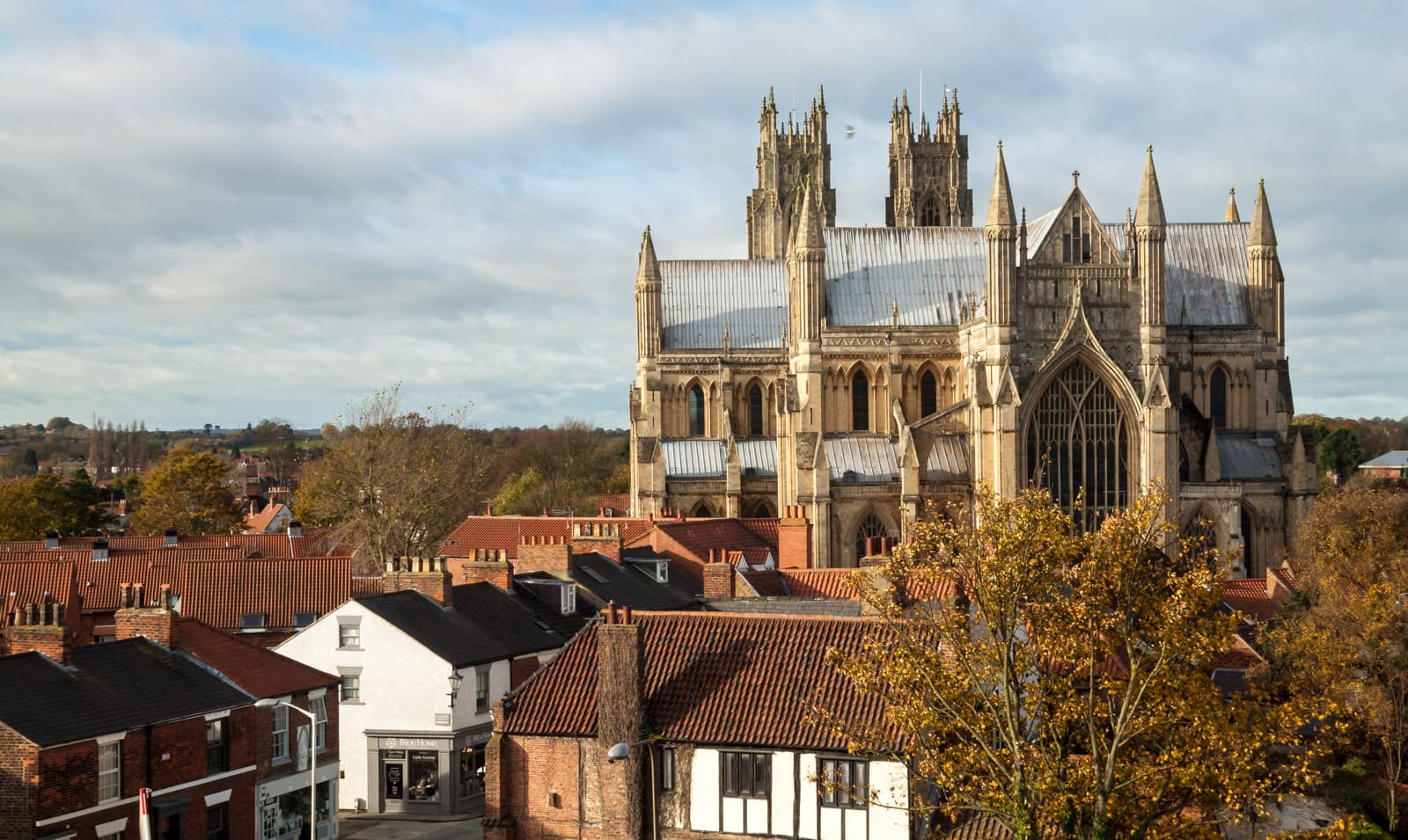 Photo of Beverley, via Wikimedia Commons
Self-guided audio walking tour of Settle — GPS route, offline playback, story-driven narration in 32 languages.
“Where limestone crags meet ancient markets and railway legends.”
Not the postcards. The stories even locals don't know — whispered in your ear, right where they happened.
This cafe's unusual name hints at a gruesome 17th-century practice.
Evidence of prehistoric megafauna has been found just a short walk from town.
This unassuming building holds a significant title in the world of performing arts.
Discover every secret of Settle
Every address, every reveal in full — in your ear, right where it happened.
You pick your stops. You walk. The voice reveals what the others miss.


Your self-guided audio tour of Settle is ready — pick your landmarks, choose your language, and start the moment you arrive.
BuyLume has a built-in augmented-reality guide. Hold your phone up and its camera shows the street ahead of you, with a glowing arrow laid over the real view that always points to your next stop — no map to puzzle over, no wrong turns. Like everything in Lume, it works fully offline.
Settle, a market town in North Yorkshire, England, serves as a gateway to the dramatic landscapes of the Yorkshire Dales National Park. Overlooked by the imposing Castleberg Crag, a 206-foot (63 m) limestone cliff, the town is a center for outdoor enthusiasts and those seeking a glimpse into traditional Dales life. Its inviting stone buildings, independent shops, and inviting streets create an atmosphere that encourages exploration.
Beyond its natural splendor, Settle is known for its connection to the Settle-Carlisle Railway, a celebrated line offering scenic journeys through the Dales. The town's enduring heritage is evident in its architecture, with many 17th and 18th-century buildings, including Grade I and Grade II listed structures. Settle provides an ideal base for exploring the wider region, including the iconic Three Peaks, Malham Cove, and Gordale Scar.
Settle's origins are thought to date back to the 7th century, when it was an Anglian settlement, its name deriving from the Old English word 'Setl' meaning a seat, abode, or dwelling. The Norse-Irish later moved into the area, also from the west. In the Domesday Book, the area of Craven shows that Bo was the lord of Settle until 1066. Following the Harrying of the North between 1069–1071, the land was granted to Roger de Poitou.
A pivotal moment in Settle's history arrived in 1249 when King Henry III granted a Market Charter to Henry de Percy, the 7th feudal baron of Topcliffe. This charter licensed the townsmen to hold a market every Tuesday, transforming Settle into a key trading destination and fostering population growth. To this day, a traditional market continues to be held in the market square every Tuesday.
The medieval town's main route was aligned in an east-west direction, leading from Albert Hill, Victoria Street, High Street, and Cheapside, and continuing through Kirkgate to Giggleswick, where residents attended the parish church. The first bridge over the River Ribble was recorded in 1498.
During the English Civil War, the Clifford family, who were the lords of the manor, were Royalists, though their subjects did not share their allegiance. By the early 1800s, Settle had become an important stop on the Keighley and Kendal Turnpike. The town's industrial past saw it thrive with wool and leather production, including stocking knitting and tanning. By 1835, Settle had five water-powered cotton mills, harnessing the power of the River Ribble.
The arrival of the railway further shaped Settle's development. While Giggleswick had a station earlier, the Settle-Carlisle Railway, opened in 1875, dramatically changed travel in the Dales and Cumbria. This 73-mile line was a marvel of Victorian engineering, built by over 6,000 navvies under harsh conditions. Today, the town retains much of its historic character, with 76 listed buildings, including The Folly, a Grade I listed 17th-century building, and the Victoria Hall, a Grade II listed Victorian music hall.
Settle offers a blend of natural wonders and historical sites. Begin at the Market Place, the heart of the town, where a traditional market is held every Tuesday. Overlooking the square is Castleberg Crag, a 206-foot limestone cliff offering expansive views of the town and surrounding countryside.
Explore The Folly, a distinctive 17th-century building that houses the Museum of North Craven Life. The museum provides insights into the region's past, local industries, and railway heritage. Just a short walk away is Settle Victoria Hall, England's oldest surviving music hall, which continues to host a diverse program of events.
A journey on the Settle-Carlisle Railway is essential, offering sweeping views of the Yorkshire Dales, including the iconic Ribblehead Viaduct with its 24 arches. For outdoor enthusiasts, Settle is a base for exploring Malham Cove, a massive curved limestone formation, and Gordale Scar, a dramatic limestone ravine with a double waterfall. The nearby Janet's Foss waterfall is a popular spot for wild swimming. For those seeking subterranean adventures, Ingleborough Cave and White Scar Caves offer extensive cave tours and natural formations.
The best time to visit Settle is during the late spring and summer months, from May to September, when the weather is mild and ideal for outdoor activities like hiking and cycling. July and August offer the warmest temperatures, with average highs around 19°C (66°F). Autumn, from September to November, brings vivid foliage to the Dales, creating picturesque landscapes. While winter offers a quieter atmosphere, some attractions may have limited hours, and weather conditions can make hiking more challenging.
Settle is accessible by both road and rail. The town is located off the A65, connecting to Skipton and Kendal. Settle railway station is on the Settle-Carlisle line, with regular services from Leeds and Carlisle. The town center and most attractions are within walking distance of the railway station.
Parking is available at three main town center car parks, plus the market square on non-market days. Public toilets, including a Radar key accessible toilet, are available at Whitefriars car park. The Settle Tourist Information Centre, located in the Town Hall, provides free leaflets and local advice. The town has essential amenities, including a health center, dentists, supermarket, and petrol stations.
Settle in Korean, in Chinese or in Hebrew — and 29 more languages, every stop narrated by a native voice. The widest language range of any self-guided audio tour.
Available in: