Kastro
The ancient village of Kastro, constructed on a dramatic precipice, holds a secret about its defensive architecture that many visitors overlook.
Full story unlocks in the tour
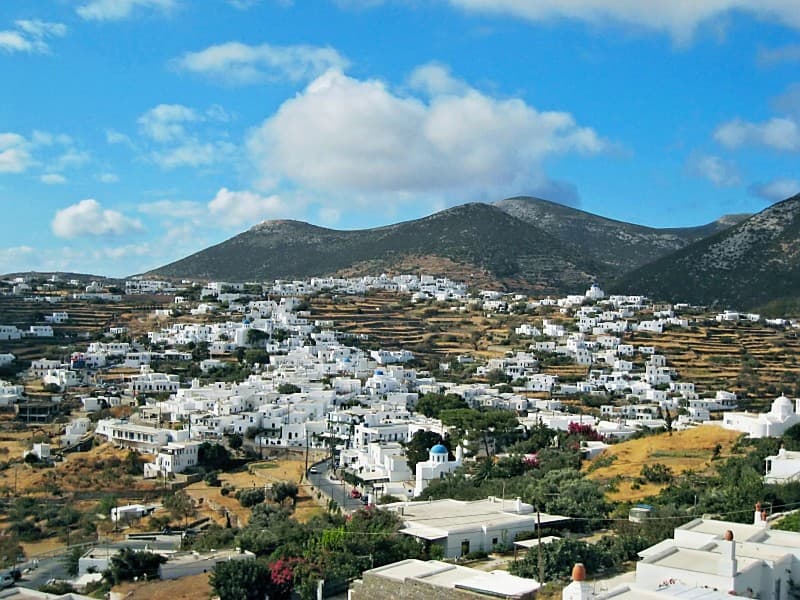 Jon Corelis / CC BY-SA 3.0, via Wikimedia Commons
Self-guided audio walking tour of Sifnos — GPS route, offline playback, story-driven narration in 32 languages.
“Where the Aegean light sharpens every line, and the scent of wild thyme carries forgotten stories.”
Not the postcards. The stories even locals don't know — whispered in your ear, right where they happened.
The ancient village of Kastro, constructed on a dramatic precipice, holds a secret about its defensive architecture that many visitors overlook.
In the heart of Sifnos, the capital, Apollonia, has a curious connection to its name that goes beyond the obvious.
The small fishing village of Cherronisos, seemingly serene and remote, has a surprising link to Sifnian culinary tradition.
Discover every secret of Sifnos
Every address, every reveal in full — in your ear, right where it happened.
You pick your stops. You walk. The voice reveals what the others miss.


Your self-guided audio tour of Sifnos is ready — pick your landmarks, choose your language, and start the moment you arrive.
BuyLume has a built-in augmented-reality guide. Hold your phone up and its camera shows the street ahead of you, with a glowing arrow laid over the real view that always points to your next stop — no map to puzzle over, no wrong turns. Like everything in Lume, it works fully offline.
Sifnos, a Cycladic island in the Aegean Sea, presents a landscape of terraced hills, olive groves, and whitewashed villages. Its coastline offers a blend of sandy expanses and rocky inlets, all touched by the clear blue waters. The island's architecture, defined by cubic houses and blue-domed churches, mirrors the traditional Cycladic style. It is an island where the rhythm of daily life remains connected to its agricultural roots and artisanal legacy.
Beyond its visual appeal, Sifnos is celebrated for its gastronomy, often considered one of the culinary centers of the Cyclades. This reputation stems from a long tradition of local produce, skilled cooks, and a distinctive pottery heritage that influences its cooking methods. The island invites a slower pace, encouraging exploration of its ancient paths, quiet monasteries, and sun-drenched beaches.
## Ancient Roots and Venetian Influence Sifnos possesses a history extending back to the Early Cycladic period, evident in archaeological findings across the island. Its ancient prosperity stemmed largely from its silver and gold mines, which thrived from the 3rd millennium BC. The island's treasury at Delphi, among the most elaborate, stands as a testament to its wealth during this era.
During classical antiquity, Sifnos maintained its significance, though its mining operations eventually diminished. The island later came under Roman rule, followed by the Byzantine Empire. The medieval period saw Sifnos become part of the Duchy of Naxos, established by the Venetians after the Fourth Crusade in 1204. This Venetian presence, enduring for several centuries, left its imprint on the island's architecture and administrative structures, particularly in fortified settlements like Kastro.
## Ottoman Rule and Modern Greece In 1537, Sifnos, alongside the rest of the Cyclades, was conquered by the Ottoman Empire. Despite Ottoman rule, the island largely retained its local customs and religious practices. The relative autonomy granted by the Ottomans allowed Sifnos to maintain a lively cultural and intellectual life, becoming a center for learning and trade in the Aegean. Many notable scholars and religious figures emerged from Sifnos during this period.
Sifnos played a part in the Greek War of Independence in 1821 and officially became part of the newly formed Greek state in 1830. The 19th and 20th centuries witnessed a resurgence in the island's economy, particularly in pottery and agriculture. Today, Sifnos balances its traditional heritage with a growing, sustainable tourism industry, preserving its unique character while welcoming visitors.
Begin your exploration in Apollonia, the island's capital, with its intricate streets, boutique shops, and traditional tavernas. Visit the Folklore Museum to understand Sifnian life and crafts. A short drive will take you to Kastro, the ancient capital, a Venetian-era village set upon a cliff, offering expansive views and a walk through history. Its defensive architecture, with houses forming the outer walls, is a notable characteristic.
For those who appreciate the shore, Platis Gialos is among the largest and most popular sandy beaches, offering watersports and dining by the water. Vathy, a sheltered bay, provides a more peaceful setting with traditional tavernas. Do not miss the Monastery of Panagia Chrissopigi, the island's patron saint, dramatically situated on a rocky outcrop. For walkers, Sifnos offers a network of ancient paths connecting villages and chapels, revealing striking landscapes and quiet corners.
The best time to visit Sifnos is during the shoulder seasons, specifically May-June and September-October. During these months, the weather is pleasantly warm, ideal for walking and swimming, and the island experiences fewer crowds than in the peak summer months of July and August. The sea is warm enough for swimming, and all services are fully operational.
Sifnos is accessible by ferry from Piraeus Port in Athens, with both conventional and high-speed options available. The journey duration varies from 2.5 to 5 hours. Once on the island, a reliable public bus service connects the main villages and popular beaches. Taxis are also available, and for more flexibility, car and scooter rentals are an option, though booking in advance, especially in peak season, is advisable. The island is generally safe, and tap water is potable in most areas, but bottled water is widely available.
Sifnos in Korean, in Chinese or in Hebrew — and 29 more languages, every stop narrated by a native voice. The widest language range of any self-guided audio tour.
Available in: