Among the ancient artifacts in Sitia's Archaeological Museum, one particular statuette stands out, not just for its age, but for its unusual composition and the mystery surrounding its creation.
RabiTob / CC BY-SA 3.0, via Wikimedia CommonsSitia
Self-guided audio walking tour of Sitia — GPS route, offline playback, story-driven narration in 32 languages.
“Where the Aegean meets authentic Crete, far from the well-trodden path.”
Sitia, as no one tells it.
Not the postcards. The stories even locals don't know — whispered in your ear, right where they happened.
The unique palm forest at Vai, Europe's only natural palm forest, has a surprising origin story that links it to ancient travelers and their discarded meals.
Sitia's Venetian fortress, Kazarma, has endured centuries of conflict and natural disasters, yet it continues to host cultural events today. Its resilience is tied to a strategic decision made during a desperate time.
Discover every secret of Sitia
Every address, every reveal in full — in your ear, right where it happened.
You pick your stops. You walk. The voice reveals what the others miss.


How long do you have in Sitia?
Your self-guided audio tour of Sitia is ready — pick your landmarks, choose your language, and start the moment you arrive.
BuyThe story of Sitia
Sitia, a port town on the eastern edge of Crete, offers a tranquil escape from the island's more bustling tourist centers. With a population of around 11,000, it maintains a genuine working rhythm, where local life unfolds without the clamor of mass tourism. The town is built amphitheatrically around a scenic bay, providing expansive views of the Aegean Sea. Its waterfront promenade, adorned with palm trees, invites leisurely strolls past tavernas and cafes where fresh, local cuisine is served.
Beyond its charming town center, Sitia serves as a gateway to a region of natural allure and historical depth. From Europe's only natural palm forest at Vai to ancient Minoan ruins and fortified monasteries, the area promises diverse experiences. The entire region surrounding Sitia has been designated a UNESCO Global Geopark, recognizing its unique geological features and natural landscapes. This corner of Crete is a destination for independent travelers, culture enthusiasts, and those seeking a quieter, more authentic Greek island experience.
From Minoan Origins to Venetian Stronghold
The story of Sitia stretches back to pre-Minoan times, with archaeological evidence of settlements dating to the Neolithic period (6000-3000 BC). The modern town is believed to stand on the site of the ancient settlement of Itia or Eteia, which served as the primary naval harbor for Praisos, a powerful city-state in eastern Crete. During the Minoan era (2700-1450 BC), Sitia was a significant commercial center and a thriving port, with a notable Minoan palace complex at nearby Petras.
Following the decline of the Minoan civilization, Sitia was ruled by a succession of powers, including the Greeks, Romans, and Byzantines. Its port continued to be commercially active through the early Byzantine period. In the 13th century, Sitia came under Venetian rule, a period that lasted over 400 years. The Venetians recognized Sitia's strategic importance, describing it as the 'maximum station and light of the island' and a major commercial hub for trade with the East and Africa. They constructed numerous fortresses, including the Kazarma (Casa di arma), which became the city's main defensive structure.
Sitia endured a turbulent Venetian period, suffering destruction three times. An earthquake in 1508 caused significant damage, followed by a devastating raid by the Ottoman pirate Hayreddin Barbarossa in 1538. The final destruction occurred in 1651, when the Venetians themselves razed the city's fortifications to prevent them from falling into Ottoman hands during the Cretan War. This left Sitia largely desolate for over two centuries.
Rebirth and Modern Era
The town was eventually rebuilt in 1870 under the progressive Turkish governor Hüseyin Avni Pasha, who moved the provincial capital there and renamed it Avniye. However, the local Greek population continued to use the traditional name of Sitia, which ultimately prevailed after the city's liberation from Ottoman rule in 1898 and its reunification with Greece in 1913. The new Sitia was planned with wider, straighter streets and a promenade, a departure from the winding alleys of many medieval settlements.
In the 20th century, Sitia played a role in the Greek Resistance during World War II, with the Toplou Monastery serving as an important center. Today, Sitia is an administrative and tourist center, known for its olive oil and wine production, and for preserving an authentic Cretan character away from mass tourism.
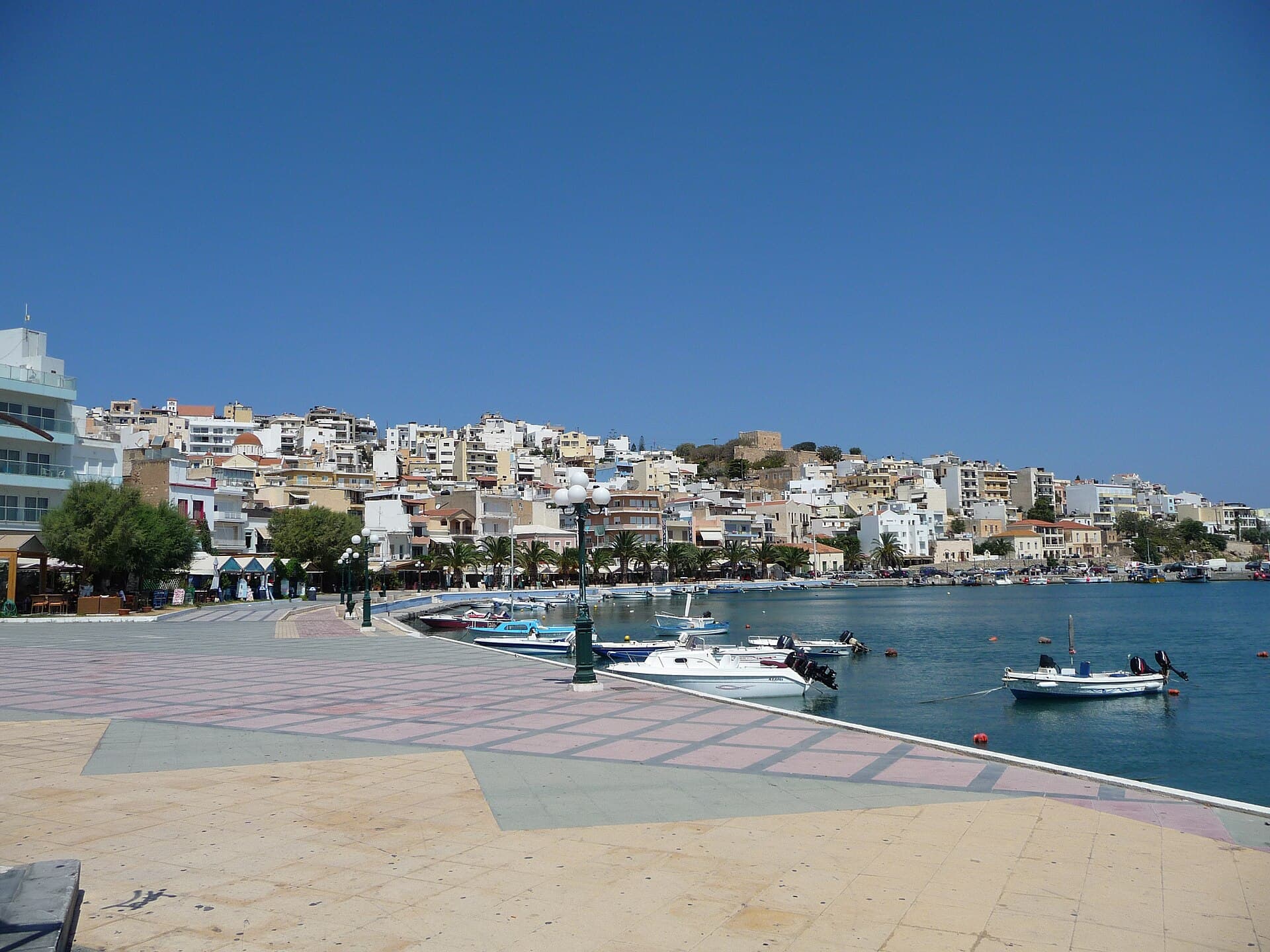
Begin your exploration at the Kazarma Fortress, a 13th-century Venetian stronghold that offers expansive views of Sitia Bay and hosts cultural events during the summer. Delve into the region's deep past at the Archaeological Museum of Sitia, which houses artifacts spanning from the Neolithic to the Roman periods, including significant Minoan finds from Kato Zakros and the exquisite Palaikastro Kouros. For a glimpse into local life, visit the Folklore Museum, showcasing traditional costumes, handwoven materials, and furniture.
Beyond the town, a short drive leads to the Vai Palm Forest, a unique natural wonder and Europe's only natural palm forest, with a sandy beach. Explore the ruins of Ancient Itanos, a Phoenician colony that prospered through trade, with remnants scattered along a sandy hill near the beach. The fortified Toplou Monastery, dating back to the 14th century, is another significant site, known for its Byzantine art collection and organic olive oil and wine production. For nature enthusiasts, the Richtis Gorge offers a scenic hiking trail leading to a waterfall, providing a cool escape especially in warmer months.
The ideal time to visit Sitia is from May to October, when temperatures are warm and rainfall is minimal. May, June, September, and October offer pleasant weather for sightseeing and outdoor activities, with temperatures typically ranging from 20-27°C (68-81°F) and fewer crowds. July and August are the warmest months, with average highs around 30°C (84°F), perfect for beach activities, though these months can be busier. Spring (April-May) is particularly beautiful as wildflowers bloom across the countryside.
Sitia is generally a safe and welcoming destination. While the town center is walkable, renting a car is highly recommended for exploring the wider region, as public transportation can be limited and unreliable. Car rental agencies are available at Sitia Airport and in town. When driving, be aware of narrow roads and local driving habits. Parking in Sitia is relatively easy, with a main free public lot near the harbor on Papandreou Street.
Accommodation options range from small hotels and guesthouses in Sitia town to villas and apartments, with options near the harbor providing easy access to restaurants and beaches. Sitia is generally more affordable than more popular Greek islands. Many small tavernas and shops may only accept cash, so it's advisable to carry some. Respect local customs; a friendly 'Kalimera' (Good morning) is always appreciated. For emergencies, the general Greek emergency line is 112.
- How do I get to Sitia?
- Sitia has a small airport (JSH) with domestic flights from Athens, primarily via Sky Express and Aegean, especially during summer months. Alternatively, you can fly into Heraklion Airport (HER) and take a bus or rental car for the approximately 2.5-hour drive east to Sitia. Ferry connections are also available from other Greek islands like Karpathos, Kasos, and Rhodes.
- Is Sitia suitable for families?
- Yes, Sitia is an excellent destination for families. It offers a relaxed atmosphere, safe and shallow beaches with gentle waves, and a low crime rate. The town and surrounding areas provide a mix of historical sites, natural attractions, and local culture that can be enjoyed by all ages.
- What local products should I try in Sitia?
- Sitia is known for its high-quality extra-virgin olive oil, which has received numerous awards. Other local specialties include uniquely flavored thyme-honey, delicious dairy products like 'myzithra' cheese, excellent 'tsikoudia' (a local spirit), and traditional pastries such as 'kalitsounia' and 'kserotigana'. The region also produces exceptional wines from indigenous grape varieties.
- What is the Kazarma Fortress?
- The Kazarma (Casa di arma) is Sitia's Venetian fortress, originally built in the 13th century. It has a long and turbulent history, having been demolished, repaired, and rebuilt multiple times due to earthquakes, pirate raids, and conflicts. Today, its ruins stand on a hill overlooking the town and host the annual 'Kornaria' cultural events.
- Are there good beaches in Sitia?
- Yes, Sitia offers a variety of beaches. Sitia City Beach is a long, sandy, Blue Flag-accredited beach conveniently located near the town center. Further afield, you'll find the exotic Vai Palm Beach, known for its unique palm forest. Other options include the tranquil Chiona Beach and Erimoupoli Beach, often less crowded and offering clear waters.
- What are the driving conditions like in Eastern Crete?
- Driving in Eastern Crete requires attention, as some roads can be narrow, particularly in remote areas. While major routes are generally good, fuel stations become sparse outside of Sitia and Palekastro, so plan accordingly for longer drives. An International Driving Permit (IDP) is generally not required for licenses from the EU/EEA, UK, US, Canada, or Australia, but always carry your valid license and ID.