Stendal's Marktplatz
The towering Roland figure in Stendal's market square isn't merely an emblem of civic freedom; it once played a part in a devilish narrative.
Full story unlocks in the tour
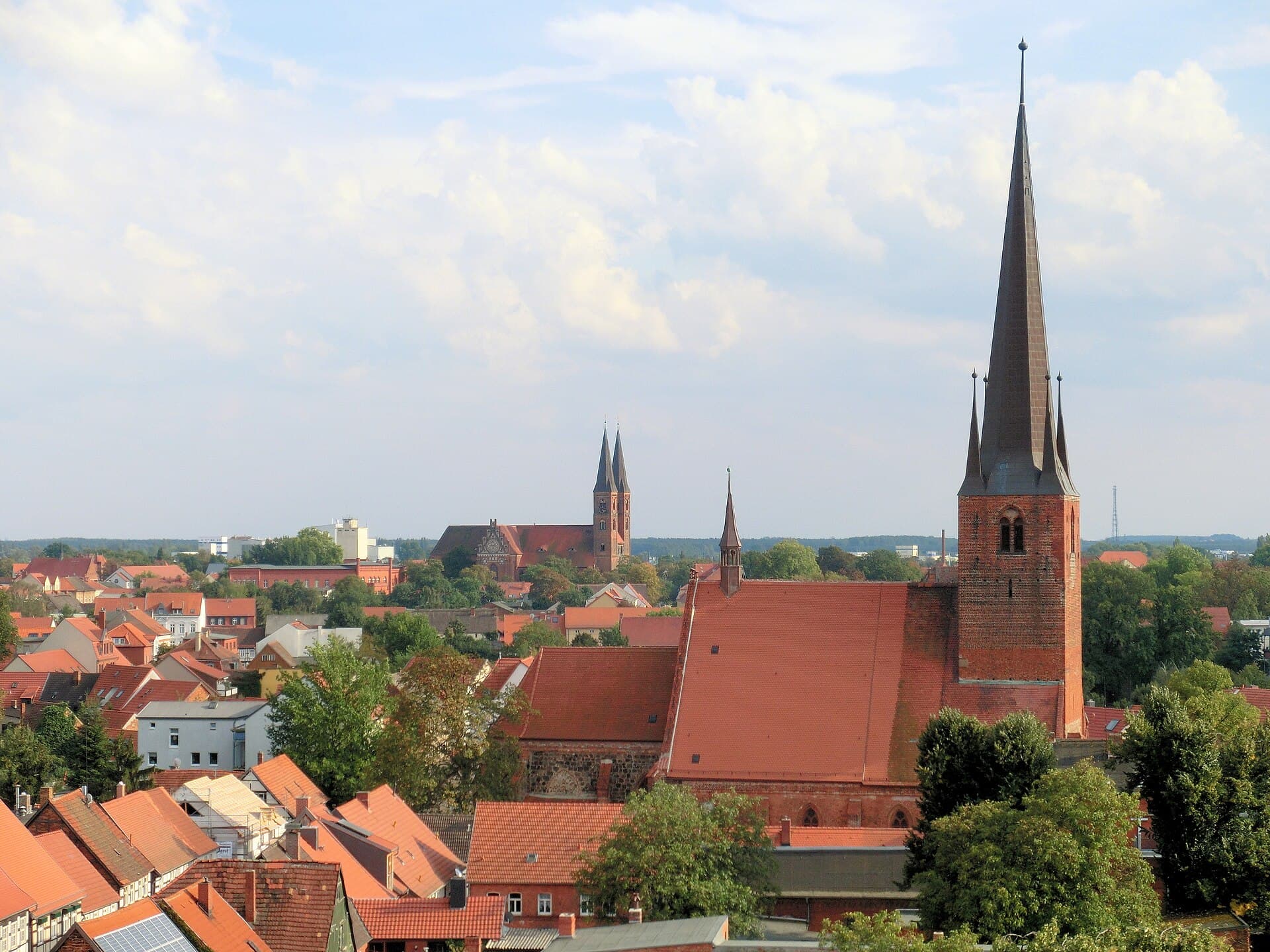 Schiwago / CC BY-SA 3.0, via Wikimedia Commons
Self-guided audio walking tour of Stendal — GPS route, offline playback, story-driven narration in 32 languages.
“Where Hanseatic grandeur meets unexpected literary echoes.”
Not the postcards. The stories even locals don't know — whispered in your ear, right where they happened.
The towering Roland figure in Stendal's market square isn't merely an emblem of civic freedom; it once played a part in a devilish narrative.
Within the venerable Town Hall, a wooden carving holds a surprising distinction.
This commanding brick Gothic gate, a testament to Stendal's medieval defenses, shares a curious link with a famous trickster.
Discover every secret of Stendal
Every address, every reveal in full — in your ear, right where it happened.
You pick your stops. You walk. The voice reveals what the others miss.
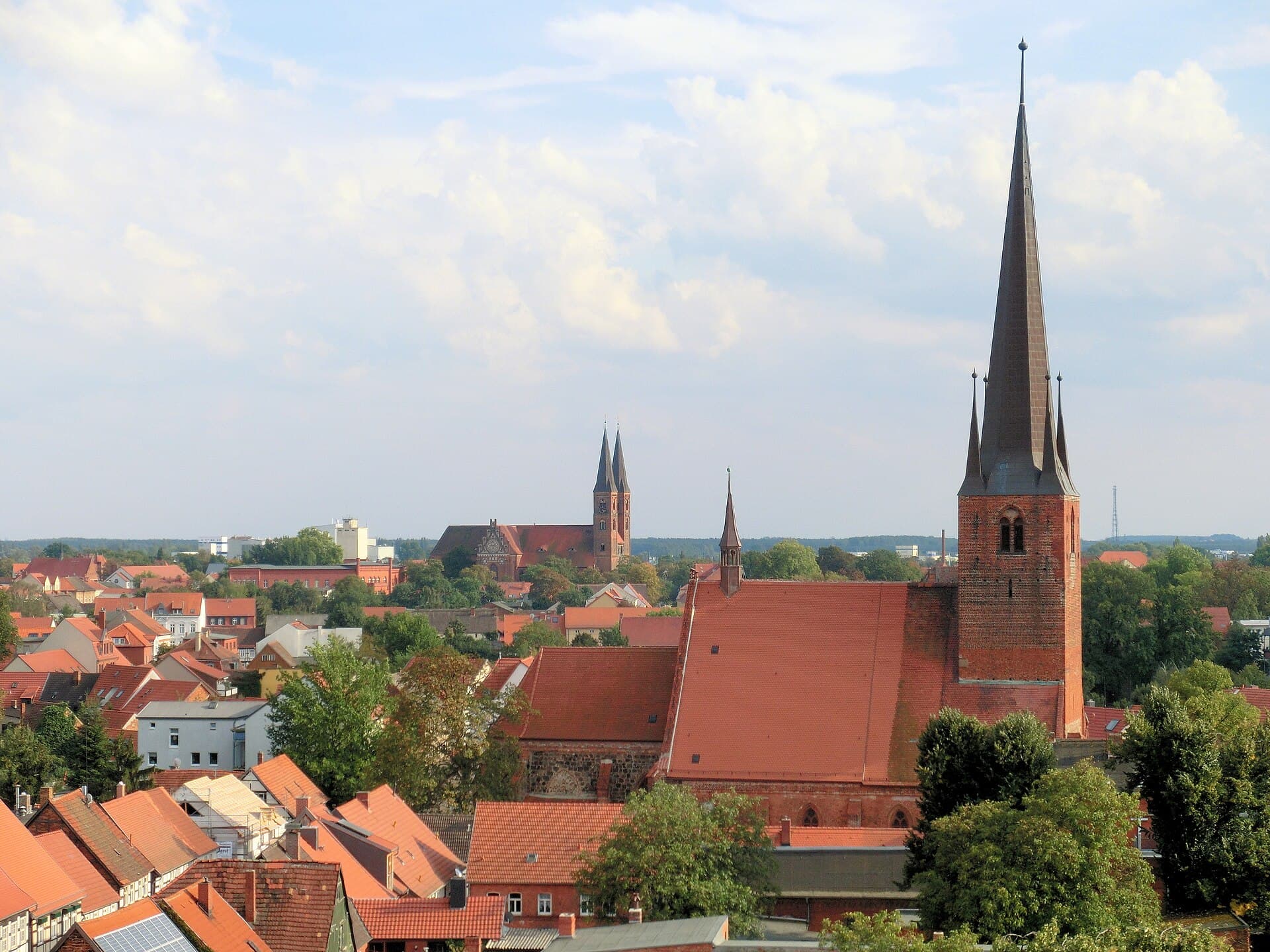
Your self-guided audio tour of Stendal is ready — pick your landmarks, choose your language, and start the moment you arrive.
BuyLume has a built-in augmented-reality guide. Hold your phone up and its camera shows the street ahead of you, with a glowing arrow laid over the real view that always points to your next stop — no map to puzzle over, no wrong turns. Like everything in Lume, it works fully offline.
Stendal, officially recognized as a Hanseatic City, stands as the largest town in Germany's northern Saxony-Anhalt region, situated along the Uchte River. This historic city, with a population of approximately 40,000, offers a compelling journey through time, revealing a remarkably preserved medieval core. Its architectural identity is deeply rooted in its Hanseatic past, characterized by imposing North German Brick Gothic buildings that define its skyline and narrow, curving streets.
Stendal is an ideal destination for those seeking a tranquil respite from bustling metropolises, providing an authentic European experience without being overwhelmed by visitors. Travelers can immerse themselves in the city's enduring heritage, explore its historic landmarks, and savor local cuisine in traditional eateries. Beyond its architectural marvels, Stendal is also celebrated as the birthplace of Johann Joachim Winckelmann, the pioneering 18th-century archaeologist and art historian who profoundly influenced Neoclassicism.
The city's compact old town converges around the Marktplatz, featuring the venerable town hall and the commanding Roland figure, a potent emblem of municipal rights and freedoms. Key landmarks include the twin-spired St. Mary's Church, St. Nicholas Cathedral with its notable stained glass, and well-preserved medieval city gates like the Uenglinger Tor and Tangermünder Tor.
## From Medieval Trade Hub to Hanseatic Powerhouse Stendal's origins can be traced back to the medieval period, with archaeological evidence suggesting settlements as early as the 9th century. The town was formally established and granted market rights by Margrave Albert the Bear of Brandenburg around 1160, positioning it as one of the oldest cities in the historic Mark Brandenburg. This strategic location fostered its swift development into a significant medieval trading center.
By 1300, Stendal had erected city walls, and its citizens formally joined the influential Hanseatic League in 1358. This membership ushered in a period of immense economic prosperity and architectural flourishing, transforming Stendal into the largest city in the Mark Brandenburg. The city even acquired the privilege of minting its own coinage in 1369. However, this 'Golden Age' of commercial power began to recede when Stendal was excluded from the Hanseatic League in 1518. The 17th century brought further difficulties, with the plague and the Thirty Years' War severely impacting its prosperity.
## Prussian Garrison and Modern Development For centuries, Stendal was a constituent part of the Margraviate of Brandenburg. Following the Napoleonic Wars, it became part of the Prussian Province of Saxony. From the 17th century onward, Stendal served as a Prussian garrison town, notably hosting the 10th (Magdeburg) Hussars regiment from 1884. The 18th century witnessed the birth of Johann Joachim Winckelmann in Stendal in 1717, a figure who would go on to revolutionize the study of ancient Greek and Roman art.
In 1849, the inauguration of a railway line connecting Stendal with Magdeburg stimulated industrial development. During World War II, Stendal was home to a Luftwaffe airfield and the first German Fallschirmjäger (paratrooper) training school. The town sustained damage from strategic bombing, including its historic center, town hall, and cathedral. Extensive restoration efforts followed to safeguard its heritage. Today, Stendal continues to serve as a regional hub, offering high-speed rail passenger service and a university of applied sciences established in 1994, which has brought renewed vitality to the urban environment.
Stendal's compact old town is a store of Brick Gothic architecture, easily explored on foot. Begin at the Marktplatz, the city's civic heart, where you'll find the venerable Town Hall and the imposing Roland figure. This 7.8-meter-tall sandstone knight, erected in 1525, is one of Germany's largest Roland figures and a potent emblem of municipal rights and freedoms.
Adjacent to the Marktplatz stands St. Mary's Church (Marienkirche), an impressive example of late Gothic architecture with distinctive twin spires. A brief walk leads to St. Nicholas Cathedral (Dom St. Nikolaus), a magnificent late Gothic temple celebrated for its 22 medieval stained-glass windows, considered among the most valuable in Northern Europe.
No visit to Stendal is complete without exploring its remarkably preserved medieval city gates. The Uenglinger Tor, constructed around 1450–1460, is regarded as one of the finest late medieval brick-Gothic town gates in Northern Germany. You can often access its viewing levels for expansive city vistas. The Tangermünder Tor, dating back to the early 13th century, is another impressive surviving gate, exhibiting Romanesque architectural elements.
For history and art enthusiasts, the Winckelmann Museum is an essential stop. Located at the birthplace of Johann Joachim Winckelmann, it delves into the life and legacy of this pioneering archaeologist. The Altmärkisches Museum, housed in the former Katharine-Monastery, offers further insights into regional history. Do not overlook the Pulverturm (Powder Tower), a circular 15th-century defensive tower, and remnants of the old town wall.
The optimal time to experience Stendal's historic appeal is during the warmer months, from May through September. Temperatures are mild and agreeable, averaging 20–24°C (68–75°F) from June to August, perfect for walking tours and outdoor exploration. While July and August are the warmest, they can also experience higher rainfall. For fewer crowds and comfortable weather, consider visiting in May or September. Winter in Stendal is generally mild, with temperatures typically above freezing, though overcast days are common.
Stendal is positioned approximately halfway between Berlin and Hanover, making it readily accessible by train. High-speed ICE trains traverse the area, and intercity trains between Berlin and Amsterdam (via Hanover) stop every two hours. Hourly local trains also connect Stendal with Magdeburg and Wittenberge.
Once in Stendal, the compact old town is best explored on foot, allowing you to appreciate its medieval architecture. For local information and assistance, the Tourist Information office is available. Stendal's culinary offerings emphasize hearty, straightforward dishes prepared with high-quality local farm products, featuring pork and beef specialties and traditional sauerkraut. Be sure to sample the local sausages, crafted according to ancient recipes.
Stendal in Korean, in Chinese or in Hebrew — and 29 more languages, every stop narrated by a native voice. The widest language range of any self-guided audio tour.
Available in: