Tangermünde Town Hall
The town hall, a masterpiece of Brick Gothic, holds a secret about a fiery accusation.
Full story unlocks in the tour
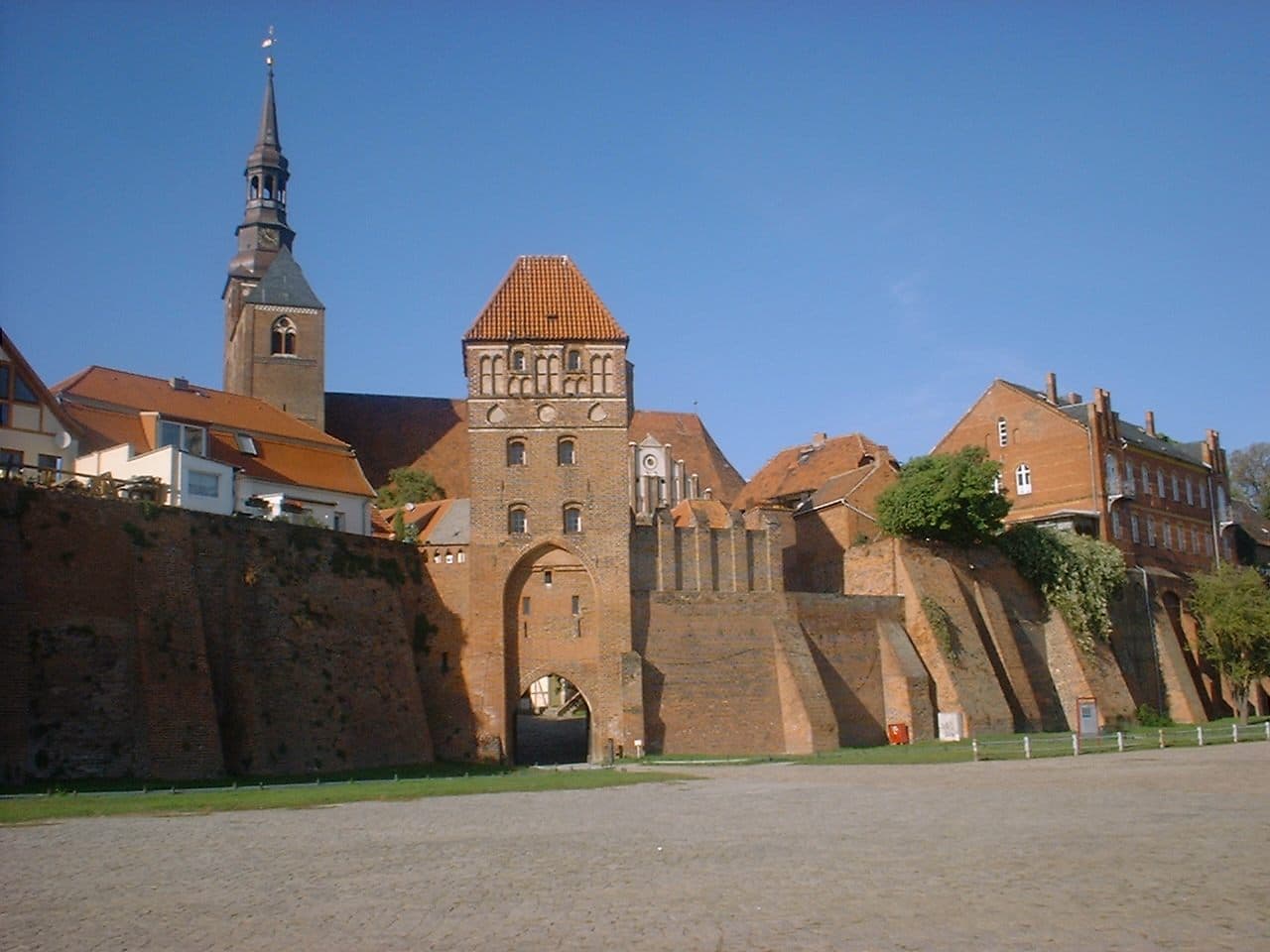 Doris Antony, Berlin / CC BY-SA 3.0, via Wikimedia Commons
Self-guided audio walking tour of Tangermünde — GPS route, offline playback, story-driven narration in 32 languages.
“Where brick Gothic dreams meet Elbe tranquility.”
Not the postcards. The stories even locals don't know — whispered in your ear, right where they happened.
The town hall, a masterpiece of Brick Gothic, holds a secret about a fiery accusation.
Beneath the soaring arches of St. Stephen's, an opening once played a dramatic role in medieval liturgy.
Once a favored imperial residence, the castle's decline was hastened by a surprisingly mundane rebellion.
Discover every secret of Tangermünde
Every address, every reveal in full — in your ear, right where it happened.
You pick your stops. You walk. The voice reveals what the others miss.


Your self-guided audio tour of Tangermünde is ready — pick your landmarks, choose your language, and start the moment you arrive.
BuyLume has a built-in augmented-reality guide. Hold your phone up and its camera shows the street ahead of you, with a glowing arrow laid over the real view that always points to your next stop — no map to puzzle over, no wrong turns. Like everything in Lume, it works fully offline.
Tangermünde, a small town on the Elbe River in the Altmark region of Saxony-Anhalt, Germany, offers a journey back in time. With a history stretching back over a thousand years, it presents one of Germany's best-preserved medieval townscapes. The town's strategic location at the confluence of the Elbe and Tanger rivers contributed to its significance throughout the centuries.
Visitors are greeted by imposing brick Gothic architecture, well-preserved city walls, and picturesque half-timbered houses lining ancient thoroughfares. In 2019, Tangermünde was even voted 'Germany's most beautiful small town' by Travelbook. This blend of authentic history, tranquil atmosphere, and expansive Elbe landscapes creates a unique and memorable experience.
## Medieval Origins and Imperial Grandeur Tangermünde's story begins around 1000 AD, with its castle first mentioned in chronicles in 1009. The town itself developed from an early marketplace and was first recorded in 1275. Its strategic position at the confluence of the Elbe and Tanger rivers made it a vital settlement in medieval Germany.
The town reached its zenith in the 14th century when Emperor Charles IV, one of the most influential Holy Roman Emperors, made Tangermünde his preferred residence from 1373 to 1378. This imperial connection transformed Tangermünde into a center of political power, bringing considerable wealth and prestige. Charles IV even had Tangermünde Castle rebuilt as a 'Kaiserpfalz' or imperial palace. Following Charles IV's death, the castle became a seat for the Hohenzollern electors of Brandenburg, though their relationship with the town was less peaceful.
## Hanseatic League and a Fiery Decline During the 15th century, Tangermünde flourished as an affluent member of the Hanseatic League. This period saw the construction of many of the splendid brick buildings that still stand today, including the town hall and the town gates. However, the town's prosperity was not to last. The early 17th century brought a series of misfortunes, including several fires, the Thirty Years' War, and the plague. A great fire in 1617 destroyed two-thirds of the town's buildings, severely impacting its economic recovery for centuries.
## Preservation and Modern Revival Despite its decline in importance, Tangermünde's historic center and city walls were largely preserved, as they were not subjected to the widespread industrialization that altered many other German towns in the 19th century. The town also sustained only minor damage during World War II. This fortunate preservation means that much of Tangermünde's original townscape remains intact, offering visitors an authentic glimpse into its imperial and Hanseatic past.
Begin your exploration at the Tangermünde Castle, a partially preserved medieval fortress overlooking the Elbe River. Its Kapitelturm (Chapter Tower), dating from 1376, offers expansive views of the town and floodplains. The Burgmuseum Schloßfreiheit within the castle complex, housed in the oldest preserved building from 1543, details the castle's history.
Next, head to the Marktplatz (Market Square), the heart of the old town, surrounded by centuries-old half-timbered houses. Dominating the square is the Rathaus (Town Hall), a striking late-Gothic structure from 1430, known for its ornate gables. The former council hall can be visited on guided tours.
Do not overlook St. Stephen's Church, a Brick Gothic hall church with the highest church tower in the Altmark region. Inside, you will find a colorful interior and an early-Baroque organ by Hans Scherer the Younger, considered one of Europe's most valuable historical organs. The nearly continuous 14th-century brick city walls, reaching 10 to 15 meters in height, are also a highlight, with well-preserved gates like the Neustädter Tor and Elbe Gate.
The most agreeable time to visit Tangermünde for general outdoor activities is from mid-June to early September, with a peak in the first week of August, when the weather is comfortable and clear. During these months, average daily high temperatures are above 68°F (20°C). May and September also offer pleasant conditions. Summers are generally comfortable and partly cloudy, while winters are long, very cold, and mostly cloudy.
Tangermünde is easily accessible by regional train via Stendal, with frequent direct services taking about 13 minutes. From Magdeburg, travel typically involves one change at Stendal and takes just over an hour. Regional PlusBus routes also connect Tangermünde with nearby hubs.
The town's compact medieval center is best explored on foot, allowing you to wander through its winding alleys and admire the architecture. For those looking to explore the surrounding natural beauty, the Elbe Cycle Path is nearby, perfect for bike rides through the Elbe floodplains. Boat trips on the Elbe are also available from the foot of the castle.
Tangermünde is ideal for a 1-2 day stay, offering a relaxed pace to absorb its history and atmosphere. You will find a range of accommodations, including the Schlosshotel Tangermünde, located within the castle complex.
Tangermünde in Korean, in Chinese or in Hebrew — and 29 more languages, every stop narrated by a native voice. The widest language range of any self-guided audio tour.
Available in: