L'église partiellement détruite de Santo Niño Jesús
La façade frappante et en ruine de l'église principale de Tihosuco n'est pas un signe de négligence, mais un acte délibéré de souvenir.
L'histoire complète se débloque dans le tour
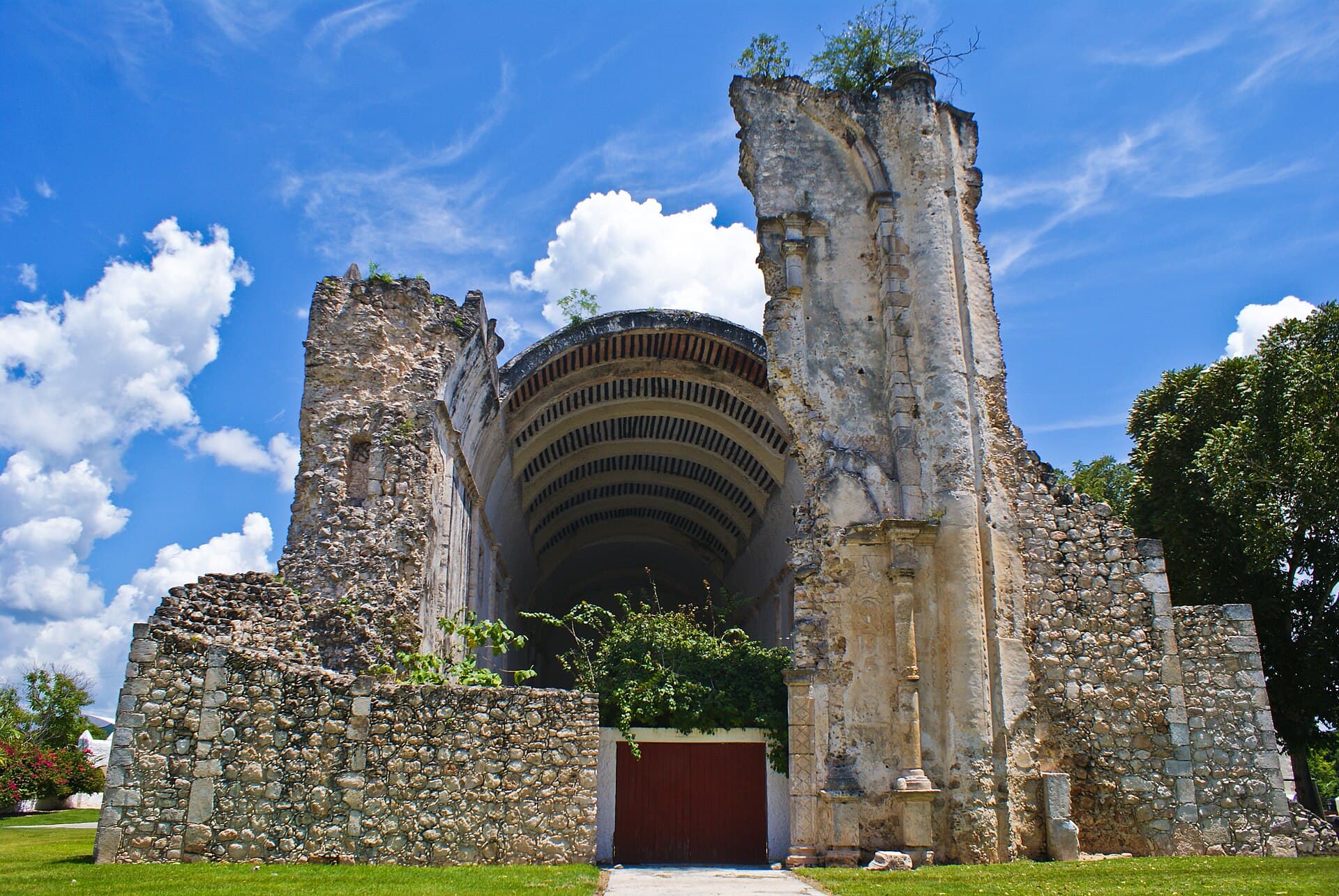 Guillermo Isaac Huesca Solis / CC BY-SA 3.0, via Wikimedia Commons
Visite audio autoguidée de Tihosuco — parcours GPS à pied, lecture hors ligne, narration en 32 langues.
“Là où les pierres se souviennent, et l'esprit perdure.”
Pas les cartes postales. Les histoires que même les habitants ignorent — soufflées à l'oreille, là où elles se sont passées.
La façade frappante et en ruine de l'église principale de Tihosuco n'est pas un signe de négligence, mais un acte délibéré de souvenir.
Des rumeurs locales suggèrent un réseau de passages sous le monument le plus emblématique de la ville.
Ce musée offre deux récits distincts du même conflit, selon qui écoute.
Découvrez tous les secrets de Tihosuco
Chaque adresse, chaque révélation en entier — dans ton oreille, là où elle s'est passée.
Tu choisis tes lieux. Tu marches. La voix te révèle ce que les autres ignorent.


Votre visite audioguidée de Tihosuco vous attend — choisissez vos lieux, votre langue, et lancez-vous dès votre arrivée.
AcheterLume intègre un guide en réalité augmentée. Levez votre téléphone : sa caméra montre la rue devant vous, avec une flèche lumineuse posée sur l'image réelle qui pointe toujours vers votre prochain arrêt — aucune carte à déchiffrer, aucun mauvais virage. Comme tout dans Lume, ça fonctionne entièrement hors-ligne.
Tihosuco, une petite ville du Quintana Roo, au Mexique, offre un voyage profond au cœur de l'histoire et de la résilience maya. Loin des stations balnéaires animées de la Riviera Maya, cette communauté d'un peu plus de 5 000 habitants est un témoignage vivant d'une période charnière de l'histoire mexicaine : la Guerre des Castes. C'est un lieu où le passé n'est pas simplement rappelé ; il est tissé dans le tissu même de la vie quotidienne, de la langue maya yucatèque parlée par la plupart des habitants aux cicatrices préservées sur son église de l'époque coloniale.
Pénétrer à Tihosuco, c'est rencontrer un contraste saisissant – une ville où les séquelles du colonialisme et la force durable de la culture indigène sont palpables. C'est une destination pour ceux qui recherchent des visites significatives, une compréhension plus profonde des conflits historiques et une appréciation du long processus de guérison et de réconciliation. Ici, la musique traditionnelle, le chant, les coutumes et une excellente cuisine régionale contribuent tous à une expression culturelle riche qui est activement préservée et encouragée à s'épanouir.
Avant l'arrivée des Espagnols, Tihosuco était un caciquat important dans le monde maya, connu sous le nom de Cochuah, signifiant « cinq partialités » ou « cinq directions ». Sa situation stratégique entre Valladolid et le port de Bacalar en fit un centre d'évangélisation après la conquête espagnole vers 1544 par Francisco de Montejo « el Sobrino ». Les Franciscains y établirent un centre d'enseignement religieux en 1579, construisant une église avec la main-d'œuvre des populations indigènes. Pendant l'ère coloniale, Tihosuco connut un essor économique grâce à l'agriculture et même à la contrebande, ce qui entraîna des attaques de pirates et de flibustiers.
Le chapitre historique le plus marquant de Tihosuco commença en 1847 lorsqu'elle devint le point d'ignition de la Guerre des Castes, une rébellion des Mayas indigènes contre les élites blanches du Yucatán. Ce conflit, également connu sous le nom de Guerre Sociale Maya, est reconnu comme l'une des rébellions indigènes les plus longues et les plus réussies de l'histoire de l'Amérique latine, durant plus de 50 ans. La ville était une grande colonie à l'époque, mais le système de castes raciales injuste, qui forçait les Mayas à travailler dans de grandes fermes pour de riches propriétaires terriens, alimenta la révolte. Jacinto Pat, l'un des premiers leaders du côté indigène, est né à Tihosuco et a accédé à une importance politique pendant cette période.
Au début de la guerre, l'église de la ville, le Templo del Santo Niño Jesús, récemment achevée, fut presque entièrement détruite lorsque les guerriers mayas la prirent d'assaut. La ville elle-même fut presque anéantie lors d'une bataille et fut ensuite abandonnée jusqu'aux années 1930. Lorsque Tihosuco fut repeuplée, la décision fut prise de préserver l'état partiellement ruiné de l'église comme un puissant symbole de fierté et de résistance indigène. Aujourd'hui, le Museo de la Guerra de Castas documente davantage cette longue et complexe période, avec une collection d'armes, de documents et d'images. En 2019, Tihosuco a été officiellement déclarée Zone de Monuments Historiques, reconnaissant son importance historique et architecturale profonde.
Le point central de Tihosuco est sans aucun doute l'Église de Santo Niño Jesús. Sa façade frappante et partiellement en ruine, un mémorial délibéré à la Guerre des Castes, attire immédiatement l'attention. Entrez pour découvrir un intérieur restauré orné de fresques vives d'artistes mayas locaux, représentant des scènes de la vie de Jésus et de la Vierge de Guadalupe. Adjacente à l'église, le Museo de la Guerra de Castas offre un aperçu captivant du conflit qui a façonné la région. La collection du musée comprend des documents historiques, des armes et des images, et ses conservateurs sont réputés pour faire revivre l'histoire. Le musée présente également une maquette représentant les événements de la Guerre des Castes. Au-delà de ces sites clés, prenez le temps de flâner dans les rues de Tihosuco. En tant que Zone de Monuments Historiques désignée, la ville elle-même, avec son architecture coloniale des XVIIe au XIXe siècles, offre un aperçu de son passé. Vous y trouverez une petite communauté accueillante où le maya yucatèque est largement parlé et où les coutumes traditionnelles sont préservées.
La meilleure période pour visiter Tihosuco, comme une grande partie de la péninsule du Yucatán, est pendant la saison sèche, de novembre à avril. Cette période offre des températures agréables et une humidité plus faible, rendant l'exploration plus confortable. Bien que Tihosuco soit une destination toute l'année, visiter en dehors de ces mois pourrait signifier un temps plus chaud et une plus grande chance de pluie. Envisagez d'aligner votre visite avec des festivals locaux ou des événements commémoratifs, comme la commémoration annuelle de la Guerre des Castes en juillet, pour une expérience culturelle plus profonde.
Tihosuco est située dans le Quintana Roo, à environ une heure de route au sud de Valladolid et une heure au nord de Felipe Carrillo Puerto. Le moyen le plus pratique d'atteindre Tihosuco est en voiture, et des locations de voitures sont disponibles. La ville est également accessible via les bus de deuxième classe depuis des villes plus grandes comme Valladolid et Felipe Carrillo Puerto, qui s'arrêtent fréquemment dans les petits villages. Le Tren Maya récemment ouvert offre également des connexions, avec des gares à Valladolid et Felipe Carrillo Puerto à environ une heure de route de Tihosuco. À Tihosuco même, les principales attractions sont accessibles à pied. Bien que Tihosuco ne soit pas un grand centre touristique, il y a au moins un hôtel, l'Hotel Tihosuco Colonial, qui propose des commodités comme une piscine sur le toit et un restaurant servant des plats mexicains. Vous pouvez également trouver des locations de vacances via des services comme Airbnb. La plupart des habitants parlent le maya yucatèque, mais beaucoup sont également à l'aise en espagnol. Le Museo de la Guerra de Castas est généralement ouvert du mardi au dimanche, de 10h00 à 18h00. La monnaie locale est le peso mexicain.
Tihosuco en coréen, en chinois ou en hébreu — et dans 29 autres langues, chaque étape narrée par une voix native. La plus large gamme de langues de tous les audioguides autoguidés.
Disponible en :