Hartenfels Castle Moat
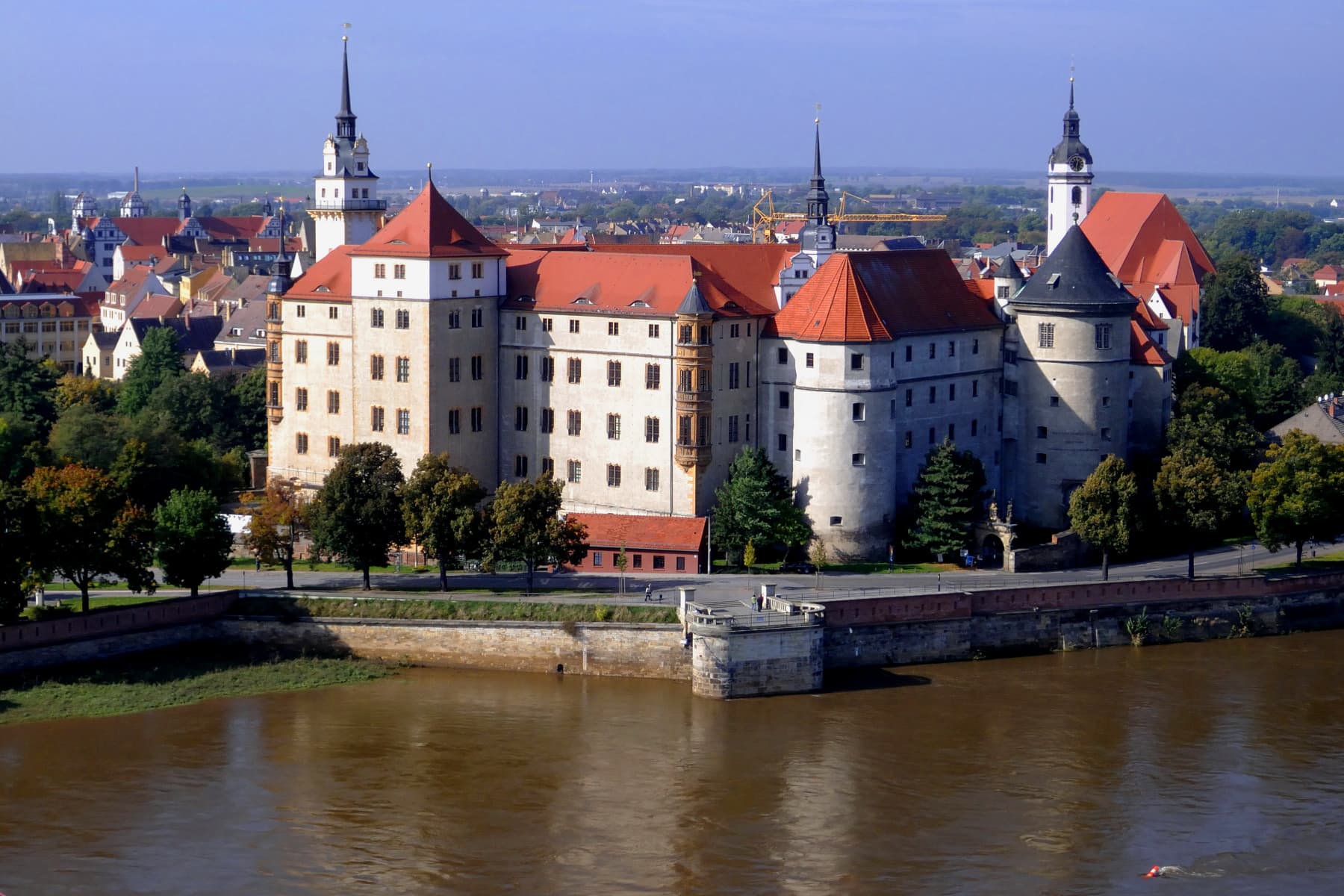
Most moats are filled with water, but Torgau's Hartenfels Castle has an unexpected, furry defense system.
Full story unlocks in the tour
 Zeppelubil / Th. Haft, from Torgau / Elbe, Germany / CC BY-SA 3.0, via Wikimedia Commons
Self-guided audio walking tour of Torgau — GPS route, offline playback, story-driven narration in 32 languages.
“Where Renaissance grandeur meets Reformation's quiet revolution.”
Not the postcards. The stories even locals don't know — whispered in your ear, right where they happened.
Most moats are filled with water, but Torgau's Hartenfels Castle has an unexpected, furry defense system.
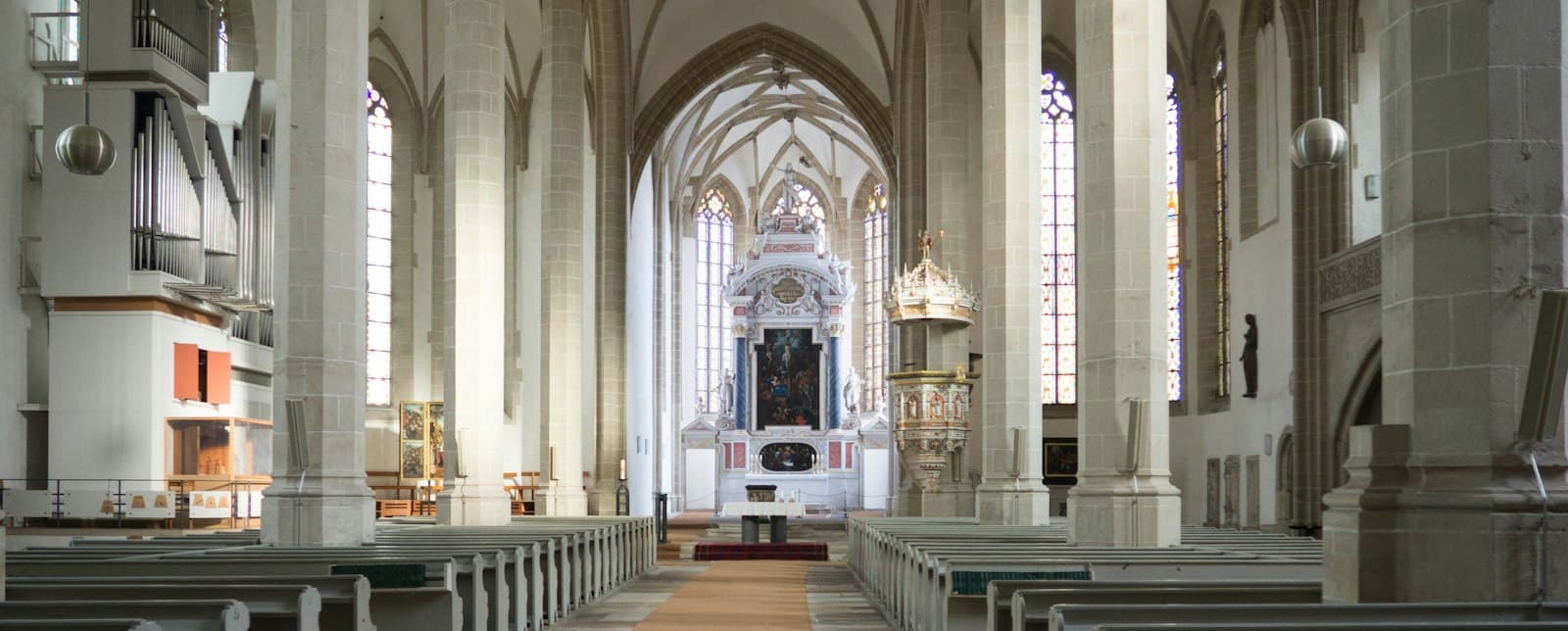
This chapel holds a unique distinction in the history of Protestantism, consecrated by its most famous figure.
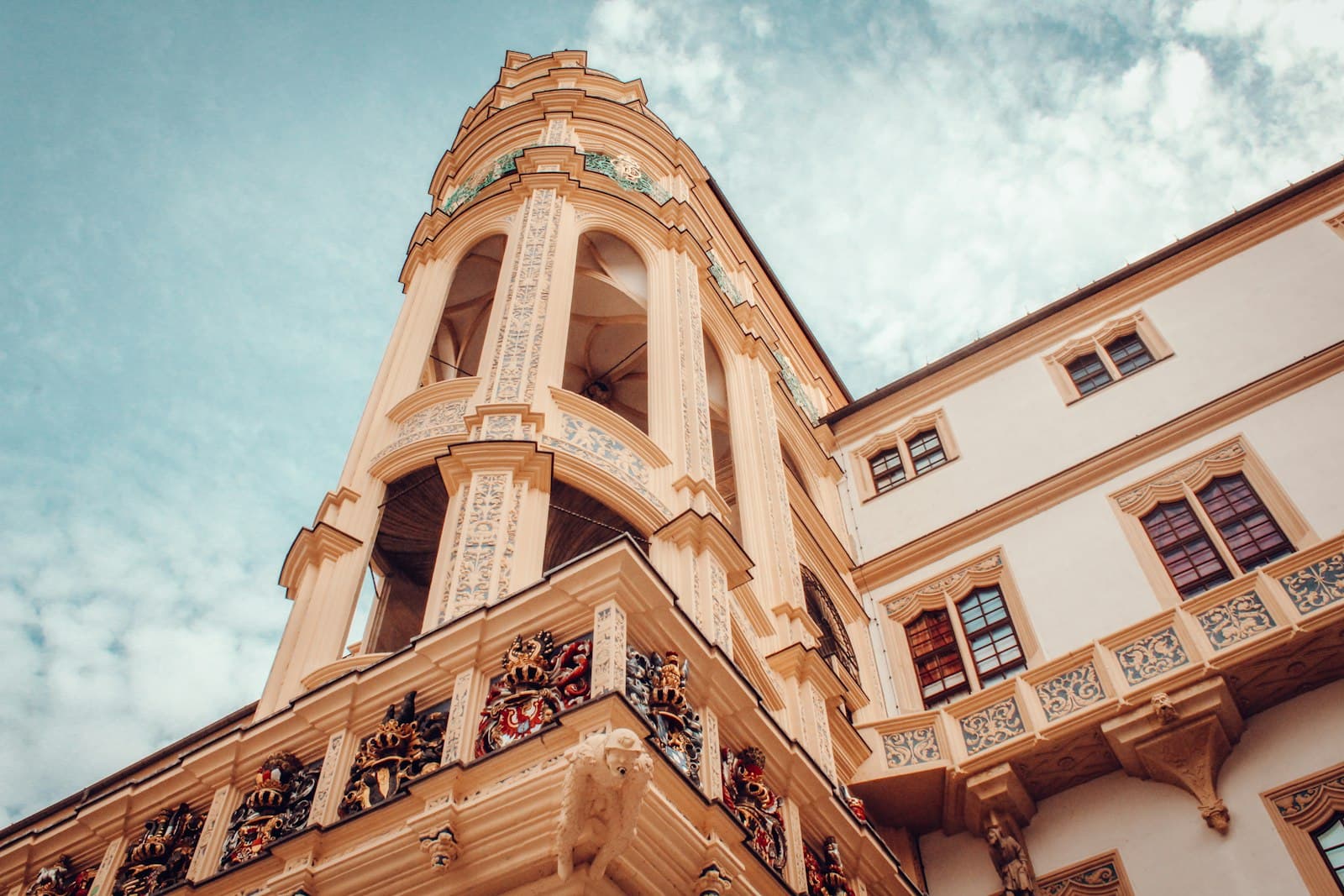
Inside the castle, a seemingly impossible architectural marvel spirals upwards without a central support.
Discover every secret of Torgau
Every address, every reveal in full — in your ear, right where it happened.
You pick your stops. You walk. The voice reveals what the others miss.
Your self-guided audio tour of Torgau is ready — pick your landmarks, choose your language, and start the moment you arrive.
BuyLume has a built-in augmented-reality guide. Hold your phone up and its camera shows the street ahead of you, with a glowing arrow laid over the real view that always points to your next stop — no map to puzzle over, no wrong turns. Like everything in Lume, it works fully offline.
Torgau, a town on the Elbe River in northwestern Saxony, Germany, is a place where centuries of history are etched into its Renaissance architecture and cobbled streets. Torgau has an unhurried demeanor that invites visitors to explore its past at a leisurely pace. With a history spanning over 1,000 years, the town offers a captivating journey through time, from its medieval origins to its pivotal role in the Reformation and its significance in World War II.
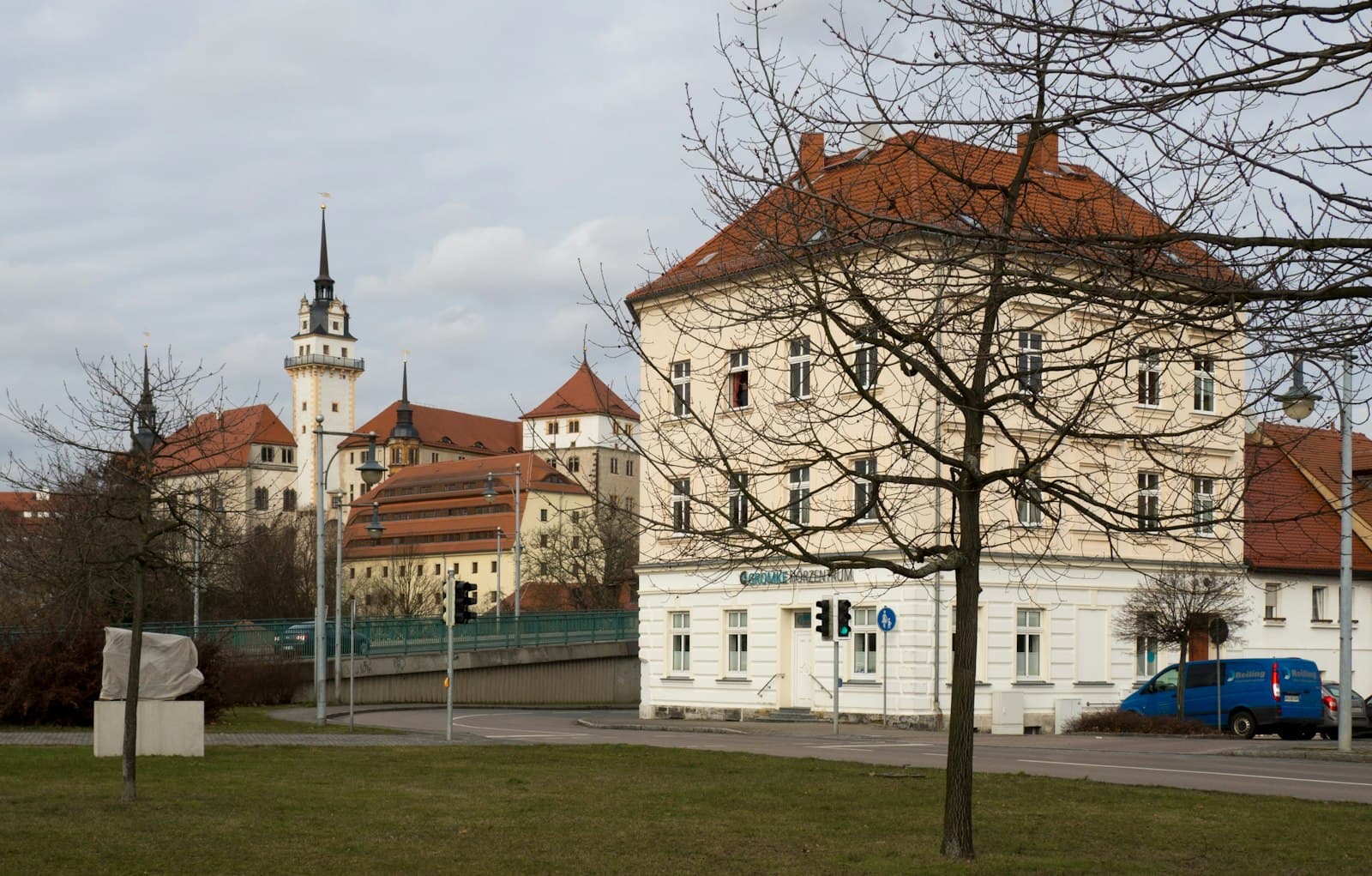
Dominated by the impressive Hartenfels Castle, Torgau served as a political center for the Protestant Reformation, frequently hosting Martin Luther himself. Beyond its Reformation ties, Torgau is internationally recognized as the site where American and Soviet troops famously met on the Elbe in 1945, a symbolic moment marking the nearing end of World War II. Today, Torgau presents a harmonious blend of historical grandeur and scenic beauty, with its well-preserved old town, numerous architectural monuments, and the tranquil Elbe meadows.
Torgau's documented history stretches back to 973 AD. It was chartered between 1255 and 1267, and by 1344, it was already known for its citizens' militia, 'Die Geharnischten' (The Armored Ones). The town gained significant prominence after 1456, becoming a frequent residence of the Electors of Saxony, particularly the Ernestine line of the Wettin dynasty. This period, especially in the first half of the 16th century, marked a splendid era of prosperity for Torgau, characterized by its growing political importance, economic strength, and cultural richness. The construction of Hartenfels Castle, beginning in the late 15th century and continuing into the 16th and 17th centuries, transformed Torgau into one of Saxony's most modern residential palaces and a venue for grand festivities and crucial state assemblies.
Torgau played a central and pivotal role in the Protestant Reformation, earning it the moniker 'wet-nurse of the Reformation' to Wittenberg's 'mother.' Martin Luther visited Torgau over 60 times, finding fertile ground for his teachings and strong support from the electors and wealthy bourgeoisie. Key events unfolded here, including the first baptism in German in Nikolai Church in 1519 and the commencement of Protestant sermons in 1520. In 1524, the first Protestant church hymnal was published in Torgau, a collaboration between Luther and cantor Johann Walter. The Torgau Articles, a foundational draft for the Augsburg Confession, were penned here in 1530 by Luther and his colleagues. A crowning achievement was the consecration of the Hartenfels Castle Chapel by Luther himself on October 5, 1544, making it the first church building in the world explicitly designed and built for Protestant worship.
Beyond the Reformation, Torgau's history is marked by military events. The town was converted into a fortress under Napoleon's initiative in the early 19th century, a strategic importance that is still visible in the townscape today. The Battle of Torgau, a significant engagement of the Seven Years' War, was fought here on November 3, 1760, a costly Prussian victory under Frederick the Great. In the 20th century, Torgau became a place of detention, housing the Reich Court Martial and military prisons during National Socialism. However, Torgau is perhaps most widely known for a moment of hope at the end of World War II: on April 25, 1945, American and Soviet soldiers met on the Elbe River near the town, a historic encounter that symbolized the imminent end of the war and became known as 'Elbe Day.' After the war, Torgau was part of the Soviet-occupied zone and later East Germany, with its fortifications repurposed as Soviet special camps and a closed youth work center.
Torgau's well-preserved historic center is a treasure trove of Renaissance and Late Gothic architecture, counting over 600 architectural monuments. Begin your exploration at the Market Square, dominated by the imposing Renaissance Town Hall, built between 1563 and 1578. Admire its symmetrical facade and the richly decorated oriels, considered among Saxony's most beautiful. Nearby, the Mayor Ringenhain House, dating from 1596, offers a glimpse into the lives of wealthy Torgau citizens with its preserved original interiors and wall paintings.
Hartenfels Castle stands as the largest completely preserved early Renaissance castle in Germany. Do not miss the unique 'Großer Wendelstein,' a free-standing spiral staircase that is an architectural marvel. Within the castle, the Hartenfels Castle Chapel holds immense historical significance as the first Protestant church consecrated by Martin Luther. You can also visit the castle moat, home to brown bears, a tradition that dates back centuries.
St. Marien Church is another essential stop, housing the grave of Katharina von Bora, Martin Luther's wife. The Katharina Luther House, her former residence, now functions as a museum. For a deeper dive into Torgau's history, follow the Torgau Museum Trail, which guides you through seven historic buildings. For a unique local experience, visit Spielwaren Carl Loebner, claiming to be the world's oldest toy store, or the Mohrenapotheke, one of Saxony's oldest pharmacies.
The best time to visit Torgau is during the dry summer months, from May through September, when the weather is generally most pleasant for exploring. This period allows for comfortable strolls through the historic old town and along the Elbe River. For those seeking fewer crowds and potentially better value, the quieter months from December to March offer cooler temperatures and the chance of snow, providing a different, perhaps more serene, experience. Torgau also hosts various events throughout the year, including Elbe Day in April, a Festival of Protestant Church Music in June, and a Christmas Market in December.
Torgau is easily accessible by train, with hourly regional services connecting it to Leipzig in about 40 minutes. From Berlin, you can reach Torgau in approximately two hours by using regional services with a change at Falkenberg (Elster). Once in Torgau, the historic town center is compact and best explored on foot, with many sights within easy walking distance. The Torgau Tourist Information Center, located at Markt 1 inside the Town Hall, is an excellent resource for maps, guided tours, and local tips. They can also assist with accommodation and dining recommendations. While English-language information is available, particularly for tourist materials, a basic understanding of German can enhance your experience in smaller establishments. Torgau is considered a family-friendly holiday destination.
Torgau in Korean, in Chinese or in Hebrew — and 29 more languages, every stop narrated by a native voice. The widest language range of any self-guided audio tour.
Available in: