Abbaye Saint-Philibert
Within the solemn walls of Tournus's ancient abbey, a secret celestial map lay concealed for centuries.
Full story unlocks in the tour
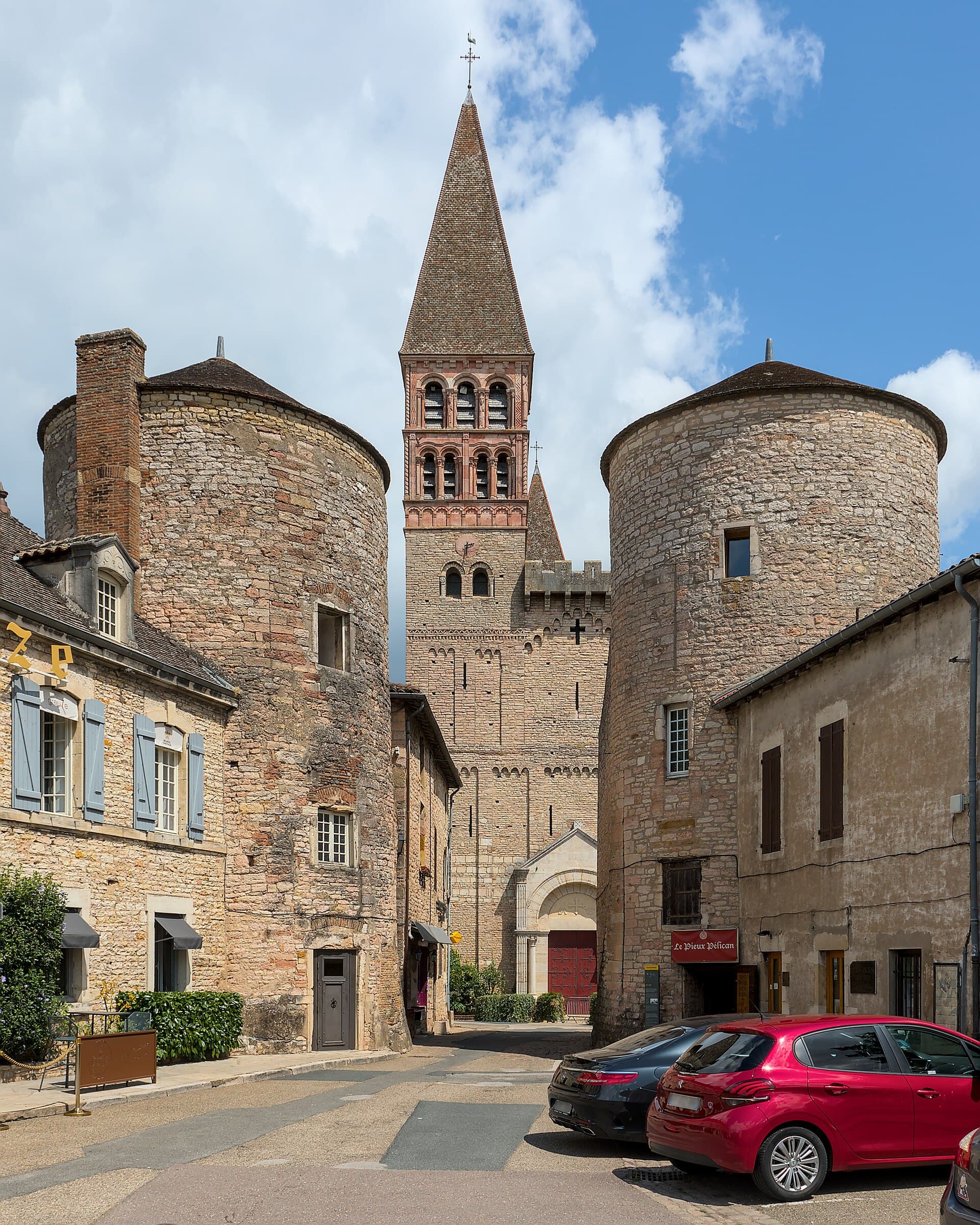 Benjamin Smith / CC BY-SA 4.0, via Wikimedia Commons
Self-guided audio walking tour of Tournus — GPS route, offline playback, story-driven narration in 32 languages.
“Where ancient stones speak and gastronomy thrives.”
Not the postcards. The stories even locals don't know — whispered in your ear, right where they happened.
Within the solemn walls of Tournus's ancient abbey, a secret celestial map lay concealed for centuries.
The beds in Tournus's historic hospital museum are unusually short, a detail that reveals a surprising medieval sleeping custom.
Among the hundreds of ancient jars in the Hôtel-Dieu's apothecary, one particular concoction holds a legendary, albeit morbid, origin story.
Discover every secret of Tournus
Every address, every reveal in full — in your ear, right where it happened.
You pick your stops. You walk. The voice reveals what the others miss.


Your self-guided audio tour of Tournus is ready — pick your landmarks, choose your language, and start the moment you arrive.
BuyLume has a built-in augmented-reality guide. Hold your phone up and its camera shows the street ahead of you, with a glowing arrow laid over the real view that always points to your next stop — no map to puzzle over, no wrong turns. Like everything in Lume, it works fully offline.
Tournus, a town along the Saône River in Burgundy, offers a compelling fusion of Romanesque architecture, enduring narratives, and celebrated gastronomy. Often overlooked by larger Burgundian destinations, Tournus maintains an authentic allure with its winding, stone-paved passages, venerable structures, and a lively culinary landscape. It is a place where history feels tangible, from its Roman origins to its significant role as a medieval religious center.
The town's architectural centerpiece is the Abbaye Saint-Philibert, a masterpiece of Romanesque art that stands as one of France's oldest and most well-preserved monastic centers. Beyond its historical significance, Tournus is a destination for epicureans, with acclaimed restaurants and a strong tradition of fine cuisine. Whether exploring its medieval alleys or savoring local flavors, Tournus invites a deeper, unhurried discovery.
The story of Tournus begins in Roman times, when it served as a fortified settlement along the Saône River. The earliest documented Christian presence dates to the 2nd century with the arrival of St. Valerian, who preached in Tournus before his martyrdom around 179 AD. His tomb became a clandestine pilgrimage site for early Christians.
In the 6th century, a small monastery dedicated to St. Valerian was founded over his tomb. However, Tournus's religious prominence truly began in 875 AD when King Charles the Bald offered the Abbey of St. Valerian to a community of Benedictine monks. These monks had fled Viking raids on their monastery in Noirmoutier, bringing with them the relics of their patron saint, Philibert. This led to the unusual situation of an abbey dedicated to two saints, Valerian and Philibert.
Between the 11th and 13th centuries, the monks constructed the impressive Abbaye Saint-Philibert, which stands today as a significant example of Romanesque architecture. The abbey church, with its fortress-like appearance and two bell towers, is considered one of the largest Romanesque monuments in France. Its interior features an impressively tall nave with unusual barrel vaulting supported by cylindrical columns, an 11th-century crypt dedicated to St. Valerian, and recently rediscovered 12th-century floor mosaics depicting the zodiac.
The abbey was secularized in the 17th century and later became a collegiate church. During the French Revolution, it was briefly secularized as a Temple of Reason before Roman Catholic worship resumed after the Concordat of 1801. Beyond the abbey, Tournus also features the Hôtel-Dieu, a 17th-century public hospital that functioned until 1982 and is now a museum, showcasing its original sick wards, apothecary, and medical instruments.
The undisputed highlight of Tournus is the Abbaye Saint-Philibert. This Romanesque masterpiece, dating primarily from the 11th century, is one of the oldest and best-preserved monastic centers in France. Explore its grand nave with distinctive barrel vaulting, the atmospheric 10th-century crypt, and the recently uncovered 12th-century zodiac mosaics. Guided tours are available, and the abbey also hosts classical music concerts and art exhibitions during summer.
Another essential visit is the Hôtel-Dieu Museum. This remarkably preserved 17th-century hospital offers a glimpse into historical medical practices with its period sick wards, an exquisite plate room, and one of France's oldest and most well-preserved apothecaries, featuring over 300 jars. The same building houses the Musée Greuze, dedicated to the 18th-century painter Jean-Baptiste Greuze, a native of Tournus.
Wander through Tournus's picturesque alleys, lined with ancient buildings, artisan shops, and art galleries. For something unique, the Musée du Vélo (Bicycle Museum) celebrates the history of bicycles, a term coined by the French, and even allows visitors to ride some unusual models.
The best time to visit Tournus for pleasant weather and outdoor activities is from mid-June to mid-September. During these months, average daytime temperatures range from 22°C to 28°C, with July being the warmest month. The skies are generally clearer, and while there can be some rain, it's typically not excessive. May and October also offer good temperatures with less rain, making them suitable for visits if you prefer slightly cooler weather.
Tournus is easily accessible, situated about an hour north of Lyon, and can be reached via the A6 motorway (exit 25 Chalon Nord). For those arriving by train, the abbey is conveniently located near the train station. Many of Tournus's attractions, including the abbey and Hôtel-Dieu, are within walking distance of each other and from where river cruise ships dock along the Saône.
While exploring the abbey, audio guides are available for rent at the Tourist Office, and guided tours can be arranged for groups. The Hôtel-Dieu Museum can only be visited by guided tour, which is highly recommended. Tournus is celebrated for its culinary scene, so be sure to explore its numerous restaurants, including several acclaimed establishments.
Tournus in Korean, in Chinese or in Hebrew — and 29 more languages, every stop narrated by a native voice. The widest language range of any self-guided audio tour.
Available in: