Acantilado de Varkala
Los llamativos acantilados rojos de Varkala son más que una hermosa vista.
La historia completa se desbloquea en el tour
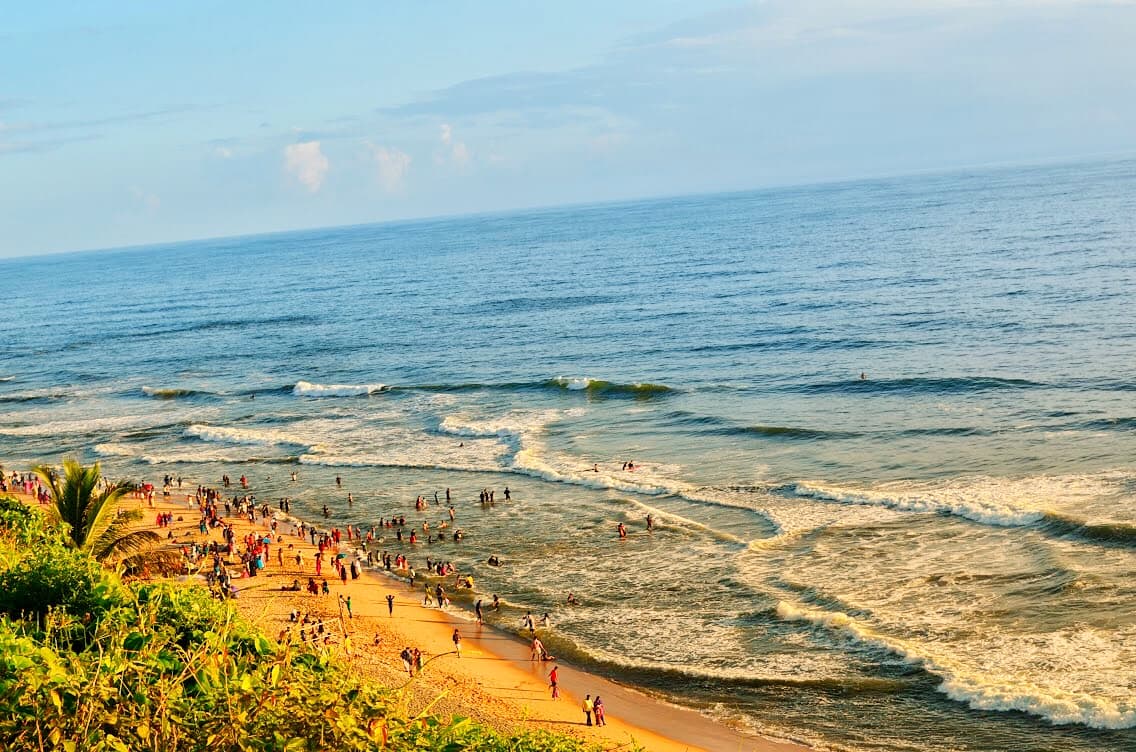 Devender Goyal / CC BY-SA 4.0, via Wikimedia Commons
Tour de audio autoguiado de Varkala — ruta GPS a pie, reproducción offline, narración en 32 idiomas.
“Donde los acantilados milenarios se encuentran con costas sagradas, y el mar Arábigo susurra renovación.”
No las postales. Las historias que ni los locales conocen — al oído, justo donde ocurrieron.
Los llamativos acantilados rojos de Varkala son más que una hermosa vista.
Una antigua campana dentro del Templo Janardanaswamy, de 2.000 años de antigüedad, relata un inesperado incidente marítimo.
La designación 'Papanasam' no es meramente una descripción poética para la playa principal de Varkala.
Descubre todos los secretos de Varkala
Cada dirección, cada revelación al completo — a tu oído, justo donde ocurrió.
Eliges tus paradas. Caminas. La voz te revela lo que los demás ignoran.


Tu tour de audioguía por Varkala te espera — elige tus lugares, tu idioma y empieza al llegar.
ComprarLume incluye una guía de realidad aumentada. Levanta el móvil y su cámara muestra la calle que tienes delante, con una flecha luminosa sobre la imagen real que siempre apunta a tu próxima parada — sin mapas que descifrar, sin giros equivocados. Como todo en Lume, funciona completamente sin conexión.
Varkala, una ciudad costera en Kerala, India, revela un paisaje singular donde imponentes acantilados rojos convergen con el mar Arábigo. Esta característica geológica inconfundible, identificada como la Formación Varkala, se erige como un monumento geológico nacional y fue recientemente incluida en la Lista Tentativa de la UNESCO, marcándola como un lugar de importancia científica y estética. Más allá de su notable esplendor natural, Varkala es un lugar imbuido de costumbre espiritual, frecuentemente referido como 'Dakshin Kashi' o 'Benares del Sur', debido a sus antiguos templos y aguas sagradas.
La ciudad ofrece una fusión de vida playera tranquila, observancias espirituales y un ambiente de espíritu libre a lo largo de su paseo junto al acantilado. Los visitantes pueden observar a los peregrinos realizando ritos ancestrales en la playa de Papanasam, explorar mercados animados o simplemente relajarse y absorber las amplias vistas al océano. El encanto de Varkala reside en su capacidad para acoger tanto a quienes buscan consuelo espiritual como a quienes desean una escapada costera relajada.
El pasado de Varkala se extiende milenios atrás, con referencias en antiguos manuscritos griegos como "El Periplo del Mar Eritreo", donde fue reconocida como Balita, un importante puerto temprano para comerciantes internacionales. La ciudad también fue conocida como Udaya Marthandapuram, conmemorando las contribuciones del rey Udaya Marthanda Varma de Travancore, quien, en 1762, construyó residencias para animar a los brahmanes locales a establecerse allí.
El núcleo espiritual de Varkala está tejido en su propia designación y numerosas leyendas. Un mito ampliamente difundido atribuye el nombre 'Varkala' al sabio Narada. La narrativa sugiere que cuando un grupo de peregrinos buscó la absolución de sus transgresiones, Narada arrojó su valkalam (una prenda hecha de corteza de árbol) a la Tierra. El lugar donde aterrizó se convirtió en Varkala, y Narada instruyó a los peregrinos a ofrecer oraciones en Papanasam, que significa 'redención de los pecados', para purificarse. Otra leyenda habla de un rey Pandya dirigido por el Señor Brahma en un sueño para construir un templo en Varkala para expiar sus fechorías, lo que llevó a la creación del Templo Janardanaswamy, de 2.000 años de antigüedad.
Durante el período colonial británico, Varkala y sus alrededores vieron la construcción de hitos notables. El Fuerte Anjengo, erigido por la Compañía Británica de las Indias Orientales en 1699, desempeñó un papel en el comercio de pimienta y algodón. Cerca, el Faro de Varkala, también conocido como el Faro de Anjengo, fue construido en el siglo XIX (alrededor de 1684) para guiar a los barcos británicos a lo largo de la costa de Malabar. Otro impresionante logro de ingeniería de esta era es el Túnel de Varkala, un canal de 1.000 metros de longitud excavado entre 1867 y 1881 por el Reino de Travancore para facilitar el comercio entre Trivandrum y Kollam. Estas construcciones son recordatorios tangibles de la importancia estratégica de Varkala y sus interacciones con varias potencias históricas.
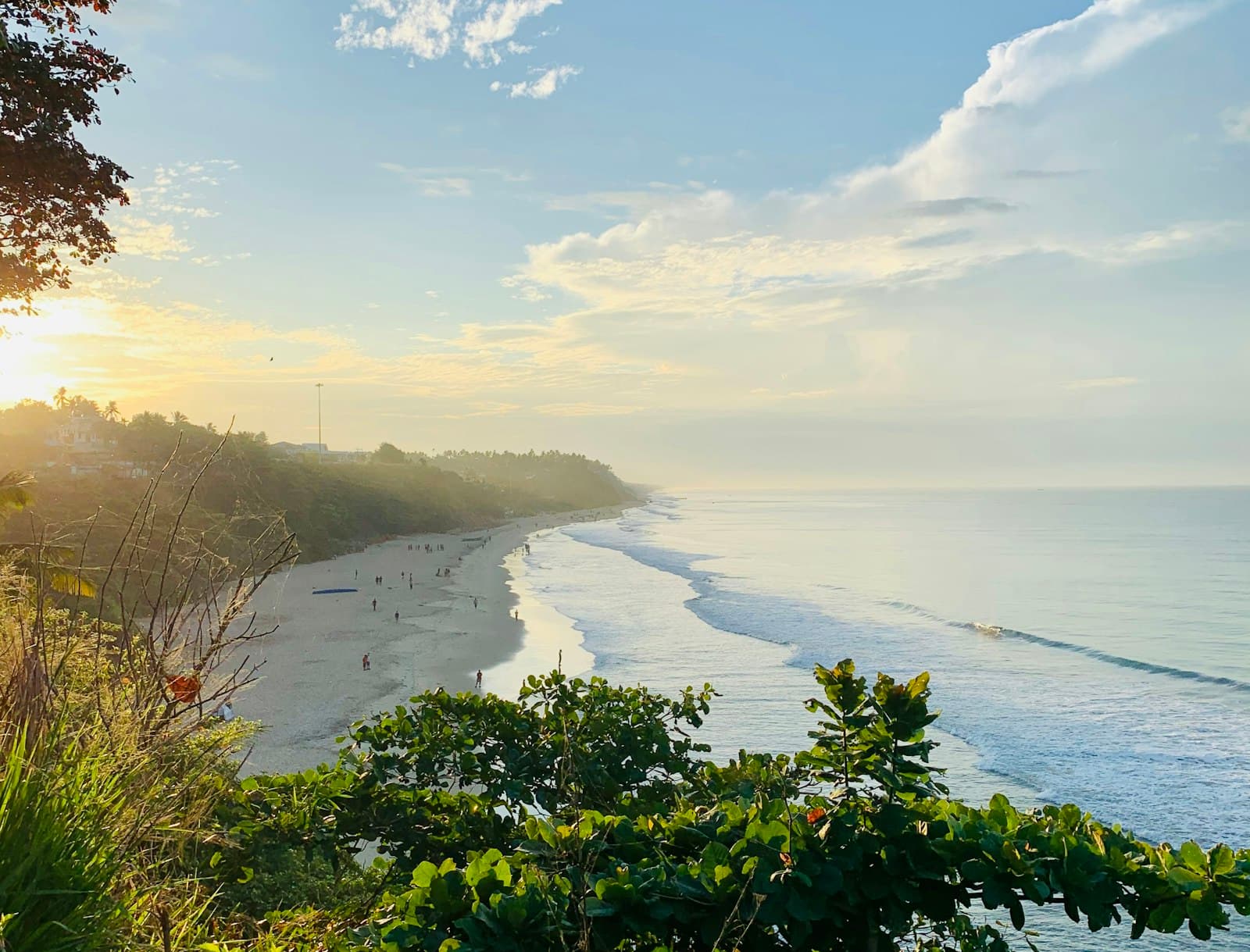
La principal atracción de Varkala son sus distintivos acantilados rojos, una formación geológica singular que se encuentra dramáticamente con el mar Arábigo. Un paseo por el sendero de la cima del acantilado ofrece vistas expansivas, especialmente al atardecer, y está bordeado de tiendas y restaurantes. Debajo de los acantilados se encuentra la playa de Papanasam, un lugar tanto de ocio como de importancia espiritual, donde se cree que un baño en sus aguas limpia las transgresiones. El Templo Janardanaswamy, de 2.000 años de antigüedad, dedicado al Señor Vishnu, es un prominente santuario vaishnava frecuentemente llamado 'Dakshin Kashi' y sirve como un sitio clave de peregrinación. Los visitantes pueden explorar la arquitectura tradicional del templo y observar los rituales.
Más allá de la playa principal, considere una visita al lago Kappil, aproximadamente a 5 kilómetros al norte, para disfrutar de tranquilas experiencias en los remansos. El histórico Fuerte Anjengo, construido en 1699, y el Faro de Varkala ofrecen atisbos del pasado colonial de la región. Para aquellos que buscan bienestar, Varkala es un centro de tratamientos ayurvédicos y retiros de yoga. Aquellos que buscan aventura pueden disfrutar de actividades como el parapente desde los acantilados o montar las olas.
El momento ideal para experimentar Varkala es durante los meses más frescos, de octubre a marzo. En este período, el clima es agradable con cielos despejados y temperaturas que oscilan entre 21°C y 24°C, lo que lo hace perfecto para actividades de playa, exploraciones y deportes acuáticos. La temporada del monzón, de julio a septiembre, trae lluvias sustanciales y temperaturas entre 24°C y 29°C, ofreciendo un atractivo diferente y verde, aunque algunos establecimientos junto al acantilado pueden cerrar. Los meses más cálidos, de abril a junio, pueden ser calurosos y húmedos, con temperaturas que suben hasta 42°C, lo que lo hace menos adecuado para el turismo.
Varkala se considera generalmente un destino seguro para los viajeros, incluidos aquellos que viajan solos, con una población local acogedora. Sin embargo, las precauciones habituales, como estar atento a su entorno, especialmente después del anochecer, y salvaguardar los objetos de valor, son siempre prudentes. Al visitar sitios sagrados como el Templo Janardanaswamy, es necesario vestirse con modestia; los hombres pueden necesitar quitarse la camisa en el complejo principal, y las mujeres deben asegurarse de que los hombros y las rodillas estén cubiertos.
Las opciones de transporte local incluyen auto-rickshaws y scooters de alquiler para explorar lugares cercanos. Para comer, se sugieren cafeterías activas con una alta rotación de clientes para mariscos frescos. Siempre use agua embotellada para beber e higiene bucal para evitar molestias estomacales.
Varkala en coreano, en chino o en hebreo — y 29 idiomas más, cada parada narrada por una voz nativa. La mayor variedad de idiomas de cualquier audioguía autoguiada.
Disponible en: