Great Zittau Lenten Veil
This monumental textile, crafted in 1472, has repeatedly faced destruction, at one point serving as a sauna tarp.
Full story unlocks in the tour
 VitVit / CC BY-SA 4.0, via Wikimedia Commons
Self-guided audio walking tour of Zittau — GPS route, offline playback, story-driven narration in 32 languages.
“At the confluence of three nations, a city's past echoes from every worn stone.”
Not the postcards. The stories even locals don't know — whispered in your ear, right where they happened.
This monumental textile, crafted in 1472, has repeatedly faced destruction, at one point serving as a sauna tarp.
One of Europe's grandest medieval storage facilities was more than a mere warehouse; it embodied Zittau's economic might, founded upon a unique medieval prerogative.
Among Zittau's former defenses, a distinctive clock tells time with more than just hands.
Discover every secret of Zittau
Every address, every reveal in full — in your ear, right where it happened.
You pick your stops. You walk. The voice reveals what the others miss.

Your self-guided audio tour of Zittau is ready — pick your landmarks, choose your language, and start the moment you arrive.
BuyLume has a built-in augmented-reality guide. Hold your phone up and its camera shows the street ahead of you, with a glowing arrow laid over the real view that always points to your next stop — no map to puzzle over, no wrong turns. Like everything in Lume, it works fully offline.
Zittau, a captivating city in Germany's southeastern expanse, occupies a singular position where the borders of Germany, Poland, and the Czech Republic converge. This strategic locale, set within the scenic Mandau River valley at the base of the Zittau Mountains, has sculpted its character and cultural identity. Once known as 'Die Reiche' (The Wealthy) during the Middle Ages, Zittau's affluence arose from its flourishing textile production, brewing, and its position on ancient trade routes.
Despite its modest dimensions, with a population of approximately 25,000, Zittau presents an engaging blend of medieval allure, Classicist architecture, and industrial legacy. The city's meticulously preserved historic core invites unhurried exploration through narrow lanes, revealing architectural marvels that speak to its prosperous past. From its extraordinary Lenten veils to its historic steam train, Zittau offers a distinctive German encounter, often overlooked yet profoundly gratifying.
## From Slavic Settlement to 'The Wealthy' Zittau's origins trace back to a Slavic settlement in the Mandau River valley, first documented in 1238 under the Latin designation Sitavia. The city's official genesis is marked in 1255, when Bohemian King Ottokar II granted it urban rights and delineated its future fortress walls, establishing the foundation for its future prosperity. Early economic triumph was built upon textile creation and brewing, earning Zittau the epithet 'Die Reiche' (The Wealthy) due to its superior cloth and beer revenues.
## The Upper Lusatian League and Shifting Powers A pivotal moment arrived in 1346 when Zittau became a founding member of the influential Upper Lusatian League of Six Cities. This alliance safeguarded commerce and order, augmenting Zittau's economic dominance in the area by overseeing trade routes to Bohemia. Nevertheless, Zittau's trajectory also included adversities, such as several urban conflagrations. The final significant fire in 1757, during the Seven Years' War, obliterated numerous structures, including the town hall and St. John's Church, signaling the conclusion of its commercial zenith.
## Industrialization and Modern Revival The 19th century ushered in industrialization, accelerated by a railway connection to Dresden and Görlitz in 1848. Zittau evolved into a notable hub for the German automotive industry with the establishment of the Phänomen plant (later Robur), recognized for its truck manufacturing through much of the 20th century. In the 1980s, the historic old town faced the prospect of demolition for brown coal mining expansion, but the political transformations of 1990 halted this, leading to extensive restoration that transformed the neglected center into an exemplary model of urban conservation. Today, Zittau continues its evolution, embracing its singular tri-border position and fostering cultural and athletic collaborations with its Polish and Czech neighbors.
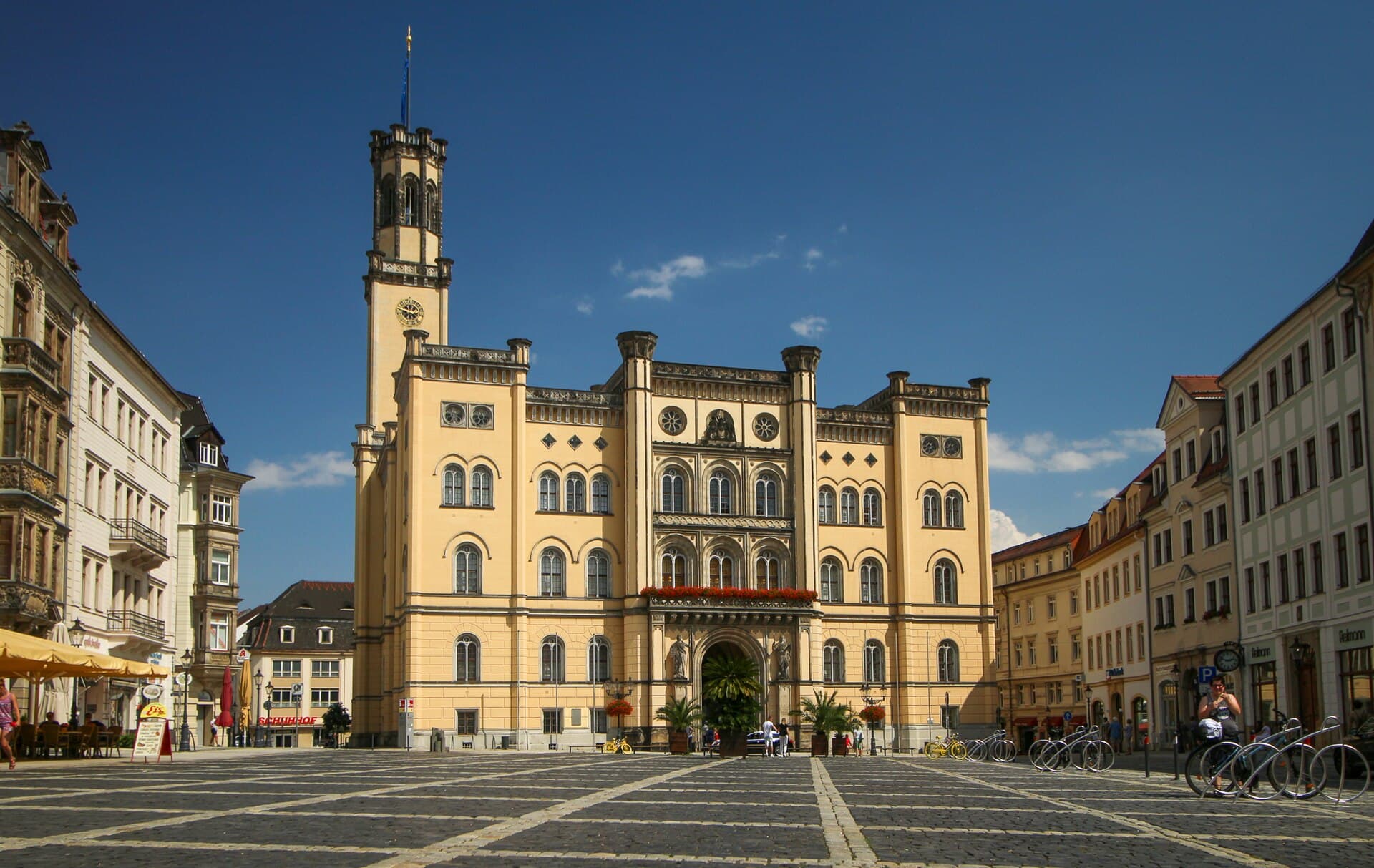
Begin your journey in Zittau's historic Market Square (Marktplatz), bordered by Baroque and Renaissance structures, with the Italian palazzo-style Town Hall at its core. The Mars Fountain, also known as Roland's Fountain, from the 1500s, stands at one end, displaying symbols of Zittau's historical affluence. Ascend the 266 steps of St. John's Church (Johanniskirche) tower for sweeping views of the historic town and the Zittau Mountains.
A visit to Zittau is incomplete without viewing its extraordinary Lenten Veils. The Great Zittau Lenten Veil (Großes Zittauer Fastentuch) from 1472, one of the largest and only remaining of its kind globally, illustrates 90 biblical scenes and is exhibited in the Museum Kirche zum Heiligen Kreuz. The smaller, 1573 Lenten Veil, depicting the Crucifixion, can be found at the Cultural History Museum in the former Franciscan Monastery.
Beyond the city center, consider a ride on the historic narrow-gauge railway (Zittauer Schmalspurbahn) to the mountain spa towns of Oybin and Jonsdorf in the Zittau Mountains. The Pop Art Quarter (Pop-Art-Viertel), a district of East German apartment buildings re-envisioned with colorful art by a Berlin artist, offers a lively contrast to the historic core. Do not overlook the Salt House (Salzhaus), one of Europe's grandest medieval storage facilities, now a cultural center.
The most pleasant time to experience Zittau for warm-weather pursuits is from late June to late August, when average daily temperatures range from 19°C to 24°C (66°F to 75°F). July is typically the warmest month, with an average high of 23-24°C (74-75°F). While summer offers agreeable temperatures for exploration and outdoor excursions, anticipate occasional rain, as July is also the wettest month. Spring and early autumn provide a refreshing experience with fewer crowds and mild weather, with May seeing temperatures around 17°C (63°F) and September around 14°C (57°F).
Zittau benefits from a well-integrated public transportation system, primarily buses and trains, which serve the city and extend to nearby towns. Zittau railway station provides connections to Dresden, Görlitz, and even Liberec in the Czech Republic. The historic narrow-gauge railway also offers picturesque transport to the Zittau Mountains.
For those arriving by air, Dresden International Airport (DRS) is the closest major airport, approximately 77 km distant. Accommodation in Zittau is generally more economical than in larger German cities, but reserving in advance is advisable, particularly during summer and around Christmas. The city offers a variety of dining choices, including regional specialties from Upper Lusatia, Bohemia, and Silesia. Vegan options are also available at several establishments.
Zittau in Korean, in Chinese or in Hebrew — and 29 more languages, every stop narrated by a native voice. The widest language range of any self-guided audio tour.
Available in: