Dom St. Marien
The great Cathedral of St. Mary in Zwickau carries a surprising designation for a church of its considerable presence.
Full story unlocks in the tour
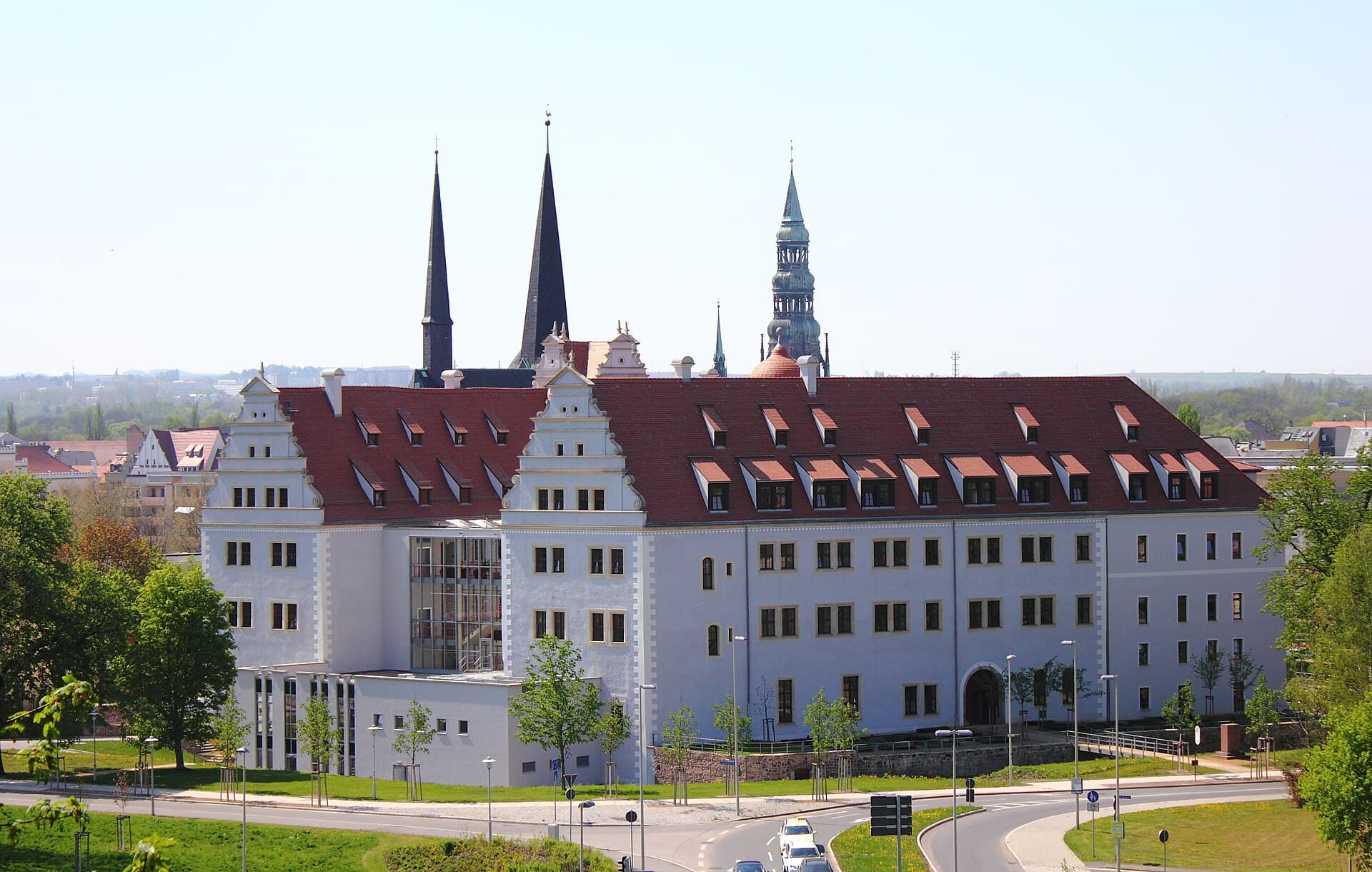 TillF / CC BY-SA 3.0, via Wikimedia Commons
Self-guided audio walking tour of Zwickau — GPS route, offline playback, story-driven narration in 32 languages.
“Where the hum of engines meets the echo of sonatas, all within a city framed by ancient stones.”
Not the postcards. The stories even locals don't know — whispered in your ear, right where they happened.
The great Cathedral of St. Mary in Zwickau carries a surprising designation for a church of its considerable presence.
Within the very home where the celebrated composer Robert Schumann first drew breath, a particular piano tells a story of youthful brilliance.
The distinctive Trabant, an icon of East German engineering, shares an unexpected material connection with an earlier Zwickau-produced automobile.
Discover every secret of Zwickau
Every address, every reveal in full — in your ear, right where it happened.
You pick your stops. You walk. The voice reveals what the others miss.


Your self-guided audio tour of Zwickau is ready — pick your landmarks, choose your language, and start the moment you arrive.
BuyLume has a built-in augmented-reality guide. Hold your phone up and its camera shows the street ahead of you, with a glowing arrow laid over the real view that always points to your next stop — no map to puzzle over, no wrong turns. Like everything in Lume, it works fully offline.
Zwickau, a city in Saxony, Germany, unfolds a compelling narrative, interweaving medieval history, a profound musical legacy, and pioneering automotive innovation. Situated along the Zwickauer Mulde River, at the threshold of the western Ore Mountains, the city preserves a historical core that speaks of centuries of prosperity. Its origins trace back to a Slavic settlement, gradually evolving into a German imperial city by the 12th century.
Beyond its evocative old town, Zwickau occupies a significant position in both the annals of classical music and industrial development. It is the birthplace of the influential Romantic composer Robert Schumann, whose childhood dwelling now serves as a dedicated museum. The city is also recognized as the genesis of the German automotive industry, where August Horch founded his company in 1904, a direct precursor to Audi, and later became the manufacturing site for the distinctive East German Trabant.
Today, Zwickau, with a populace of approximately 90,000, maintains a welcoming, intimate atmosphere despite its industrial stature. It functions as a portal to the Ore Mountains and offers visitors a distinctive perspective on German history, from its medieval foundations and Reformation ties to its pivotal role in the automotive world.
## From Slavic Settlement to Silver Boom Zwickau's story commences with Slavic tribes establishing communities in the region as early as the 7th century AD, with its name likely a Germanization of the Sorbian toponym Šwikawa. German settlers arrived in the 10th century, and a trading post received its first mention in 1118. The settlement was granted its town charter in 1212 and operated as a free imperial city from 1290 to 1323 before being incorporated into the Margraviate of Meissen.
Regional mining operations began in 1316, but Zwickau truly flourished after the discovery of silver in nearby Schneeberg in 1470. This influx of silver transformed Zwickau into a vital economic and cultural hub in Saxony during the 15th and 16th centuries, funding remarkable Gothic architecture like St. Mary's Church and the Gewandhaus.
## Reformation and Industrial Revolution Zwickau played a role in the Reformation, with Thomas Müntzer delivering sermons in the city in 1520–21, and it became one of the first European cities to embrace the Lutheran Reformation after Wittenberg. The city endured hardships, including damage during the Thirty Years' War.
The 19th century introduced a new economic engine: industrial coal mining, which commenced in 1838–39 and supplanted earlier silver extraction. This industrial groundwork prepared Zwickau for its later prominence in the automotive industry.
## The Genesis of Automotive Innovation In 1904, August Horch established A. Horch & Cie. Motorenwerke AG in Zwickau, marking the origin point of the German automotive industry. Following a disagreement, Horch founded Audi in 1909, with both brands becoming fundamental roots of the subsequent Auto Union, symbolized by four rings. After World War II, the Audi factory relocated to West Germany, but Zwickau continued its legacy as a car-producing city.
From 1957 until 1991, Zwickau's Sachsenring assembly lines crafted the distinctive East German Trabant. After German reunification, Volkswagen acquired the former Trabant plant, ensuring Zwickau's automotive heritage continued with modern production.
Zwickau's historical core presents several compelling sights. The Dom St. Marien (Cathedral of St. Mary) stands as a prominent late Gothic hall church, initially constructed around 1180 as a Romanesque basilica and later rebuilt between 1453 and 1565. Its 87-meter spire, crowned with an elegant baroque design in the 1670s, commands the city's horizon. Nearby, the Priesterhäuser (Priests' Houses) rank among Germany's oldest preserved urban residential structures, dating back to the 13th century. Four of these historic dwellings now house the Museum of Urban and Cultural History.
The Hauptmarkt (Main Market Square) serves as a central gathering place, featuring the Renaissance-era Gewandhaus (cloth merchants' hall) from 1522–36, now a theater. On the Hauptmarkt, one also finds the Robert Schumann Monument and his birthplace, now the Robert Schumann House. This museum and research center holds the world's most extensive collection of Schumann's original manuscripts and personal effects.
For those with an interest in automobiles, the August Horch Museum offers a compelling experience. Situated in the former Audi factory, it chronicles over 120 years of Zwickau's automotive history, from Horch and Audi vehicles to the legendary Trabant. The museum displays a vast array of cars, including vintage models, racing vehicles, and prototypes.
Other notable places include Osterstein Castle, reconstructed after a fire in 1403 and later utilized as a penal institution (with notable inmates like August Bebel and Karl May), now serving as a residential facility for senior citizens. One can also enjoy a stroll along the Zwickauer Mulde River, which features the Paradise Bridge, a riveted steel construction from 1900.
The ideal period to experience Zwickau is during the warmer months, spanning from May through September. During this time, daytime temperatures are comfortable, generally ranging from 18°C to 24°C (64°F to 75°F). July is the warmest month, with average highs around 24°C (75°F), though it also experiences the most rainfall. Late June to late August is excellent for outdoor pursuits. While there is a possibility of rain, these months offer the most sunshine, reaching a peak of 6.5 hours per day in July. To avoid larger gatherings, consider a visit in early summer or October.
Zwickau is located in the state of Saxony, in eastern Germany, south of Leipzig and west of Dresden. The city benefits from good regional train connections from Leipzig, Chemnitz, and Dresden, with convenient transfers from Germany's long-distance ICE/IC network. Leipzig Airport (LEJ) is the most practical for air travel, offering a direct train connection to Zwickau.
Within Zwickau, public transportation options are available, including trams and buses that link the main train station with the city center and attractions like the August Horch Museum. The city provides various lodging choices, from hotels in historic structures to those situated amidst green spaces. The Zwickau Region Welcome Center assists newcomers, offering information on accommodation, employment, German language courses, and local activities.
While German is the primary language, staff at tourist information centers and major museums may communicate in English. Knowing a few basic German phrases can always be beneficial.
Zwickau in Korean, in Chinese or in Hebrew — and 29 more languages, every stop narrated by a native voice. The widest language range of any self-guided audio tour.
Available in: