Rivière Azmak
Même lors des journées d'été les plus chaudes, la rivière Azmak offre une fraîcheur inattendue.
L'histoire complète se débloque dans le tour
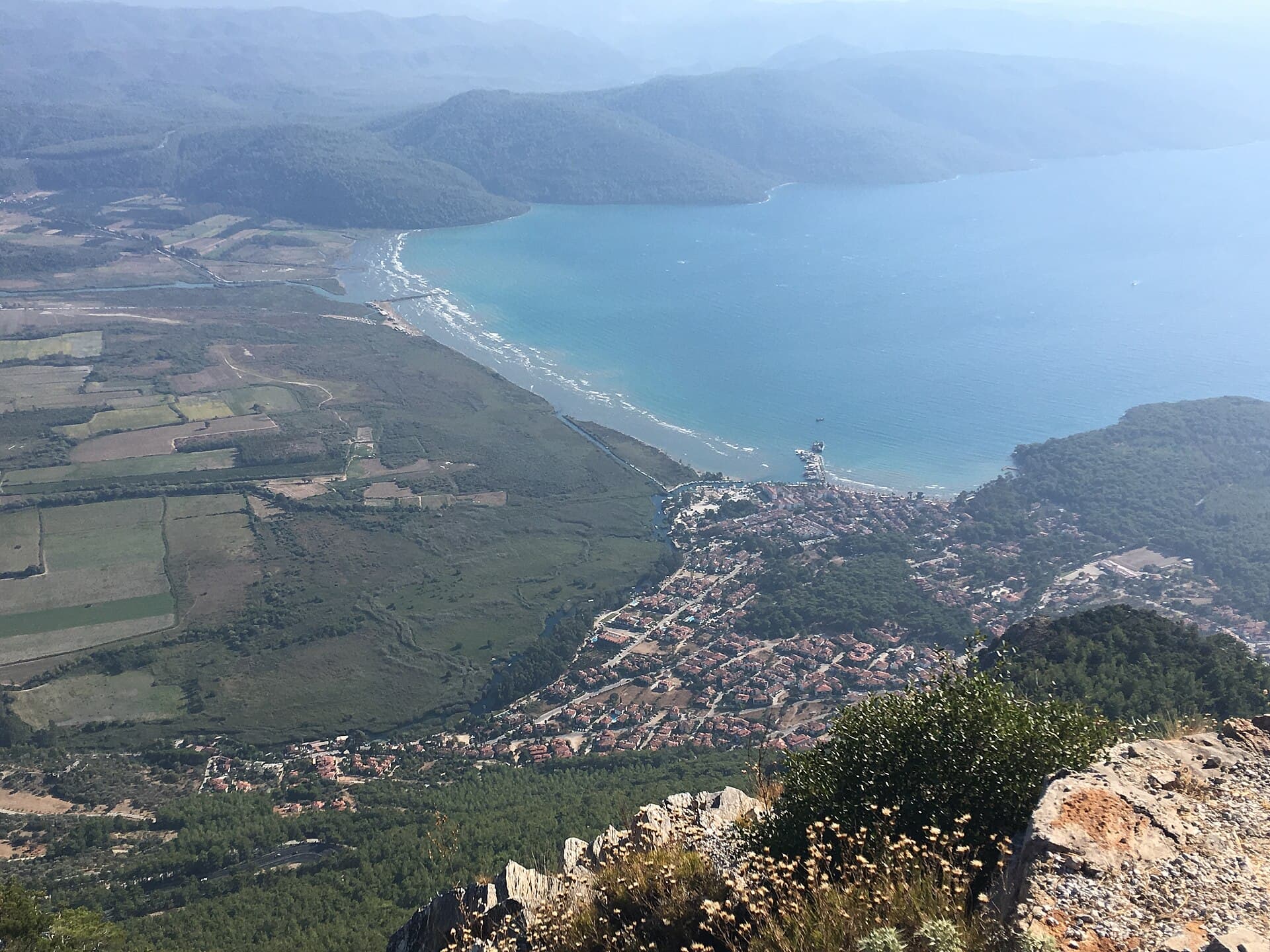 Iemizrak / CC BY-SA 4.0, via Wikimedia Commons
Visite audio autoguidée de Akyaka — parcours GPS à pied, lecture hors ligne, narration en 32 langues.
“Là où la glaciale rivière Azmak rencontre la mer Égée, une ville lente prospère.”
Pas les cartes postales. Les histoires que même les habitants ignorent — soufflées à l'oreille, là où elles se sont passées.
Même lors des journées d'été les plus chaudes, la rivière Azmak offre une fraîcheur inattendue.
Les maisons en bois distinctives d'Akyaka ne sont pas l'œuvre d'une ancienne tradition, mais d'une vision moderne.
Les sables légendaires de la plage de Cléopâtre auraient une origine royale et très lointaine.
Découvrez tous les secrets de Akyaka
Chaque adresse, chaque révélation en entier — dans ton oreille, là où elle s'est passée.
Tu choisis tes lieux. Tu marches. La voix te révèle ce que les autres ignorent.


Votre visite audioguidée de Akyaka vous attend — choisissez vos lieux, votre langue, et lancez-vous dès votre arrivée.
AcheterLume intègre un guide en réalité augmentée. Levez votre téléphone : sa caméra montre la rue devant vous, avec une flèche lumineuse posée sur l'image réelle qui pointe toujours vers votre prochain arrêt — aucune carte à déchiffrer, aucun mauvais virage. Comme tout dans Lume, ça fonctionne entièrement hors-ligne.
Akyaka, une ville tranquille à l'extrémité est du golfe de Gökova en Turquie, offre un mélange captivant de splendeur naturelle et d'un rythme de vie délibérément décontracté. Ici, les montagnes couvertes de pins rencontrent les eaux turquoise de la mer Égée, créant un paysage à la fois spectaculaire et serein. Les bougainvilliers débordant des balcons en bois complètent parfaitement les eaux cristallines de la rivière Azmak.
Désignée 'Cittaslow' ou 'Ville Lente' depuis 2011, Akyaka a activement préservé son caractère unique, résistant aux développements de grande hauteur et adoptant un style architectural qui s'harmonise avec son environnement. Cet engagement envers un mode de vie plus lent signifie que vous trouverez un accent sur les traditions locales, les produits frais et une atmosphère détendue qui vous invite à vous attarder. Que vous soyez attiré par l'étreinte rafraîchissante de l'Azmak, l'attrait de l'histoire ancienne ou le frisson du kitesurf, Akyaka offre une expérience turque distinctive loin des foules animées.
La ville fait partie du district d'Ula dans la province de Muğla et est de plus en plus reconnue internationalement, ayant même reçu le titre de « Meilleurs Villages Touristiques 2025 » par l'ONU Tourisme. C'est une destination qui séduit ceux qui recherchent une retraite active dans la nature, un voyage culinaire à travers les saveurs locales ou simplement une évasion paisible.
L'histoire d'Akyaka remonte à des millénaires, bien avant que son charme moderne ne s'installe. La ville est située sur l'ancien site d'Idyma, une importante cité carienne fondée il y a environ 2 600 ans. Des preuves de ce passé antique peuvent encore être trouvées dans la région, avec des ruines de l'ancienne acropole visibles sur les collines au-dessus de la ville moderne et de nombreuses tombes rupestres creusées dans les falaises près du village de Gökova. L'importance d'Idyma est soulignée par sa mention dans les listes fiscales de la Ligue de Délos au Ve siècle av. J.-C., indiquant son statut politique et économique dans le monde antique.
Après des périodes d'influence perse puis athénienne, la région, y compris Idyma, est devenue une possession continentale de Rhodes de 167 av. J.-C. au moins jusqu'au IIe siècle apr. J.-C. La zone porte également l'empreinte d'empires ultérieurs ; un château byzantin se dresse sur les pentes de Sakar, et un tunnel souterrain mènerait à la rivière Azmak. Au XIIIe siècle, des raids turcs ont placé la région sous le Beylik de Menteshe, avant qu'elle ne soit incorporée à l'Empire ottoman en 1420.
Pendant des siècles, Akyaka est restée un village de pêcheurs isolé. Sa transformation a commencé dans les années 1970, lorsque le tourisme à petite échelle a commencé à se développer. Les visiteurs, attirés par la nature intacte et les brises estivales rafraîchissantes, ont commencé à construire des maisons d'été et des installations touristiques. Une figure centrale de l'identité moderne d'Akyaka est Nail Çakırhan, un architecte autodidacte qui, dans les années 1970, a dirigé la restauration d'anciennes demeures de style ottoman et en a conçu de nouvelles qui s'harmonisaient avec l'environnement. Son travail, qui lui a valu le prestigieux prix Aga Khan d'architecture en 1983, a établi un style architectural distinctif qui est maintenant une marque de fabrique d'Akyaka, avec des codes de construction stricts assurant sa préservation.
En 1988, Akyaka a été désignée première « Zone Protégée Naturelle » de Turquie. Cet engagement envers la préservation de l'environnement, associé à son architecture unique, a conduit à son inclusion dans le réseau international Cittaslow (Ville Lente) en 2011. Ce statut a renforcé la dédicace d'Akyaka à un mode de vie durable et lent, en faisant une destination célébrée pour ceux qui recherchent la tranquillité et des expériences authentiques.
Akyaka offre une délicieuse gamme de sites et d'activités qui embrassent sa beauté naturelle et son caractère unique. La rivière Azmak est indéniablement la caractéristique centrale de la ville. Ses eaux glaciales et cristallines, alimentées par des sources de la colline de Sakar, créent un aquarium naturel où vous pouvez observer des plantes aquatiques, des poissons, des canards et même des loutres de rivière insaisissables. Faire une excursion en bateau tranquille sur les petits bateaux en bois est une expérience enrichissante, offrant une perspective sereine de cette voie navigable enchanteresse.
La plage d'Akyaka, une plage publique Pavillon Bleu où la rivière Azmak rencontre la mer, est un endroit populaire pour bronzer et nager dans ses eaux calmes et peu profondes. Pour ceux qui recherchent des criques plus isolées, des excursions en bateau quotidiennes partent du port pour explorer les magnifiques baies du golfe de Gökova, y compris des arrêts à des endroits comme l'île de Sedir (île de Cléopâtre), connue pour son sable unique et ses ruines antiques.
Au-delà de l'eau, promenez-vous dans les rues d'Akyaka pour admirer son architecture distinctive. Les maisons traditionnelles d'Ula, avec leurs toits de tuiles rouges, leurs balcons en bois et leurs murs blanchis à la chaux, témoignent de la vision de Nail Çakırhan d'une harmonie avec la nature. Pour un autre type d'aventure, Akyaka est un spot de kitesurf réputé, avec des vents thermiques stables qui le rendent idéal pour les débutants et les riders expérimentés. Vous pouvez également explorer le passé antique en visitant les ruines d'Idyma, y compris son acropole et ses tombes rupestres, offrant un aperçu du patrimoine carien de la région.
Akyaka bénéficie d'un climat méditerranéen avec des hivers doux et des étés chauds et secs. La meilleure période pour les activités par temps chaud est de fin juin à début septembre, lorsque les températures sont les plus élevées (moyenne d'environ 30°C en juillet) et le ciel est le plus dégagé. La température de la mer en été dépasse généralement les 20°C, ce qui est idéal pour la baignade. Cependant, c'est aussi la haute saison, attendez-vous donc à plus de monde.
Pour une ambiance plus détendue avec un temps agréable et moins de monde, envisagez de visiter en mai-juin ou septembre-octobre. Pendant ces mois, la mer est encore chaude et les prix des hébergements peuvent être plus bas. Le kitesurf est excellent de mai à novembre grâce aux vents thermiques constants. Les hivers (décembre à mars) sont plus frais, avec des températures moyennes autour de 10°C, et peuvent être pluvieux ou même neigeux, rendant certaines activités de plein air moins attrayantes.
Akyaka est facilement accessible, l'aéroport le plus proche étant l'aéroport de Dalaman (DLM), à environ 65 km. L'aéroport de Milas-Bodrum (BJV) est une autre option, à environ 100 km. De Dalaman, vous pouvez prendre un bus en direction de Muğla ou Marmaris et descendre à l'arrêt Akyaka (Dörtyol), puis prendre un taxi ou un dolmuş local jusqu'au centre-ville. Des taxis sont facilement disponibles à l'aéroport. Si vous voyagez depuis Marmaris, les dolmuş (mini-bus) locaux sont l'option la plus économique.
Une fois à Akyaka, se déplacer est simple. La ville est suffisamment compacte pour se promener à pied, surtout jusqu'à la plage et les restaurants au bord de la rivière. Des dolmuş circulent dans le village et vers les environs comme Muğla et Marmaris. Des taxis sont également disponibles, avec une station principale près du petit rond-point en haut du village. L'hébergement va des hôtels de charme et appartements aux maisons d'hôtes, avec des options disponibles pour différents budgets. De nombreux hôtels proposent des équipements comme des piscines et des navettes aéroport.
Akyaka en coréen, en chinois ou en hébreu — et dans 29 autres langues, chaque étape narrée par une voix native. La plus large gamme de langues de tous les audioguides autoguidés.
Disponible en :