Palazzo Vecchio, Florence
Leonardo da Vinci's vanished masterpiece, 'The Battle of Anghiari,' was once intended for a wall in Florence's Palazzo Vecchio. Yet, a bold artistic venture led to its disappearance.
Full story unlocks in the tour
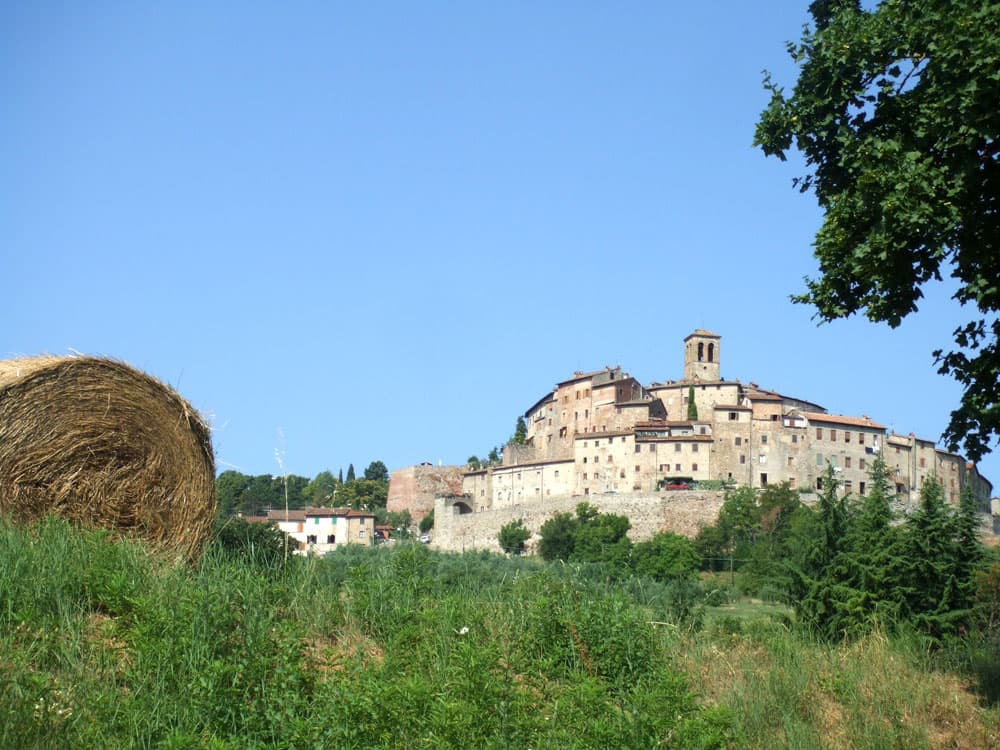 This illustration was made by louis-garden. Please credit this : louis-garden An email to Louis-garden or a message here would be appreciated too. More pictures (not free) at My Photos Site / cc by-sa 3.0, via Wikimedia Commons
Self-guided audio walking tour of Anghiari — GPS route, offline playback, story-driven narration in 32 languages.
“Where ancient stones recount sagas of conflict, vanished artistry, and enduring grace.”
Not the postcards. The stories even locals don't know — whispered in your ear, right where they happened.
Leonardo da Vinci's vanished masterpiece, 'The Battle of Anghiari,' was once intended for a wall in Florence's Palazzo Vecchio. Yet, a bold artistic venture led to its disappearance.
The Palazzo del Marzocco, which houses Anghiari's Battle Museum, displays a peculiar stone lion on its facade. This is more than mere decoration; it is a centuries-old political declaration.
Anghiari's impressive 13th-century walls feature three distinct gates, each with its own narrative, including one that once had a drawbridge.
Discover every secret of Anghiari
Every address, every reveal in full — in your ear, right where it happened.
You pick your stops. You walk. The voice reveals what the others miss.

Your self-guided audio tour of Anghiari is ready — pick your landmarks, choose your language, and start the moment you arrive.
BuyLume has a built-in augmented-reality guide. Hold your phone up and its camera shows the street ahead of you, with a glowing arrow laid over the real view that always points to your next stop — no map to puzzle over, no wrong turns. Like everything in Lume, it works fully offline.
Anghiari, an engaging hilltop town in eastern Tuscany, stands as a testament to medieval allure and a crucial past. Enclosed within formidable 13th-century walls, this "most beautiful village in Italy" offers a journey back in time, with its narrow, winding lanes and ancient stone houses adorned with bright flowers.
Positioned with foresight in the Tuscan Valtiberina valley, Anghiari played a significant role in the Middle Ages, most notably as the location of the storied Battle of Anghiari in 1440. Beyond its historical weight, the town provides a peaceful escape with expansive views of the surrounding landscapes, including the Tiber Valley.
## From Roman Settlement to Medieval Stronghold Anghiari's origins extend to a Roman settlement, evolving into a strategic fortress during 8th-century conflicts between the Langobards and Byzantines. The town is first mentioned in documents from 1048, when it was a castle under the lords of Galdino. Early in the 12th century, it was granted to the Camaldolese monks, who established an abbey around which a small town began to grow.
By the latter half of the 12th century, Anghiari fell under the influence of Arezzo, leading to the construction of a second layer of city walls between 1181 and 1234. Under the Tarlati family's governance, the Mercatale (Marketplace) area expanded, and the road connecting Anghiari to Sansepolcro, known as Ruga San Martino, was built.
## The Battle and the Lost Masterpiece Anghiari's most celebrated historical event is undoubtedly the Battle of Anghiari, fought on June 29, 1440. In this pivotal conflict, Florentine troops, supported by the Pope and Venetian Republic knights, decisively defeated the Milanese army in the plains just below the town. Machiavelli famously observed that the 24-hour skirmish resulted in only one fatality—a soldier falling off his horse.
To commemorate this Florentine triumph, Leonardo da Vinci was commissioned in 1503 to paint the battle on a wall in the Salone dei Cinquecento in Florence's Palazzo Vecchio. However, Leonardo's experimental fresco technique failed, and the artwork was lost, becoming one of art history's greatest unsolved mysteries. Despite its disappearance, copies, such as one by Peter Paul Rubens, offer a glimpse into what Leonardo's grand vision might have been.
## Enduring Legacy Anghiari's strategic importance persisted through the centuries, reflected in its well-preserved medieval architecture. The town's walls have been modified over time and are now accessible via the Via di Ronda. Today, Anghiari is recognized as one of "The most beautiful villages in Italy" and holds the Orange Flag award from the Italian Touring Club, a testament to its tourist and environmental quality.
Begin your exploration of Anghiari by simply wandering through its historic center, absorbing the atmosphere of its narrow, winding lanes and medieval stone houses. The imposing 13th-century walls, with their three gates—Porta San Martino, Porta Sant'Angelo, and Porta Fiorentina—offer a tangible connection to the town's past.
Visit the Museo della Battaglia e di Anghiari in the 16th-century Palazzo del Marzocco to delve into the history of the celebrated battle and Leonardo da Vinci's lost painting. The museum houses collections from prehistory to the 18th century, including Roman artifacts and firearms. Nearby, Palazzo Taglieschi, a Renaissance building, houses the State Museum of Arts and Folk Traditions of the Upper Tiber Valley, featuring works like a wooden Madonna by Jacopo della Quercia and Della Robbian terracottas.
Do not overlook the Palazzo Pretorio, the current Town Hall, adorned with coats of arms and home to a 15th-century fresco. The Campano, a striking 17th-century clock tower, stands prominently in the upper part of town. Explore Anghiari's ancient churches, such as the 7th-century Church of Santo Stefano, with its Byzantine influences, and the Badia of San Bartolomeo, originally founded by Camaldolese monks. For expansive views of the Tiber Valley, stroll along the Via di Ronda or visit Campo alla Fiera.
Anghiari is most enjoyable from May through October, when temperatures are comfortable, ranging from 18°C to 29°C (64°F to 84°F). July is the sunniest month, offering an average of 9.5 hours of sunshine daily, while November is the wettest. Summers are generally warm and clear, with July being the warmest month, while winters are cold and partly cloudy.
Consider visiting in spring for the Handicraft Market of the Tiber Valley, or in November for the "Hundred Flavours of the Apennines" food festival. For a truly enchanting experience, plan your visit for select December evenings when Anghiari transforms during "Anghiari si Accende," with thousands of candles illuminating its streets.
Anghiari is situated in the province of Arezzo, approximately 30 kilometers (18.6 miles) from Arezzo and an hour and a half southeast of Florence by car. While public transport is available, renting a car is highly recommended for easier access and exploring the surrounding Valtiberina region. If traveling by train, take Trenitalia to Arezzo, then a bus (line SI381) from the Aretine Terminal station to Anghiari.
Once in Anghiari, comfortable shoes are advisable for navigating the winding lanes and hilly terrain. A free lift is available from the parking area below the walls to reach the historic center. Anghiari is part of the 'Cittaslow' movement, emphasizing a slower pace of life, and offers a steady flow of visitors without being overly crowded, ensuring a more authentic local experience.
Anghiari in Korean, in Chinese or in Hebrew — and 29 more languages, every stop narrated by a native voice. The widest language range of any self-guided audio tour.
Available in: