Noble Street
Anniston comenzó como una 'Ciudad Modelo' meticulosamente planificada, pero su vía principal esconde un secreto sobre su naturaleza temprana y exclusiva.
La historia completa se desbloquea en el tour
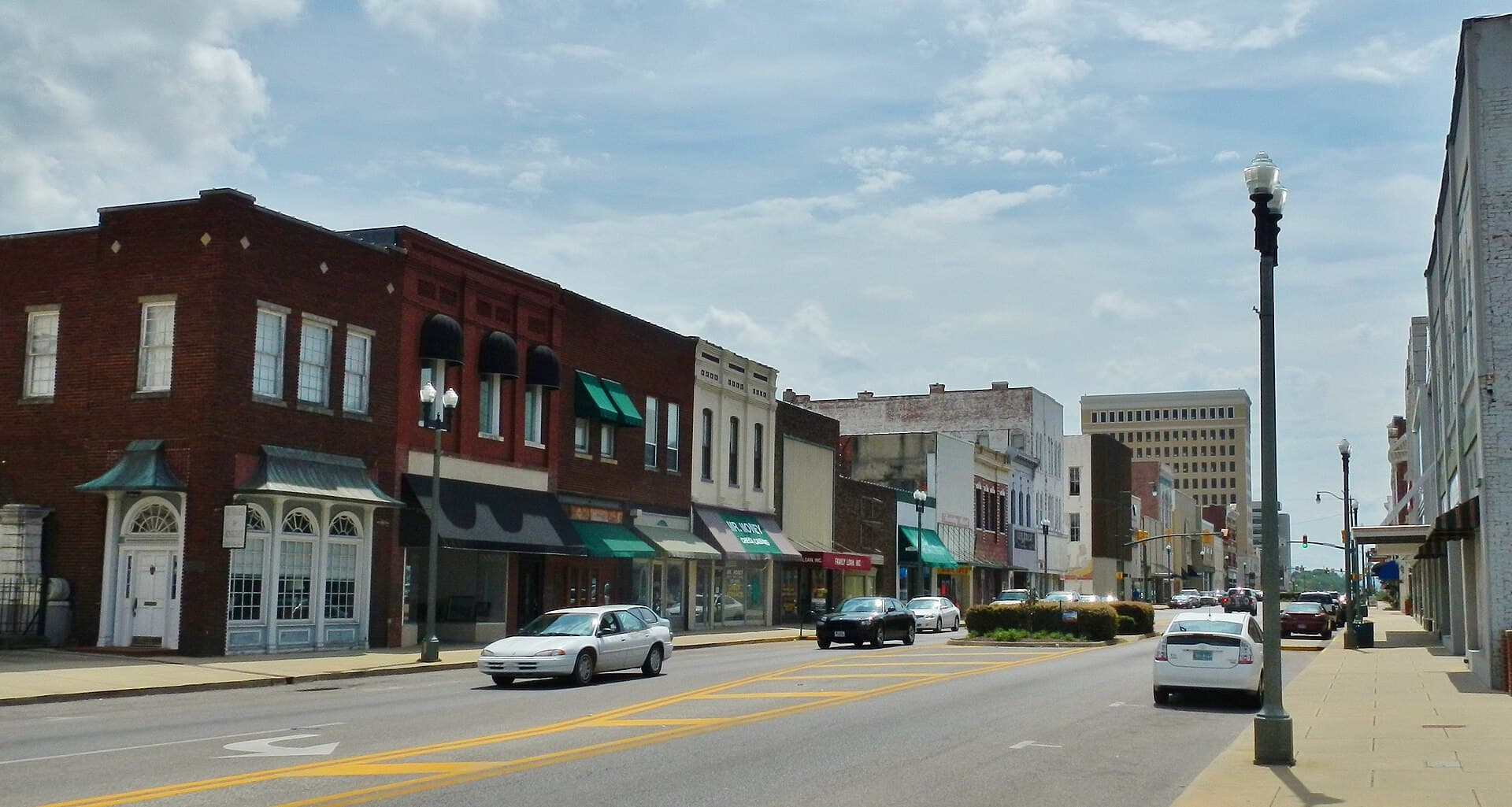 Rivers Langley; SaveRivers / CC BY-SA 3.0, via Wikimedia Commons
Tour de audio autoguiado de Anniston — ruta GPS a pie, reproducción offline, narración en 32 idiomas.
“Donde la perfección planificada encontró momentos cruciales.”
No las postales. Las historias que ni los locales conocen — al oído, justo donde ocurrieron.
Anniston comenzó como una 'Ciudad Modelo' meticulosamente planificada, pero su vía principal esconde un secreto sobre su naturaleza temprana y exclusiva.
Esta antigua base militar, una vez un bullicioso campo de entrenamiento, albergó una población inesperada durante la Segunda Guerra Mundial.
Una estación de autobuses aparentemente ordinaria se convirtió en un punto álgido del Movimiento por los Derechos Civiles, marcada por un evento que conmocionó a la nación.
Descubre todos los secretos de Anniston
Cada dirección, cada revelación al completo — a tu oído, justo donde ocurrió.
Eliges tus paradas. Caminas. La voz te revela lo que los demás ignoran.
Tu tour de audioguía por Anniston te espera — elige tus lugares, tu idioma y empieza al llegar.
ComprarAnniston, Alabama, a menudo conocida como 'La Ciudad Modelo', se ganó su apodo a finales del siglo XIX debido a sus orígenes meticulosamente planificados. Situada en las laderas de Blue Mountain en el condado de Calhoun, Anniston fue fundada en 1872 como una ciudad industrial privada por la Woodstock Iron Company. Sus fundadores, Samuel Noble y el general de la Unión Daniel Tyler, concibieron una comunidad perfecta construida alrededor de sus operaciones de hornos de hierro.
Hoy, Anniston es una ciudad que carga con el peso de su complejo pasado mientras trabaja activamente hacia un futuro revitalizado. Sirve como centro regional de gobierno, comercio y cultura en el noreste de Alabama. Los visitantes encontrarán una mezcla de arquitectura histórica, belleza natural en las estribaciones de los Apalaches circundantes y sitios significativos que cuentan historias convincentes de innovación industrial, presencia militar y momentos cruciales en el Movimiento por los Derechos Civiles.
## De la empresa privada a la vida pública La historia de Anniston comienza en 1872, nacida de la ambición de Samuel Noble y el general Daniel Tyler, quienes establecieron la Woodstock Iron Company. Su visión se extendía más allá de la industria; buscaban crear una 'Ciudad Modelo', una comunidad cuidadosamente planificada para sus trabajadores del hierro. Inicialmente una ciudad privada llamada 'Annie's Town' en honor a la nuera de Tyler, Annie, fue diseñada con calles arboladas, cabañas para trabajadores y servicios esenciales. En 1882, Anniston se convirtió en la primera ciudad de Alabama en ser iluminada por electricidad, y en 1884, los teléfonos ya estaban en uso, mostrando su temprana adopción de la infraestructura moderna.
Anniston se abrió oficialmente al público el 3 de julio de 1883, y su población creció rápidamente, alcanzando casi 10.000 habitantes en 1890. La economía de la ciudad se diversificó más allá del hierro para incluir textiles de algodón en 1881, empleando a muchas de las familias de los trabajadores del hierro. En 1899, Anniston se convirtió en la sede del condado de Calhoun.
## Un siglo de presencia militar El siglo XX trajo una importante presencia militar a Anniston. En 1917, durante la Primera Guerra Mundial, el Ejército de los Estados Unidos estableció Camp McClellan, más tarde Fort McClellan, como campo de entrenamiento. Se expandió significativamente durante la Segunda Guerra Mundial, entrenando aproximadamente a medio millón de tropas e incluso albergando a prisioneros de guerra alemanes e italianos. Después de la guerra, Fort McClellan se convirtió en el hogar del Cuerpo de Policía Militar, el Cuerpo Químico y la Escuela del Cuerpo de Mujeres del Ejército, sirviendo como un centro de entrenamiento vital durante toda la Guerra Fría. El fuerte cerró en 1999 como parte del proceso de Reajuste y Cierre de Bases (BRAC), y gran parte de su terreno se incorporó a Anniston.
## Derechos Civiles y desafíos ambientales Anniston desempeñó un papel crucial, aunque difícil, en el Movimiento por los Derechos Civiles. El 14 de mayo de 1961, la ciudad se convirtió en el escenario de un violento ataque a un autobús Greyhound que transportaba a los Freedom Riders, un evento que atrajo la atención nacional y subrayó la lucha contra la segregación. El Sendero de los Derechos Civiles de Anniston ahora conmemora estos momentos cruciales.
La ciudad también lidió con desafíos ambientales. Desde 1929 hasta 1971, una fábrica de productos químicos de Monsanto en Anniston produjo PCB, lo que provocó una contaminación significativa que salió a la luz a principios de la década de 2000 y requirió grandes esfuerzos de limpieza. A pesar de estos desafíos, Anniston ha sido reconocida por sus esfuerzos cívicos, recibiendo el Premio All-America City en 1978. Hoy, Anniston continúa centrándose en el desarrollo económico, la preservación histórica y la revitalización de la comunidad, esforzándose por construir sobre su base única.
Comience su exploración en el centro de Anniston, particularmente a lo largo de Noble Street, que conserva parte de su encanto histórico y está en proceso de revitalización. El Sendero de los Derechos Civiles de Anniston ofrece un conmovedor viaje a través de sitios significativos para el Movimiento por los Derechos Civiles, incluida la antigua Estación de Autobuses Greyhound y el Monumento Nacional a los Freedom Riders, que conmemora el ataque al autobús de 1961. Para una inmersión más profunda en la historia, visite el Museo de Historia Natural de Anniston y el Museo Berman de Historia Mundial, ambos con diversas colecciones.
Los entusiastas del aire libre apreciarán la proximidad de Anniston a las atracciones naturales. El Chief Ladiga Trail, el primer sendero ferroviario de Alabama, comienza en Anniston y ofrece oportunidades para practicar senderismo y ciclismo. Cerca, el Refugio Nacional de Vida Silvestre Mountain Longleaf y el Parque Estatal Cheaha ofrecen paisajes pintorescos y más aventuras al aire libre. No pierda la oportunidad de ver algunas de las hermosas casas de estilo victoriano de la ciudad, particularmente las que quedan en Quintard Avenue.
Las mejores épocas para visitar Anniston para disfrutar de un clima agradable y actividades al aire libre son desde principios de mayo hasta mediados de junio y desde finales de agosto hasta mediados de octubre. Durante estos períodos, las temperaturas son suaves y agradables, lo que lo hace ideal para explorar la ciudad y sus alrededores naturales. La primavera (marzo a mayo) y el otoño (septiembre a noviembre) también ofrecen hermosos paisajes y menos turistas. Los veranos (junio a agosto) suelen ser calurosos y húmedos, con máximas promedio de alrededor de 31-32°C. Los inviernos (diciembre a febrero) son cortos y fríos, con mínimas promedio de alrededor de 1-2°C.
Anniston cuenta con el Aeropuerto Regional de Anniston para viajes aéreos. Para moverse por la ciudad, el Sistema de Transporte Comunitario de Área Amplia (ACTS) proporciona un sistema de autobuses en todo el condado con cuatro rutas fijas que operan de lunes a viernes y los sábados. Los autobuses funcionan en un ciclo horario, con transbordos disponibles en la Estación Multimodal. Las tarifas suelen ser de $1.00, y se requiere el cambio exacto ya que los conductores no llevan dinero. También hay disponible un servicio de paratránsito de acera a acera compatible con la ADA para personas con discapacidades. Para viajes interurbanos, está disponible el servicio de tren de pasajeros de Amtrak. Si bien el transporte público es una opción, tener un automóvil ofrece mayor flexibilidad para explorar Anniston y sus atracciones naturales circundantes.
Anniston en coreano, en chino o en hebreo — y 29 idiomas más, cada parada narrada por una voz nativa. La mayor variedad de idiomas de cualquier audioguía autoguiada.
Disponible en: