Aldobrandesca Fortress
This imposing fortress guards a secret within its ancient stones, a detail often overlooked by casual visitors.
Full story unlocks in the tour
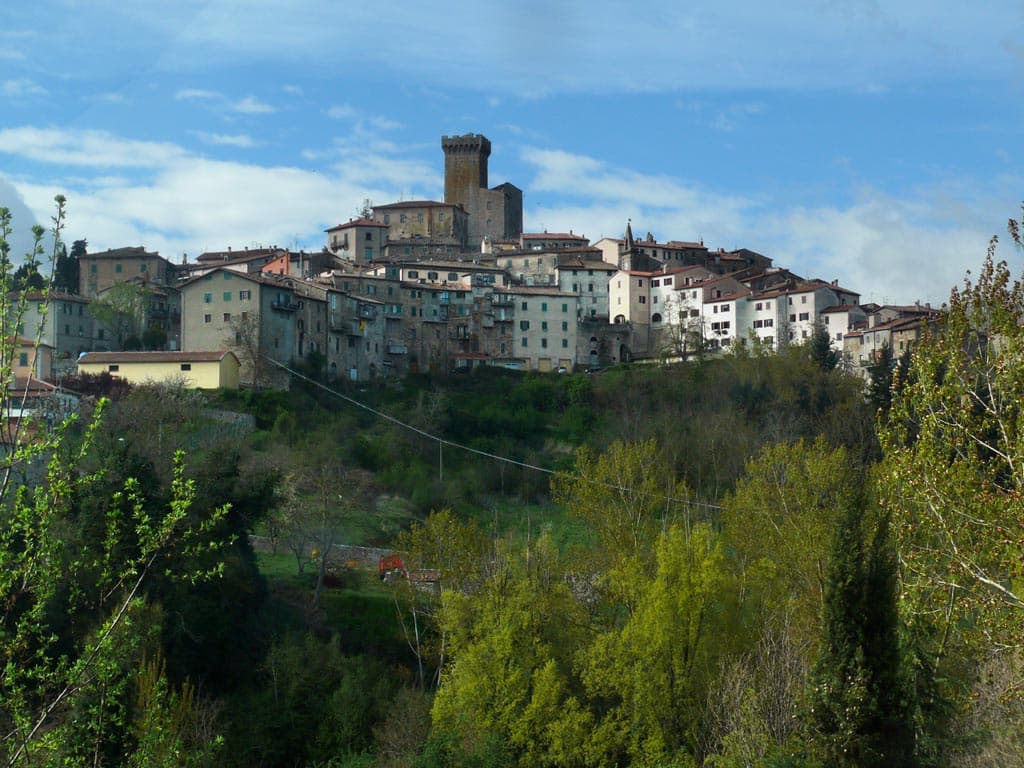 Zyance / cc by-sa 3.0, via Wikimedia Commons
Self-guided audio walking tour of Arcidosso — GPS route, offline playback, story-driven narration in 32 languages.
“Where medieval stone meets mystic whispers on Monte Amiata.”
Not the postcards. The stories even locals don't know — whispered in your ear, right where they happened.
This imposing fortress guards a secret within its ancient stones, a detail often overlooked by casual visitors.
The elegant neo-Gothic fountain in Arcidosso has a surprising origin story, involving a nighttime relocation.
Beyond its natural beauty, Mount Labbro holds the remnants of a unique 19th-century religious movement.
Discover every secret of Arcidosso
Every address, every reveal in full — in your ear, right where it happened.
You pick your stops. You walk. The voice reveals what the others miss.

Your self-guided audio tour of Arcidosso is ready — pick your landmarks, choose your language, and start the moment you arrive.
BuyLume has a built-in augmented-reality guide. Hold your phone up and its camera shows the street ahead of you, with a glowing arrow laid over the real view that always points to your next stop — no map to puzzle over, no wrong turns. Like everything in Lume, it works fully offline.
Arcidosso, a medieval village on the western slopes of Monte Amiata in Tuscany, offers a compelling blend of history, nature, and unique spiritual narratives. At an elevation of 679 meters, it appears to rise organically from the mountainside, its ancient stone structures and terracotta rooftops creating an austere yet magical atmosphere. The village's layout, shaped like a long pyramid, culminates in the imposing Aldobrandesca Fortress, a testament to centuries of strategic importance.
This charming settlement, with its narrow, winding streets and ancient houses, invites exploration. Beyond its well-preserved medieval core, Arcidosso is a gateway to the natural beauty of the Monte Amiata region, known for its dense chestnut and beech forests. It's a place where the past is palpable, from the fortified walls that once defended against Sienese incursions to the quiet corners that hold stories of mystics and local traditions.
Arcidosso serves as an administrative center for the Monte Amiata area, offering a genuine Tuscan experience away from the more crowded tourist routes. It's a destination for those seeking a deeper connection with Italian heritage, where every stone seems to tell of bygone eras and the surrounding landscape offers both tranquility and adventure.
The earliest documented mention of Arcidosso dates back to 860 AD, when it was part of the Abbey of San Salvatore's holdings. The very name, likely derived from the Latin 'Arx' (fortress) and 'Dossum' (hump or back), hints at its strategic defensive position. The first nucleus of the castle, around which the village would eventually grow, began to take shape around the year 1000.
From the 11th to the 14th centuries, Arcidosso became a significant stronghold of the powerful Aldobrandeschi counts. They transformed and expanded the initial castle, adding two floors to the palace, constructing towers, and reinforcing its two crenellated walls. This made it a crucial military fortress, serving as an outpost against the encroaching influence of Siena into the Amiata territory. The town faced a major siege in 1331 by the Sienese army, led by Guidoriccio da Fogliano, comprising 4,000 infantrymen and 400 horsemen. After a four-month siege, Arcidosso surrendered and became part of the Republic of Siena.
Following the final fall of Siena in 1556, Arcidosso was incorporated into the Grand Duchy of Tuscany in 1559, coming under the rule of the Medici family. Cosimo I de' Medici established several outlying offices here, further solidifying its importance. A notable period of growth occurred after the Leopoldina Reformation of 1786, which led to a redistribution of state and ecclesiastical lands. This resulted in a remarkable demographic increase, with Arcidosso's population quadrupling in about a century, reaching around 12,000 inhabitants. During this time, it emerged as the most important political and administrative center of Monte Amiata.
The 19th century brought a unique chapter to Arcidosso's history with the emergence of David Lazzaretti, known as 'the Prophet of Amiata.' Born in Arcidosso in 1834, Lazzaretti was a charismatic figure who preached religious and social themes, attracting a significant following, particularly among the local peasantry. He founded the Giurisdavidica Church, a proto-socialist Christian community, with its center on Mount Labbro, where remnants of his tower and chapel can still be seen. Lazzaretti's life ended tragically in 1878 when he was killed by military forces during a peaceful procession at the entrance of Arcidosso.
In more recent times, Arcidosso has also become a center for other forms of spirituality. Since 1981, the slopes of Monte Amiata have been home to Merigar West, the first center of the Dzogchen Community in Italy, established by Chögyal Namkhai Norbu. This 'place of the fire mountain' attracts practitioners from around the world for spiritual retreats. Today, Arcidosso continues to blend its layered past with contemporary cultural and spiritual expressions, making it a truly distinctive destination.
Arcidosso's historic center, shaped like a pyramid, is dominated by the imposing Aldobrandesca Fortress. This well-preserved medieval castle, dating back to the 10th century, houses several museums, including the David Lazzaretti Museum, the Medieval Landscape Museum, and the Emo Mecheroni collection of ancient weapons. Climbing its 28-meter-high tower offers sweeping views of Monte Amiata and the surrounding valleys.
Explore the ancient village through its remaining medieval gates: Porta di Castello, Porta Talassese, and the 19th-century Porta dell'Orologio. Wander the narrow, stone-paved streets to discover several historic churches. The Chiesa di San Niccolò, the town's oldest, contains a precious wooden crucifix and a stoup. The Chiesa di Sant'Andrea is known for its Romanesque architecture and frescoes, including 'La Vergine in Trono.' The 12th-century Chiesa di San Leonardo also features notable frescoes.
Just outside the city walls, visit the Santuario della Madonna delle Grazie (also known as Madonna dell'Incoronata), a revered sanctuary housing Sienese school artworks. Do not miss the intriguing Fountain of Poggiolo, a neo-Gothic marble fountain with a local legend. For a unique cultural experience, seek out the street art in Parco Donatori del Sangue, which pays homage to David Lazzaretti. Nearby, the Monte Amiata Faunal Park offers a chance to observe local wildlife.
The best times to visit Arcidosso are spring and autumn. During these seasons, the weather is pleasant for exploring the historic center and the surrounding countryside. Autumn, particularly October, is especially lively due to the 'La Castagna in Festa' (Chestnut Festival), a major event celebrating local traditions, food, and wine. Summers are warm, with average daily highs above 73°F (23°C) from mid-June to early September, and bring various festivals. Winters are colder, with average daily highs below 50°F (10°C) from mid-November to mid-March, attracting visitors interested in snow activities on Monte Amiata.
Arcidosso is located in the province of Grosseto, about 55 km from Grosseto, 80 km from Siena, and 150 km from Florence. While the nearest train stations are in Civitella Paganico or Grosseto, public transport to Arcidosso is not ideal. The most convenient way to reach the village is by car. From Grosseto or Siena, take Strada Statale 223 and exit at Paganico, then follow signs for Arcidosso/Monte Amiata.
Once in Arcidosso, the historic center is best explored on foot. While a day is sufficient to see the main attractions, consider a longer stay to immerse yourself in the natural beauty of Monte Amiata and explore nearby spiritual sites like Merigar West or the Giurisdavidica Tower on Mount Labbro. Accommodation options include agriturismo (farm stays) for an authentic rural experience, or local hotels.
Arcidosso in Korean, in Chinese or in Hebrew — and 29 more languages, every stop narrated by a native voice. The widest language range of any self-guided audio tour.
Available in: