Castillo de Belmonte
Esta formidable fortaleza, un sorprendente ejemplo de arquitectura gótico-mudéjar, sirvió una sorprendente doble función más allá de la defensa.
La historia completa se desbloquea en el tour
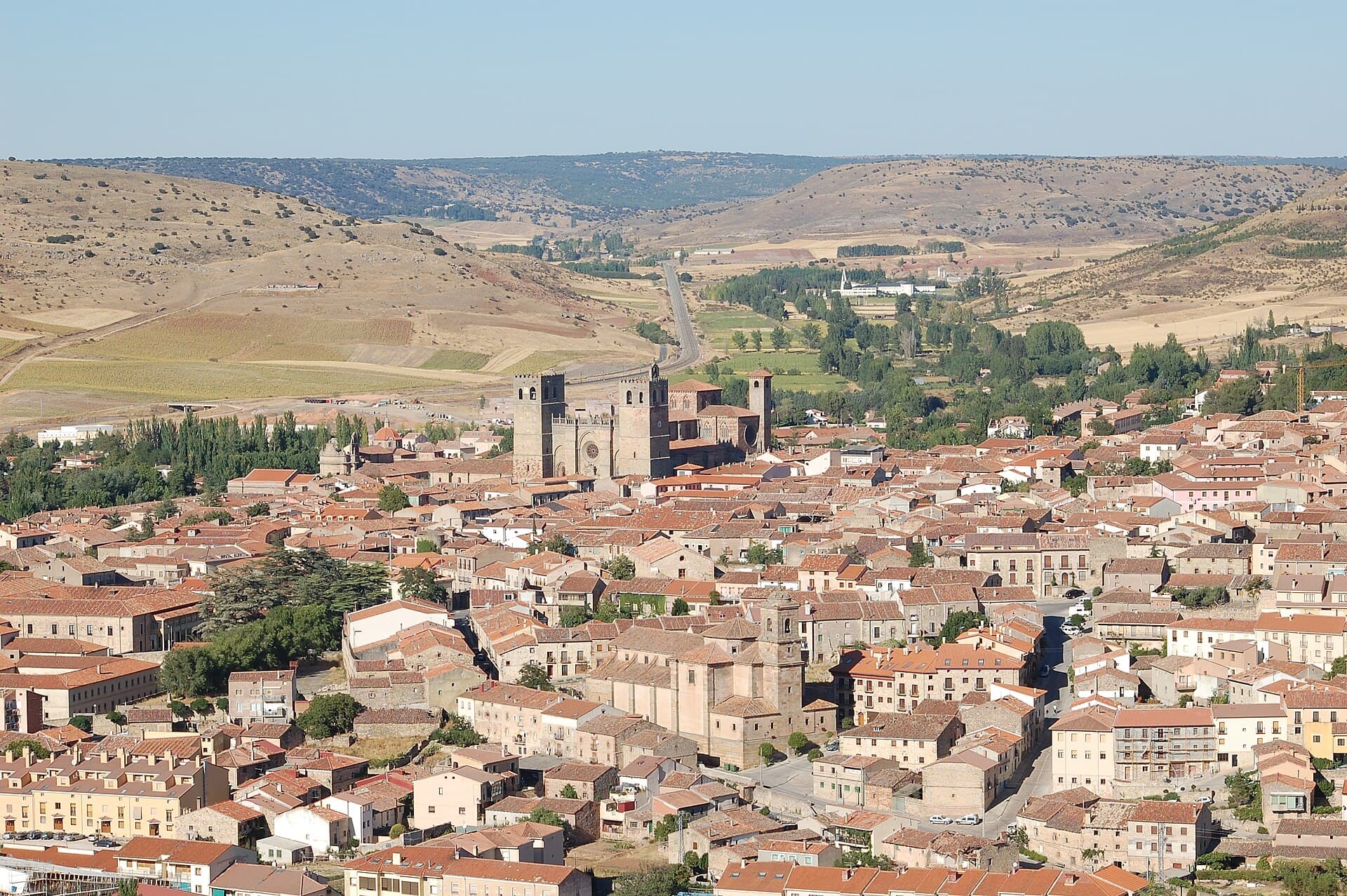 Photo of Sigüenza, via Wikimedia Commons
Tour de audio autoguiado de Belmonte — ruta GPS a pie, reproducción offline, narración en 32 idiomas.
“Donde las antiguas murallas resuenan con legados de emperatrices y batallas cinematográficas.”
No las postales. Las historias que ni los locales conocen — al oído, justo donde ocurrieron.
Esta formidable fortaleza, un sorprendente ejemplo de arquitectura gótico-mudéjar, sirvió una sorprendente doble función más allá de la defensa.
La narrativa de Belmonte guarda una conexión única y duradera con una comunidad que enfrentó siglos de persecución.
La sillería del coro de madera intrincadamente tallada dentro de esta iglesia gótica tiene una historia que se extiende más allá de las fronteras de Belmonte.
Descubre todos los secretos de Belmonte
Cada dirección, cada revelación al completo — a tu oído, justo donde ocurrió.
Eliges tus paradas. Caminas. La voz te revela lo que los demás ignoran.
Tu tour de audioguía por Belmonte te espera — elige tus lugares, tu idioma y empieza al llegar.
ComprarLume incluye una guía de realidad aumentada. Levanta el móvil y su cámara muestra la calle que tienes delante, con una flecha luminosa sobre la imagen real que siempre apunta a tu próxima parada — sin mapas que descifrar, sin giros equivocados. Como todo en Lume, funciona completamente sin conexión.
Sobre una colina en la provincia de Cuenca, dentro de la región de Castilla-La Mancha en España, Belmonte es un pueblo donde la historia está grabada en cada piedra. Su castillo medieval, una distintiva estructura pentagonal con seis torres redondas, domina el paisaje, ofreciendo una visión de una época pasada de nobleza y conflicto castellanos.
Más allá de las murallas del castillo, el casco antiguo de Belmonte, declarado Bien de Interés Cultural, invita a la exploración con sus calles serpenteantes y su arquitectura tradicional manchega. El pueblo es una parada en la famosa 'Ruta de Don Quijote', conectándolo con las aventuras literarias del icónico personaje de Miguel de Cervantes.
## Del Marquesado a la Actualidad La historia de Belmonte está indisolublemente ligada a su formidable castillo, una construcción del siglo XV ordenada por Don Juan Pacheco, el primer Marqués de Villena. Pacheco, un poderoso noble durante el reinado del rey Enrique IV de Castilla, buscó fortificar su territorio durante un período de intensas luchas internas. La construcción comenzó en 1456, probablemente bajo el arquitecto Juan Guas, aunque el castillo permaneció incompleto tras la muerte de Pacheco.
Después de siglos de abandono parcial, el castillo estaba en gran parte en ruinas a principios del siglo XIX. Un importante proyecto de restauración comenzó en 1857 bajo el patrocinio de Eugenia de Guzmán, más conocida como la Emperatriz Eugenia de Montijo, la última Emperatriz de Francia y heredera de la casa de Villena. Su arquitecto, Alejandro Sureda, preservó meticulosamente el estilo original del exterior mientras actualizaba el interior a los gustos del siglo XIX, incluso incorporando galerías de ladrillo con vistas al patio interior. La Emperatriz Eugenia supuestamente gastó más de 500.000 pesetas en la restauración antes de que la caída del Segundo Imperio Francés en 1870 detuviera el trabajo.
A lo largo de su existencia, el Castillo de Belmonte ha desempeñado varios roles: residencia noble, fortaleza estratégica e incluso prisión durante la Guerra de la Independencia y la Guerra Civil Española. Fue declarado monumento histórico en 1931 y ahora es un Bien de Interés Cultural, lo que significa su importancia como hito cultural. El castillo reabrió al público en 2010 después de una extensa restauración, permitiendo a los visitantes explorar su arquitectura única y adentrarse en su pasado en capas.
El centro de atención indiscutible en Belmonte es el Castillo de Belmonte, una fortaleza del siglo XV conocida por su singular planta pentagonal y seis torres redondas. Los visitantes pueden explorar su interior, incluyendo la torre del homenaje, las murallas y el patio de armas, y admirar los elementos arquitectónicos góticos y mudéjares, como techos tallados y yeserías decorativas. La torre norte ofrece amplias vistas del pueblo y el campo circundante.
Debajo del castillo, el centro histórico del pueblo cuenta con la Colegiata de San Bartolomé, una iglesia gótica también del siglo XV. Su sillería del coro, originalmente de la Catedral de Cuenca, es una característica notable. Otros puntos de interés incluyen la Plaza de Enrique Fernández, la Ermita de Nuestra Señora de Gracia del siglo XVII, y el Convento de los Trinitarios del siglo XV. El Palacio del Infante Don Juan Manuel, que una vez fue un palacio fortificado interior, ha sido restaurado y ahora funciona como un hotel y spa de cuatro estrellas. También se puede buscar la casa donde nació el poeta Fray Luis de León.
Los momentos más agradables para visitar Belmonte son durante la primavera (marzo a mayo) y el otoño (septiembre a octubre). Las temperaturas son suaves, lo que lo hace cómodo para explorar el castillo y el pueblo, y hay menos multitudes que en verano. Los veranos (junio a agosto) pueden ser calurosos, con máximas diarias promedio superiores a 28°C (82°F) y julio siendo el mes más caluroso, alcanzando alrededor de 32°C (89°F). Los inviernos (noviembre a febrero) son muy fríos y parcialmente nublados, siendo enero el mes más frío, con un promedio de 0°C (32°F) a 9°C (49°F).
Belmonte se encuentra aproximadamente a 150 km de Madrid y a 100 km de Cuenca. La forma más conveniente de llegar al pueblo es en coche, utilizando la carretera N-420 desde cualquiera de las dos ciudades. El viaje desde Madrid dura aproximadamente una hora y media, ofreciendo vistas panorámicas del paisaje de La Mancha. También hay conexiones de autobús desde Cuenca y Madrid.
El Castillo de Belmonte está abierto al público, y las visitas guiadas son muy recomendables para apreciar su arquitectura e historia. Las tarifas de entrada suelen ser de alrededor de 9€ para adultos, con tarifas reducidas para niños y grupos. Belmonte es un pueblo transitable a pie, con muchas atracciones, incluyendo el castillo y la Colegiata, accesibles a pie.
Belmonte en coreano, en chino o en hebreo — y 29 idiomas más, cada parada narrada por una voz nativa. La mayor variedad de idiomas de cualquier audioguía autoguiada.
Disponible en: