Castillo de la Peña Bermeja
The fortress bears a name, 'Piedra Bermeja' or 'Vermilion Stone,' referencing a particular crimson rock within its sturdy walls.
Full story unlocks in the tour
 Håkan Svensson (Xauxa) / CC BY 2.5, via Wikimedia Commons
Self-guided audio walking tour of Brihuega — GPS route, offline playback, story-driven narration in 32 languages.
“Where ancient stones meet a fragrant, purple horizon.”
Not the postcards. The stories even locals don't know — whispered in your ear, right where they happened.
The fortress bears a name, 'Piedra Bermeja' or 'Vermilion Stone,' referencing a particular crimson rock within its sturdy walls.
Beneath the time-worn avenues of Brihuega stretches a vast, intricate network of ancient tunnels.
This 18th-century royal factory incorporates a distinctive architectural element that ingeniously resolved two significant engineering challenges.
Discover every secret of Brihuega
Every address, every reveal in full — in your ear, right where it happened.
You pick your stops. You walk. The voice reveals what the others miss.


Your self-guided audio tour of Brihuega is ready — pick your landmarks, choose your language, and start the moment you arrive.
BuyLume has a built-in augmented-reality guide. Hold your phone up and its camera shows the street ahead of you, with a glowing arrow laid over the real view that always points to your next stop — no map to puzzle over, no wrong turns. Like everything in Lume, it works fully offline.
Brihuega, affectionately known as the "Garden of La Alcarria," is a venerable town set in the Tajuña Valley of Guadalajara, Spain. Its medieval architecture and the lush, expansive lavender fields that embrace it create a singularly evocative atmosphere. Recognized as a Property of Cultural Interest, Brihuega offers a compelling blend of historical discovery and natural splendor.
The town's allure extends beyond its visual charm. In July, Brihuega undergoes a fragrant metamorphosis as its thousand hectares of lavender fields burst into bloom, painting the landscape in shades of purple and contributing to 10% of the world's lavender production. This magnificent spectacle is honored with the annual Lavender Festival, drawing visitors from across the globe.
Beyond the seasonal lavender, Brihuega's enduring past is etched into its ancient walls, venerable buildings, and a labyrinthine network of subterranean caves, inviting a journey through centuries of Spanish heritage.
## From Celtiberian Beginnings to Royal Endorsement Brihuega's origins reach back to Celtiberian settlements, known as Castrum Brioca under Roman dominion, a name perhaps derived from 'Briga,' signifying 'fortified place.' It served as a strategic outpost and a favored royal hunting ground in antiquity.
In 1072, Brihuega offered sanctuary to Alfonso VI of León after his defeat by his brother Sancho II of Castile. By 1085, Alfonso VI, then King of Castile and León, conquered the Tajuña Valley and granted Brihuega to Archbishop Raimundo de Toledo the following year. The Archbishop initiated the construction of the Peña Bermeja Castle. By the early 13th century, Brihuega's protective walls were complete, and it received a municipal charter, cementing its ties to the Archbishopric of Toledo.
Archiepiscopal authority concluded in 1574 when Philip II incorporated Brihuega into the Crown. The town played a significant role in military engagements, including the Battle of Brihuega in 1710 during the War of the Spanish Succession. Here, a British contingent under General James Stanhope was overcome by a larger Franco-Spanish army, marking a pivotal moment in the conflict. Brihuega also witnessed intense combat during the Battle of Guadalajara in the Spanish Civil War in March 1937.
In the 18th century, King Ferdinand VI established the Real Fábrica de Paños (Royal Cloth Factory) in Brihuega in 1750. This endeavor aimed to reinvigorate the local economy after the War of Succession, transforming Brihuega into a significant hub for woolen textile production and an important example of 18th-century Spanish industrial architecture.
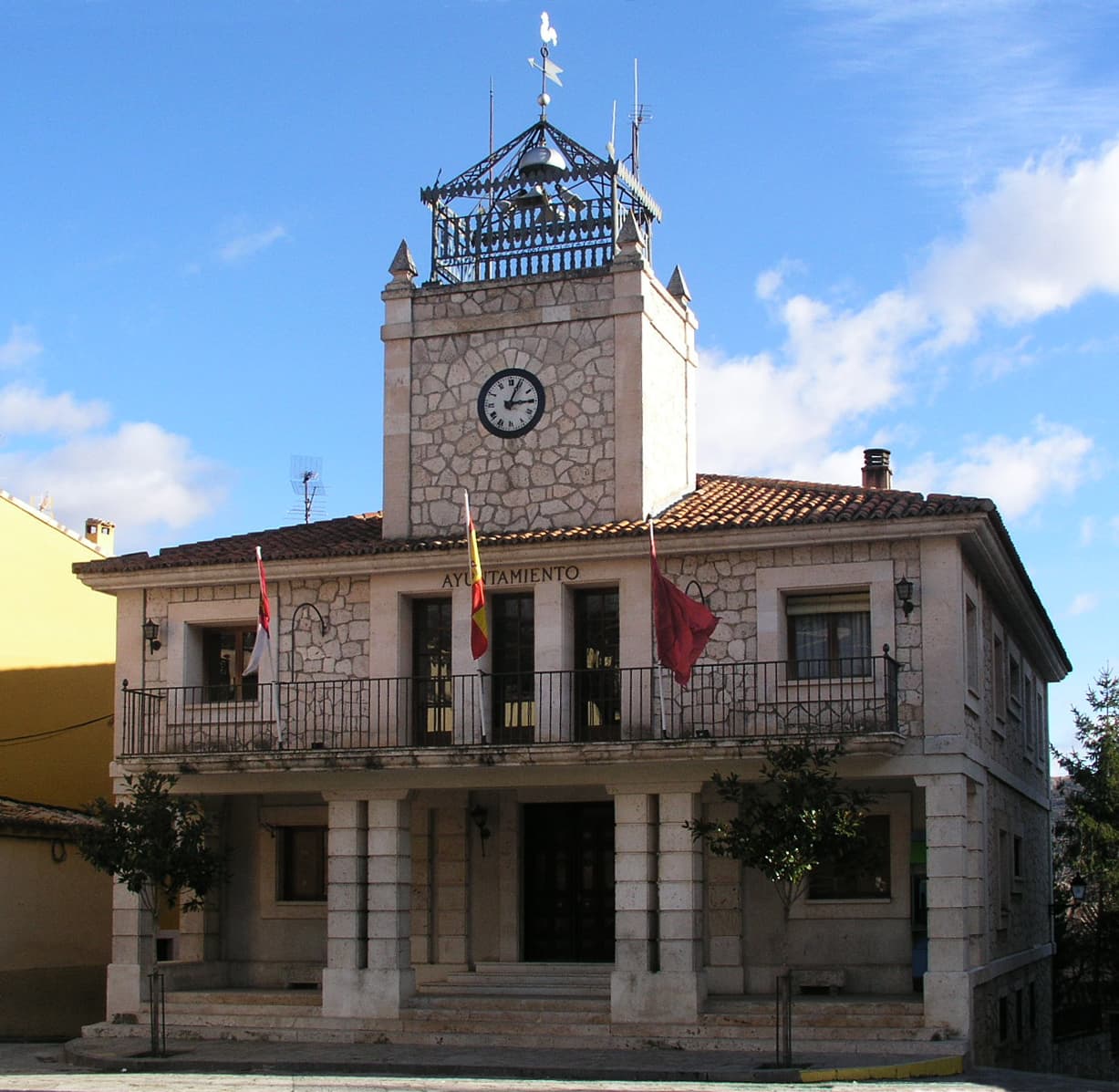
Brihuega's historic core, a designated Property of Cultural Interest, warmly invites exploration. Stroll through the Plaza del Coso, the main square since the 16th century, where you will find the town hall and the Royal Prison of Charles III, now home to the Tourist Office.
The Castillo de la Peña Bermeja, a medieval fortress with Arab foundations, rises from a rocky outcrop surveying the Tajuña Valley. Within its confines stands the 13th-century Church of Santa María de la Peña, a Gothic structure that also serves as the municipal cemetery. Other notable churches include the late Romanesque Church of San Felipe and the Church of San Miguel.
Descend into the subterranean Arab Caves, an expansive network of tunnels dating back to the 10th and 11th centuries, accessible from the Plaza del Coso. The Real Fábrica de Paños, an 18th-century circular industrial edifice with gardens inspired by Versailles, provides sweeping views of the village and the Tajuña river. Do not overlook the Arco de Cozagón and Puerta de la Cadena, well-preserved segments of the nearly two-kilometer-long Arab wall. For an unforgettable perspective, consider a hot-air balloon flight above the lavender fields during their peak bloom.
The most opportune time to experience Brihuega is in July, when the lavender fields are in full bloom, transforming the landscape into a sea of purple. The peak bloom typically occurs in the second and third weeks of July, coinciding with the annual Lavender Festival, which features concerts and cultural events. To avoid larger gatherings, consider visiting on weekdays. For activities in warmer weather, early July to mid-August is also recommended.
September offers comfortably warm and gentle breezes, with temperatures ranging from 12-26°C (53-79°F), making it a pleasant time to discover the town's other attractions.
Brihuega is situated in the province of Guadalajara, in eastern-central Spain, approximately 90-100 kilometers (about 1 to 1.5 hours by car) northeast of Madrid. The closest airport is Madrid-Barajas Adolfo Suárez Airport, where rental cars are readily available. While train travel from Madrid is an option, it requires a transfer to a bus at Guadalajara-Renfe and extends the journey to approximately 3.5 hours.
Parking is generally easy to locate along the town's avenues and in the Plaza del Coso. Many of Brihuega's attractions, particularly within the historic center, are easily explored on foot. Guided tours of the lavender fields are offered on Fridays, Saturdays, and Sundays in July at 7:00 PM and 8:30 PM, departing from Parque de María Cristina. Reservations are advisable. The Arab Caves have an entrance fee of approximately €3. For lodging, options such as Hostal Rural Santa Barbara and La Fuensanta Hostal-Rural are available nearby.
Brihuega in Korean, in Chinese or in Hebrew — and 29 more languages, every stop narrated by a native voice. The widest language range of any self-guided audio tour.
Available in: