Ducal Palace of Pastrana
The grand Renaissance palace in Pastrana holds a secret of royal intrigue and a formidable woman's defiance.
Full story unlocks in the tour
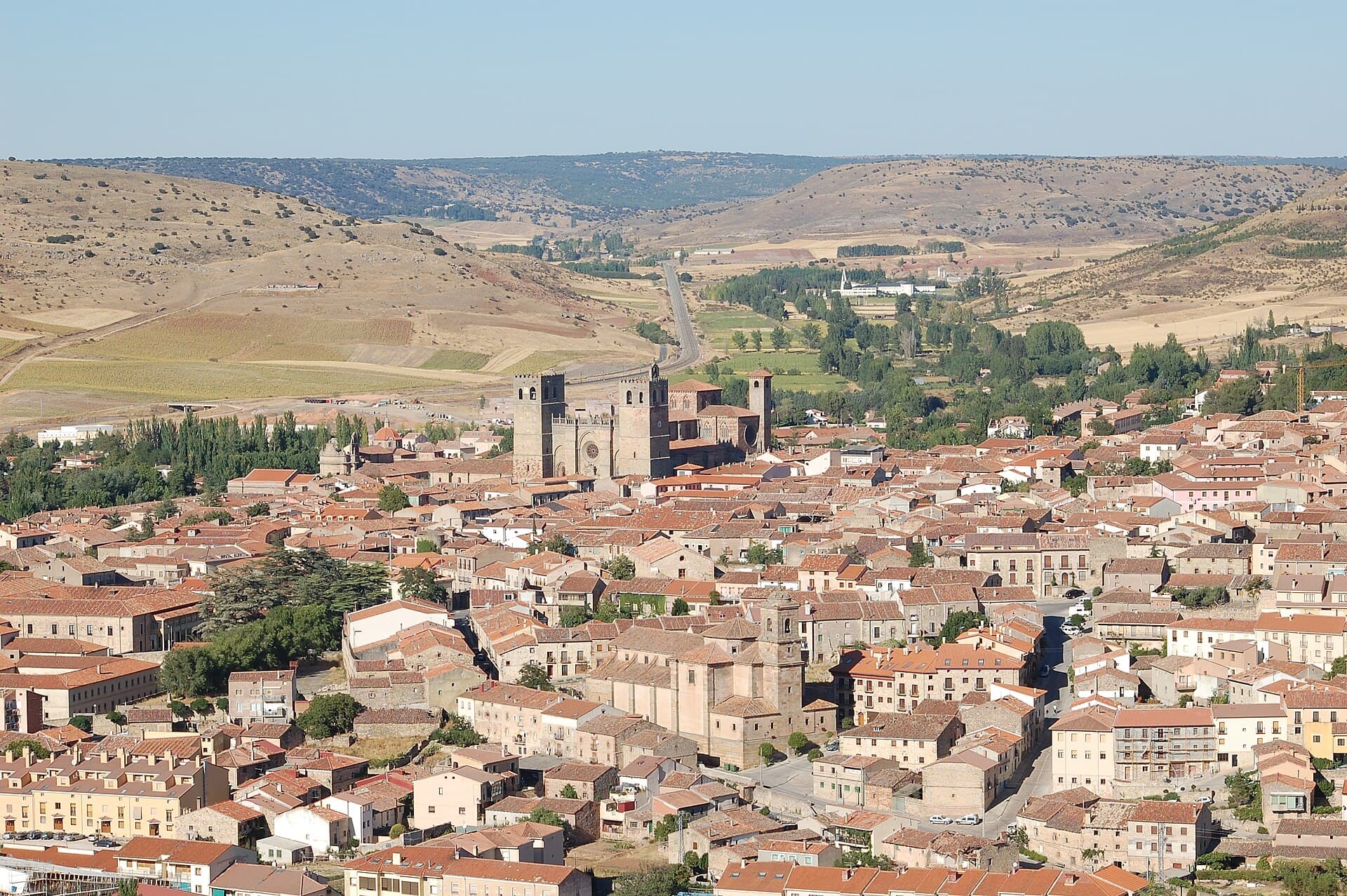 Photo of Sigüenza, via Wikimedia Commons
Self-guided audio walking tour of Pastrana — GPS route, offline playback, story-driven narration in 32 languages.
“Where noble secrets linger in sun-drenched stone.”
Not the postcards. The stories even locals don't know — whispered in your ear, right where they happened.
The grand Renaissance palace in Pastrana holds a secret of royal intrigue and a formidable woman's defiance.
Within the walls of Pastrana's Collegiate Church, a priceless collection of art tells a surprising story of conquest, far from Spain's shores.
This convent, founded by a renowned mystic, also holds an unexpected collection from distant lands.
Discover every secret of Pastrana
Every address, every reveal in full — in your ear, right where it happened.
You pick your stops. You walk. The voice reveals what the others miss.

Your self-guided audio tour of Pastrana is ready — pick your landmarks, choose your language, and start the moment you arrive.
BuyLume has a built-in augmented-reality guide. Hold your phone up and its camera shows the street ahead of you, with a glowing arrow laid over the real view that always points to your next stop — no map to puzzle over, no wrong turns. Like everything in Lume, it works fully offline.
Pastrana, a village in the province of Guadalajara, Castilla–La Mancha, Spain, offers a journey through centuries of layered time. Its medieval street plan and meticulously preserved historic quarter have earned it the designation of a Property of Cultural Interest. Situated between the Tajo and Tajuña Rivers, Pastrana has been recognized since 2019 as one of 'The Most Beautiful Villages of Spain.'
The town is celebrated for its architectural treasures, including Renaissance palaces, a collegiate church with Gothic and Baroque elements, and grand manor houses that line its winding streets. Pastrana's deep heritage is intertwined with influential figures such as the Princess of Éboli and Saint Teresa of Ávila, who established convents here. The town also holds a significant literary tradition, having been immortalized in Camilo José Cela's 'Journey to the Alcarria.'
Pastrana's history reaches back to ancient times, with evidence of human settlements from the Bronze Age. It gained importance during the Roman era as "Roman Pastrana," a strategic point on the road connecting Mérida and Zaragoza. The town experienced various changes in power, including a period of Visigothic stability and several centuries of Muslim rule after the 8th century.
Pastrana regained autonomy in the 11th century when King Alfonso VI of Castile integrated it into the Christian kingdom. It was later granted to the Order of Calatrava in 1174 and received the privilege of 'villazgo' (township) in 1369, asserting its independence. The 15th century saw Pastrana flourish as a market town, and in the early 16th century, it became a significant center for the mystic alumbrados in the Kingdom of Toledo.
A pivotal period for Pastrana was the 16th century, marked by the arrival of Ana de Mendoza de la Cerda, the Princess of Éboli. In 1562, King Philip II granted her husband, Rui Gomes da Silva, the title of Duke of Pastrana, making Ana the first Duchess of Pastrana and Princess of Éboli. During her stay, she promoted the construction of the Ducal Palace. The town also welcomed Saint Teresa of Ávila, who founded two Carmelite convents in 1569. The late 16th and early 17th centuries saw a substantial number of Moriscos (Muslims converted to Christianity) from the Alpujarras revolt deported to Pastrana, contributing to a flourishing local silk industry.
The 18th and 19th centuries brought a period of stagnation and ruralization to Pastrana. However, its enduring historical and cultural legacy continues to draw those seeking to explore the region's past and traditions.
Begin your exploration at the Ducal Palace of Pastrana, a splendid Renaissance building from the mid-16th century. Designed by Alonso de Covarrubias, its elegant façade features a doorway that mirrors one on the Alcázar fortress in Toledo. The palace, now owned by the University of Alcalá de Henares, offers insights into Spanish nobility during the Renaissance.
Next, visit the Colegiata de la Asunción (Collegiate Church of the Assumption), a Catholic temple with origins in a 13th-century Romanesque church built by the Knights of Calatrava. Inside, the Parish Tapestry Museum showcases a collection of religious art and, most notably, four 15th-century Flemish tapestries depicting the conquests of King Afonso V of Portugal. The Collegiate Church also houses a 17th-century bust-reliquary of Saint Teresa of Jesus and a painting by Jacques Stella on alabaster from 1624.
Explore the two convents founded by Saint Teresa of Ávila: the Convent of the Franciscan Conceptionists and the Convent of El Carmen (16th century). The latter also contains a Museum of Natural History. Other points of interest include the 17th-century College of San Buenaventura and the Fuente de los Cuatro Caños, an impressive 16th-century fountain. Wander through the Plaza de la Hora, where the Ducal Palace is located, and the Plaza del Deán, dotted with historic buildings.
The most pleasant times to visit Pastrana are during the shoulder months of spring (April to June) and early autumn (September to October). During these periods, the weather is agreeable, with average temperatures ranging from 19°C to 29°C (66°F to 84°F), making it ideal for sightseeing and exploring. Rainfall is moderate, with October being the wettest month and July the driest. Summers (June to September) are warm, with daytime highs around 33°C (91°F) in July, while winters (January) are cooler, with highs around 11°C (52°F).
Pastrana is located approximately 40 kilometers southeast of Guadalajara. If traveling from Madrid, the driving distance is around 70-80 kilometers, taking about an hour to an hour and a half by car. Public transport options from Madrid include a combination of bus and taxi, which can take around 2.5 to 3 hours. There are also train and taxi combinations available. Once in Pastrana, the town's historic quarter is best explored on foot. Accommodation options include hostals and hotels. It is advisable to check the opening hours of specific attractions, such as the Tapestry Parish Museum, which typically operates with morning and afternoon hours daily.
Pastrana in Korean, in Chinese or in Hebrew — and 29 more languages, every stop narrated by a native voice. The widest language range of any self-guided audio tour.
Available in: