The legendary cricketer Sir Donald Bradman honed his extraordinary skills not on a manicured pitch, but against a humble household object.
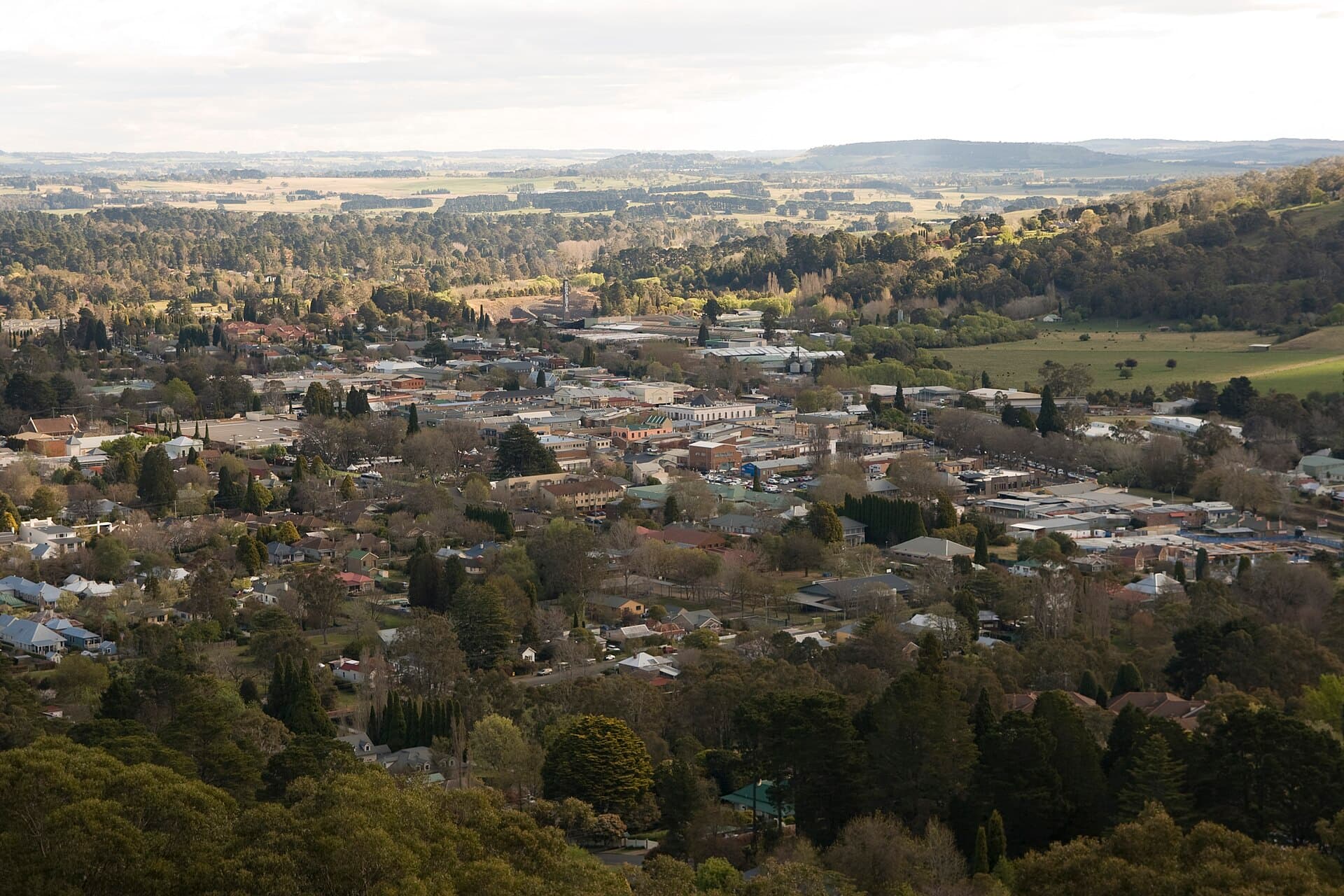
Maksym Kozlenko / CC BY-SA 3.0, via Wikimedia CommonsBowral
Self-guided audio walking tour of Bowral — GPS route, offline playback, story-driven narration in 32 languages.
“Where English gardens meet Australian spirit, and cricket legends are born.”
Bowral, as no one tells it.
Not the postcards. The stories even locals don't know — whispered in your ear, right where they happened.
Every spring, a century-old garden in Bowral transforms into a lively spectacle, drawing visitors from across Australia for a floral celebration.
The whimsical tales of a magical nanny, beloved by generations, may have been inspired by the childhood experiences of their author in Bowral.
Discover every secret of Bowral
Every address, every reveal in full — in your ear, right where it happened.
You pick your stops. You walk. The voice reveals what the others miss.


How long do you have in Bowral?
Your self-guided audio tour of Bowral is ready — pick your landmarks, choose your language, and start the moment you arrive.
BuyThe story of Bowral
Bowral, the largest town in New South Wales' Southern Highlands, offers a gracious escape approximately 90 minutes southwest of Sydney and less than two hours northeast of Canberra. It is known for its distinct seasons, elegant public buildings, and expansive gardens, and has long been a favored retreat. Its appeal lies in a unique blend of rural character and sophisticated offerings, from boutique shops and art galleries to cool-climate wineries and gourmet dining.
The town provides a tranquil atmosphere, inviting visitors to immerse themselves in its unhurried pace, crisp air, and picturesque landscapes. It serves as the primary business and entertainment hub of the Wingecarribee Shire, making it a central point for exploring the wider Southern Highlands region. Whether you seek cultural experiences, outdoor adventures, or simply a relaxed getaway, Bowral provides a memorable Australian countryside experience.
From Aboriginal Lands to European Retreat
The area now recognized as Bowral holds a history stretching back approximately 200 years in terms of European settlement, though its roots extend much further. The land originally belonged to the Tharawal Aboriginal Tribe; however, no permanent Aboriginal settlement occurred due to the region's extreme climate. The name 'Bowral' itself is believed to be derived from an Aboriginal word, 'Bowrel,' meaning "high" or "large," likely referencing the nearby Mount Gibraltar.
The first European to traverse the area was ex-convict John Wilson in 1798, commissioned by Governor Hunter to explore south of Sydney. Subsequent expeditions by figures like John Warby, botanist George Caley, the Hume brothers, and later John Oxley and Charles Throsby further opened up the region. In 1823, Governor Lachlan Macquarie granted 2,400 acres to John Oxley, which eventually formed the basis of Bowral. The first house, a rough bark hut, was constructed by the Oxley family in 1825.
Bowral's development accelerated with the arrival of the railway in 1867, transforming it from an isolated rural community into an accessible mountain resort. This connectivity made it a popular summer retreat for Sydney's elite during the 19th century, leading to the construction of grand Victorian weatherboard homes and estates. The town was officially proclaimed a municipality in 1886. A distinctive characteristic of Bowral's urban development was the systematic planting of deciduous European trees from 1887 onwards, aiming to evoke a more British or European aesthetic, a legacy still visible today, particularly in its rich autumn foliage.
Beyond its appeal as a resort, Bowral also became the spiritual heart of Australian cricket, largely due to its connection with Sir Donald Bradman, who grew up and honed his skills in the town. The Bradman Museum and International Cricket Hall of Fame now stand as a testament to his legacy and the sport's history. Today, Bowral continues to be a thriving hub, balancing its profound heritage with a contemporary appeal that attracts both residents and visitors.
Begin your exploration at the Bradman Museum & International Cricket Hall of Fame, a pilgrimage site for cricket enthusiasts worldwide, detailing the life of Sir Donald Bradman and the history of the sport. Nearby, the Bradman Oval is where the 'Boy from Bowral' played in his youth. For a serene experience, stroll through Corbett Gardens, especially during the annual Tulip Time festival in spring (mid-September to early October), when over 75,000 tulips create a spectacular display.
Discover the Cherry Tree Walk, a five-kilometer pathway lined with cherry blossoms, particularly delightful in spring, which also serves as the Vietnam War Memorial. For expansive vistas, drive or walk to Mount Gibraltar Heritage Reserve, the highest point between Sydney and Canberra, offering sweeping views across the region. Art lovers can visit Ngununggula, the Southern Highlands' first regional gallery, housed in the heritage buildings of the Retford Park Dairy, or explore the Milk Factory Gallery Art and Design Centre. Do not miss Retford Park, a pink Italianate mansion surrounded by heritage gardens, offering a glimpse into a grand estate. For a unique local flavor, visit the Bowral Honey Farm for tours and tastings.
Bowral offers distinct seasons, making it appealing year-round, but spring and autumn are particularly recommended. Spring (September to November) is ideal for blooming gardens and the celebrated Tulip Time Festival, especially in late September when tulips are at their peak. Autumn (March to May) transforms the town with striking red, orange, and gold foliage, offering crisp air and excellent photography opportunities. Summers (December to February) are warm and pleasant, suitable for outdoor activities, while winters (June to August) are cool to cold, perfect for cozying up by a fireplace with local wine.
Bowral is easily accessible, located approximately 90 minutes south of Sydney and less than two hours from Canberra by car. Direct train services are also available from Sydney, taking about two hours, and from Canberra, taking two and a half hours. Once in Bowral, the town center is walkable, but a car is recommended for exploring the wider Southern Highlands region and its various attractions. Accommodation options range from charming guesthouses and boutique hotels to larger resorts. Dining in Bowral is a highlight, with a diverse culinary scene featuring award-winning restaurants, cafes, and patisseries that emphasize local produce. Be aware that during popular festivals like Tulip Time, the town can be busy, so booking accommodations and popular dining spots in advance is advisable.
- What is Bowral known for?
- Bowral is widely recognized for its beautiful gardens, particularly during the Tulip Time Festival, its association with cricket legend Sir Donald Bradman, and its charming European-style architecture and atmosphere.
- When is the Tulip Time Festival in Bowral?
- The Tulip Time Festival typically runs from mid-September to early October each spring. In 2026, it is scheduled from September 11 to October 5.
- Can you visit Sir Donald Bradman's childhood home?
- While the Bradman Museum and International Cricket Hall of Fame is open to visitors, you can also see the water tank at his childhood home at 52 Shepherd Street, where he practiced batting.
- What kind of climate does Bowral have?
- Bowral has an oceanic climate with distinct seasons, experiencing warm to mild, rainy summers and cool to cold winters. Frost is common in winter, and occasionally even in summer.
- Are there good dining options in Bowral?
- Yes, Bowral is considered a culinary hub of the Southern Highlands, offering a wide array of excellent restaurants, cafes, and patisseries known for their use of local produce.
- Is Bowral a good day trip from Sydney?
- Yes, Bowral is a popular day trip destination from Sydney, being only about a 90-minute drive away, offering a change of scenery with its country charm, shops, and gardens.