Etobicoke River retaining wall
A seemingly ordinary concrete wall downtown holds a secret about Brampton's tumultuous past.
Full story unlocks in the tour
 Peter K Burian / CC BY-SA 4.0, via Wikimedia Commons
Self-guided audio walking tour of Brampton — GPS route, offline playback, story-driven narration in 32 languages.
“Beyond the 'Flower City' facade, Brampton hums with unexpected stories.”
Not the postcards. The stories even locals don't know — whispered in your ear, right where they happened.
A seemingly ordinary concrete wall downtown holds a secret about Brampton's tumultuous past.
Brampton's oldest park has a surprising origin story that involves a prominent publisher and a specific condition.
Beneath the modern streets of Brampton, there's talk of unseen passages.
Discover every secret of Brampton
Every address, every reveal in full — in your ear, right where it happened.
You pick your stops. You walk. The voice reveals what the others miss.
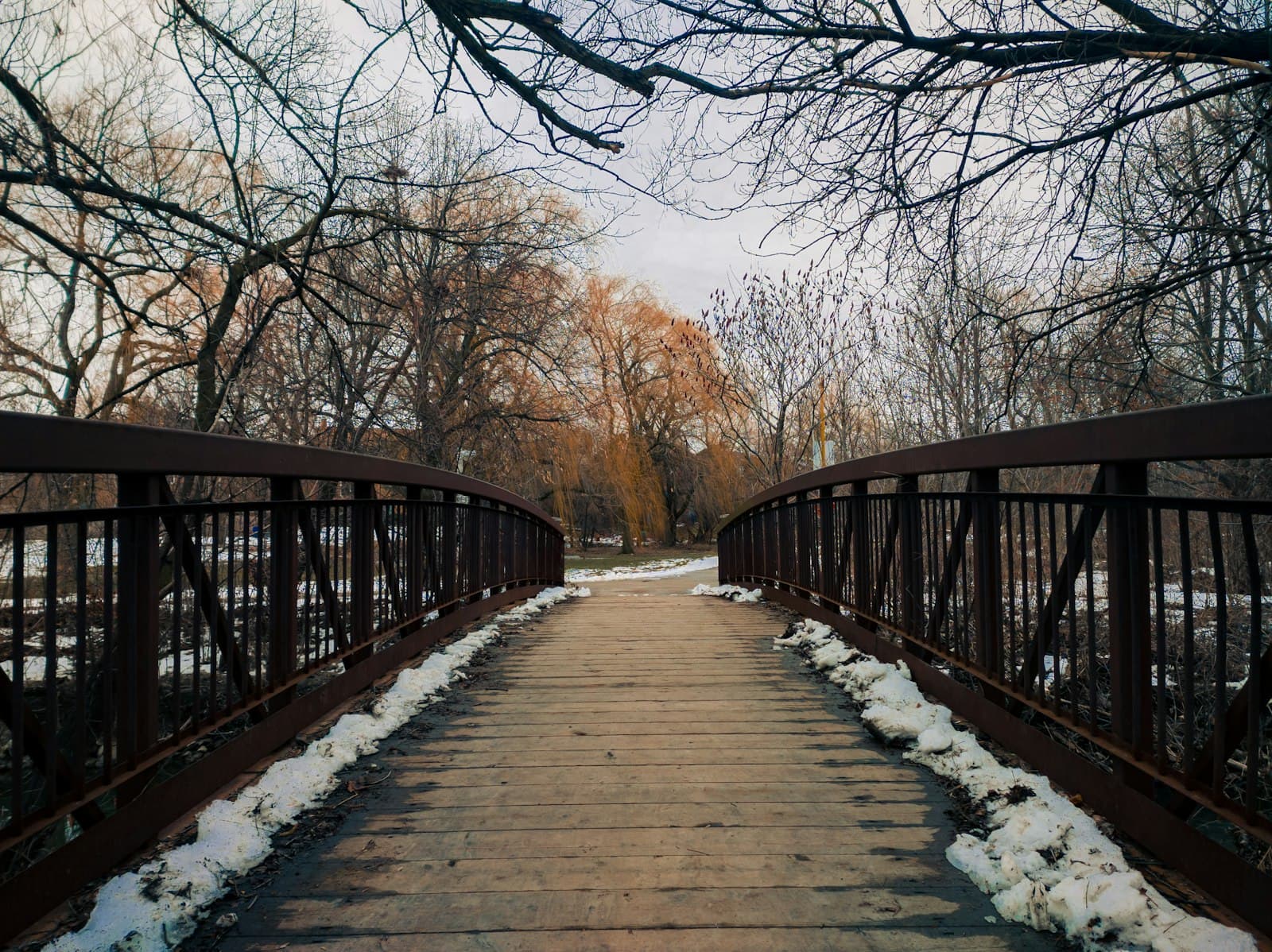
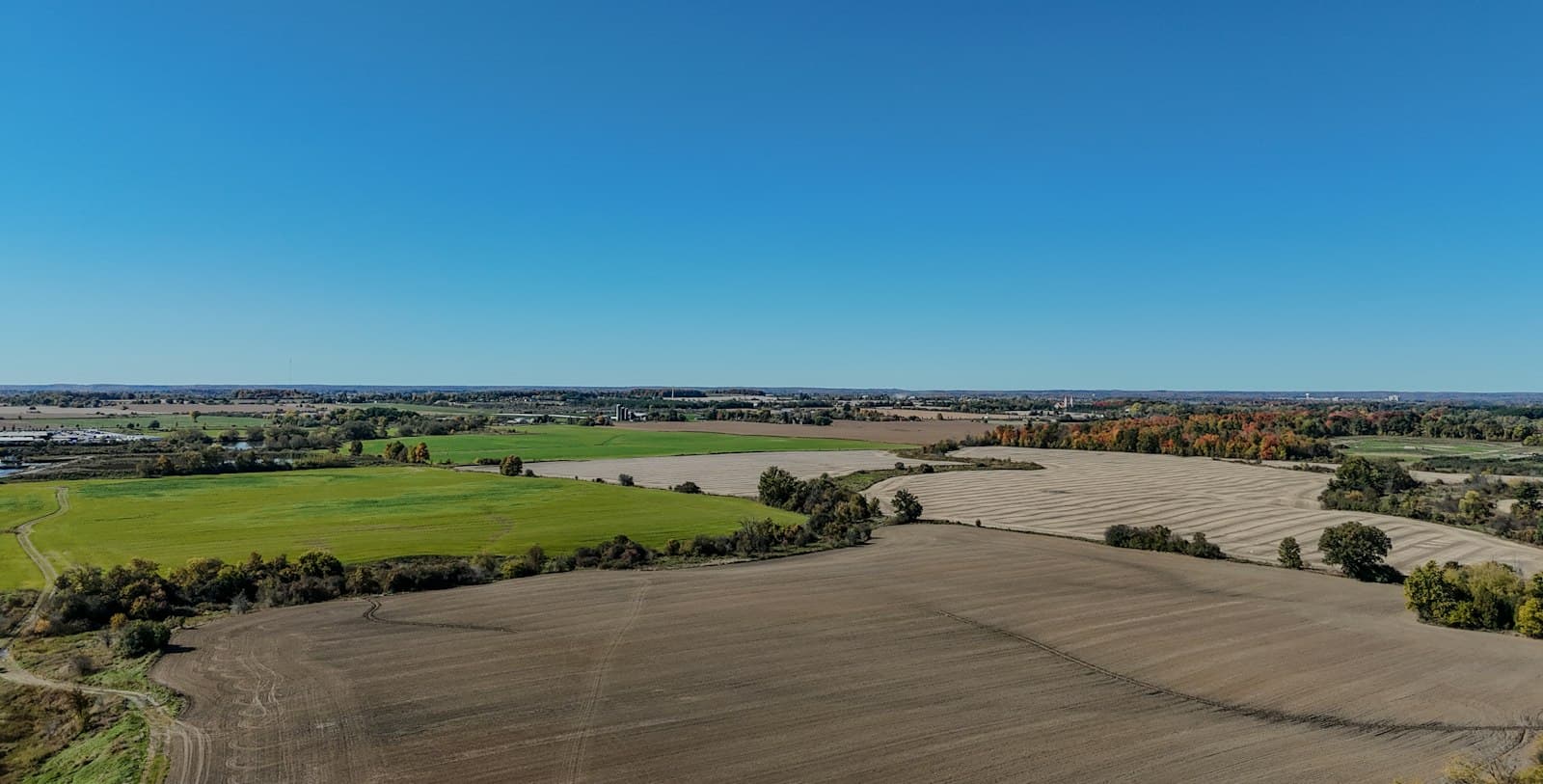
Your self-guided audio tour of Brampton is ready — pick your landmarks, choose your language, and start the moment you arrive.
BuyLume has a built-in augmented-reality guide. Hold your phone up and its camera shows the street ahead of you, with a glowing arrow laid over the real view that always points to your next stop — no map to puzzle over, no wrong turns. Like everything in Lume, it works fully offline.
Brampton, a dynamic city just west of Toronto, has blossomed from a humble crossroads settlement into one of Canada's largest and most culturally diverse urban centers. Once affectionately known as the "Flower Town of Canada" due to its thriving 19th-century floriculture industry, Brampton still embraces its horticultural roots, evident in its numerous parks and green spaces.
Today, Brampton is a mosaic of communities, reflected in its diverse culinary scene, lively arts, and numerous cultural festivals. With a youthful population and a continuous influx of new residents, the city pulses with an energetic spirit, offering a unique blend of urban amenities and natural escapes.
## From Buffy's Corners to Flower Town Brampton's story began in the early 1820s at the intersection of Queen and Main Streets, a focal point that remains its historical heart. Initially, this crossroads settlement was known as "Buffy's Corners," named after William Buffy, who opened a tavern there in the early 1830s.
The arrival of the Grand Trunk Railway in 1856 was a pivotal moment, triggering an economic boom and transforming the small agricultural community. In 1853, Brampton was officially incorporated as a village with a population of over 500 people. Just over a decade later, in 1867, it was selected as the Peel County seat, leading to the construction of important public buildings like the County Courthouse and Jail.
A new industry began to define Brampton in the mid-Victorian era. In 1860, Edward Dale established a flower nursery, quickly becoming the town's largest employer. Within a few years, Brampton earned the moniker "Flowertown of Canada," with hundreds of acres dedicated to greenhouses growing prize orchids, hybrid roses, and other high-quality flowers primarily for export markets worldwide.
## Modern Growth and Diversification The 20th century brought new industries, particularly along the railway line, including shoe factories and binder companies. However, the Great Depression and two World Wars took their toll on the local economy, leading to a decline in the flower industry.
Post-World War II, Brampton underwent a significant transformation. The late 1940s and 1950s saw rapid urban growth and the development of new subdivisions. In 1950, an ambitious civil engineering project began to channelize and reroute the Etobicoke River, which had repeatedly flooded the downtown area. This project was completed in 1952. In 1974, Brampton officially became a city, part of the newly formed Region of Peel. The latter half of the 20th century saw the city emerge as a culturally diverse and major urban center, with its population more than doubling since 1991.
Brampton offers a blend of natural beauty and cultural attractions. Begin your exploration at Gage Park, the city's oldest municipal park, featuring floral gardens, a gazebo, and a popular ice skating trail in winter. Nearby, the Peel Art Gallery, Museum and Archives (PAMA), housed in the historic Peel County Courthouse and Jail, provides a glimpse into the region's past and showcases contemporary art. For a step back in time, visit the Historic Bovaird House, a beautifully restored 19th-century Georgian-style farmhouse.
Nature enthusiasts will appreciate Brampton's extensive network of parks and conservation areas. Heart Lake Conservation Park, named for its heart-shaped spring-fed lake, offers hiking trails, fishing, and even ziplining. Donald M. Gordon Chinguacousy Park is a destination park with a ski hill, curling rink, mini-golf, a petting zoo, and paddle boating. The Claireville Conservation Area provides a serene escape with its woodlands, wetlands, and diverse wildlife. For a unique urban beach experience, head to Professor's Lake Recreation Centre, where you can swim, sunbathe, and enjoy various water rentals.
The best time to visit Brampton for warm-weather activities is from late June to early September. During these summer months, average daily temperatures range from 16°C to 26°C, offering pleasant conditions for exploring parks and outdoor attractions. Spring (March-May) and autumn (September-November) are transitional seasons with moderate temperatures, though precipitation is common. If you're interested in winter sports like ice skating, December to February offers freezing temperatures suitable for the outdoor skating trails.
Brampton is situated in southeastern Ontario, just west of Toronto, making it accessible by major highway networks. The city is well-served by public transportation, though exploring some of the larger conservation areas might benefit from personal vehicle access. As a large and growing urban center, Brampton offers a wide range of accommodations, dining options, and shopping facilities to suit various budgets and preferences. The city's diverse population means you'll find a rich array of international cuisines, particularly South Asian. Keep in mind that Brampton is one of Canada's fastest-growing cities, so traffic and crowds can be a factor, especially during peak hours.
For those driving, Highway 410 North provides direct access to Brampton from Toronto. Parking is generally available at major attractions and shopping centers.
Brampton in Korean, in Chinese or in Hebrew — and 29 more languages, every stop narrated by a native voice. The widest language range of any self-guided audio tour.
Available in: