Dundurn Castle
This grand 19th-century estate held a prominent figure, yet whispers persist of a passage beneath its manicured lawns.
Full story unlocks in the tour
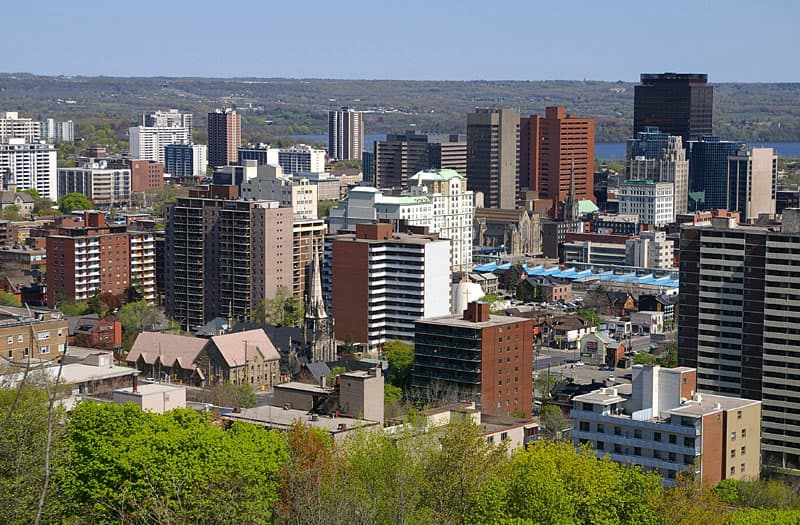 V. L. / CC0, via Wikimedia Commons
Self-guided audio walking tour of Hamilton — GPS route, offline playback, story-driven narration in 32 languages.
“Where the forge's echo meets the forest's hush.”
Not the postcards. The stories even locals don't know — whispered in your ear, right where they happened.
This grand 19th-century estate held a prominent figure, yet whispers persist of a passage beneath its manicured lawns.
Hamilton is celebrated for its cascades, though many of these natural spectacles have receded into memory.
Canada's largest botanical garden carries a regal designation, but its origins are rooted in a more utilitarian past.
Discover every secret of Hamilton
Every address, every reveal in full — in your ear, right where it happened.
You pick your stops. You walk. The voice reveals what the others miss.


Your self-guided audio tour of Hamilton is ready — pick your landmarks, choose your language, and start the moment you arrive.
BuyLume has a built-in augmented-reality guide. Hold your phone up and its camera shows the street ahead of you, with a glowing arrow laid over the real view that always points to your next stop — no map to puzzle over, no wrong turns. Like everything in Lume, it works fully offline.
Hamilton, a port city on the western shore of Lake Ontario, offers a compelling blend of industrial heritage and striking natural beauty. With a population exceeding 569,000 residents as of 2021, the city stands as a significant urban center within the Canadian province of Ontario. Its distinctive position along the Niagara Escarpment, a UNESCO World Biosphere Reserve, presents a remarkable landscape featuring over 100 waterfalls and cascades.
Once primarily recognized as 'Steeltown' or 'The Hammer' due to its prominent steel production, Hamilton has diversified its economy to include robust sectors in healthcare, education, and social services. The city's strategic location, approximately 45 kilometers southwest of Toronto, has historically made it a vital transportation hub. From its early settlement by Loyalists fleeing the American Revolution to its evolution into a modern, diverse city, Hamilton presents a multifaceted experience for visitors.
The land now known as Hamilton was originally inhabited by Indigenous peoples, including the Iroquoian-speaking Neutral Nation, who occupied the area for thousands of years. French explorers like Étienne Brûlé visited the region in the early 17th century. European settlement began in 1778 with the arrival of British Loyalists seeking refuge after the American Revolution.
The city's formal origins trace back to George Hamilton, a local politician and settler, who acquired land shortly after the War of 1812 and laid out a town site in 1815. Hamilton's growth was initially slower than nearby settlements like Dundas, but the construction of the Burlington Canal in the early 1830s, connecting Hamilton Harbour to Lake Ontario, stimulated rapid development as a port and rail center. The town was officially incorporated in 1840, achieving city status in 1846.
The 19th and 20th centuries saw Hamilton transform into a major industrial center, particularly for steel production. Companies like Stelco (formed in 1910) and Dofasco (established in 1912) became central to the city's identity, earning it designations such as 'Steel City' and 'The Birmingham of Canada.' This industrial expansion was fueled by the city's access to natural resources, its harbor, and expanding railway connections. During both World War I and II, Hamilton's steel industry played a crucial role in wartime production, significantly expanding its capabilities.
While steel production remains a part of Hamilton's legacy, the late 20th and early 21st centuries have seen a significant shift towards a more diversified economy. In 2001, the 'old' City of Hamilton amalgamated with five neighboring municipalities—Ancaster, Dundas, Flamborough, Glanbrook, and Stoney Creek—to form the larger, single-tier City of Hamilton. Today, the city is a growing center for healthcare, education, and social services, with institutions like McMaster University contributing to its evolving economic landscape. Efforts are also underway to rejuvenate its waterfront, with projects like the Pier 8 development aiming to create lively, mixed-use communities.
Hamilton offers a diverse range of attractions, blending its industrial past with natural splendor. Consider Dundurn Castle, a 40-room Italianate-style villa constructed in the 1830s. This National Historic Site, once home to Sir Allan Napier MacNab, a railway magnate and Premier of the United Canadas, provides guided tours with costumed interpreters that illustrate daily life in the 1850s. The estate also includes a meticulously restored two-acre Historic Kitchen Garden.
Explore the Royal Botanical Gardens (RBG), Canada's largest botanical garden and a National Historic Site. Spanning nearly 2,700 acres, RBG features five cultivated gardens, including the Rock Garden and Hendrie Park, along with 27 kilometers of nature trails. It is also recognized for having one of the world's largest lilac collections.
Hamilton is known as the 'City of Waterfalls,' with over 100 waterfalls and cascades along the Niagara Escarpment. Notable falls include Webster's Falls, the largest in the city, and Tew's Falls, the tallest at 41 meters. Many are accessible via hiking, cycling, or short walks from parking areas. For those interested in the city's industrial roots, the revitalized Pier 8 area at the West Harbour is transforming into a dynamic waterfront community.
The ideal time to visit Hamilton depends on your preferred activities. For warm-weather pursuits and outdoor exploration, late June to early September is most suitable, with July being the warmest month. Spring (April and May) and autumn (September and October) offer mild weather, brilliant foliage, and are perfect for hiking and enjoying the city's natural beauty, especially the waterfalls. While winter (December to February) brings a snowy landscape and holiday festivities, some outdoor attractions may be less accessible.
Hamilton is easily accessible, located approximately 68 km southwest of Toronto. Public transportation is available, but renting a car offers greater flexibility for exploring the city and surrounding areas, including the many waterfalls. When visiting waterfalls, it is advisable to go during off-peak times (early mornings or weekdays) and to remain on designated trails, respecting environmental guidelines.
Accommodation options in Hamilton range from luxury hotels to charming bed and breakfasts. Popular choices can be found in the city center or near nature reserves. The city's diverse culinary scene offers everything from local bistros to fine dining, with a growing craft beer scene and numerous cafes. For shopping, explore James Street North for local shops and art galleries, or Ottawa Street for textiles and vintage finds. The Hamilton Farmers' Market is a good spot for fresh produce and artisanal goods.
Hamilton in Korean, in Chinese or in Hebrew — and 29 more languages, every stop narrated by a native voice. The widest language range of any self-guided audio tour.
Available in: