Tomb of Domenico Tiburzi
The local bandit, Domenico Tiburzi, commanded such respect that his burial sparked a dispute with the church.
Full story unlocks in the tour
 LigaDue / CC BY 3.0, via Wikimedia Commons
Self-guided audio walking tour of Capalbio — GPS route, offline playback, story-driven narration in 32 languages.
“Beyond the ancient walls, where Tuscan grace meets the wild Maremma.”
Not the postcards. The stories even locals don't know — whispered in your ear, right where they happened.
The local bandit, Domenico Tiburzi, commanded such respect that his burial sparked a dispute with the church.
A celebrated composer once found inspiration within these palace chambers, leaving a tangible piece of his legacy.
A painting of the Madonna here once resisted relocation, prompting the construction of an entire church around it.
Discover every secret of Capalbio
Every address, every reveal in full — in your ear, right where it happened.
You pick your stops. You walk. The voice reveals what the others miss.

Your self-guided audio tour of Capalbio is ready — pick your landmarks, choose your language, and start the moment you arrive.
BuyLume has a built-in augmented-reality guide. Hold your phone up and its camera shows the street ahead of you, with a glowing arrow laid over the real view that always points to your next stop — no map to puzzle over, no wrong turns. Like everything in Lume, it works fully offline.
Capalbio, sometimes called "Little Athens," is a captivating medieval village in the southernmost reaches of Tuscany, where the Maremma hills gently meet the Tyrrhenian Sea. This ancient hilltop town, approximately 45 kilometers southeast of Grosseto, offers a tranquil escape from the bustling crowds of more famous Tuscan destinations. Its perfectly preserved double ring of medieval walls encircles a labyrinth of narrow, winding alleys, stone arches, and intimate squares, inviting visitors to wander and absorb an atmosphere where time seems to slow.
Beyond its architectural beauty, Capalbio is a place of understated sophistication, known for drawing artists, writers, and thinkers seeking inspiration and quietude. From its ramparts, panoramic views extend across the Maremman countryside to the shimmering Mediterranean Sea, and on clear days, even the islands of the Tuscan Archipelago are visible on the horizon. Capalbio is not merely a collection of historical sights; it is an immersive experience in authentic Tuscan slow living, where every detail, from flower-adorned buildings to ancient wooden doors, contributes to its evocative charm.
Capalbio's origins are deeply rooted in antiquity, with evidence of habitation dating back to the Bronze Age. The earliest documented mention of the village appears in 805 CE, when Charlemagne himself donated its castle to the Abbey of the Tre Fontane in Rome. This initial gift set the stage for a long and often turbulent history, as various powerful families and republics contended for control of this strategic outpost.
Around the 13th century, Capalbio came under the dominion of the Aldobrandeschi family, who undertook significant restructuring of the existing fortress and erected the first medieval defensive walls between the 11th and 12th centuries. Later, in 1416, the Republic of Siena seized Capalbio, transforming it into its southernmost defensive point and a significant commercial center. It was during this period of Sienese rule in the 1400s that the village's distinctive double ring of walls was extended and strengthened, giving it the fortified character seen today. The Porta Senese, still adorned with the Sienese lion and the town's symbolic bald head, stands as a testament to this era.
In 1555, the conquest of Siena by the Florentine Medici family led to Capalbio's decline, as the town lost much of its strategic importance. The subsequent centuries were marked by economic and demographic crises, exacerbated by Saracen incursions and the prevalence of malaria in the Maremma region. The area eventually came under the rule of the Bourbon family and then the Austrians, before the Medici and later the Lorraine family initiated extensive land reclamation policies, gradually improving the region's conditions. Banditry also became widespread during this period, with figures like Domenico Tiburzi becoming local legends.
Capalbio became an independent comune in 1960, and in the 20th century, it experienced a resurgence, earning the moniker "Little Athens" for its renewed artistic and cultural significance. Today, it continues to be a cherished destination, preserving its medieval heritage while fostering a lively cultural scene through events like the Capalbio Cinema festival and literary gatherings.
Begin your exploration of Capalbio by walking the medieval walls. These perfectly preserved ramparts offer panoramic vistas of the Maremman countryside and the Tyrrhenian Sea, a perfect introduction to the region's beauty. Enter the historic center through the Porta Senese, an ancient gate still featuring its original 15th-century wooden doors and the iconic Sienese lion emblem.
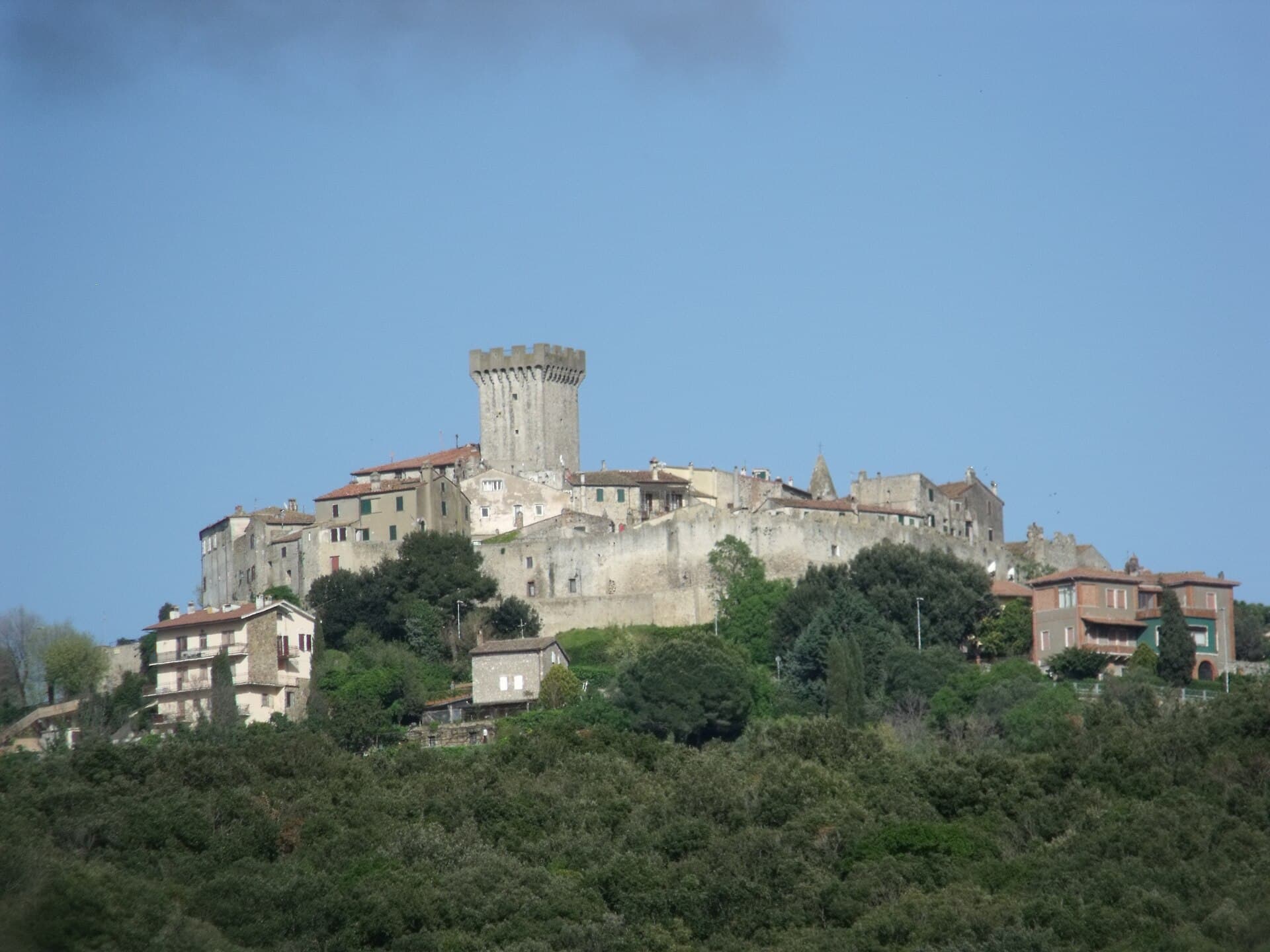
At the village's highest point stands the Rocca Aldobrandesca, a fortress with a square tower that forms the original core of Capalbio's defenses. You can visit some of its rooms and ascend to the terrace for expansive views. Adjacent to the Rocca is Palazzo Collacchioni, an elegant Renaissance palace where Giacomo Puccini once played the fortepiano. Do not miss the Church of San Nicola in the main square, a Romanesque treasure from the 12th century, adorned with delightful Renaissance frescoes and Romanesque capitals.
Just outside the walls, the Oratorio della Provvidenza houses frescoes attributed to the school of Pinturicchio. For a touch of modern art, seek out the "Nanà Fountain" by Niki de Saint Phalle in Piazza Carlo Giordano. A short drive from Capalbio, you will find the fantastical Giardino dei Tarocchi (Tarot Garden), a sculpture garden by Niki de Saint Phalle, inspired by Gaudí's Park Güell. Nature enthusiasts will appreciate the WWF-protected Lake Burano, a significant wetland for birdwatching. The surrounding coastline also offers long, sandy beaches with clear waters, ideal for a relaxing day by the sea.
Capalbio is charming year-round, but the best times to visit are spring (April to June) and fall (September to October). During these months, the weather is pleasantly mild, ideal for exploring the village and surrounding nature, and the landscape is at its most verdant. The Giardino dei Tarocchi is typically open from April 1st to October 15th. Summer (July and August) brings warmer temperatures, but it is perfect for beach lovers, with the nearby coast offering a refreshing escape. Be aware that August is the warmest month, with average highs around 29°C (84°F). Winter can be cool and rainy, but the village retains its evocative atmosphere in the off-season.
Capalbio is located approximately 60 kilometers south of Grosseto and 140 kilometers north of Rome. While Capalbio has a small train station (Capalbio Scalo) with regional service, a car is highly recommended for exploring the beaches, the Tarot Garden, and the wider Maremma region. Parking is available just outside the ancient walls, as the historic center is car-free. The village itself is best explored on foot, allowing you to fully appreciate its narrow alleys and quiet corners. Consider comfortable shoes for walking on cobbled streets and climbing the fortress tower. Capalbio is known for its local cuisine, particularly dishes featuring wild boar, and its excellent wines, so be sure to sample the regional specialties.
Capalbio in Korean, in Chinese or in Hebrew — and 29 more languages, every stop narrated by a native voice. The widest language range of any self-guided audio tour.
Available in: