The Greek Church of Saint Spyridon
This church, with its neo-Gothic exterior, holds a secret within its neoclassical interior.
Full story unlocks in the tour
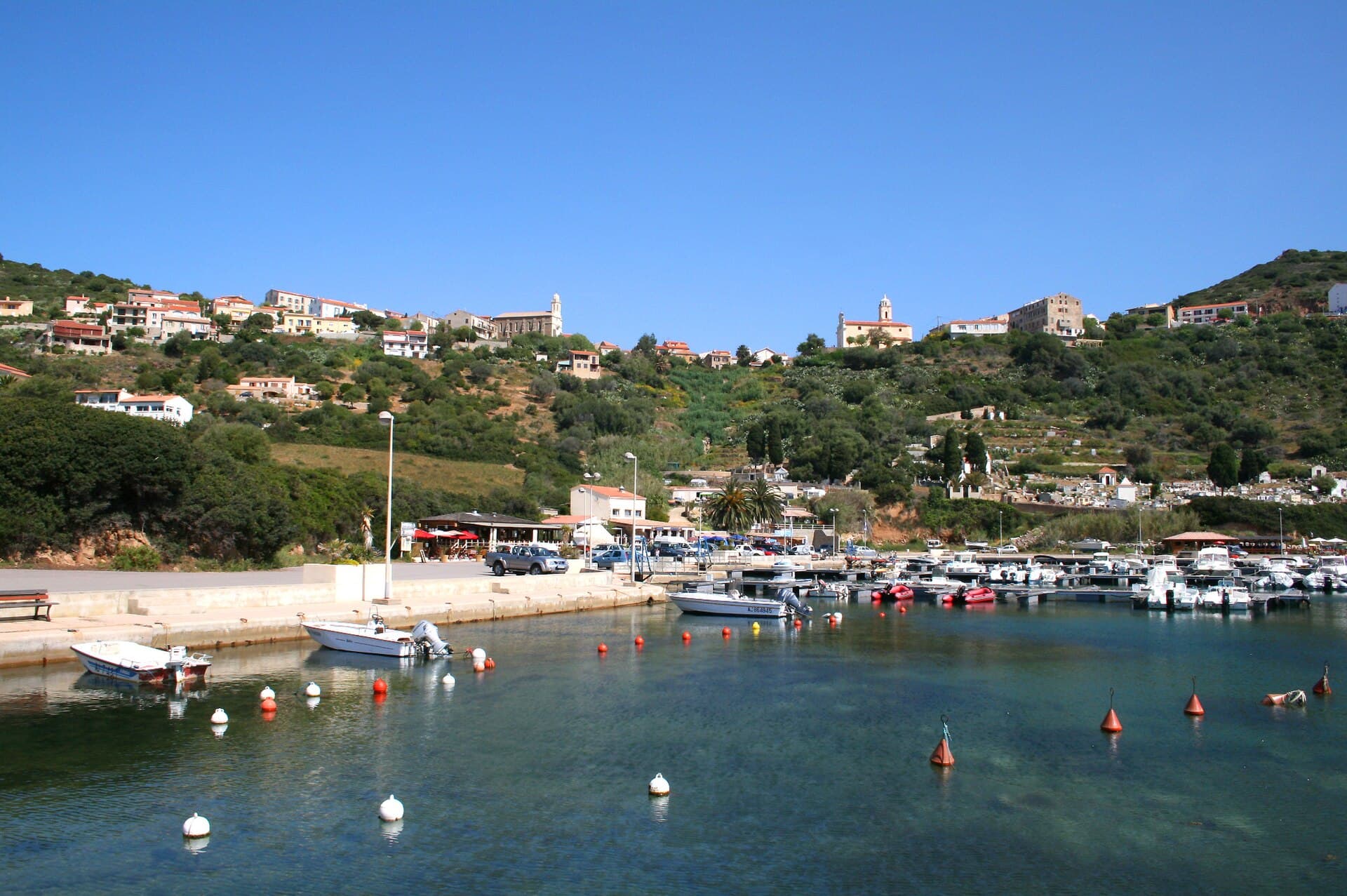 Jean-Pol GRANDMONT / CC BY 3.0, via Wikimedia Commons
Self-guided audio walking tour of Cargèse — GPS route, offline playback, story-driven narration in 32 languages.
“Where Corsican Soul Meets Greek Heritage.”
Not the postcards. The stories even locals don't know — whispered in your ear, right where they happened.
This church, with its neo-Gothic exterior, holds a secret within its neoclassical interior.
This 17th-century Genoese tower stands as a silent witness to a dramatic three-day siege.
Many family names in Cargèse sound distinctly Greek, but there's a practical reason behind their Corsican twist.
Discover every secret of Cargèse
Every address, every reveal in full — in your ear, right where it happened.
You pick your stops. You walk. The voice reveals what the others miss.


Your self-guided audio tour of Cargèse is ready — pick your landmarks, choose your language, and start the moment you arrive.
BuyLume has a built-in augmented-reality guide. Hold your phone up and its camera shows the street ahead of you, with a glowing arrow laid over the real view that always points to your next stop — no map to puzzle over, no wrong turns. Like everything in Lume, it works fully offline.
Cargèse, a village on Corsica's western coast, offers a unique blend of Corsican and Greek cultures. Overlooking the Gulf of Sagone, its white houses with blue shutters evoke a Mediterranean charm, while its history tells a compelling story of resilience and cultural integration. This fishing port and marina is celebrated for its distinctive heritage, most notably symbolized by its two prominent churches—one Latin Rite, the other Greek Byzantine Rite—standing opposite each other across a small valley.
Founded in the late 18th century by descendants of Greek immigrants, Cargèse offers a tranquil escape with a preserved authentic atmosphere. Beyond its historical significance, the village provides a gateway to natural landscapes, from dramatic granite cliffs to serene sandy beaches. It's a place where time seems to slow, inviting visitors to explore cobbled streets, enjoy local flavors, and witness sunsets over the sea.
The story of Cargèse begins in 1676, when a colony of approximately 600 to 800 Greeks from Vitylo in the Mani Peninsula of the Peloponnese fled Ottoman rule. With the approval of the Republic of Genoa, which then controlled Corsica, they initially settled in Paomia, about 2 km from present-day Cargèse.
However, their arrival was not met with open arms by the local Corsican population, who viewed them with suspicion, seeing them as allies of the Genoese. Tensions escalated, and in 1731, during a Corsican revolt against Genoa, the Greek community faced attacks, their lands were pillaged, and they were forced to seek refuge in Ajaccio. Some families even chose to sell their properties in Cargèse to Corsicans and return to Ajaccio permanently.
Corsica was ceded to France in 1768, and in 1773, the French governor, General Marbeuf, granted the Greeks permission to settle in the current location of Cargèse. They constructed 120 houses, and Marbeuf was named the Marquis of Cargèse in 1775. However, the challenges weren't over. In 1789 and 1791, during the French Revolution, Cargèse was subjected to further attacks by inhabitants of neighboring villages. The castle built for Marbeuf was destroyed in 1793 by Corsican attackers, forcing the Greeks to flee to Ajaccio once more.
Despite these conflicts, the Greek community eventually returned, and through intermarriage, the two cultures gradually integrated. This unique history is most visibly represented by the two 19th-century churches that stand facing each other: the Latin Church of the Assumption, built by the native Corsicans, and the Greek Catholic Church of Saint Spyridon, built by the descendants of the Greek colonists who maintained their Byzantine rites. Services were conducted alternately in both churches for many years, symbolizing the peaceful coexistence that now defines Cargèse.
Cargèse's most distinctive landmarks are its two 19th-century churches, the Latin Church of the Assumption and the Greek Catholic Church of Saint Spyridon, which stand facing each other across a small valley. Both are listed as Historic Monuments and are open daily until 6 p.m. The Latin church, completed in 1847, features a Baroque interior with trompe-l'oeil paintings. The Greek church, consecrated in 1872, offers a neoclassical interior with an iconostasis. Services are still held in both churches, sometimes alternating.
Beyond the churches, explore the three Genoese towers that dot the coastline, built between 1605 and 1606 to defend against invasions. The Tour de Cargèse is near the village, while the Tour d'Omigna and Tour d'Orchinu are to the north. The Tour d'Omigna, accessible via a hike from Pero Beach, offers historical intrigue and expansive views.
For those seeking relaxation, Cargèse offers several appealing beaches. Plage de Pero is a wide sandy expanse, ideal for a relaxing day or windsurfing. Chiuni Beach, about 7 km from the village, is family-friendly with soft sand. Menasina Beach and Capizzolu Beach are other options for clear turquoise waters.
Boat trips from the marina are popular for exploring the nearby Scandola Nature Reserve, the Calanques de Piana, and the village of Girolata, often including swimming breaks in secluded coves.
The best time to visit Cargèse for pleasant weather and outdoor activities is from May to September. During these months, temperatures are comfortable, ranging from 19°C to 26°C (66°F to 79°F). July and August are the warmest, with average highs around 25-26°C (77-79°F), offering ideal conditions for swimming and beach activities. July is also the sunniest month, with an average of 12.3 hours of sunshine per day. While these months are popular, June offers predictably warm weather with fewer tourists and more affordable accommodation. The dry season in Cargèse typically runs from June to August.
To reach Cargèse, fly into Ajaccio Napoleon Bonaparte Airport (AJA), which has flights from major French cities like Paris, Nice, and Marseille. From Ajaccio, Cargèse is about a 45-minute drive. A bus service operates between Ajaccio and Ota, stopping in Cargèse, with two daily buses in each direction, except on Sundays and bank holidays when there are no services. Car rental is highly recommended for exploring Corsica, as public transportation can be limited, especially for smaller towns and scenic routes. Be prepared for winding, narrow mountain roads.
While French is the official language, some younger generations and those in the hospitality industry may speak English, German, or Italian. The local currency is the Euro. It's advisable to carry cash, as many smaller restaurants and local businesses may not accept credit cards. Cargèse offers essential services, including a post office, bank with an ATM, restaurants, shops, a pharmacy, and medical facilities. Accommodation options include hotels, guesthouses, and village house rentals.
Cargèse in Korean, in Chinese or in Hebrew — and 29 more languages, every stop narrated by a native voice. The widest language range of any self-guided audio tour.
Available in: