The Citadel of Corte
This formidable fortress, a sentinel above the valleys, holds a past beyond its strategic military purpose.
Full story unlocks in the tour
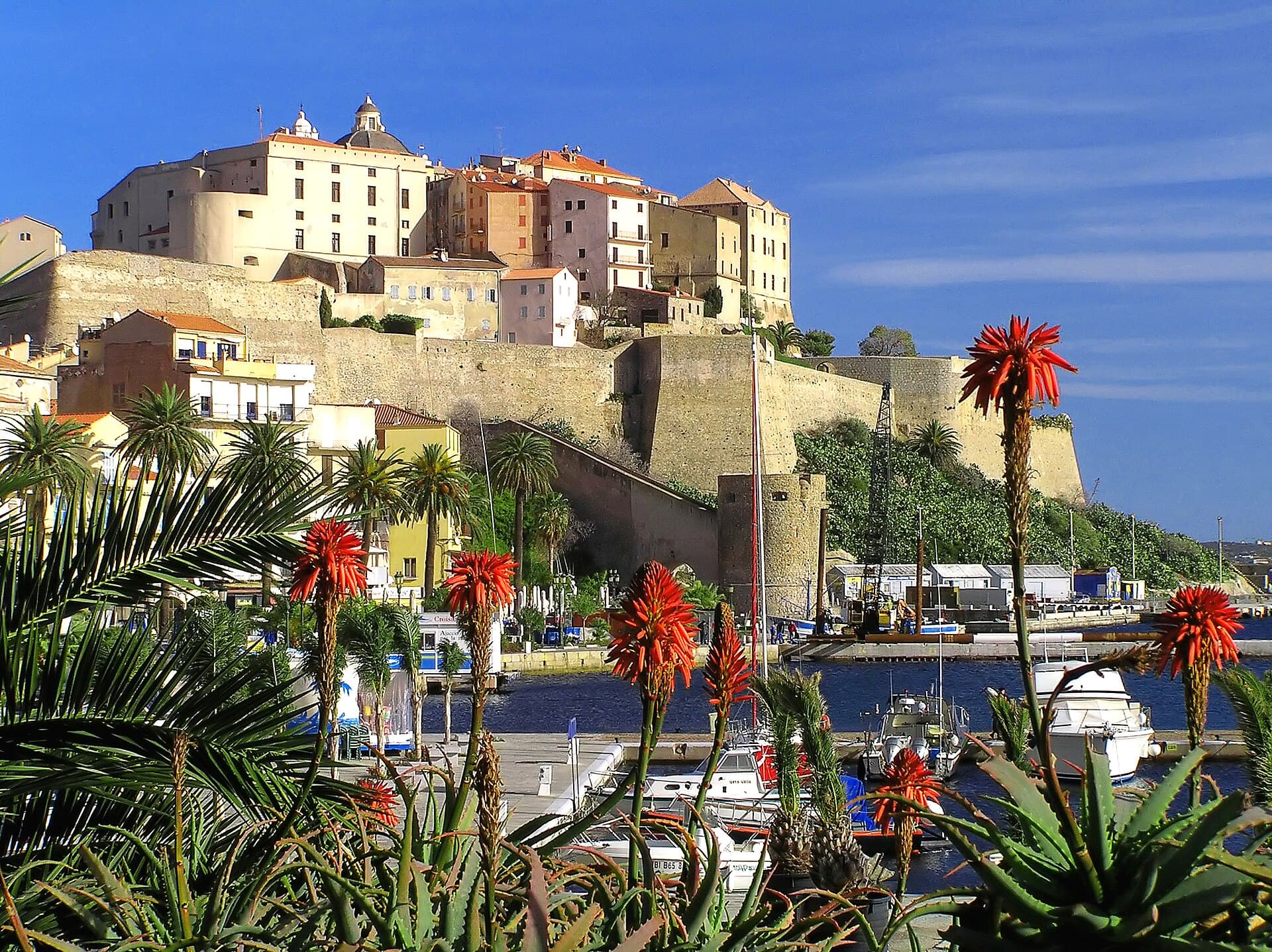 Photo of Calvi, via Wikimedia Commons
Self-guided audio walking tour of Corte — GPS route, offline playback, story-driven narration in 32 languages.
“Where Corsican identity clings to granite peaks, a town etched into the very stone of the island.”
Not the postcards. The stories even locals don't know — whispered in your ear, right where they happened.
This formidable fortress, a sentinel above the valleys, holds a past beyond its strategic military purpose.
A modest 16th-century tower-house in Corte possesses a surprising connection to one of history's most prominent families.
The island's singular university, established by a Corsican patriot, did not always provide a continuous beacon of learning.
Discover every secret of Corte
Every address, every reveal in full — in your ear, right where it happened.
You pick your stops. You walk. The voice reveals what the others miss.


Lume has a built-in augmented-reality guide. Hold your phone up and its camera shows the street ahead of you, with a glowing arrow laid over the real view that always points to your next stop — no map to puzzle over, no wrong turns. Like everything in Lume, it works fully offline.
Corte, situated in the very core of Corsica, offers an experience distinct from the island's coastal settlements. It rests within the mountains of north-central Corsica, at the convergence of the Tavignano and Restonica rivers. The town is a convergence of rugged natural grandeur and profound historical weight. Its dramatic landscape, with the formidable citadel ascending above, immediately speaks of its past as a stronghold.
This historic fortress town, often called the enduring spirit of Corsica's identity, serves as an entrance to some of the island's most remarkable natural attractions, including the Regional Nature Park of Corsica. Beyond its appeal for outdoor exploration, Corte is a lively university town, home to the University of Corsica Pasquale Paoli, which infuses its ancient streets with youthful energy.
Corte's singular position and resilient character make it a compelling destination for those seeking to comprehend Corsica's cultural heritage and traverse its mountainous interior.
## From Ancient Settlements to Genoese Control Evidence of human activity in Corte stretches back to the Bronze Age. From 238 BC to 600 AD, the Romans governed the territory of Corte and the remainder of Corsica. The initial human settlement on the granite outcrop was constructed by the Moors during their subsequent occupation of the area.
The period of contention between Pisa and Genoa, which also enveloped the island, witnessed the rise of Corsican noblemen. Local lords asserted their authority, and rivalries intensified. After Pisa's defeat at Meloria in 1284, Corte came under the dominion of the Genoese, who assumed control of the island.
## The Capital of Independent Corsica Corte's most significant historical period began in the 18th century. In 1755, Pasquale Paoli, revered as the "Father of the Fatherland," spearheaded a Corsican uprising against Genoese rule and established an independent government. He thoughtfully selected Corte as the capital due to its military and political advantages, making it a nearly impenetrable bastion against invaders. During this era, Paoli laid the foundations of a modern Corsican state, implementing a structured administrative system and strengthening military organization.
In 1765, Paoli established the University of Corsica in Corte, with the aim of providing the island with an academic framework to shape future generations. The National Palace, which served as the seat of the Corsican government, also dates from this period. The town's older houses, with their schist construction and Genoese Venetian blinds, form a harmonious architectural ensemble, reflecting this era.
## French Annexation and Modern Revival Despite Paoli's endeavors, his government fell in 1769 following the defeat of Corsican troops at the Battle of Ponte-Novo against King Louis XV's forces. Corsica was then absorbed by France, and Corte relinquished its political prominence. The French army viewed Corte as a strategic location and commenced construction of the current citadel in 1769 to display royal power and erase the memory of the Paoline capital. The construction of the citadel, a technical marvel, spanned 350 years. The citadel itself was built around a 15th-century castle, sometimes called the "Eagle's Nest," which was constructed in 1419 by Vincentello d'Istria.
Even after French annexation, Corte remained a spiritual capital and a symbol of resilience in the hearts of Corsican patriots. From 1962 to 1983, the Citadel of Corte served as a base for the Foreign Legion. In 1981, the University of Corsica was re-opened, bringing renewed energy and a youthful population of over 4,000 students to the city.
Corte's primary point of interest is its formidable Citadel, which commands the town's skyline. This 18th-century fortress, built around a 15th-century castle, offers expansive views of the Restonica and Tavignano valleys. Within the citadel, you will discover the Musée de la Corse (Museum of Corsica), which delves into the island's origins, culture, and ethnography.
Wander through the Old Town with its narrow, winding lanes and traditional schist houses. The Place Paoli features a bronze likeness of Pasquale Paoli, the Corsican patriot who designated Corte as the capital of independent Corsica. Nearby, the Church of the Annunciation, a 15th-century edifice with 18th-century modifications, exemplifies characteristic Corsican church architecture.
For those who enjoy the outdoors, Corte serves as an entry to the Restonica Valley and Tavignano Valley. The Restonica Valley, a designated Grand Site of France, offers trails leading to alpine lakes like Lac de Melo and Lac de Capitello, with opportunities for freshwater swimming in natural pools along the river.
The most favorable times to visit Corte are May or September. During these months, the weather is pleasant for walking and exploring, with fewer people than in the busiest summer season. Temperatures in May and September range from 15°C to 27°C (59°F to 81°F), making outdoor activities comfortable. Spring (March to May) brings verdant landscapes as the mountains awaken, while autumn (September and October) offers golden foliage. While summer (June to August) is the warmest, it is also the busiest. Winter (November to February) is quieter and cooler, with some tourist services closing.
Corte is reachable by train, with daily connections to Bastia, Ajaccio, and Calvi from the Gare de Corte. Several coach operators also provide services between Corte and other Corsican towns. For exploring the surrounding valleys and trailheads, a rental car is advisable, though the old town is best traversed on foot due to its steep, narrow passages.
The town's tourist office, located inside the Citadel, provides comprehensive information on Corte's heritage and attractions. Numerous parking areas are available, including the Tuffelli covered car park and a paid parking area near the Citadel. Accommodation in Corte can be limited, especially for students, so reserving in advance is recommended. The University of Corsica also has a mobility office for international students seeking assistance with administrative procedures and accommodation.
Corte in Korean, in Chinese or in Hebrew — and 29 more languages, every stop narrated by a native voice. The widest language range of any self-guided audio tour.
Available in: