Victoria Hall
Esta imponente estructura neoclásica, que una vez fue considerada una posible capital provincial, oculta una maravilla óptica en el techo de su Sala de Conciertos.
La historia completa se desbloquea en el tour
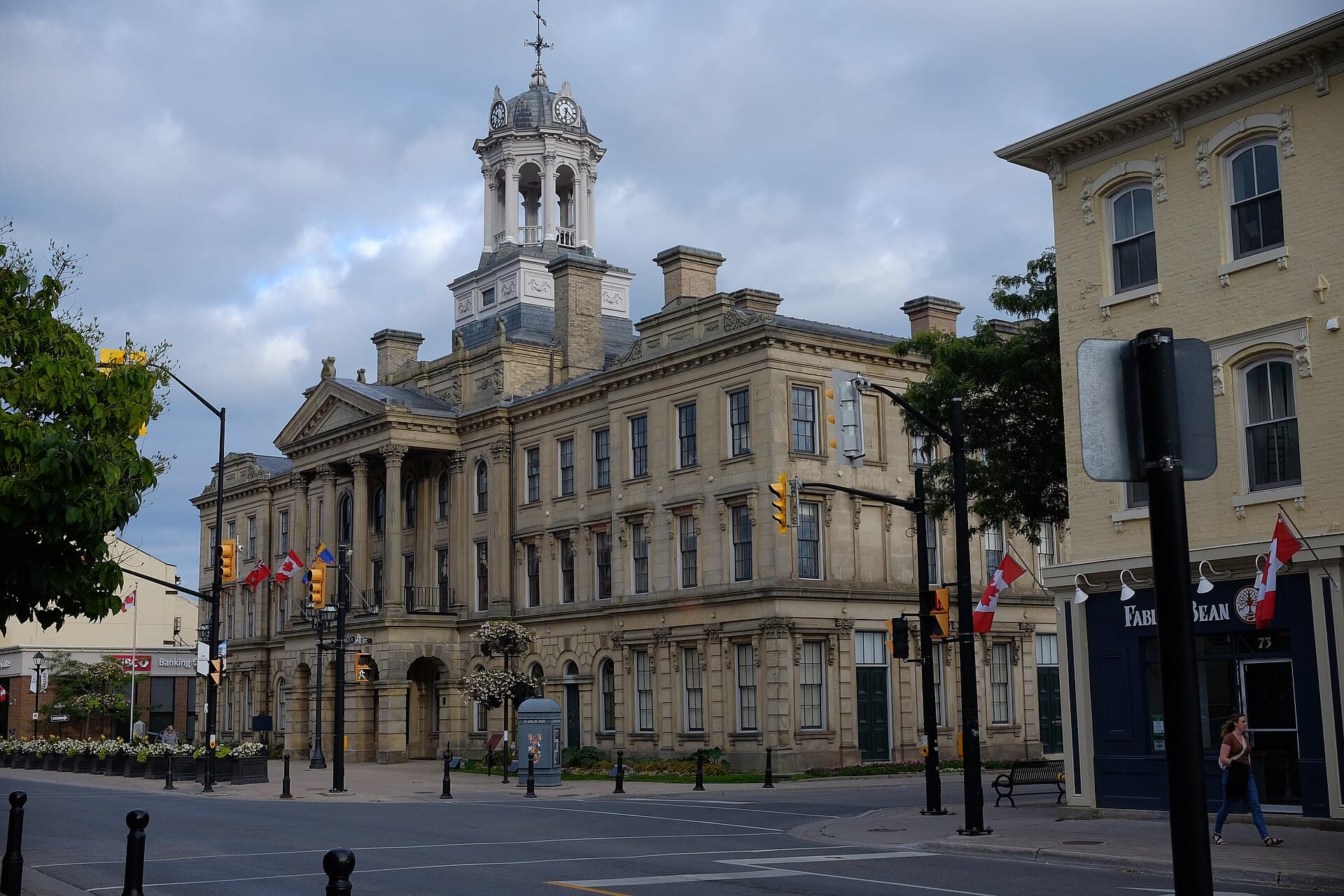 elysia / CC BY-SA 4.0, via Wikimedia Commons
Tour de audio autoguiado de Cobourg — ruta GPS a pie, reproducción offline, narración en 32 idiomas.
“Donde la inmensidad del lago Ontario se encuentra con una arquitectura perdurable.”
No las postales. Las historias que ni los locales conocen — al oído, justo donde ocurrieron.
Esta imponente estructura neoclásica, que una vez fue considerada una posible capital provincial, oculta una maravilla óptica en el techo de su Sala de Conciertos.
El venerable edificio de piedra caliza, conocido coloquialmente como 'The Barracks' (El Cuartel), lleva un nombre descriptivo que podría no coincidir con su verdadera historia.
Este familiar faro blanco, que guía a las embarcaciones hacia el puerto de Cobourg, una vez encendió un debate local sobre su apariencia exterior.
Descubre todos los secretos de Cobourg
Cada dirección, cada revelación al completo — a tu oído, justo donde ocurrió.
Eliges tus paradas. Caminas. La voz te revela lo que los demás ignoran.


Tu tour de audioguía por Cobourg te espera — elige tus lugares, tu idioma y empieza al llegar.
ComprarLume incluye una guía de realidad aumentada. Levanta el móvil y su cámara muestra la calle que tienes delante, con una flecha luminosa sobre la imagen real que siempre apunta a tu próxima parada — sin mapas que descifrar, sin giros equivocados. Como todo en Lume, funciona completamente sin conexión.
Cobourg, una elegante ciudad que descansa en la orilla norte del lago Ontario, presenta una armoniosa mezcla de carácter histórico y reposo junto al lago. Situada aproximadamente a 95 km al este de Toronto, ofrece un acceso sencillo y sirve como la ciudad más grande del condado de Northumberland. Reconocida por su ambiente acogedor, aire limpio y pintoresca orilla, Cobourg ofrece un refrescante respiro de la actividad de los centros urbanos más grandes.
El principal atractivo de la ciudad reside en sus extensas playas de arena, que atraen tanto a residentes como a visitantes durante los meses más cálidos. Más allá de la costa, las avenidas de Cobourg están bordeadas de arquitectura del siglo XIX meticulosamente conservada, tiendas independientes y establecimientos de comida locales, lo que refleja su profundo pasado y su comunidad comprometida. Es un destino que invita a paseos sin prisas, vistas del sol descendiendo sobre el lago y una auténtica experiencia de la vida provincial canadiense.
Cobourg también funciona como un centro para reuniones culturales y actividades al aire libre. Desde paseos guiados por el patrimonio hasta exploraciones a lo largo del sendero de la orilla, una diversa gama de experiencias espera. La dedicación de la ciudad a preservar su pasado mientras abraza su belleza natural la convierte en una parada memorable para familias, parejas o amigos que buscan una escapada completa.
El territorio que ahora ocupa Cobourg fue originalmente hogar de los pueblos Mississauga (hablantes de Anishinaabemowin). Los asentamientos europeos iniciales, establecidos por Lealistas del Imperio Unido en 1798, comenzaron como una colección de comunidades más pequeñas, incluyendo Amherst y Hardscrabble, que más tarde se conocieron colectivamente como Hamilton. Eliud Nickerson es frecuentemente citado como el primer colono, construyendo una cabaña cerca de las calles King y Division en 1798.
A principios del siglo XIX, la zona comenzó a expandirse. En 1808, se convirtió en la ciudad del distrito de Newcastle. Un momento crucial llegó en 1819 cuando la ciudad fue renombrada Cobourg. Este cambio de nombre honró el matrimonio de la Princesa Charlotte Augusta de Gales con el Príncipe Leopoldo de Sajonia-Coburgo-Saalfeld, quien más tarde ascendería al trono belga. La 'o' en Cobourg fue, según se informa, añadida por inadvertencia.
Para la década de 1830, Cobourg había consolidado su posición como centro regional, en gran parte debido a su ventajoso puerto en el lago Ontario. Esta era vio un considerable desarrollo, incluyendo el establecimiento de la Upper Canada Academy en 1835 por Egerton Ryerson y la Conferencia de Obispos Wesleyan. Cobourg fue formalmente incorporada como ciudad el 1 de julio de 1837. La Upper Canada Academy más tarde se transformó en Victoria College en 1841, permaneciendo en Cobourg hasta su traslado a Toronto en 1892.
Un emblema de la ambición de Cobourg durante este período es Victoria Hall. Construido en la década de 1850 e inaugurado por el Príncipe de Gales en 1860, este imponente edificio neoclásico fue concebido por el arquitecto Kivas Tully. Su grandeza reflejaba una época en la que los líderes locales esperaban que Cobourg pudiera incluso convertirse en la capital del Alto Canadá, aunque esa distinción finalmente fue para Ottawa. Victoria Hall fue designada sitio histórico nacional en 1959.
El puerto de Cobourg jugó un papel vital en su crecimiento económico. En 1828, se construyó un puerto artificial para asegurar el comercio con las regiones del norte. La ciudad también se convirtió en un importante depósito de petróleo para motores diésel y líneas de barcos de vapor de Canadá, un legado de sus días de puerto industrial. Una de las empresas ferroviarias más ambiciosas de Canadá, el Cobourg and Peterborough Railway, comenzó aquí en 1852. Contaba con un puente de caballetes de madera de 4 kilómetros a través del lago Rice, entre los más largos del mundo en ese momento, aunque encontró dificultades de ingeniería y cerró en 1898.
A lo largo de finales de los años 80 y principios de los 90, la ciudad invirtió en la renovación de su paseo marítimo, creando un malecón para conectar el puerto y la playa, y senderos a través de Victoria Park y el centro histórico. Este énfasis en su atractivo natural y patrimonio ha transformado a Cobourg en un destino vacacional favorito, celebrado por su paseo marítimo, arquitectura histórica y reuniones comunitarias.
Cobourg presenta una variedad de lugares de interés, muchos concentrados alrededor de su atractivo paseo marítimo y su centro histórico. La Playa de Cobourg, particularmente la Playa de Victoria Park, destaca por ofrecer arena suave, aguas tranquilas e instalaciones como una zona de juegos acuáticos y un parque infantil. Un paseo marítimo conecta la playa con el puerto deportivo, proporcionando una agradable ruta para caminar. Para una experiencia más serena, explore West Beach, una extensión de arena más apartada al oeste de Victoria Park Beach, dentro del Área de Conservación de Cobourg.
Dominando el centro de la ciudad se encuentra Victoria Hall, un magnífico edificio neoclásico de la década de 1850 que funciona como ayuntamiento. Los visitantes pueden admirar su arquitectura, explorar la Galería de Arte de Northumberland que alberga y incluso visitar la Sala del Tribunal Old Bailey, diseñada a semejanza de su homóloga londinense. La Sala de Conciertos de Victoria Hall también es una característica notable, reconocida por su calidad acústica y su obra de arte trompe-l'œil.
Para una comprensión más profunda de la historia local, el Sifton-Cook Heritage Centre ofrece exposiciones, artefactos y un vistazo a la vida pionera, incluyendo una herrería en funcionamiento y una colección de vehículos históricos. No pase por alto el Faro de Cobourg East Pierhead, una estructura histórica al final del muelle este, que ofrece vistas panorámicas del puerto y el lago Ontario.
Otros puntos de interés incluyen el Jardín Ecológico de Cobourg, un encantador oasis cerca del paseo marítimo, y varios murales por toda la ciudad, como las alas de Mystic Roots y el mural de Pine Ridge Vet.
El momento ideal para visitar Cobourg para actividades de clima cálido abarca desde principios de julio hasta principios de septiembre. Durante estos meses, la temperatura máxima diaria promedio supera los 18°C (65°F), siendo agosto el mes más cálido, con un promedio de 23°C (73°F). La temporada de verano es popular para disfrutar de las playas, el paseo marítimo y los festivales al aire libre. El período con cielos más despejados en Cobourg también se extiende de junio a octubre, con agosto ofreciendo típicamente las condiciones más claras. Si bien los niveles de precipitación son relativamente consistentes durante todo el año, septiembre se encuentra estadísticamente entre los meses más secos. Para aquellos interesados en festivales, el Festival de la Ribera de Cobourg se celebra el fin de semana del Día de Canadá, y el Festival anual de Castillos de Arena se lleva a cabo en agosto.
Cobourg está situada aproximadamente a 95 km al este de Toronto y es fácilmente accesible a través de la Autopista 401 (salidas 472 y 474). Para quienes viajan en coche, hay aparcamientos públicos disponibles cerca del paseo marítimo, con tarifas por hora vigentes desde el fin de semana del Día de la Victoria hasta el Día de Acción de Gracias. Para una opción sin coche, VIA Rail ofrece servicio diario de pasajeros a Cobourg desde Toronto, Ottawa y Montreal, llegando a la histórica Estación de Tren de Cobourg. También hay taxis disponibles a la llegada.
Cobourg opera en la Hora Estándar del Este (GMT -5 horas), observando el Horario de Verano. Se aceptan la mayoría de las tarjetas de crédito principales y los cajeros automáticos están ampliamente disponibles. La edad legal para beber es de 19 años, con alcohol accesible en los puntos de venta de LCBO, The Beer Store y algunas tiendas de comestibles. En caso de emergencia, marque 911. Para el alojamiento, es aconsejable reservar con al menos 2-3 meses de antelación si visita durante el pico del verano (julio y agosto), ya que la ciudad es un destino favorito.
Cobourg en coreano, en chino o en hebreo — y 29 idiomas más, cada parada narrada por una voz nativa. La mayor variedad de idiomas de cualquier audioguía autoguiada.
Disponible en: