Le Puits de la Polenta (Pozzo della Polenta)
Un paysan, un sac de polenta et une curieuse disparition près d'un puits. Que s'est-il vraiment passé ?
L'histoire complète se débloque dans le tour
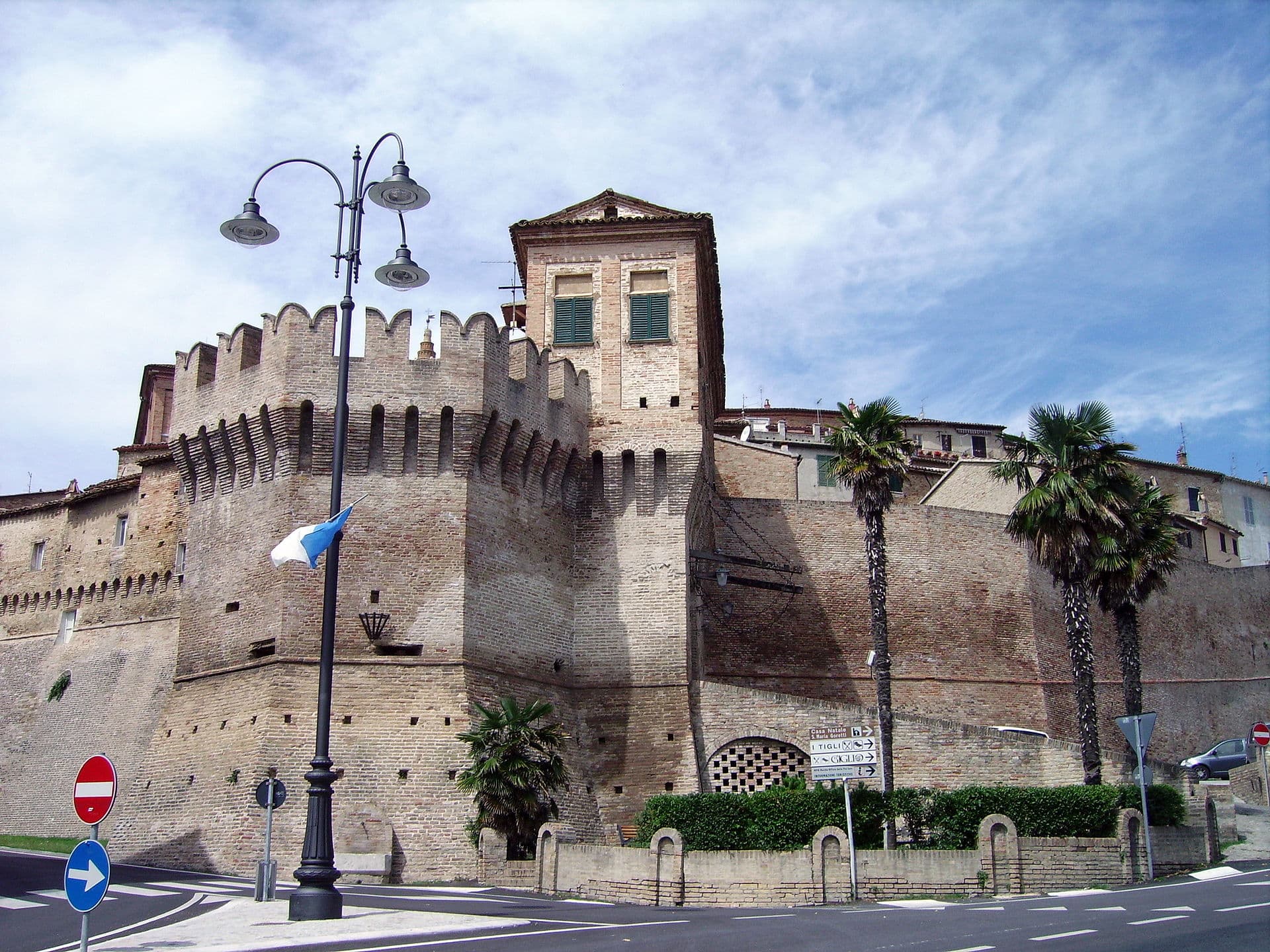 Beta16 / CC BY-SA 3.0 it, via Wikimedia Commons
Visite audio autoguidée de Corinaldo — parcours GPS à pied, lecture hors ligne, narration en 32 langues.
“Au-delà de ses solides remparts, Corinaldo recèle des récits de résilience, de fantaisie et d'une sainte vénérée.”
Pas les cartes postales. Les histoires que même les habitants ignorent — soufflées à l'oreille, là où elles se sont passées.
Un paysan, un sac de polenta et une curieuse disparition près d'un puits. Que s'est-il vraiment passé ?
Une maison à Corinaldo n'est qu'une façade, témoignage de la générosité d'un fils et des… priorités d'un père.
Comment une ville a-t-elle tenté d'attaquer sa rivale avec un canon fait d'un arbre fruitier commun ?
Découvrez tous les secrets de Corinaldo
Chaque adresse, chaque révélation en entier — dans ton oreille, là où elle s'est passée.
Tu choisis tes lieux. Tu marches. La voix te révèle ce que les autres ignorent.


Votre visite audioguidée de Corinaldo vous attend — choisissez vos lieux, votre langue, et lancez-vous dès votre arrivée.
AcheterLume intègre un guide en réalité augmentée. Levez votre téléphone : sa caméra montre la rue devant vous, avec une flèche lumineuse posée sur l'image réelle qui pointe toujours vers votre prochain arrêt — aucune carte à déchiffrer, aucun mauvais virage. Comme tout dans Lume, ça fonctionne entièrement hors-ligne.
Corinaldo, ville de la région des Marches en Italie, est un mélange captivant de caractère médiéval et de culture locale vivante. Située sur une colline dans la province d'Ancône, elle est reconnue comme l'un des plus beaux villages d'Italie. La caractéristique principale de la ville est son circuit de remparts défensifs des XIVe et XVe siècles, remarquablement intact, s'étendant sur près d'un kilomètre et offrant des vues imprenables sur la vallée de Cesano environnante.
Au-delà de ses impressionnantes fortifications, Corinaldo invite les visiteurs à flâner dans ses rues étroites et pavées, à découvrir de charmantes places et à explorer des bâtiments historiques qui s'étendent sur des siècles. La ville est également connue pour ses traditions et festivals animés, qui donnent vie à son histoire durable et à ses légendes locales uniques. Des contes ludiques de la « Ville des Fous » à la vénération solennelle de Sainte Maria Goretti, Corinaldo offre une expérience italienne authentique qui semble à la fois ancienne et vivante.
La position stratégique de Corinaldo offre des vues panoramiques sur les terres agricoles vallonnées, les oliveraies et les vignobles, mettant en valeur la relation harmonieuse entre l'effort humain et la beauté naturelle de la campagne des Marches. C'est un endroit pour ralentir, s'immerger dans une atmosphère intemporelle et découvrir les histoires gravées dans chaque pierre.
Les origines de Corinaldo sont enveloppées d'une ancienne légende, certains documents suggérant une colonie dès l'an 400 de notre ère, lorsque des habitants de la Suasa romaine cherchèrent refuge contre les invasions barbares. Le nom même de la ville proviendrait de « curie de Rinaldo », faisant allusion à ses racines médiévales précoces. Pendant des siècles, Corinaldo a existé en tant que commune libre, souvent prise entre le duché d'Urbin et la marche d'Ancône, naviguant dans le paysage politique complexe des loyautés gibelines et guelfes.
Un moment charnière de l'histoire de Corinaldo s'est produit en 1360 lorsque l'armée papale, sous le pape Innocent VI, a rasé la ville. Cependant, sept ans plus tard seulement, le pape Urbain V a autorisé sa reconstruction, ce qui a conduit à la création des formidables remparts qui définissent largement Corinaldo aujourd'hui. Cette résilience est capturée dans la devise de la ville : « Cineribus orta combusta revixi » (Née des cendres, je suis revenue à la vie). Ces remparts, initialement construits avec des créneaux en queue d'aronde distinctifs, ont ensuite été prolongés entre 1484 et 1490 par le célèbre architecte militaire siennois Francesco di Giorgio Martini, ajoutant une touche Renaissance avec des sections linéaires et des corbeaux.
L'importance stratégique de Corinaldo fut encore soulignée en 1517 lorsque ses murs résistèrent avec succès à un siège de 23 jours par Francesco Maria I della Rovere, duc d'Urbin. Cette victoire alimenta la fierté civique et est encore célébrée aujourd'hui lors de la reconstitution historique de la « Contesa del Pozzo della Polenta ». La ville prospéra à partir du XVIIe siècle, devenant partie des États pontificaux, ce qui permit une période de croissance du commerce, de la culture et de la construction de bâtiments représentatifs et d'églises. Plus récemment, des découvertes archéologiques dans la région de Nevola ont mis au jour une tombe de l'âge du fer datant du VIIe siècle av. J.-C., suggérant un riche passé pré-romain et conduisant le maire de Corinaldo à la proclamer fièrement « Terre des Princes ».
La caractéristique la plus frappante de Corinaldo est son circuit de remparts médiévaux, de près d'un kilomètre de long et considérés parmi les mieux conservés de la région des Marches. Une promenade le long de ces remparts, avec ses tours, ses bastions et ses créneaux en queue d'aronde uniques, offre des vues imprenables sur la campagne environnante.
Au cœur du centre historique, vous trouverez La Piaggia, un pittoresque escalier de 109 marches bordé de maisons en briques rouges disposées en chevrons. À mi-chemin, découvrez le célèbre Pozzo della Polenta (Puits de la Polenta), au centre de l'une des légendes les plus tenaces de Corinaldo.
Une autre curiosité est la Maison de Scuretto, une habitation qui n'est qu'une façade avec une histoire humoristique. Pour ceux qui s'intéressent à l'histoire religieuse, Corinaldo est le lieu de naissance de Sainte Maria Goretti. Vous pouvez visiter sa maison d'enfance et le Sanctuaire qui lui est dédié, qui abrite une relique.
Parmi les autres sites remarquables, citons l'Hôtel de Ville néoclassique (Palazzo Comunale) avec son imposant portique, datant de la fin des années 1700, et l'église San Francesco du XIIIe siècle, reconstruite au XVIIIe siècle. La Collection d'Art Civique « Claudio Ridolfi », abritée dans l'ancien monastère des Augustins, présente des œuvres du XVIe au XVIIIe siècle, ainsi que des pièces contemporaines. Ne manquez pas le Théâtre Carlo Goldoni, un lieu magnifiquement restauré du XIXe siècle.
Corinaldo est charmante au printemps (avril à juin) et en automne (septembre à octobre), lorsque le temps est agréable et que la foule est moins dense. Le mois de mai est particulièrement agréable, avec une verdure luxuriante et des fleurs abondantes. La ville s'anime de festivals pendant ces périodes, offrant une riche expérience culturelle. L'été (fin juin à fin août) est idéal pour les activités par temps chaud, bien qu'il puisse faire chaud, avec des maximales moyennes en juillet atteignant 28 °C (83 °F). La reconstitution historique de la « Contesa del Pozzo della Polenta » a lieu le troisième dimanche de juillet. Octobre apporte le populaire Halloween – Festa delle Streghe (Fête des Sorcières), transformant la ville avec des décorations et des événements thématiques.
Corinaldo est facilement accessible. L'aéroport principal le plus proche est l'aéroport d'Ancône Falconara (AOI), à environ 40 km. De là, vous pouvez louer une voiture ou prendre un bus. La gare la plus proche est à Senigallia, à environ 18 km, avec des liaisons en bus et en taxi vers Corinaldo. En voiture, Corinaldo est accessible via l'autoroute A14, avec des sorties à Senigallia ou Marotta/Mondolfo. Un parking est disponible à l'extérieur des remparts historiques.
Corinaldo est une petite ville qui se visite mieux à pied, vous permettant d'apprécier pleinement son caractère médiéval. L'Office de Tourisme local (Pro Loco) situé Largo XVII Settembre 1860 peut vous fournir des cartes et des informations. Bien que l'italien soit utile, de nombreux acteurs du tourisme parlent un anglais de base. Des chaussures de marche confortables sont recommandées. Les options d'hébergement incluent de charmants bed and breakfasts, des hôtels de charme et des agritourismes. Il est conseillé de réserver à l'avance, surtout pendant la haute saison et les festivals. Corinaldo dispose également d'une zone gratuite dédiée aux camping-cars en dehors du centre-ville.
Corinaldo en coréen, en chinois ou en hébreu — et dans 29 autres langues, chaque étape narrée par une voix native. La plus large gamme de langues de tous les audioguides autoguidés.
Disponible en :