Piazza del Popolo
Cette élégante place Renaissance, cœur même de Fermo, présente une omission surprenante pour une piazza du centre de l'Italie.
L'histoire complète se débloque dans le tour
 Flickr user lastquest / CC BY-SA 2.0, via Wikimedia Commons
Visite audio autoguidée de Fermo — parcours GPS à pied, lecture hors ligne, narration en 32 langues.
“Là où l'ingéniosité romaine rencontre la grandeur de la Renaissance, face à l'Adriatique.”
Pas les cartes postales. Les histoires que même les habitants ignorent — soufflées à l'oreille, là où elles se sont passées.
Cette élégante place Renaissance, cœur même de Fermo, présente une omission surprenante pour une piazza du centre de l'Italie.
L'impressionnant théâtre du XVIIIe siècle de Fermo recèle un détail architectural unique et un secret céleste dans son plafond.
Cette bibliothèque historique abrite une collection extraordinaire, y compris un document qui a annoncé l'une des découvertes les plus importantes de l'histoire.
Découvrez tous les secrets de Fermo
Chaque adresse, chaque révélation en entier — dans ton oreille, là où elle s'est passée.
Tu choisis tes lieux. Tu marches. La voix te révèle ce que les autres ignorent.


Votre visite audioguidée de Fermo vous attend — choisissez vos lieux, votre langue, et lancez-vous dès votre arrivée.
AcheterLume intègre un guide en réalité augmentée. Levez votre téléphone : sa caméra montre la rue devant vous, avec une flèche lumineuse posée sur l'image réelle qui pointe toujours vers votre prochain arrêt — aucune carte à déchiffrer, aucun mauvais virage. Comme tout dans Lume, ça fonctionne entièrement hors-ligne.
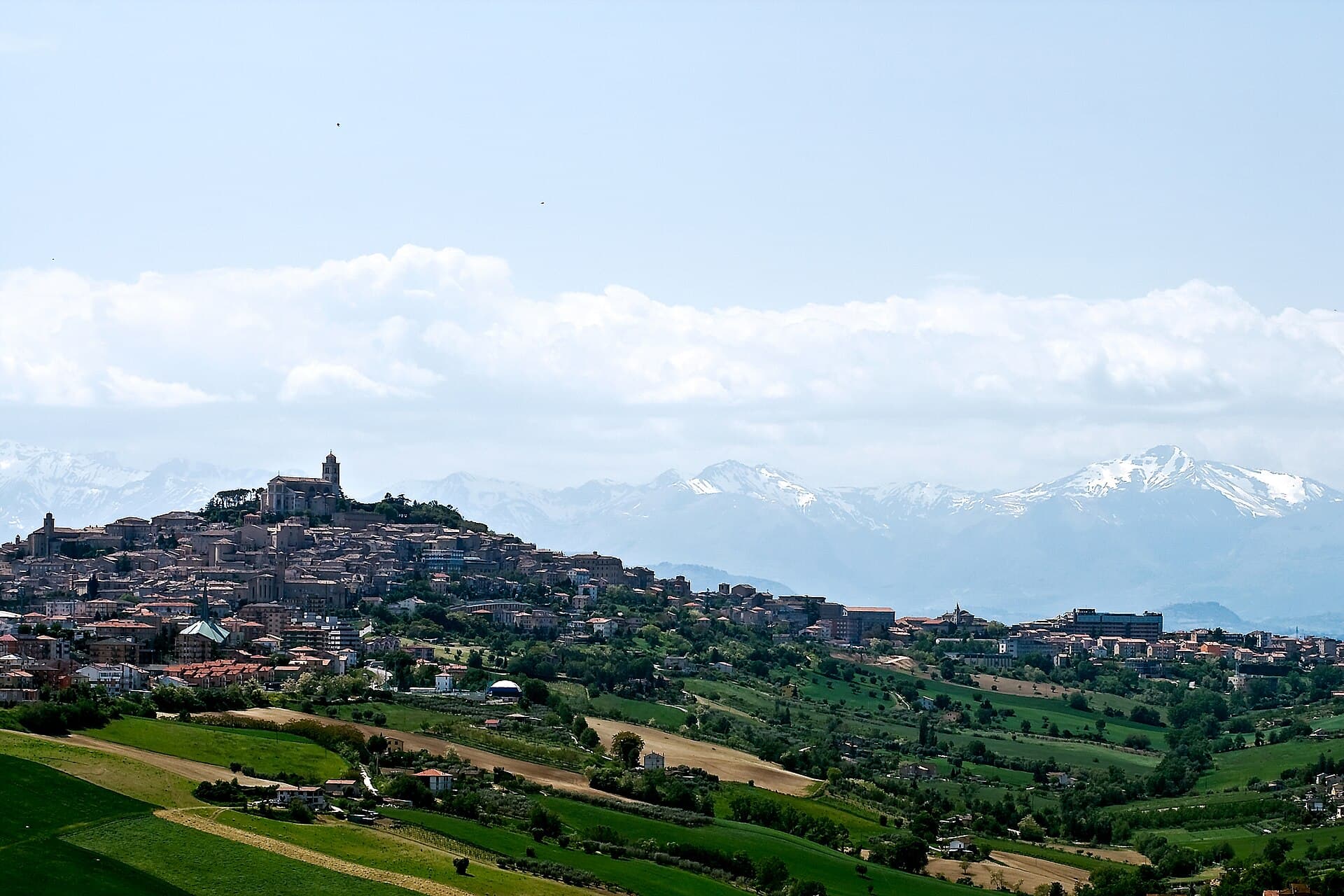
Perchée sur la colline de Sabulo, dominant la rivière Tenna et la mer Adriatique, Fermo est une ville qui raconte des millénaires d'histoires. Cette élégante capitale provinciale de la région des Marches en Italie offre un mélange captivant d'ingéniosité romaine, de charme médiéval et de magnificence de la Renaissance. Avec son centre historique, ses vastes panoramas et un trésor de richesses culturelles, Fermo invite à une exploration plus approfondie au-delà des sentiers battus du tourisme italien.
De ses anciennes citernes romaines, une merveille d'ingénierie qui alimentait autrefois toute la colonie, à l'architecture harmonieuse de la Renaissance de la Piazza del Popolo, Fermo se révèle par couches. La situation stratégique de la ville, à quelques kilomètres de la côte adriatique et porte naturelle vers les montagnes Sibyllines, offre des expériences diverses, que vous recherchiez une immersion culturelle, une détente au bord de la mer ou des aventures en montagne.
Fermo n'est pas seulement une collection de sites historiques ; c'est une ville vivante où l'histoire est palpable dans ses rues étroites, ses palais nobles et sa scène culturelle animée. C'est une destination pour ceux qui apprécient l'authenticité, un héritage profond et la beauté sereine du paysage des Marches.
## Des Picènes à la Colonie Romaine Les origines de Fermo remontent à l'âge du fer, avec des preuves de colonies villanoviennes sur la colline de Girfalco vers le IXe siècle av. J.-C. Les Picènes, un ancien peuple italique, ont ensuite habité la région à partir du VIIe siècle av. J.-C. Cependant, leur domination a pris fin avec une défaite face aux Romains en 267 av. J.-C.
En 264 av. J.-C., Fermo est officiellement devenue une colonie romaine sous le nom de Firmum Picenum. Elle est rapidement devenue l'un des sièges gouvernementaux les plus importants de l'Empire romain, initialement gouvernée par cinq questeurs. La ville était connue pour sa loyauté inébranlable envers Rome, adoptant la devise « Firmum firma fides Romanorum Colonia » (« Fermo, la colonie romaine et une ville de forte foi »). Des vestiges architecturaux de cette période, tels que les citernes romaines et les ruines d'un théâtre romain sur la colline de Sabulo, témoignent de son importance.
## Duché Médiéval et Domination Papale Avec la chute de l'Empire romain, Fermo a subi de nombreuses incursions barbares. Au VIIIe siècle, elle est devenue le siège d'un duché indépendant et plus tard la capitale de la Marchia Firmana, un vaste territoire qu'elle a administré à partir du IXe siècle. Cette période a vu des changements significatifs, y compris la soumission formelle à l'État de l'Église après l'arrivée de Charlemagne en Italie.
Fermo a obtenu le statut de ville libre en 1199, conservant son indépendance jusqu'en 1550, date à laquelle elle a été annexée aux États pontificaux. Au XIIIe siècle, la ville a été fréquemment assiégée et capturée lors de conflits entre les Hohenstaufen et la papauté. Une inscription de 1227 sur la façade du Duomo marque la construction d'une nouvelle basilique après qu'une précédente ait été détruite par Christian de Mayence, agissant sur ordre de Frédéric Barberousse.
## Renaissance et Époque Moderne La Renaissance a apporté d'importants développements architecturaux, y compris la restructuration de la Piazza del Popolo en 1569. En 1398, une « Schola » a été établie à Fermo, qui est devenue plus tard une université à la demande du pape Boniface IX. Le pape Sixte V, né à proximité, a favorisé son développement en 1585, conduisant à la conception d'un nouveau bâtiment universitaire par l'architecte Girolamo Rainaldi.
Fermo a perdu son autonomie provinciale pendant l'unification italienne, étant annexée à Ascoli Piceno, mais a retrouvé son statut de province en 2004, la ville devenant sa capitale en 2009. Aujourd'hui, Fermo continue de prospérer, mêlant ses profondes couches historiques à une identité moderne, connue pour son patrimoine culturel et sa position stratégique entre la mer et les montagnes Sibyllines.
Commencez votre exploration sur la Piazza del Popolo, l'élégante place principale de Fermo, encadrée par des portiques Renaissance et des bâtiments historiques comme le Palazzo dei Priori. À l'intérieur du Palazzo dei Priori, découvrez la Galerie d'Art Civique, abritant des chefs-d'œuvre tels que 'L'Adoration des Bergers' de Rubens, et la fascinante Salle du Mappamondo avec son immense globe de 1713.
Descendez sous la ville pour explorer les Citernes Romaines, un extraordinaire complexe souterrain de 30 salles interconnectées, témoignant de l'ingénierie hydraulique romaine antique. Montez sur la colline de Girfalco pour visiter la Cathédrale de Fermo (Duomo), une structure romano-gothique avec un intérieur néoclassique, offrant de vastes vues sur la ville et la mer Adriatique.
Découvrez la grandeur du Teatro dell'Aquila, un opéra du XVIIIe siècle réputé pour son acoustique, ses fresques de plafond élaborées et son rideau historique. Pour les amateurs de livres et les érudits, la Biblioteca Civica "Romolo Spezioli" dans le Palazzo degli Studi abrite une immense collection de volumes et de manuscrits anciens.
Parmi les autres sites remarquables, citons la Tour Matteucci médiévale, la plus ancienne Église de San Zenone et les Musées Scientifiques de la Villa Vitali, qui comprennent le Musée Ethnographique Polaire unique. Envisagez de vous aventurer à Lido di Fermo pour ses jolies plages, à quelques minutes en bus.
La période idéale pour visiter Fermo s'étend de la fin du printemps au début de l'automne (mai à septembre), lorsque le temps est le plus agréable pour explorer les attractions de la ville et profiter des activités de plein air. En juillet et août, le temps est chaud et ensoleillé, ce qui est parfait pour combiner les visites de la ville avec des excursions sur les plages voisines de l'Adriatique. La température de la mer est également la plus chaude en août, atteignant en moyenne environ 25°C. Des événements culturels et des festivals ont souvent lieu pendant ces mois, ajoutant à l'atmosphère animée. Pour des températures plus fraîches et moins de monde, envisagez de visiter en mai, juin, septembre ou début octobre.
Fermo est facilement accessible, bien qu'elle ne possède pas sa propre gare. La gare la plus proche se trouve à Porto San Giorgio, une ville côtière à seulement 10 kilomètres, avec des services de bus réguliers reliant le centre historique de Fermo toutes les 20 minutes pendant la journée. Pour les voyageurs internationaux, l'aéroport Leonardo da Vinci-Fiumicino à Rome est le plus accessible, avec des vols de correspondance vers l'aéroport d'Ancône, qui est plus proche de Fermo. La location d'une voiture est recommandée pour explorer la région des Marches, bien que Fermo elle-même soit très propice à la marche, avec des ascenseurs publics disponibles pour aider à gravir les collines escarpées de la ville fortifiée.
La ville offre une gamme de services touristiques, y compris un office de tourisme sur la Piazza del Popolo. De nombreux habitants, en particulier les jeunes générations, parlent anglais. Préparez-vous à des précipitations modérées tout au long de l'année, novembre étant généralement le mois le plus humide et juillet le plus sec.
Fermo en coréen, en chinois ou en hébreu — et dans 29 autres langues, chaque étape narrée par une voix native. La plus large gamme de langues de tous les audioguides autoguidés.
Disponible en :