The 'Amphitheater' of Houses
Cudillero's distinctive, ascending houses were not conceived for visual appeal.
Full story unlocks in the tour
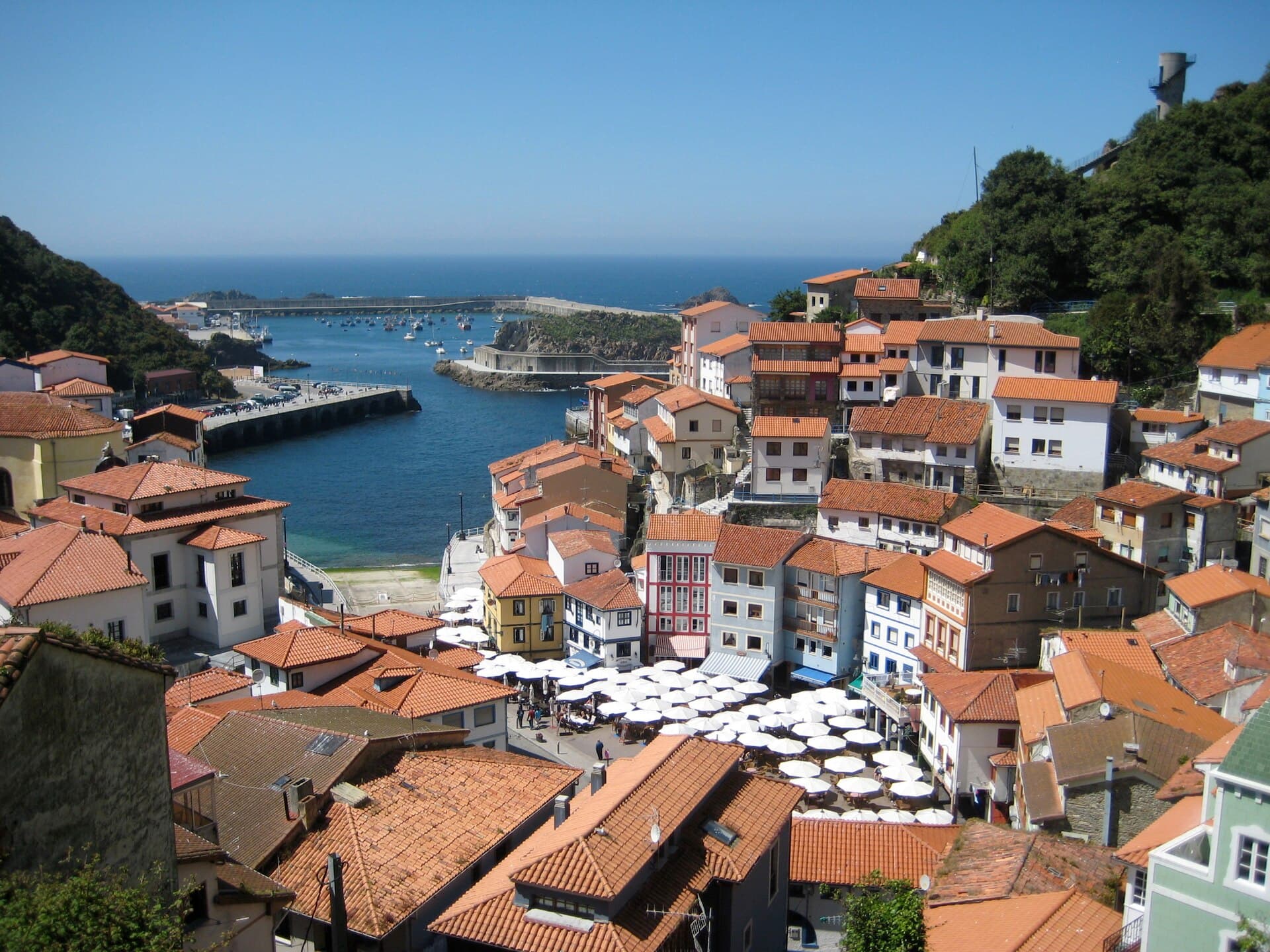 Markus Bernet / CC BY-SA 3.0, via Wikimedia Commons
Self-guided audio walking tour of Cudillero — GPS route, offline playback, story-driven narration in 32 languages.
“Where colorful houses ascend from the water, and the sea murmurs ancient stories.”
Not the postcards. The stories even locals don't know — whispered in your ear, right where they happened.
Cudillero's distinctive, ascending houses were not conceived for visual appeal.
Local lore suggests an unexpected group of founders for this Spanish fishing village.
Cudillero remains out of sight until you are already within its embrace.
Discover every secret of Cudillero
Every address, every reveal in full — in your ear, right where it happened.
You pick your stops. You walk. The voice reveals what the others miss.


Your self-guided audio tour of Cudillero is ready — pick your landmarks, choose your language, and start the moment you arrive.
BuyLume has a built-in augmented-reality guide. Hold your phone up and its camera shows the street ahead of you, with a glowing arrow laid over the real view that always points to your next stop — no map to puzzle over, no wrong turns. Like everything in Lume, it works fully offline.
Cudillero, or Cuideiru in the Asturian dialect, is a captivating fishing village on Spain's northern coast, in the region of Asturias. Frequently cited as one of Spain's most beautiful villages, it presents a dramatic tableau of colorful houses seemingly stacked against steep cliffs, curving around a serene harbor. This distinctive layout has earned it the nickname 'amphitheater.'
The village's enduring connection to the sea is evident everywhere, from the fishing boats in the harbor to the fresh seafood served in its many restaurants. Despite its growing popularity with both Spanish and international visitors, Cudillero has managed to retain its authentic character, with locals still enjoying coffee on sunlit terraces and traditional dishes being served with pride. It's a place where the rhythm of life is still dictated by the tides and the daily catch.
The history of the Cudillero region stretches back to prehistoric times, with evidence of castreñas buildings (fortified settlements) found in areas like La Garita and La Cavona. The first documented mention of Cudillero itself dates to a 1285 deed, where a plot in its port was donated to a monastery. During the Middle Ages, Cudillero functioned as a small fishing port, politically dependent on the nearby town of Pravia.
By the 15th century, Cudillero had solidified its role as a significant fishing hub. The Modern Age saw the village, known as 'Pixueta'—a term derived from pisces (fish), reflecting its primary industry—grow considerably, becoming one of Asturias' main fishing centers. This growth led to the renovation of its port in 1787. The inhabitants of Cudillero were not only local fishermen; they ventured to fishing grounds off the coasts of Flanders, England, Scotland, and Portugal. They also participated in historical campaigns, including the siege of Gibraltar and the conquests of Seville and Florida.
Cudillero remained administratively tied to Pravia until 1837, when it gained its autonomy. By the 20th century, Cudillero maintained the largest fishing fleet in Asturias and one of the most important in the Cantabrian Sea. Today, while tourism plays a significant economic role, the fishing industry continues to be a vital part of Cudillero's identity and livelihood.
Begin your exploration in the heart of the village at Plaza de la Marina, a lively square where fishing boats dock and fresh catch is brought in daily. From here, wander through the narrow, winding streets that climb the hillside, revealing the unique architecture of the village.
Cudillero is renowned for its miradors, or viewpoints, which offer panoramic vistas of the colorful houses, the harbor, and the Atlantic Ocean. Don't miss Mirador de la Garita, Mirador del Pico, and Mirador Cimadevilla for some of the most impressive views. The Cudillero Lighthouse (Faro de Cudillero), situated on a rocky cliff, also provides expansive ocean views and a peaceful escape from the village bustle.
For a glimpse into the village's past, visit the Chapel of El Humilladero, dating back to the 13th century and considered the oldest building in Cudillero. The Church of San Pedro, a Gothic-style parish church from the 16th century, features Baroque carvings and is another significant historical site.
While Cudillero itself does not have a beach, several beautiful options are a short drive away. Playa de Aguilar is an expansive sandy beach perfect for relaxing, while the quieter Playa de Oleiros offers a peaceful picnic spot after a steep descent. Other notable nearby beaches include Playa del Silencio and Playa de San Pedro de la Ribera.
The best time to experience Cudillero is between May and September, when the weather is generally warm, with temperatures ranging from 20 to 25°C (68-77°F). During these months, the village is active with events like the Fiesta del L'Amuravela. July and August are the busiest, and also the most expensive, months. If you prefer fewer crowds while still enjoying pleasant weather, consider visiting in late spring (May, June) or early autumn (September). The colder months bring more rain and fewer crowds, offering a more laid-back atmosphere.
Cudillero is easily accessible by car, bus, or train. The nearest airport is Asturias Airport (OVD), approximately 15 kilometers away. Renting a car is often the most convenient option, with a 15-20 minute drive via the A-8 highway from the airport.
Parking in Cudillero is available just outside the village. There's a spacious parking lot, and while it can get busy, turnover is generally good. During peak season (Semana Santa and June 1 to October 15), a daily fee of €2.50 applies for cars. For motorhomes, a dedicated parking area is available near the port, with a daily fee of €10 during peak season. Comfortable walking shoes are essential, as Cudillero's streets and stairs are steep and can be slippery. Even in summer, it's wise to be prepared for rain with a raincoat or umbrella.
For dining, Cudillero is renowned for its fresh seafood. Restaurants like El Pescador, Casa Mari, and La Taberna del Puerto offer local specialties, including Asturian cider, fabada (white bean stew), and cachopo (a breaded meat dish).
Cudillero in Korean, in Chinese or in Hebrew — and 29 more languages, every stop narrated by a native voice. The widest language range of any self-guided audio tour.
Available in: