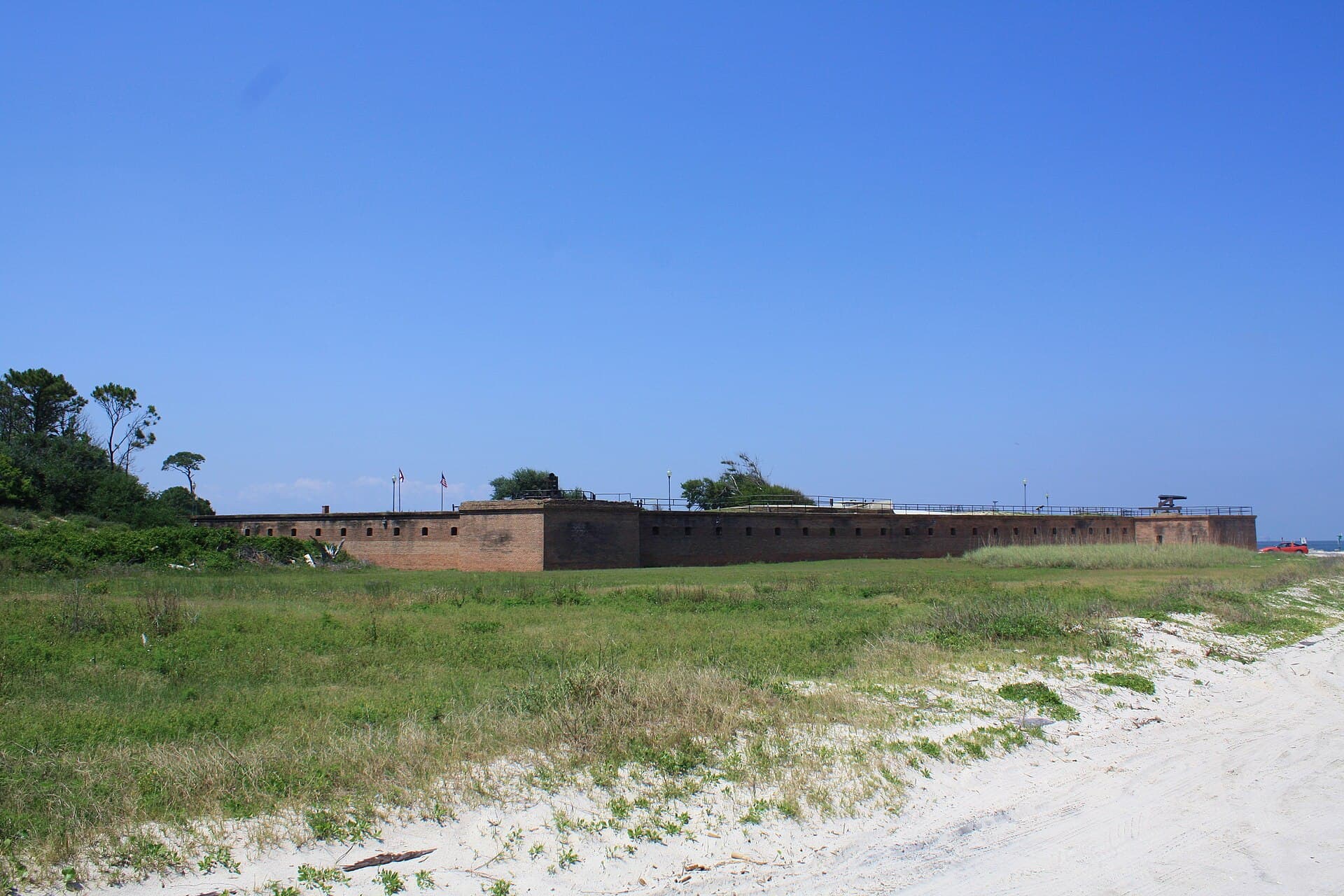
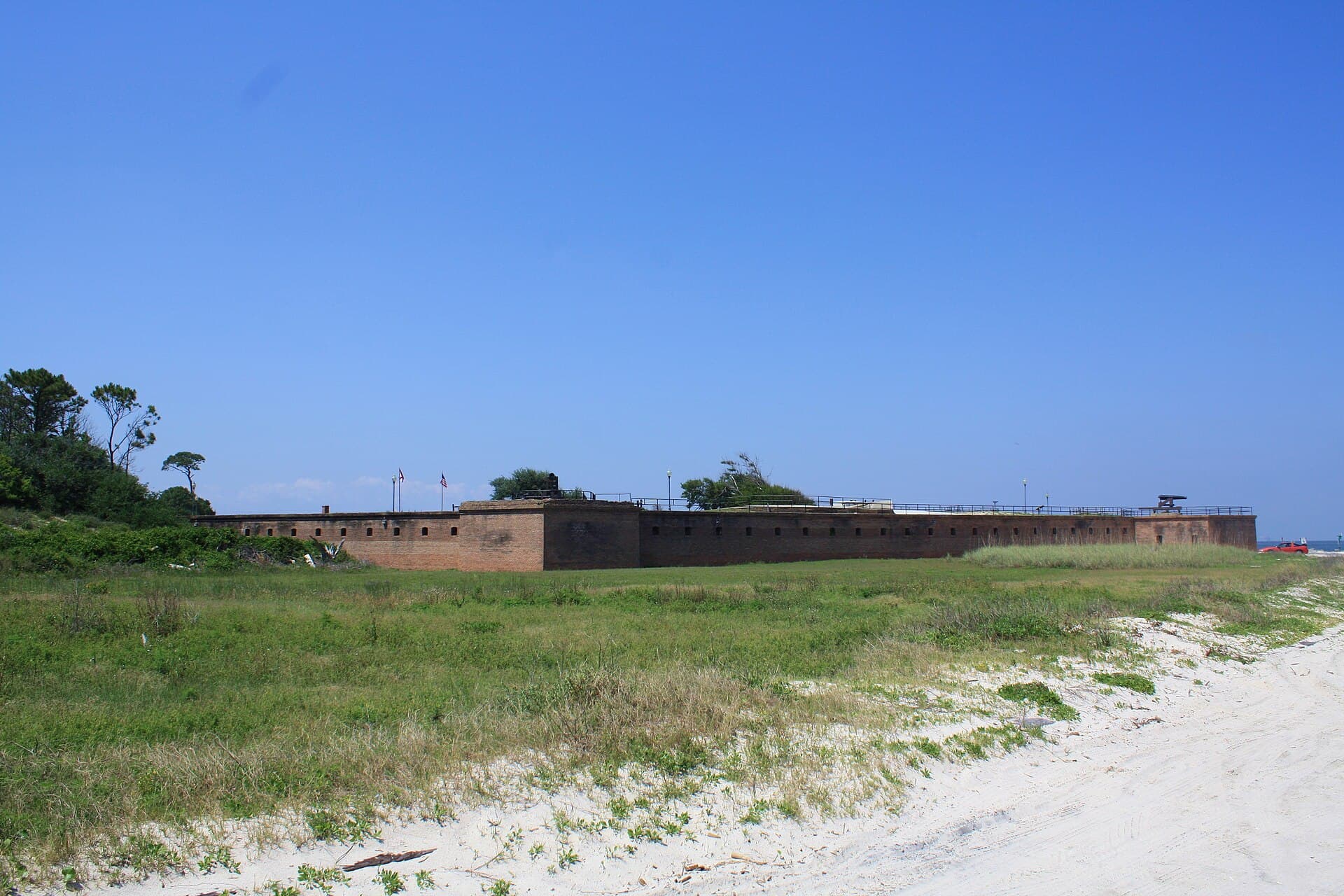
Dauphin Island, United StatesAltairisfar (Jeffrey Reed) / CC BY-SA 3.0, via Wikimedia Commons
US

Dauphin Island

Self-guided audio walking tour of Dauphin Island — GPS route, offline playback, story-driven narration in 32 languages.

Where Gulf breezes carry tales of pirates, princes, and disappearing islands.

The secrets of Dauphin Island

Dauphin Island, as no one tells it.

Not the postcards. The stories even locals don't know — whispered in your ear, right where they happened.

3 secrets below. Many more wait inside the tour.
Shell Mound Park

Before French explorers arrived, Dauphin Island was a significant site for ancient peoples, leaving behind mysterious structures. What can still be seen today?

Full story unlocks in the tour
Original French Landing Site

When French explorers first landed on Dauphin Island, they were met with a gruesome sight that led to its initial, chilling name.

Full story unlocks in the tour
Fort Gaines

Fort Gaines, a key Civil War stronghold, was constructed with a surprising logistical challenge.

Full story unlocks in the tour
The full tour

Discover every secret of Dauphin Island

Every address, every reveal in full — in your ear, right where it happened.

Get the key to Dauphin Island

You pick your stops. You walk. The voice reveals what the others miss.

Choose your time

How long do you have in Dauphin Island?

Your self-guided audio tour of Dauphin Island is ready — pick your landmarks, choose your language, and start the moment you arrive.

Buy
About Dauphin Island

The story of Dauphin Island

Dauphin Island, often called the 'Sunset Capital of Alabama,' is a serene barrier island at the southernmost point of Alabama, offering an authentic taste of the Gulf Coast. Connected to the mainland by a three-mile-long high-rise bridge, this charming town feels worlds away, inviting visitors to a relaxed pace of island life. With its uncrowded beaches, abundant wildlife, and clear blue waters, Dauphin Island is a destination that captivates with its natural beauty and laid-back atmosphere.

The island maintains an endearing, slightly quirky blend of small-town Americana and coastal charm, making it a beloved spot for both residents and visitors. Beyond its scenic allure, Dauphin Island is a crucial stop for migrating birds, designated as a bird sanctuary, and offers world-class fishing opportunities year-round. Whether you're seeking beach days, fresh seafood, or a deep dive into the past, Dauphin Island provides a unique Gulf Coast experience.

History

From Massacre to Dauphin: A Shifting Identity

Dauphin Island's story stretches back to approximately 1000 B.C., with early inhabitants, including the Choctaw and Seminole tribes, drawn by the plentiful seafood. These indigenous peoples left their mark in the form of shell mounds, some arranged in a serpentine pattern, which can still be explored on the north side of the island today.

The first recorded European visit was in 1519 by Spanish explorer Alonzo Pineda, who mapped the island and named it Isla de San Feliz. However, it was the French who truly left an indelible mark. In 1699, French explorer Pierre Le Moyne d'Iberville landed and, upon discovering numerous skeletons—likely an ancient burial mound uncovered by a hurricane—dubbed it 'Massacre Island.' This grim name was later changed around 1707 to 'Île du Dauphine' or Dauphin Island, honoring the French crown prince, the future King Louis XV.

A Strategic Stronghold and Shifting Allegiances

Dauphin Island quickly became a cornerstone of French colonial ambitions, serving as the capital of French Louisiana in 1702. Its natural harbor was crucial for trade, connecting French settlements along the Mississippi River with the wider Atlantic world. Fortifications were built to defend against rival European powers, but the island's value as a port was short-lived, and it was passed between Spanish and English occupation after the French and Indian War.

In the early 1820s, the United States acquired the island and began construction on Fort Gaines to protect Mobile Bay. This fort played a significant role during the Civil War, serving as a Confederate stronghold before falling to the Union Army during the Battle of Mobile Bay in 1864. The fort remained in use, even as a radar station during WWII, until 1971.

Modern Era and Environmental Challenges

The completion of the Dauphin Island Bridge in 1955 spurred economic growth and increased tourism. Today, Dauphin Island is primarily a tourist attraction and home to marine research facilities. As a barrier island, it is incredibly important to the coastal environment but also constantly eroding, losing about 10 feet of beach annually due to tropical storms. Despite these challenges, the island continues to draw visitors with its unique blend of history, natural beauty, and a relaxed coastal lifestyle.

What to see

Dauphin Island offers a blend of historical sites, natural wonders, and family-friendly attractions. Start your exploration at Fort Gaines, a historic 200-year-old military structure on the eastern side of the island. You can tour the fort, which played a crucial role in the Civil War's Battle of Mobile Bay, and see its original cannons and tunnel systems.

Adjacent to Fort Gaines is the Dauphin Island Sea Lab and Alabama Aquarium (Estuarium), where you can delve into the local marine life and aquatic ecosystems. For nature enthusiasts, the Audubon Bird Sanctuary is a destination. This 164-acre sanctuary, designated for the entire island, features maritime forest, freshwater wetlands, and walking trails, making it a premier spot for birdwatching, especially during spring and fall migrations. The sanctuary is the first landmass many neotropical birds encounter after their flight across the Gulf from Central and South America.

Enjoy the island's seven miles of sugar-white sand public beaches, perfect for swimming, sunbathing, and fishing. The main fishing pier at Pelican Point on the east end extends 850 feet into the Gulf, offering excellent fishing opportunities. For a different perspective, consider a scenic ride on the Mobile Bay Ferry, which offers dramatic entry and connects the island to the eastern shore. The island is also very bike-friendly, with a dedicated paved bike trail running its length.

When to visit

Dauphin Island is a year-round destination, but the best times for warm-weather activities are from early April to mid-May and from late September to early November. During these shoulder seasons, you'll find comfortable temperatures, fewer crowds, and ideal conditions for swimming, kayaking, and fishing. May offers idyllic weather with highs in the low 80s and nights in the high 60s, perfect for enjoying the beach and hiking. October is also highly recommended, with comfortable temperatures, significantly reduced crowds, and peak fall bird migration. Winter brings mild, pleasant weather and fewer tourists, while summer is warm and sunny, though with higher humidity and precipitation.

Practical

Dauphin Island is easily accessible via the Gordon Persons Bridge from the mainland, or by the Mobile Bay Ferry, which runs daily (weather permitting). The island is approximately 14 miles long and averages 1.75 miles wide, making it easy to navigate by car or bicycle. You can drive from end to end in about 20 minutes, or bike the length in about an hour.

Accommodations range from hotels and condominiums to vacation rentals and beach cottages. Fresh seafood is a staple, with local restaurants offering Gulf shrimp, oysters, and fresh catches, often with waterfront views. When visiting the beaches, note that glass containers and personal grills are prohibited at West End Beach, and pets are generally restricted there due to bird nesting habitats, though an island-wide leash law applies elsewhere. Bonfires are not permitted on any beach due to a statewide burn ban. Camping is only allowed at the Dauphin Island Campground.

Good to know
What is the origin of the name "Dauphin Island"?
Dauphin Island was named in honor of the "Dauphin of France," which was the title for the heir apparent to the French throne at the time, Louis XV. It is often mistakenly thought to be named after the aquatic animal, as "dauphin" is also the French word for dolphin.
Are dogs allowed on Dauphin Island beaches?
Dogs are generally allowed on most Dauphin Island beaches, but there is an island-wide leash law in effect, requiring pets to be properly restrained. However, pets are prohibited on the West End Beach due to critical bird nesting habitats.
Can I have a bonfire on the beach?
No, bonfires are not permitted on any beach on Dauphin Island due to a statewide no-burn ban from the Alabama Department of Environmental Management (ADEM).
Is there a ferry to Dauphin Island?
Yes, the Mobile Bay Ferry provides automobile and passenger service to Dauphin Island, running daily, weather permitting.
What is the best way to get around Dauphin Island?
Dauphin Island is very bike-friendly, with a dedicated paved bike trail running the length of the island. You can bring your own bikes or rent them. Driving is also an option, as the island is only about 14 miles long.
What is the Dauphin Island Sea Lab?
The Dauphin Island Sea Lab is a marine research and education center that also houses the Alabama Aquarium (Estuarium). It offers visitors the chance to learn about local sea life and aquatic ecosystems through exhibits of live creatures.
On the map
Dauphin Island
€9.90
No booking · activate anytime · 12h to walk it
Load on Wi-Fi, then walk offline — no roaming abroad
Get the key to Dauphin Island