Sanctuary of Isis
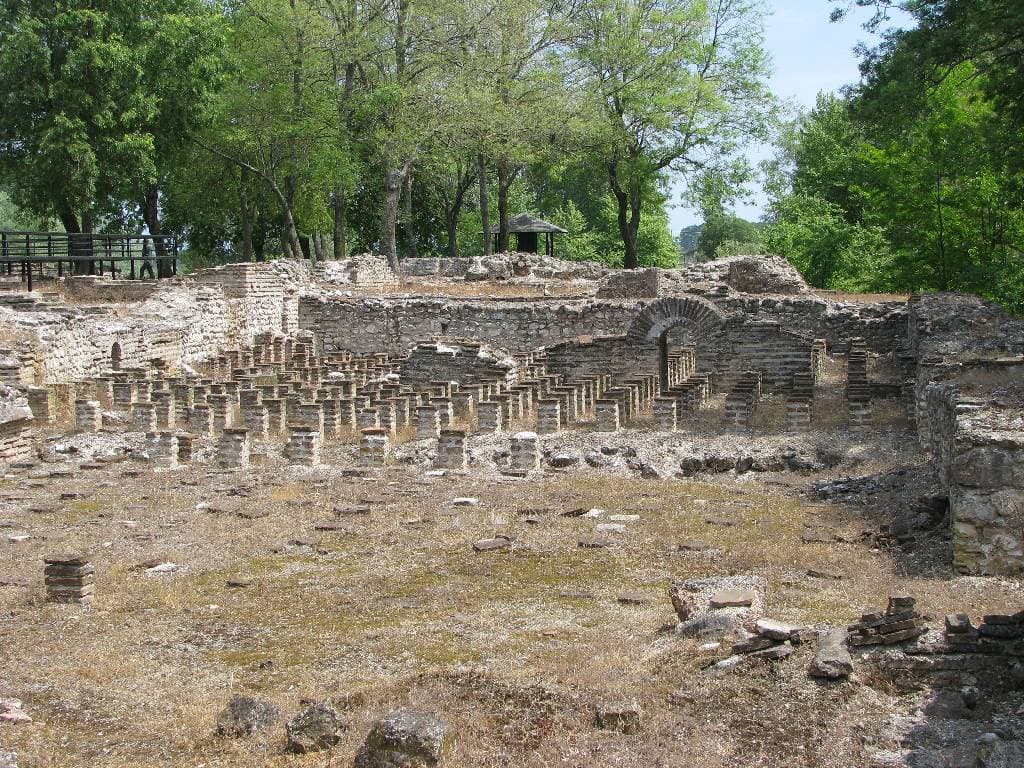
Among the ruins of Dion, a sanctuary dedicated to an Egyptian goddess lies partially submerged. But it is not the water of the Vaphyras River that makes this place truly unique.
Full story unlocks in the tour
 stg_gr1 / CC BY 2.0, via Wikimedia Commons
Self-guided audio walking tour of Dion — GPS route, offline playback, story-driven narration in 32 languages.
“Where gods walked and legends linger, beneath the gaze of Mount Olympus.”
Not the postcards. The stories even locals don't know — whispered in your ear, right where they happened.
Among the ruins of Dion, a sanctuary dedicated to an Egyptian goddess lies partially submerged. But it is not the water of the Vaphyras River that makes this place truly unique.
Deep within the museum, a bronze instrument, unlike any other from antiquity, was unearthed. Its discovery rewrote the history of music.
Before embarking on his legendary campaign, Alexander the Great made a significant sacrifice here, followed by a tribute that speaks volumes about his loyalty to his fallen soldiers.
Discover every secret of Dion
Every address, every reveal in full — in your ear, right where it happened.
You pick your stops. You walk. The voice reveals what the others miss.


Your self-guided audio tour of Dion is ready — pick your landmarks, choose your language, and start the moment you arrive.
BuyLume has a built-in augmented-reality guide. Hold your phone up and its camera shows the street ahead of you, with a glowing arrow laid over the real view that always points to your next stop — no map to puzzle over, no wrong turns. Like everything in Lume, it works fully offline.
Dion, at the foot of the mythical Mount Olympus in Greece, is far more than just a collection of ancient stones. It was the sacred city of the Macedonians, a place where kings like Philip II and Alexander the Great offered sacrifices to Zeus before embarking on their legendary campaigns. Imagine a city where the divine met the earthly, where grand festivals honored the gods, and where the very landscape was interwoven with myth and history.
Today, the Archaeological Park of Dion offers a unique journey through time, a sprawling open-air museum where Hellenistic and Roman ruins coexist harmoniously with the natural environment. Lush vegetation, abundant springs, and the gentle murmur of the Vaphyras River create an evocative atmosphere, a stark contrast to many drier archaeological sites. Here, you can trace the footsteps of ancient inhabitants along paved streets, explore sanctuaries dedicated to powerful deities, and marvel at the remnants of a once-thriving city.
Beyond the archaeological park, the modern village of Dion and its impressive museum provide further insights into the region's expansive past. From monumental theaters to luxurious villas adorned with intricate mosaics, Dion offers a tangible connection to the ancient world, all under the watchful gaze of the gods' legendary abode.
Dion's story begins in deep antiquity, with traditions suggesting that Deucalion, the king of Thessaly, established the first altar to Zeus here after the great flood. The city's very name, derived from 'Dias' (Zeus), underscores its profound religious significance as the primary sanctuary for the king of the Olympian gods and his daughters, the Muses. By the 5th century BC, Dion had become the religious heart of the Macedonian kingdom, hosting important games and theatrical contests. King Archelaos I further solidified its importance, establishing an Olympic festival lasting nine days, each dedicated to one of the nine Muses.
This sacred city played a crucial role in Macedonian history. Philip II celebrated his triumphs here, and his son, Alexander the Great, made significant sacrifices at the Temple of Olympian Zeus before launching his monumental campaign against the Persian Empire in 334 BC. It was also here that Alexander later honored his fallen cavalrymen with 25 bronze statues by the renowned sculptor Lysippos. Dion's strategic location, controlling the passes between Thessaly and Macedonia, made it a vital military base.
The city faced destruction by the Aitolians in 219 BC but was swiftly rebuilt by Philip V. The Romans took control in 169 BC, and Emperor Augustus founded a Roman colony here in 31 BC, renaming it Colonia Iulia Augusta Diensis. Under Roman rule, Dion experienced a second period of prosperity, particularly in the 2nd and 3rd centuries AD, evidenced by numerous public buildings, grand baths, and luxurious residences. The city continued to thrive into the early Christian era, becoming the seat of a bishop, though its urban area began to shrink. However, a combination of barbarian attacks, earthquakes, and severe floods in the 4th and 5th centuries AD led to its gradual decline and eventual abandonment, with the once-great city eventually slipping into oblivion beneath layers of soil and silt. It was rediscovered by travelers and archaeologists in the 19th and 20th centuries, with systematic excavations beginning in 1973, bringing its remarkable history back to light.
Dion was a confluence of religious practices, with sanctuaries dedicated not only to Zeus and the Muses but also to Demeter, Asclepius, and even the Egyptian goddess Isis. The presence of an Isis sanctuary, complete with a channel symbolizing the Nile, highlights the cultural exchange and diverse spiritual landscape of the Roman Empire. The cult of Zeus Hypsistos ('Zeus the Most High') further illustrates this complexity, potentially representing a syncretic blend of pagan, Christian, and Jewish beliefs. These varied places of worship, along with the grand Hellenistic and Roman theaters, stadium, and public baths, paint a vivid picture of daily life and religious devotion in ancient Dion.
Begin your exploration at the Archaeological Park of Dion, a vast open-air museum where ancient ruins are beautifully integrated with the natural landscape. Walk along the paved central road, which stretches for 670 meters, imagining the bustling life of the ancient city.
Discover the various sanctuaries, including the oldest, the Sanctuary of Demeter, with finds dating back to the 6th century BC. Explore the Sanctuary of Zeus Hypsistos, dedicated to 'Zeus the Most High', and the Sanctuary of Isis, an intriguing site with a channel symbolizing the Nile, often partially submerged and teeming with frogs.
Visit the impressive Roman Villa of Dionysus, renowned for its magnificent mosaic depicting the god emerging from the sea. Admire the remnants of the Great Baths, showcasing sophisticated Roman engineering with its hypocaust heating system. Do not miss the Hellenistic and Roman theaters, where performances are still occasionally held, and the well-preserved Macedonian tomb.
Conclude your visit at the Archaeological Museum of Dion, located in the modern village. Here, you will find a rich collection of artifacts unearthed from the site, including exquisite sculptures, mosaics (like the original Zeus Hypsistos statue), and the unique 'hydraulis', the oldest known keyboard wind instrument.
The best time to visit Dion is during spring (April to early June) and autumn (September to October). During these shoulder seasons, the weather is pleasantly warm but not excessively hot, making it ideal for exploring the extensive archaeological park. In spring, the park is lush and green with wildflowers, and Mount Olympus often retains snow on its peaks, providing a dramatic backdrop. Autumn offers warm, settled days with softer light and fewer crowds. July and August bring the hottest temperatures and busiest conditions, so an early morning or late afternoon visit is recommended during these months.
Dion is located at the northeast foot of Mount Olympus, about 15 kilometers from Katerini and 90 kilometers from Thessaloniki. The easiest way to reach Dion is by car, with good roads connecting it to Thessaloniki and Katerini. Parking is generally manageable at the archaeological site. Many organized day trips from Thessaloniki, Katerini, or Litochoro also include Dion.
Allow approximately 1.5 to 2 hours to explore the Archaeological Park and an additional half-hour for the Archaeological Museum in the village. Entry to the park typically includes access to the museum. The park has a small visitor center with a cafe. Wear comfortable shoes suitable for walking on uneven terrain, and bring water and sun protection, especially during warmer months.
Dion in Korean, in Chinese or in Hebrew — and 29 more languages, every stop narrated by a native voice. The widest language range of any self-guided audio tour.
Available in: