El Desfiladero de Enipeas
El río Enipeas, abriéndose paso por el Monte Olimpo, guarda un secreto que conecta el acto mundano del baño con lo divino.
La historia completa se desbloquea en el tour
 Mboesch / CC BY-SA 4.0, via Wikimedia Commons
Tour de audio autoguiado de Litochoro — ruta GPS a pie, reproducción offline, narración en 32 idiomas.
“Donde los dioses caminaron, y el Egeo aún susurra.”
No las postales. Las historias que ni los locales conocen — al oído, justo donde ocurrieron.
El río Enipeas, abriéndose paso por el Monte Olimpo, guarda un secreto que conecta el acto mundano del baño con lo divino.
Durante el Carnaval, los barrios de Litochoro participan en una ardiente tradición que es más que un simple espectáculo.
A pesar de ser conocida como la puerta de entrada a la montaña más alta de Grecia, Litochoro guarda una historia menos conocida ligada al mar.
Descubre todos los secretos de Litochoro
Cada dirección, cada revelación al completo — a tu oído, justo donde ocurrió.
Eliges tus paradas. Caminas. La voz te revela lo que los demás ignoran.


Tu tour de audioguía por Litochoro te espera — elige tus lugares, tu idioma y empieza al llegar.
ComprarLume incluye una guía de realidad aumentada. Levanta el móvil y su cámara muestra la calle que tienes delante, con una flecha luminosa sobre la imagen real que siempre apunta a tu próxima parada — sin mapas que descifrar, sin giros equivocados. Como todo en Lume, funciona completamente sin conexión.
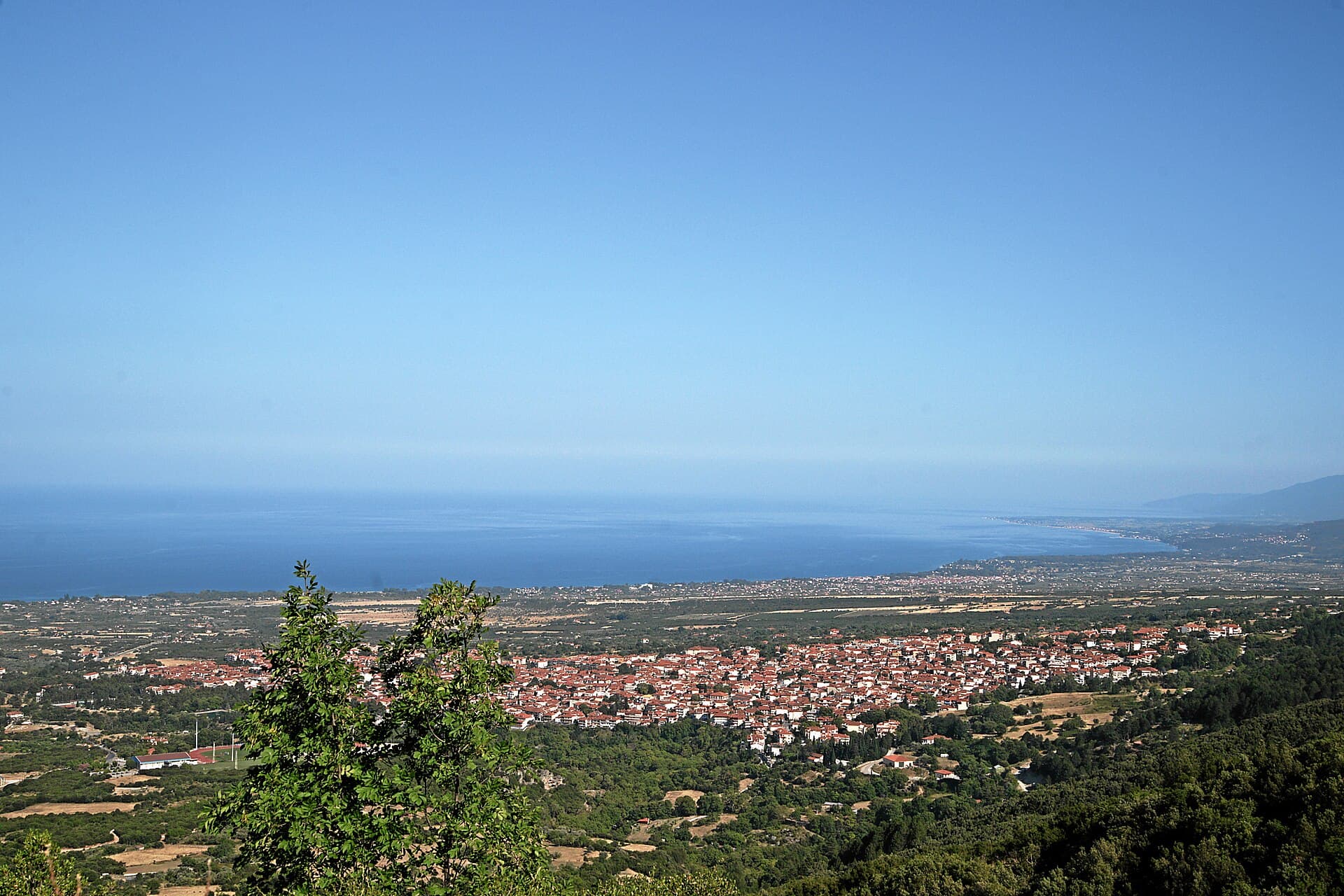
Litochoro, una ciudad en la parte sur de la región de Pieria en Macedonia, Grecia, sirve como un umbral dramático donde los míticos picos del Monte Olimpo se encuentran con el Mar Egeo. Con una población de alrededor de 6.615 residentes, ofrece una mezcla de aventura en la montaña y tranquilidad costera. La ciudad está situada en las laderas orientales del Monte Olimpo, el legendario hogar de los doce dioses olímpicos, y se encuentra en la orilla occidental del Golfo Termaico. Esta ubicación geográfica única permite a los visitantes pasar de caminar por antiguos bosques de robles hacia un pico de 2.917 metros por la mañana a nadar en una playa poco concurrida a primera hora de la tarde, todo ello manteniendo la montaña a la vista.
A menudo reconocida principalmente como la principal puerta de entrada para escalar el Monte Olimpo, Litochoro es, de hecho, un destino con diversas ofertas que se extienden más allá de sus famosos senderos. La ciudad en sí mantiene un carácter tradicional con casas encaladas, patios de piedra y calles estrechas y sinuosas. Proporciona una base para explorar no solo el parque nacional, sino también importantes sitios arqueológicos, serenos monasterios y una costa con varias playas. Litochoro invita a un ritmo más lento, fomentando el compromiso con la cultura local, la cocina tradicional y el ritmo de vida donde el mito y la realidad convergen.
Los orígenes de Litochoro están profundamente entrelazados con el pasado antiguo, y la tradición sugiere que fue fundada por habitantes de la antigua Pimpleia. Pimpleia, un importante centro de culto de las Musas Pimpleias, fue una vez parte de la ciudad de Dion. El asentamiento original estaba situado a lo largo de las orillas del río Enipeas, pero las frecuentes inundaciones obligaron a sus residentes a reubicarse en la posición actual de Litochoro. El nombre de la ciudad en sí está sujeto a varias interpretaciones, vinculándolo con la mitología, la historia y su entorno natural. Una tradición sugiere que originalmente se llamaba Letochoro, en honor a Leto, la madre de Apolo y Artemisa, de quien se decía que se había bañado en el río Enipeas. Otras teorías proponen que el nombre deriva de 'litho' (lugar de piedra), la palabra bizantina 'liti' (oración), o incluso 'lyto' (lugar libre), lo que implica un período de relajado dominio otomano.
Aunque se desconoce la fecha exacta del establecimiento de Litochoro, sus raíces se remontan tradicionalmente a aproximadamente el año 1540 d.C. con la llegada de San Dionisio y la fundación de su renombrado monasterio. La zona fue influenciada por el emperador bizantino Teodosio, quien envió a isleños cristianos como colonos, introduciendo así una fuerte tradición naval en la región. Este patrimonio marítimo floreció, y durante la ocupación otomana, Litochoro albergaba más de cien veleros. Los marineros de la ciudad desempeñaron un papel importante en las luchas de liberación, liderando exitosas operaciones navales contra las fuerzas turcas en 1912-1913. Esta duradera historia náutica se conserva y exhibe en el Museo Marítimo de Litochoro, fundado en 1995 por la Unión de Marineros Jubilados.
A lo largo de su historia, Litochoro, junto con el Monte Olimpo y el Monasterio de Agios Dionisios, sirvió como refugio para los revolucionarios que se oponían al dominio otomano. Figuras notables como el maestro griego Kosmas Aitolos pasaron por aquí, y el héroe griego Nikotsaras desembarcó en la playa de Litochoro en 1807 durante un intento de revuelta. Los habitantes de Litochoro participaron activamente en la lucha de liberación de 1821, y en 1878, el primer gobierno revolucionario para la liberación de Macedonia se formó en la ciudad. Durante la Segunda Guerra Mundial, las laderas y gargantas del Monte Olimpo proporcionaron santuario a la resistencia nacional. Hoy en día, Litochoro mantiene su carácter tradicional al tiempo que ofrece comodidades modernas, uniendo su pasado histórico con el presente.
Litochoro ofrece una variedad de experiencias, desde senderos de montaña hasta relajación costera y exploración histórica. La ciudad en sí es un lugar agradable para pasear tranquilamente, con su plaza central, sus tradicionales kafeneios y sus mercados locales. El Desfiladero de Enipeas, parte del Parque Nacional del Monte Olimpo, es accesible a solo 1-2 kilómetros del centro de la ciudad y cuenta con pintorescos senderos para caminatas, cascadas y piscinas claras perfectas para nadar. Para los excursionistas serios, el sendero hasta el pico Mytikas, el punto más alto de Grecia a 2.917 metros, es una desafiante caminata de dos días, que generalmente comienza en Prionia, a 18 km de la ciudad. También hay senderos más accesibles en el bajo Olimpo para aquellos que buscan caminatas menos extenuantes.
A poca distancia en coche de Litochoro, el Sitio Arqueológico de Dion presenta la ciudad sagrada de los antiguos macedonios, un lugar donde Filipo II y Alejandro Magno realizaron ritos. El sitio incluye templos antiguos, restos de la ciudad de la época romana y un santuario a la diosa egipcia Isis. El Museo Arqueológico de Dion alberga una colección de artefactos, incluido el Hydraulis, un órgano antiguo. Más al sur, el Castillo Bizantino de Platamon ofrece intriga histórica y amplias vistas del Mar Egeo. El Monasterio de Agios Dionisios, fundado en 1542, está situado dentro del desfiladero de Enipeas, ofreciendo una visión de la historia religiosa de la región. Para probar la vida local, explore las zonas costeras cercanas como la Playa de Gritsa o Limani, donde podrá encontrar tabernas de mariscos frescos.
Los momentos ideales para visitar Litochoro son durante la primavera (abril-mayo) y el otoño (septiembre-octubre). Durante estos meses, el clima es templado, lo que lo hace perfecto tanto para hacer senderismo en el Monte Olimpo como para disfrutar de las playas. La primavera trae flores silvestres en flor y menos multitudes, mientras que el otoño ofrece un clima cálido en la playa con una disminución de turistas. El verano (junio-agosto) es temporada alta, adecuado para playas pero potencialmente demasiado caluroso para caminatas extensas. Julio y agosto son los meses más cálidos, con máximas promedio alrededor de 29°C (85°F), y también los más soleados. Generalmente, se debe evitar el invierno (noviembre-marzo) a menos que seas un excursionista de montaña experimentado, ya que las condiciones pueden ser desafiantes.
Litochoro está bien conectado y ofrece varias comodidades para los visitantes. El aeropuerto de Tesalónica (SKG) es el aeropuerto más cercano, a aproximadamente 90 minutos en coche. Se puede llegar a Litochoro desde Tesalónica en tren o autobús, con un viaje en tren que dura aproximadamente una hora. Para explorar los alrededores, se recomienda alquilar un coche debido al transporte público limitado a las playas y otras atracciones. Dentro de la ciudad, el centro es peatonal. Las opciones de alojamiento varían desde casas de huéspedes económicas hasta hoteles de gama media, y se recomienda reservar con antelación durante la temporada alta. Los viajeros con presupuesto limitado pueden esperar gastar entre 45 y 120 euros por día. La ciudad ofrece servicios esenciales que incluyen bancos, una oficina de correos, un hospital y varias tiendas. Las tabernas locales ofrecen cocina tradicional griega con ingredientes frescos de origen local, incluyendo cordero kleftiko y pescado fresco.
Litochoro en coreano, en chino o en hebreo — y 29 idiomas más, cada parada narrada por una voz nativa. La mayor variedad de idiomas de cualquier audioguía autoguiada.
Disponible en: