The Old Clock Tower
The city's prominent clock tower, a central landmark, almost faced an unforeseen end in the 1970s.
Full story unlocks in the tour
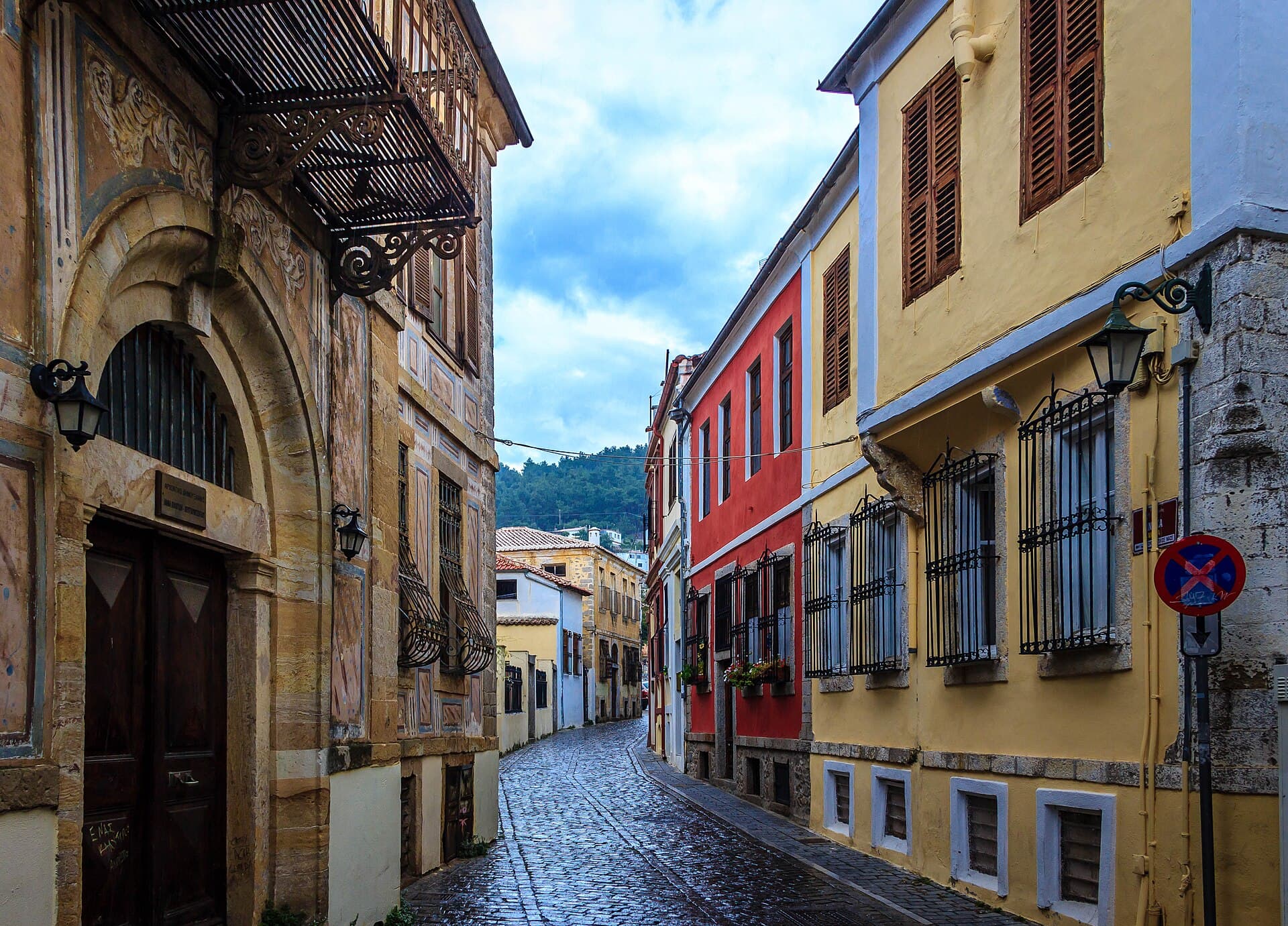 Serge Traveler / CC BY-SA 4.0, via Wikimedia Commons
Self-guided audio walking tour of Xanthi — GPS route, offline playback, story-driven narration in 32 languages.
“Where Balkan spirit encounters Ottoman grace, and each stone recounts a journey.”
Not the postcards. The stories even locals don't know — whispered in your ear, right where they happened.
The city's prominent clock tower, a central landmark, almost faced an unforeseen end in the 1970s.
The grand estates of Xanthi's Old Town, with their neoclassical fronts and intricate elements, speak of considerable affluence, yet not from precious metals.
The lively Xanthi Carnival concludes with an unusual ceremony involving a blazing effigy, a tradition with origins extending beyond simple festivity.
Discover every secret of Xanthi
Every address, every reveal in full — in your ear, right where it happened.
You pick your stops. You walk. The voice reveals what the others miss.


Your self-guided audio tour of Xanthi is ready — pick your landmarks, choose your language, and start the moment you arrive.
BuyLume has a built-in augmented-reality guide. Hold your phone up and its camera shows the street ahead of you, with a glowing arrow laid over the real view that always points to your next stop — no map to puzzle over, no wrong turns. Like everything in Lume, it works fully offline.
Xanthi, a city in Northern Greece, reveals a compelling blend of cultural influences. Its Old Town, a preserved district of narrow lanes and historic buildings, invites exploration. The city's character is shaped by its geographical position, serving as a crossroads between East and West. Visitors will find a community that honors its past while embracing contemporary life, evident in its markets, cafes, and annual festivals. The river Kosynthos flows nearby, adding a natural element to the urban landscape. This is a place where every turn presents a new perspective, from the architecture to the aromas emanating from local bakeries.
The atmosphere here is one of quiet discovery. The rhythm of daily life unfolds around the central squares and along the riverbanks. The city's identity is deeply connected to its agricultural surroundings, particularly the tobacco fields that once brought great prosperity. Today, Xanthi maintains its distinctive charm, offering a genuine experience of Greek Thrace. It is a destination for those who appreciate authenticity and a sense of place.
Xanthi's documented history begins in the Byzantine era, though its significant development occurred under Ottoman rule. For centuries, it served as an important administrative and commercial center within the Ottoman Empire. Its strategic location on trade routes connecting Europe and Asia contributed to its early prosperity. The city's urban fabric, particularly the layout of its Old Town, still reflects this period, with its winding alleys and traditional houses.
The 19th and early 20th centuries marked a period of extraordinary growth for Xanthi, fueled by the cultivation and trade of a specific aromatic tobacco variety known as 'basma.' This lucrative industry transformed the city, attracting merchants and workers from across the region. The wealth generated by tobacco is visibly expressed in the grand neoclassical mansions of the Old Town, built by affluent tobacco barons. These impressive residences stand as testaments to an era of immense economic success and cultural exchange.
The early 20th century brought significant geopolitical shifts to Xanthi. Following the Balkan Wars (1912-1913), the city became part of Greece. This transition led to substantial demographic changes, including the departure of many Muslim residents and the arrival of Greek refugees from Asia Minor and Eastern Thrace. The population exchanges profoundly reshaped Xanthi's social and cultural landscape, integrating new traditions and communities into the city's fabric. This period of change is a crucial element in understanding modern Xanthi.
After these tumultuous periods, Xanthi gradually found its footing as a Greek city. While the tobacco industry eventually declined, its legacy endures in the city's architecture and collective memory. Today, Xanthi is a university city, which brings a youthful energy and intellectual vibrancy. It continues to be a cultural crossroads, maintaining a diverse population and celebrating its multicultural heritage through various events, most notably the annual Xanthi Carnival. The city balances its respect for the past with a forward-looking perspective.
Wander through the Old Town, a district of preserved architecture with narrow, winding lanes. Admire the neoclassical mansions, many of which once belonged to wealthy tobacco merchants. Visit the Folk and History Museum of Xanthi, located in a restored tobacco merchant's house, to gain insight into the city's past and local traditions. The central square, Plateia Dimokratias, is a focal point for city life, surrounded by cafes and shops. Explore the Municipal Market, a lively place to observe local commerce and find regional products. The Kosynthos River flows through the city, offering pleasant walks along its banks. Seek out the Ottoman-era mosques and Byzantine churches that speak to the city's layered history. The Old Clock Tower, a prominent landmark, provides a sense of the city's enduring character. For a broader view, ascend to the highest points of the Old Town.
Spring (April-May) and autumn (September-October) offer pleasant weather for exploring Xanthi, with comfortable temperatures and fewer crowds. The Xanthi Carnival, held in late winter/early spring, is a major cultural event, drawing many visitors. Summer can be warm, but the evenings are often enjoyable. Winter brings cooler temperatures and a quieter atmosphere.
Xanthi is accessible by bus from major Greek cities like Thessaloniki and Athens. The nearest airport is in Kavala (Megas Alexandros Airport), about 45 minutes away by car. Within the city, the Old Town is best explored on foot due to its narrow, pedestrian-friendly lanes. Public buses serve the wider urban area. Taxis are also readily available. Accommodation options range from boutique hotels in the Old Town to modern hotels in the newer parts of the city. Local cuisine features a blend of Greek and Balkan flavors, with many tavernas and restaurants offering traditional dishes. Look for local sweets and dairy products.
Xanthi in Korean, in Chinese or in Hebrew — and 29 more languages, every stop narrated by a native voice. The widest language range of any self-guided audio tour.
Available in: