Château de Dourdan
This formidable fortress once held a royal prisoner, though not for the reasons one might expect.
Full story unlocks in the tour
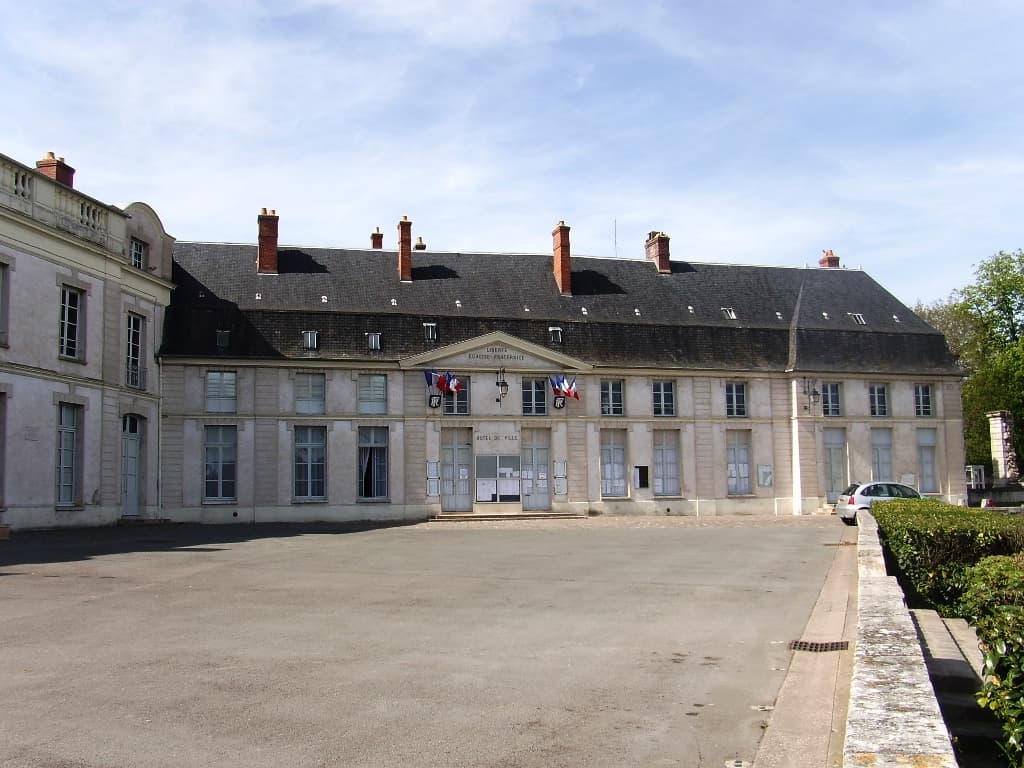 Cyrilb1881 / CC BY-SA 3.0, via Wikimedia Commons
Self-guided audio walking tour of Dourdan — GPS route, offline playback, story-driven narration in 32 languages.
“Where medieval stones speak of royal secrets.”
Not the postcards. The stories even locals don't know — whispered in your ear, right where they happened.
This formidable fortress once held a royal prisoner, though not for the reasons one might expect.
The castle's imposing keep found a surprising second life long after its military purpose faded.
Each year, Dourdan transforms into a medieval tableau, and one particular edition will honor a surprising international guest.
Discover every secret of Dourdan
Every address, every reveal in full — in your ear, right where it happened.
You pick your stops. You walk. The voice reveals what the others miss.


Your self-guided audio tour of Dourdan is ready — pick your landmarks, choose your language, and start the moment you arrive.
BuyLume has a built-in augmented-reality guide. Hold your phone up and its camera shows the street ahead of you, with a glowing arrow laid over the real view that always points to your next stop — no map to puzzle over, no wrong turns. Like everything in Lume, it works fully offline.
Dourdan, a captivating commune in the Essonne department of Île-de-France, invites a journey back through time. Situated along the banks of the Orge River, the town's origins reach into the Gallo-Roman period, when it served as a center for pottery production. Its strategic position on the wheat route between the Beauce region and Paris ensured its enduring significance throughout various chapters of French history.
Today, Dourdan retains much of its medieval character, with well-preserved architectural heritage that stands as a testament to its past as a royal city and the capital of Hurepoix. The town rests in a natural basin, embraced by plateaus and a royal forest, beckoning visitors to explore its historic core and the impressive 13th-century fortress that defines its skyline.
Dourdan's story begins in the Gallo-Roman era, then known as Dordincum, where it flourished as a significant center for ceramic production. Archaeological excavations in the 19th and 20th centuries have uncovered kilns and a substantial collection of pottery, now carefully preserved in the Château de Dourdan museum.
The town's prominence deepened in the Middle Ages, becoming a residence for Hugh the Great, father of Hugh Capet, who passed away there in 956. When Hugh Capet was crowned king in 987, Dourdan officially became a royal city. The most defining architectural landmark, the Château de Dourdan, was commissioned by King Philip II Augustus around 1220. This fortress stands as a prime example of 13th-century military architecture, featuring a quadrangular wall, corner towers, and a distinctive isolated cylindrical donjon, similar in design to the Louvre's castle of that era.
Over the centuries, the castle passed through the hands of notable figures such as Blanche de Castille, Louis d'Évreux, and Anne of Austria, and was even used as a prison in the 17th century after being given to the Duke of Orléans. The town experienced sieges during the French Wars of Religion, which left their mark on structures like the Saint-Germain-d'Auxerre Church, originally constructed in 1150. The arrival of the railway in 1866 transformed Dourdan into a resort destination, drawing new residents and leading to the construction of many homes around the station district, which still shape the urban landscape today. The castle itself was classified as a historical monument in 1964 and has undergone significant restoration efforts to preserve its integrity.
Begin your exploration at the Château de Dourdan, a remarkably preserved 13th-century fortress. Ascend to the top of its cylindrical donjon for a panoramic 360-degree view of the town and the surrounding royal forest. The castle also houses a municipal museum with collections spanning archaeology, fine art, and local history. Across from the castle, you will find the Market Hall, a medieval structure rebuilt in 1836, which continues to host merchants and artisans every Wednesday and Saturday morning.
Just a short walk away stands the Saint-Germain-d'Auxerre Church, a Gothic edifice with parts dating back to the late 12th century. Its spires rise above the town, and inside, you can admire its stained-glass windows and varied Gothic architectural styles. For nature enthusiasts, the Royal Forest of Dourdan, covering 17 square kilometers, offers opportunities for walks and enjoying the serene wooded surroundings. The Dourdannais region also offers the first mountain biking base in Essonne, with over 160 kilometers of trails suitable for families and experienced cyclists.
Dourdan is particularly enchanting during the warmer months, from spring to early autumn. The Medieval Festival, a highlight of the year, unfolds every first weekend of June, transforming the town into a living medieval city with tournaments, markets, and performances. July brings the town's municipal festival, with National Holiday celebrations on the 13th and 14th, featuring a torchlight procession, fireworks launched from the castle ramparts, and a public dance. The weather in July typically sees daytime temperatures around 24°C and nights around 15°C. Spring and early summer offer pleasant temperatures for outdoor activities and fewer crowds.
Dourdan is about an hour from Paris and is accessible by car via the A10 and N20. The RER C line also serves Dourdan, with stations at Dourdan-la-Forêt and Dourdan, providing direct access from Paris. However, be aware that RER C service can be interrupted for works, especially in the evenings and on weekends, so check schedules in advance. The Dourdan Tourist Office, situated between the castle and the church, provides personalized advice, documentation, and a selection of local gifts and souvenirs. They are open Wednesday to Sunday, with extended hours from April to October. For accommodation, options include hotels like the Best Western Blanche de Castille, campsites, and guesthouses.
Dourdan in Korean, in Chinese or in Hebrew — and 29 more languages, every stop narrated by a native voice. The widest language range of any self-guided audio tour.
Available in: