Bateau-Lavoir
Avant de devenir le légendaire « bateau-lavoir » de Montmartre, ce bâtiment avait une vocation originelle surprenante.
L'histoire complète se débloque dans le tour
 Navin75 / CC BY-SA 2.0, via Wikimedia Commons
Visite audio autoguidée de Montmartre des Artistes — parcours GPS à pied, lecture hors ligne, narration en 32 langues.
“Suivez l'écho des pinceaux et des rêves bohémiens sur la Butte Montmartre.”
Pas les cartes postales. Les histoires que même les habitants ignorent — soufflées à l'oreille, là où elles se sont passées.
Avant de devenir le légendaire « bateau-lavoir » de Montmartre, ce bâtiment avait une vocation originelle surprenante.
Le nom « Lapin Agile » n'était pas le premier, et son thème initial n'était pas particulièrement artistique.
L'existence même du vignoble de Montmartre aujourd'hui est due à une tactique astucieuse d'artistes et de résidents locaux.
Découvrez tous les secrets de Montmartre des Artistes
Chaque adresse, chaque révélation en entier — dans ton oreille, là où elle s'est passée.
Tu choisis tes lieux. Tu marches. La voix te révèle ce que les autres ignorent.
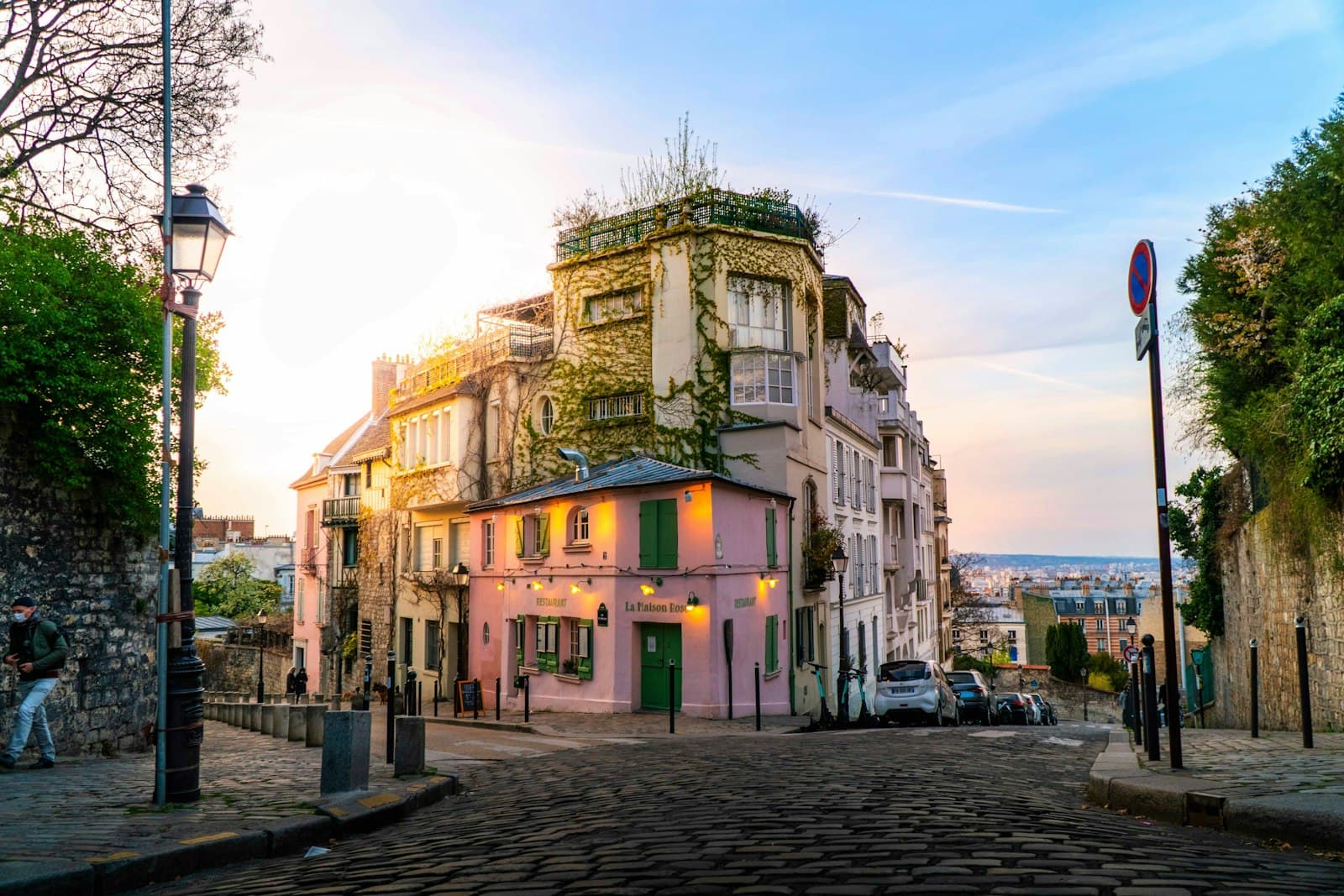
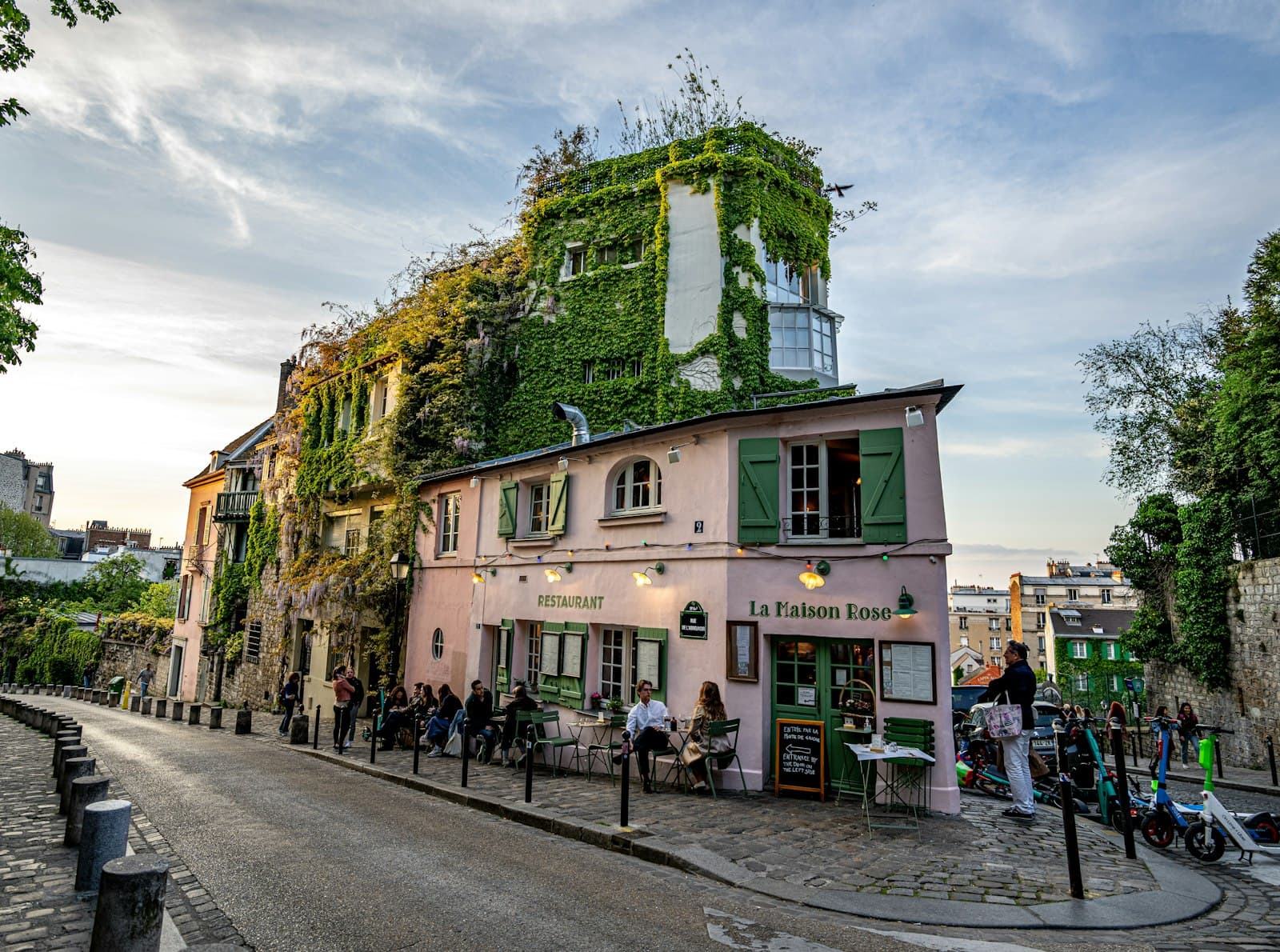
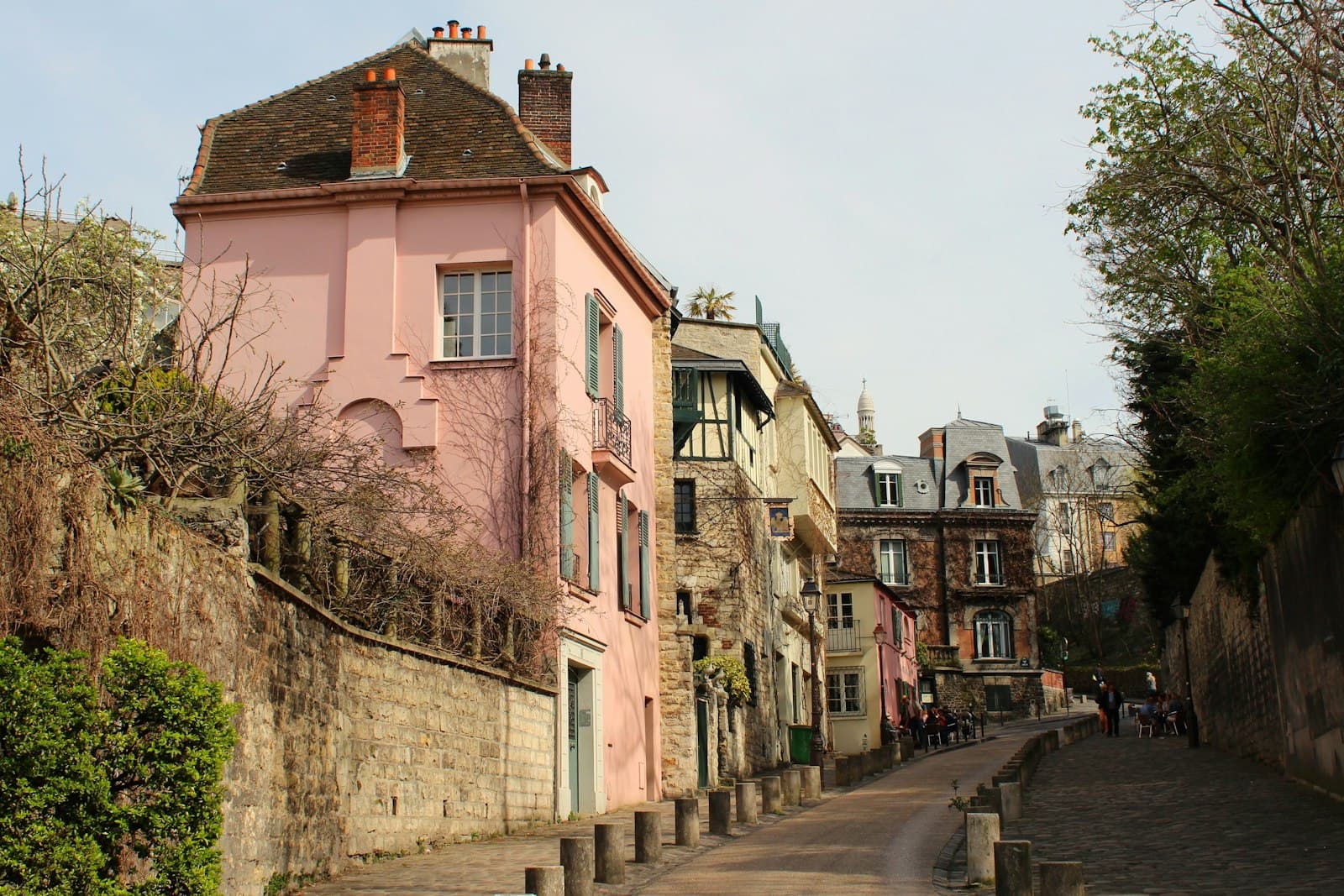
Votre visite audioguidée de Montmartre des Artistes vous attend — choisissez vos lieux, votre langue, et lancez-vous dès votre arrivée.
AcheterLume intègre un guide en réalité augmentée. Levez votre téléphone : sa caméra montre la rue devant vous, avec une flèche lumineuse posée sur l'image réelle qui pointe toujours vers votre prochain arrêt — aucune carte à déchiffrer, aucun mauvais virage. Comme tout dans Lume, ça fonctionne entièrement hors-ligne.
Montez sur la Butte Montmartre, une colline qui fut autrefois un village à part de Paris. Ici, au tournant du XXe siècle, les loyers abordables et une atmosphère de liberté attirèrent une constellation d'artistes, d'écrivains et de musiciens. Des Impressionnistes aux Cubistes, Montmartre fut un creuset de créativité, où des idées révolutionnaires naquirent dans des ateliers modestes et des cabarets animés. Cette promenade vous invite à suivre leurs traces, à découvrir les extérieurs des lieux où Picasso, Renoir, Van Gogh, Toulouse-Lautrec et Modigliani vécurent, travaillèrent et trouvèrent leur inspiration. Ressentez le pouls bohème durable de ce quartier parisien emblématique.
Ce parcours autoguidé se concentre sur les espaces publics et les extérieurs qui ont façonné la vie des artistes, vous permettant d'imaginer les scènes qui s'y sont déroulées. Vous déambulerez dans des rues sinueuses, découvrirez des places tranquilles et expérimenterez le caractère unique qui continue d'attirer artistes et rêveurs à Montmartre. C'est l'occasion de vous connecter à l'héritage artistique qui a transformé une colline rurale en un site culturel mondial.
Pendant des siècles, Montmartre fut un village rural, distinct de Paris. Ses coteaux étaient parsemés de moulins et de vignobles, offrant une échappée rustique loin de l'agitation de la ville en contrebas. La présence de carrières de gypse a également façonné son paysage primitif. Cela changea radicalement en 1860 lorsque Montmartre fut annexée à Paris.
À la fin du XIXe siècle, Montmartre commença sa transformation en un havre bohème. Ses loyers relativement bas et son atmosphère libérale attirèrent une communauté diverse d'artistes, d'écrivains et d'intellectuels en quête d'un lieu de vie et de travail abordable et inspirant. Cette période, souvent appelée la Belle Époque, fut le théâtre d'une explosion d'activité artistique. Des artistes comme Edgar Degas, Auguste Renoir et Gustave Moreau trouvèrent des maisons et des ateliers sur les pentes inférieures. En montant la colline, les loyers devenaient encore moins chers, attirant une nouvelle vague de créateurs en difficulté.
Les cabarets et les salles de danse, tels que le Moulin Rouge et Le Lapin Agile, devinrent centraux dans la vie nocturne de Montmartre, offrant à la fois divertissement et sujets pour des artistes comme Toulouse-Lautrec. Les cafés bourdonnaient de discussions sur l'art, l'amour et la vie, favorisant un sentiment unique de communauté parmi l'avant-garde. Cette époque vit le développement de mouvements artistiques révolutionnaires, Montmartre servant de berceau au Cubisme dans l'atelier de Picasso.
Cependant, la domination artistique de Montmartre commença à décliner avec le début de la Première Guerre mondiale, de nombreux artistes partant, et le centre culturel de Paris se déplaçant vers Montparnasse. Malgré cela, l'héritage de Montmartre en tant que berceau de l'art moderne perdure, ses rues et ses places continuant d'évoquer l'esprit de son passé illustre.
Commencez par le Bateau-Lavoir (13 Rue Ravignan), un bâtiment modeste qui fut autrefois un centre pour les artistes, notamment là où Pablo Picasso peignit Les Demoiselles d'Avignon. Continuez jusqu'au 54 Rue Lepic, l'appartement que Vincent et Théo van Gogh partagèrent de 1886 à 1888, où la palette de Vincent commença à s'éclaircir. À proximité, vous trouverez le Moulin de la Galette, l'un des derniers moulins de Montmartre, célèbrement représenté par Renoir dans son tableau Bal du moulin de la Galette.
Promenez-vous jusqu'au Lapin Agile (22 Rue des Saules), un cabaret historique fréquenté par Picasso, Modigliani et Toulouse-Lautrec, connu pour son atmosphère bohème. À deux pas se trouve le Vignoble de Montmartre (Clos Montmartre), une parcelle de vignes surprenante qui rappelle le passé agricole de la région. Explorez les sereins jardins du Musée de Montmartre, faisant partie d'une ancienne résidence et atelier pour des artistes comme Renoir et Suzanne Valadon. Concluez votre pèlerinage artistique à la Place du Tertre, où des artistes contemporains perpétuent la tradition de peindre et de vendre leurs œuvres en plein air, tout comme leurs prédécesseurs.
Bien que les adresses significatives ultérieures de Modigliani se trouvent à Montparnasse, il a résidé à Montmartre au début de sa carrière parisienne, notamment dans un atelier rue Caulaincourt et des séjours au Bateau-Lavoir et au 7, Place Jean-Baptiste Clément. Toulouse-Lautrec a également eu plusieurs adresses à Montmartre, dont le 21 Rue Caulaincourt (1887-1893), le 9 Rue de Douai (sa dernière adresse parisienne) et le 19 Bis Rue Pierre Fontaine (1884-1893/4).
Montmartre est charmant toute l'année, mais pour une expérience des plus agréables, envisagez de visiter au printemps (avril-juin) ou à l'automne (septembre-octobre) lorsque le temps est agréable et que la foule est généralement moins nombreuse qu'en plein été. Pour éviter les plus grandes foules, surtout autour du Sacré-Cœur et de la Place du Tertre, visez tôt le matin ou en fin d'après-midi. Les jours de semaine sont généralement moins fréquentés que les week-ends. Les artistes de la Place du Tertre sont généralement présents de la fin de matinée au début de soirée.
Cette visite à pied implique des montées et des escaliers, alors portez des chaussures confortables. La distance totale peut varier selon votre exploration, mais attendez-vous à marcher environ 4 kilomètres (2,5 miles) et prévoyez 2 à 3 heures pour effectuer le circuit principal à un rythme tranquille, sans compter les arrêts dans les musées ou pour vous rafraîchir. Montmartre est généralement sûr, mais soyez vigilant aux pickpockets dans les zones très fréquentées, en particulier près du Sacré-Cœur et du Moulin Rouge. Envisagez de commencer votre promenade près de la station de métro Abbesses pour une entrée plus calme dans le quartier, ou Anvers pour un accès plus proche au Sacré-Cœur et au funiculaire. Le funiculaire offre une alternative à l'ascension des principaux escaliers menant à la basilique.
Montmartre des Artistes en coréen, en chinois ou en hébreu — et dans 29 autres langues, chaque étape narrée par une voix native. La plus large gamme de langues de tous les audioguides autoguidés.
Disponible en :