Piazza Farinata degli Uberti
Imagine a pivotal moment in Florentine history, not in Florence itself, but in a lesser-known town. A decision was made here that saved Florence from utter destruction.
Full story unlocks in the tour
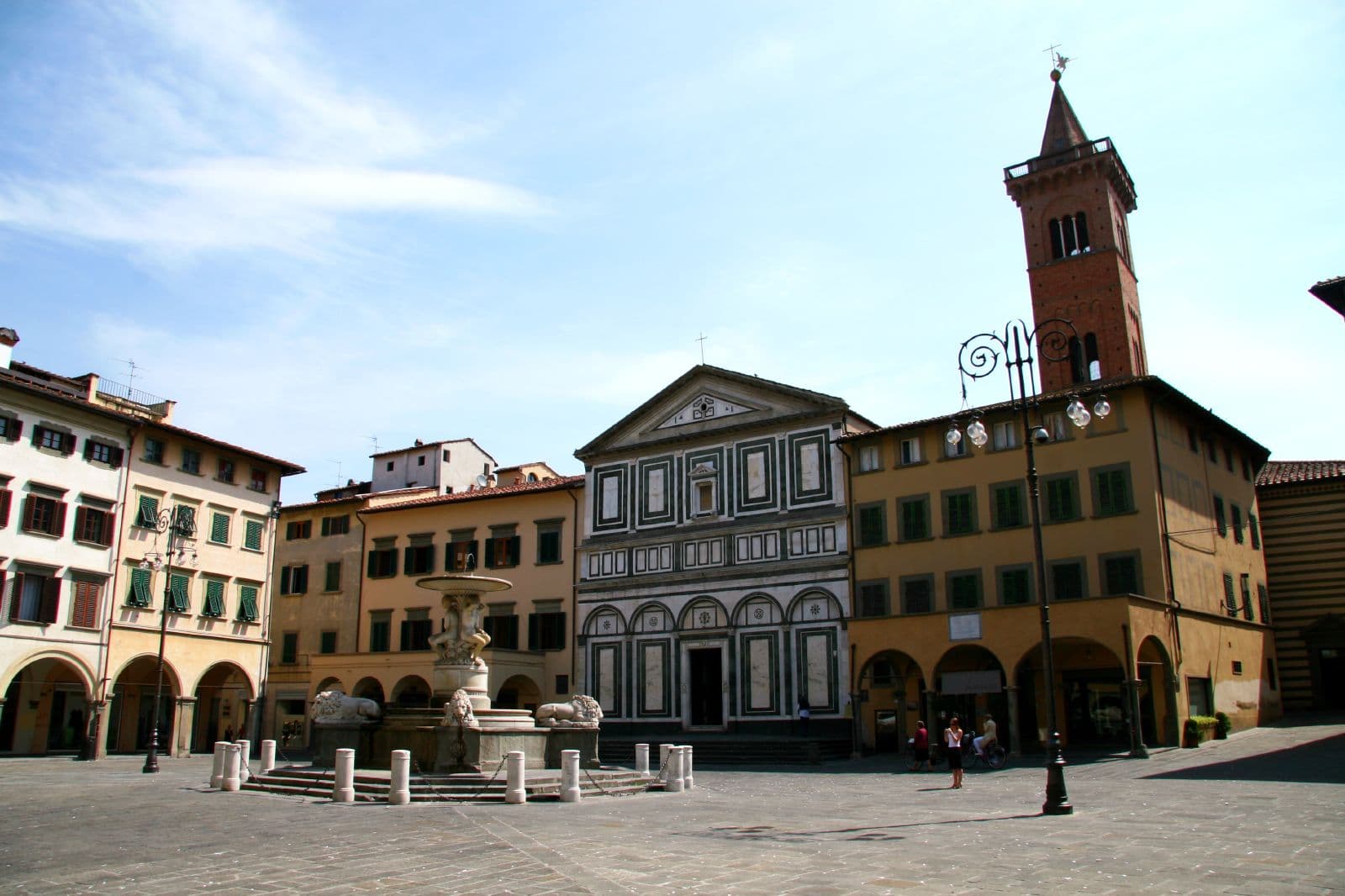 mockney piers / CC BY 2.0, via Wikimedia Commons
Self-guided audio walking tour of Empoli — GPS route, offline playback, story-driven narration in 32 languages.
“Beyond Florence's shadow, Empoli holds secrets of glass, defiant history, and Renaissance whispers.”
Not the postcards. The stories even locals don't know — whispered in your ear, right where they happened.
Imagine a pivotal moment in Florentine history, not in Florence itself, but in a lesser-known town. A decision was made here that saved Florence from utter destruction.
Empoli's historical glass industry is known for a specific color that wasn't created with dye, but from the very earth it stands on.
This Tuscan town, not a provincial capital, has a football club with a surprising track record, including European competition.
Discover every secret of Empoli
Every address, every reveal in full — in your ear, right where it happened.
You pick your stops. You walk. The voice reveals what the others miss.

Your self-guided audio tour of Empoli is ready — pick your landmarks, choose your language, and start the moment you arrive.
BuyLume has a built-in augmented-reality guide. Hold your phone up and its camera shows the street ahead of you, with a glowing arrow laid over the real view that always points to your next stop — no map to puzzle over, no wrong turns. Like everything in Lume, it works fully offline.
Empoli, a town in the heart of Tuscany, offers a captivating blend of history, art, and authentic Italian life, often overlooked by those rushing to its more famous neighbors. Situated about 30 kilometers southwest of Florence, along the Arno River, Empoli has been a significant agricultural and commercial center since Roman times. Its fertile plains, crisscrossed by four important rivers—Arno, Pesa, Orme, and Elsa—have long supported a thriving local economy.
While it may not present the grand Renaissance monuments of Florence or the iconic tower of Pisa, Empoli provides a genuine glimpse into small-town Tuscany. Its charming streets, historic squares, and a relaxed pace invite exploration, revealing layers of a past intertwined with powerful Florentine families and pivotal historical decisions. From its distinctive green glass to its role in saving Florence from destruction, Empoli holds a quiet allure for those seeking a deeper connection with the region's heritage.
## From Roman Port to Medieval Powerhouse Empoli's roots stretch back to the early Roman Empire, where archaeological finds confirm its existence until the 4th century AD. Known as "In Portu" in the 4th-century Tabula Peutingeriana, a Roman road map, Empoli served as a vital river port on the Via Quinctia, facilitating trade of agricultural products and local amphorae between Florence, Fiesole, and Pisa. It was also connected to Volterra's salt ponds via the Via Salaiola, highlighting its early commercial importance.
By the 8th century, Empoli began to consolidate as a town around a castle, referred to as Emporium or Empolis. In 1119, it was absorbed into the possessions of the powerful Guidi counts, who fortified the town with walls and defensive structures. However, its strategic location made it a coveted prize for the Florentine Republic, and in 1182, Empoli swore allegiance to Florence.
## The Ghibelline Congress and Florentine Influence One of the most significant events in Empoli's history occurred in 1260. Following the Ghibelline victory over the Guelphs at the Battle of Montaperti, Empoli hosted a famous council. Here, the Ghibelline leader Farinata degli Uberti famously opposed the destruction of defeated Florence, a decision that Dante Alighieri later immortalized in his Inferno. This act cemented Empoli's place in Tuscan lore.
The town's fortifications continued to evolve. While early walls were destroyed by a devastating Arno flood in 1333, they were quickly rebuilt. A wider circle of walls was constructed in the latter part of the 15th century, with contributions from renowned military architects like Giuliano and Antonio da Sangallo. Despite periods of foreign raids and sieges, Empoli experienced economic growth in the 14th and 15th centuries, attracting artists like Masolino da Panicale and Lorenzo di Bicci.
## Industrialization and Modernity Empoli's fate improved significantly after 1530 with the industrialization efforts initiated by Grand Duke Leopoldo I di Lorena. This laid the groundwork for its later reputation as an industrial town. The 18th and 19th centuries saw a boom in glass production, particularly the iconic green glass, which became a major source of wealth and employment. The construction of the Leopoldine railway and a bridge over the Arno in the mid-19th century further enhanced Empoli's strategic position and economic opportunities.
Tragically, Empoli suffered extensive damage during World War II due to its industrial importance, but its citizens quickly rebuilt the town. Today, Empoli remains a lively town, balancing its historical past with a dynamic present, known for its agriculture, glass and ceramics industries, and a thriving service sector.
Begin your exploration of Empoli in Piazza Farinata degli Uberti, also known as Piazza dei Leoni, named for its central fountain adorned with lions by Luigi Pampaloni. This is the historic heart of the town, surrounded by arcades. Here, you'll find the Collegiata di Sant'Andrea, a significant monument with a unique Florentine Romanesque façade. Inside, the Museo della Collegiata di Sant'Andrea houses a collection of religious art, including works by Francesco Botticini, a terracotta by Luca della Robbia, and frescoes by Masolino.
Opposite the Collegiata stands the Palazzo Ghibellino, once the palace of the Guidi counts and the site of the famous Ghibelline Parliament. Today, it houses the Civic Museum of Paleontology, offering a journey into the region's ancient geological past. Nearby, the Palazzo Pretorio, the former Town Hall, is also worth noting for its medieval origins and 15th-century wooden door.
For a deeper dive into Empoli's industrial heritage, visit the Museo del Vetro (MUVE), the Museum of Glass, located in a renovated salt warehouse. It showcases centuries of Empoli's glassmaking tradition, particularly its distinctive green glass. Seek out the Casa del Pontormo in the hamlet of Pontorme, the childhood home of the influential Mannerist painter Jacopo Carrucci, now a museum. The nearby church of San Michele in Pontorme also displays some of his early 16th-century panel paintings.
For music lovers, the House Museum of Ferruccio Busoni in Piazza della Vittoria celebrates the life and work of the renowned Empolese composer and pianist. If you're a football fan, the Stadio Carlo Castellani is the home ground of Empoli FC. For a relaxing outdoor experience, the large Parco di Serravalle offers green space for a stroll.
The ideal times to visit Empoli are during the spring (April to June) and fall (September to October). During these months, the weather is generally pleasant, with average temperatures in October ranging from a high of 68°F (20°C) to a low of 50°F (10°C), and fewer tourists. May through September also offers a pleasant climate for exploring. The cooler months of December through March provide a quieter experience for those seeking to avoid crowds.
Empoli is easily accessible, located about 30 km southwest of Florence. You can take a direct train from Florence's Santa Maria Novella station to Empoli, with the journey lasting approximately 30 minutes. Empoli is also on the main railway line connecting Florence to Pisa, and a line diverges here to Siena, making it a convenient base for exploring Tuscany.
The town center is quite walkable, allowing you to explore most of the main sights on foot. For exploring the surrounding countryside or nearby villages like Pontorme, walking is an option, or consider local buses. Empoli has a lively local market where you can sample Tuscan delicacies and find unique souvenirs. Don't forget to try the local Empoli artichokes and indulge in some gelato from one of the town's parlors.
Empoli in Korean, in Chinese or in Hebrew — and 29 more languages, every stop narrated by a native voice. The widest language range of any self-guided audio tour.
Available in: