La Place du Palais de Justice
Le plan distinctif du centre-ville de Goderich n'est pas seulement attrayant ; il reflète une planification urbaine ancienne.
L'histoire complète se débloque dans le tour
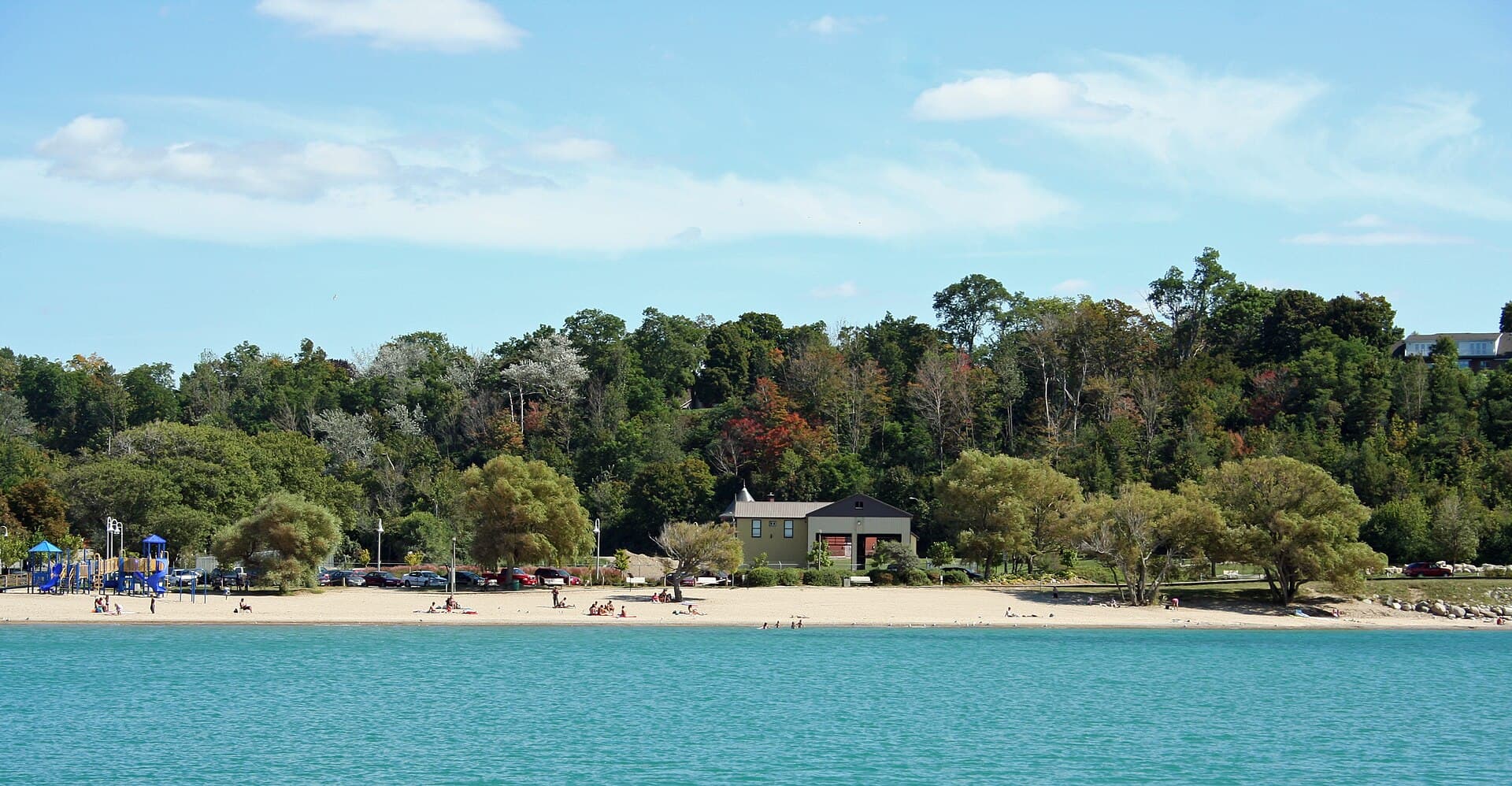 Whpq / CC BY-SA 3.0, via Wikimedia Commons
Visite audio autoguidée de Goderich — parcours GPS à pied, lecture hors ligne, narration en 32 langues.
“Là où l'étendue du lac rencontre des histoires intemporelles.”
Pas les cartes postales. Les histoires que même les habitants ignorent — soufflées à l'oreille, là où elles se sont passées.
Le plan distinctif du centre-ville de Goderich n'est pas seulement attrayant ; il reflète une planification urbaine ancienne.
Ce phare emblématique sur le lac Huron est le théâtre d'une transaction discrète avec la royauté.
Sous le lac Huron se trouve une découverte vaste et inattendue, mise au jour par hasard.
Découvrez tous les secrets de Goderich
Chaque adresse, chaque révélation en entier — dans ton oreille, là où elle s'est passée.
Tu choisis tes lieux. Tu marches. La voix te révèle ce que les autres ignorent.


Votre visite audioguidée de Goderich vous attend — choisissez vos lieux, votre langue, et lancez-vous dès votre arrivée.
AcheterLume intègre un guide en réalité augmentée. Levez votre téléphone : sa caméra montre la rue devant vous, avec une flèche lumineuse posée sur l'image réelle qui pointe toujours vers votre prochain arrêt — aucune carte à déchiffrer, aucun mauvais virage. Comme tout dans Lume, ça fonctionne entièrement hors-ligne.
Goderich, en Ontario, un endroit que la reine Victoria a un jour appelé « la plus jolie ville du Canada », présente une convergence fascinante de splendeur naturelle et d'intrigue historique sur la rive est du lac Huron. La place octogonale unique du palais de justice de la ville forme son cœur actif, avec des avenues s'étendant pour révéler un centre-ville piétonnier rempli de boutiques et de restaurants. De ses falaises spectaculaires surplombant le lac à ses plages de sable et sa vaste promenade, Goderich offre des vues évocatrices et une atmosphère détendue et accueillante.
Au-delà de son attrait pittoresque, Goderich est une communauté aux fondations profondes, comme en témoignent ses bâtiments patrimoniaux bien préservés et son héritage maritime. Elle est le chef-lieu du comté de Huron, et sa position à l'embouchure de la rivière Maitland en a fait historiquement un centre de commerce et d'industrie. Que vous soyez attiré par l'attrait des couchers de soleil spectaculaires, l'exploration de sites historiques ou les histoires inattendues qui émergent de son passé, Goderich promet une expérience distinctive dans le sud-ouest de l'Ontario.
Goderich a été établie en 1827 par John Galt et le Dr William « Tiger » Dunlop de la Canada Company, une entreprise de colonisation qui a acquis le vaste Huron Tract. La ville a été nommée d'après Frederick John Robinson, 1er vicomte Goderich, qui était alors Premier ministre du Royaume-Uni. La colonie initiale était marquée par « The Castle », la résidence en rondins de Dunlop, qui fut la première demeure permanente du comté de Huron. Le plan octogonal distinctif de la ville, avec des rues partant en éventail d'une place centrale, a été arpenté en 1829 et est attribué à Galt, qui se serait inspiré des anciens plans de villes romaines. En 1841, Goderich est devenue le centre administratif et judiciaire du district de Huron nouvellement établi, et elle a été incorporée en tant que ville en 1850 avec une population d'environ 1 000 habitants.
L'emplacement de Goderich sur le lac Huron, à l'embouchure de la rivière Maitland, a été fondamental pour son développement précoce. Des jetées ont été construites dans les années 1830 pour protéger les navires, et le phare de Goderich, le premier sur la rive canadienne du lac Huron, a été érigé en 1846-1847. La pêche est devenue une industrie importante, avec des cabanes de pêcheurs bordant la jetée. L'arrivée du chemin de fer en 1858 a considérablement augmenté l'activité portuaire, conduisant à la construction d'un grand silo à grains en 1859 et consolidant davantage Goderich en tant que centre industriel. Des moulins à farine opéraient également le long de la rivière Maitland.
Un moment charnière dans l'histoire de Goderich s'est produit en 1866 lorsque Samuel Platt, alors qu'il forait pour du pétrole, a accidentellement découvert une vaste veine de sel. Cette découverte a conduit à l'établissement d'une importante exploitation minière de sel, qui continue d'être une industrie majeure aujourd'hui. La mine de sel de Goderich est reconnue comme la plus grande mine de sel souterraine du monde, s'étendant sur plusieurs kilomètres sous le lac Huron. Au début du XXe siècle, ce qui est maintenant l'aéroport de Goderich est devenu une installation d'entraînement aérien canadienne pendant la Seconde Guerre mondiale. La ville a également fait face à des défis, notamment une tornade F3 dévastatrice en 2011, qui a causé d'importants dégâts au centre-ville, bien que les efforts de récupération aient été rapides. Aujourd'hui, Goderich conserve son caractère historique tout en embrassant le tourisme et ses activités industrielles en cours.
Goderich présente un éventail d'attractions, mêlant son caractère historique à la beauté naturelle. La Place du Palais de Justice, le cœur octogonal de la ville, est un lieu historique désigné et un point central pour les boutiques et les restaurants locaux. Surplombant le lac Huron, le Parc du Phare offre des vues imprenables, des canons historiques et un accès à la Plage St. Christopher. Le Phare de Goderich, la plus ancienne station lumineuse canadienne sur le lac Huron, se dresse ici.
Pour une exploration plus approfondie du passé, la Prison historique de Huron est un octogone en pierre de trois étages qui a fonctionné comme prison et palais de justice du comté de 1841 aux années 1970. C'est maintenant un site historique national offrant des visites et des reconstitutions. À côté, le Musée du comté de Huron offre une vue étendue sur l'histoire de la région. Le Pont Menesetung, un ancien passage ferroviaire du Canadien Pacifique construit en 1907, a été transformé en pont piétonnier, offrant des vues sur la rivière Maitland. Les trois plages publiques de Goderich — Main Beach, St. Christopher's Beach et Rotary Cove Beach — sont reliées par une promenade de 1,5 kilomètre, idéale pour des promenades tranquilles et l'observation du coucher du soleil. La Promenade du front de mer de Goderich est un sentier panoramique de 1,5 kilomètre le long du lac.
Pour ceux qui s'intéressent au côté industriel de la ville, le gigantesque terminal céréalier Parrish and Heimbecker et la mine de sel Compass Minerals dominent le port commercial, cette dernière étant la plus grande mine de sel souterraine du monde.
La période la plus favorable pour visiter Goderich pour les activités par temps chaud s'étend de fin juin à début septembre. Pendant ces mois, les températures maximales quotidiennes moyennes sont supérieures à 19°C (66°F), juillet étant le mois le plus chaud, avec une moyenne de 24°C (76°F). Cette période est idéale pour profiter des plages, de la promenade et des sentiers extérieurs. La ville connaît des étés confortables et partiellement nuageux. Septembre connaît les précipitations moyennes les plus élevées, tandis que février est le plus sec. Les hivers sont froids, neigeux et venteux, janvier étant le mois le plus froid, avec une moyenne de -8°C (18°F).
Goderich est située sur la rive est du lac Huron, à l'embouchure de la rivière Maitland. Elle se trouve à environ 74 kilomètres de Stratford et à un peu plus de 200 kilomètres de Toronto. Bien que le centre-ville soit très agréable à parcourir à pied, une voiture est suggérée pour explorer la région environnante en raison des transports en commun limités. L'aéroport régional de Goderich est à une courte distance en voiture du centre-ville.
Les options d'hébergement comprennent des hôtels tels que le Cedar Lodge Motel, le Comfort Inn & Suites, le Benmiller Inn & Spa et The Silver Birch Motel. Dîner à Goderich offre une variété de choix, avec du poisson local du lac Huron disponible dans des établissements comme le Park House, West Street Willy's ou le Goderich Harbour Restaurant. Pour un repas avec vue, la Beach Street Station, située dans une gare du Canadien Pacifique restaurée de 1907, est un choix privilégié. La ville compte de nombreuses galeries et boutiques d'artisans, et plus d'un quart de ses terres est dédié aux parcs.
Goderich en coréen, en chinois ou en hébreu — et dans 29 autres langues, chaque étape narrée par une voix native. La plus large gamme de langues de tous les audioguides autoguidés.
Disponible en :