Göynük's historical houses
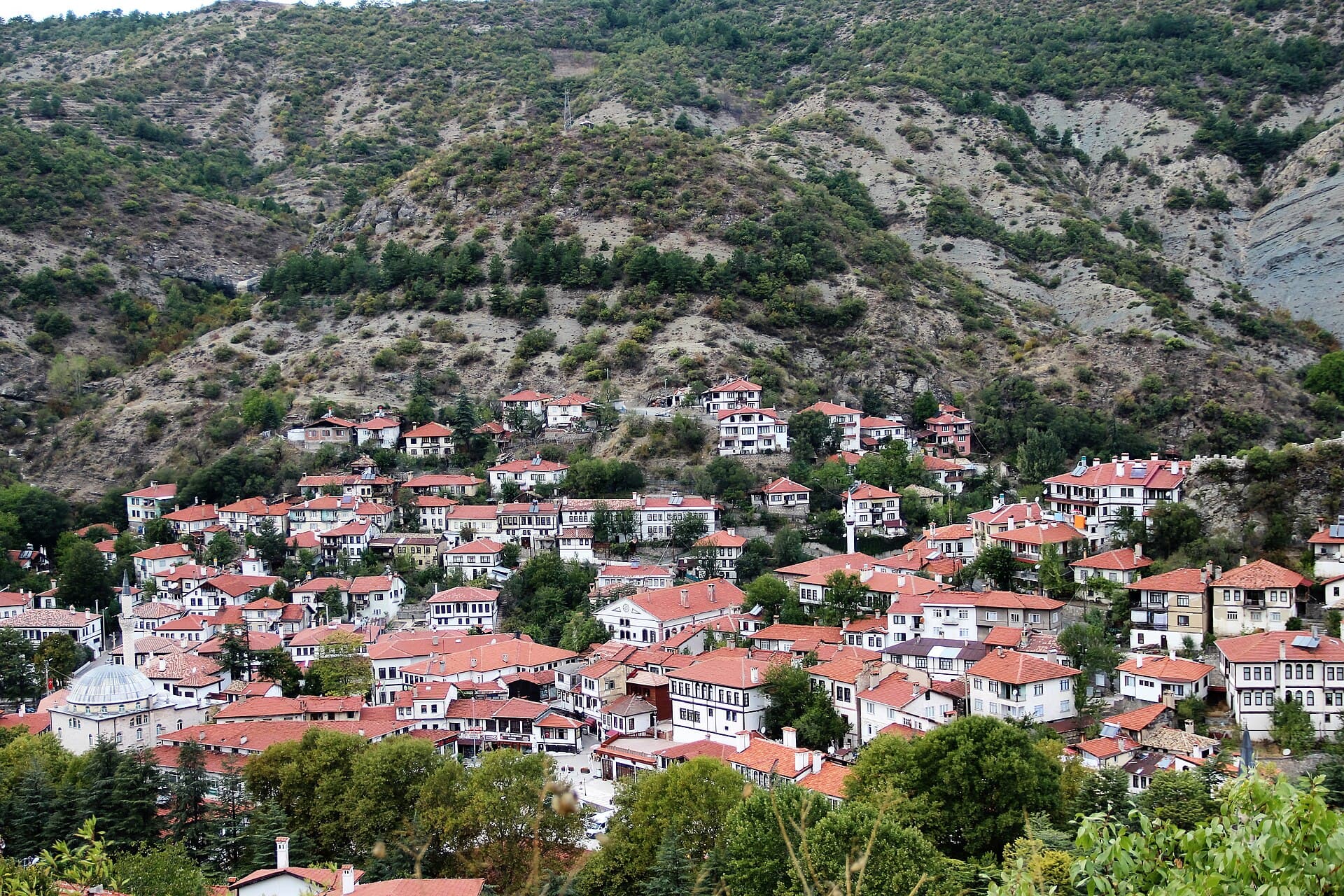
Many of Göynük's iconic Ottoman-era houses, with their distinctive wooden frames and red-tiled roofs, are not merely relics of the past.
Full story unlocks in the tour
 fatihset / CC BY 3.0, via Wikimedia Commons
Self-guided audio walking tour of Göynük — GPS route, offline playback, story-driven narration in 32 languages.
“Where the echoes of the Ottoman Empire resonate through ancient stones and mountain breezes.”
Not the postcards. The stories even locals don't know — whispered in your ear, right where they happened.
Many of Göynük's iconic Ottoman-era houses, with their distinctive wooden frames and red-tiled roofs, are not merely relics of the past.
Göynük once held a surprising and delectable role within the grand Ottoman Empire.
The revered Akşemseddin, spiritual guide to Sultan Mehmed the Conqueror, selected Göynük as his final resting place, yet his contributions extended beyond religious scholarship.
Discover every secret of Göynük
Every address, every reveal in full — in your ear, right where it happened.
You pick your stops. You walk. The voice reveals what the others miss.


Your self-guided audio tour of Göynük is ready — pick your landmarks, choose your language, and start the moment you arrive.
BuyLume has a built-in augmented-reality guide. Hold your phone up and its camera shows the street ahead of you, with a glowing arrow laid over the real view that always points to your next stop — no map to puzzle over, no wrong turns. Like everything in Lume, it works fully offline.
Göynük, a serene town in Turkey's Bolu Province, invites visitors on a captivating journey through time. Designated a Cittaslow (Slow City) since 2017, it embraces a gentle rhythm of life, encouraging immersion in its well-preserved Ottoman heritage and natural splendor. Situated 98 kilometers from Bolu, at an elevation of 730 meters, Göynük is shaped by its valleys, elevated hills, and a stream that gracefully meanders through its core.
Stroll through its narrow streets, and you will discover a living museum of early Ottoman architecture. Over 100 early 20th-century Ottoman houses, with their whitewashed walls, wooden frames, and red-tiled roofs, ascend the hillsides, many still serving as family residences. This harmonious interplay of landscape and architecture, safeguarded under national heritage laws, ensures Göynük retains its authentic, atmospheric allure.
## A Crossroads of Civilizations Göynük's story is intricately woven with threads from various ancient civilizations. The region first hosted the Scythians and Thracians, later falling under the dominion of Bithynia during the Hellenistic era. Subsequently, it became a settlement for the empires of Alexander the Great, Rome, Byzantium, and the Seljuk state. The Roman Military Highway, known as 'Dadastan,' is believed to have traversed Göynük, underscoring its historical importance as a strategic passage.
## Ottoman Embrace and Legacy The town was absorbed into the Ottoman Empire in the early 14th century. In 1330, Gazi Süleyman Paşa, son of Orhan Gazi, revitalized the city, constructing a mosque and a bathhouse that still bear his name. These structures stand as some of the earliest examples of Ottoman-era architecture. Göynük's favorable location on the historic Baghdad road and its involvement in the 14th-century saffron trade contributed to its economic growth.
## The Spiritual Conqueror's Retreat One of Göynük's most profound historical connections is to Akşemseddin (1389-1459), an influential Ottoman religious scholar, mystic, poet, and the revered mentor of Sultan Mehmed the Conqueror. Following the conquest of Istanbul, Akşemseddin chose to retire to Göynük, where he resided for 15 years until his passing. His türbe (mausoleum), situated in the courtyard of the Gazi Süleyman Paşa Mosque, draws pilgrims and history enthusiasts, establishing Göynük as a significant site on Turkey's faith tourism map. The mausoleum was erected in 1464 by Fatih Sultan Mehmet himself.
## A Symbol of Independence More recently, Göynük played a role in modern Turkish history. The Victory Tower, a prominent landmark on a hill overlooking the town, was constructed in 1922 to commemorate the Sakarya Victory during the Turkish War of Independence. Today, Göynük continues to safeguard its historical, cultural, architectural, and natural beauties, earning it the distinction of an 'urban conservation area.'
Göynük presents a captivating array of sights that transport you to a bygone era. Begin your exploration with a walk through the town's narrow streets, admiring the approximately 140 carefully preserved Ottoman-era houses. These timber-framed homes, many dating to the early 20th century, exemplify traditional Turkish civil architecture with their hipped roofs and distinctive bay windows.
At the heart of Göynük lies the Gazi Süleyman Paşa Mosque and Bath, constructed in 1330 by Orhan Gazi's son, Gazi Süleyman Paşa. These structures represent significant examples of early Ottoman architecture and remain in use today. Adjacent to the mosque is the Mausoleum of Akşemseddin, the spiritual mentor of Fatih Sultan Mehmet, a site of deep historical and spiritual importance.
Ascend to the Victory Tower (Zafer Kulesi), situated on a hill overlooking the town. This monument, erected in 1922, provides expansive views of Göynük's charming historical townscape and the surrounding Anatolian scenery. Beyond the town's architectural treasures, Göynük is enveloped by natural beauty. Explore the tranquil Çubuk Lake and Sünnet Lake, ideal for picnics and nature walks. For those seeking adventure, the nearby Göynük Canyon (located near Kemer, Antalya, not the Göynük in Bolu Province) offers opportunities for hiking, swimming, ziplining, and rafting amidst dramatic cliffs and waterfalls.
The most pleasant time to visit Göynük for agreeable weather and outdoor pursuits is during the shoulder seasons of April, May, June, September, and October. During these months, average temperatures range from 19°C to 28°C (66°F to 82°F), perfect for exploring the town and its natural surroundings. Summers, particularly July and August, are warm and dry, with average highs around 31°C (88°F) and clear skies, making them suitable for warm-weather activities. Winters are cold and snowy.
Göynük is a district of Bolu Province, situated approximately 98 kilometers southwest of the city center. The town's population was 4,376 in 2021. You can reach Göynük by driving or taking a bus from larger cities like Bolu or Ankara. Once in Göynük, the town center is easily navigated on foot, with many historical sites readily accessible. For sites like the Victory Tower, a walk or hike is necessary for the final ascent. While Göynük itself is a 'Slow City,' be aware that some online information about 'Göynük Canyon' refers to a different location near Kemer in Antalya, which offers more adventure sports like rafting and ziplining. Göynük in Bolu Province focuses more on cultural immersion and serene natural beauty. The local economy primarily relies on agriculture and animal husbandry, with traditional handicrafts also holding significance.
Göynük in Korean, in Chinese or in Hebrew — and 29 more languages, every stop narrated by a native voice. The widest language range of any self-guided audio tour.
Available in: