Tepeyac Hill, Mexico City
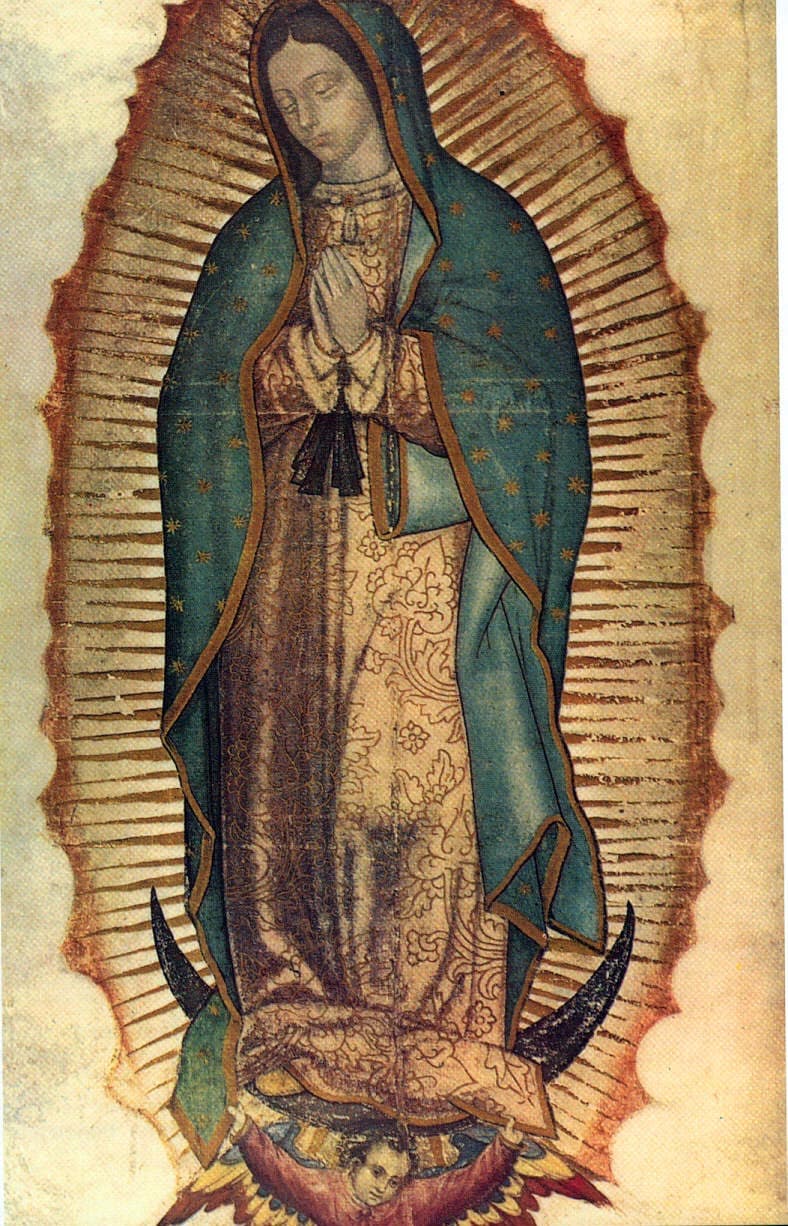
The Virgin of Guadalupe's image, miraculously imprinted on a cloak, defies scientific explanation.
Full story unlocks in the tour
 Wikimedia / public domain, via Wikimedia Commons
Self-guided audio walking tour of Guadalupe — GPS route, offline playback, story-driven narration in 32 languages.
“Where ancient faith and colonial echoes intertwine.”
Not the postcards. The stories even locals don't know — whispered in your ear, right where they happened.
The Virgin of Guadalupe's image, miraculously imprinted on a cloak, defies scientific explanation.
The Virgin of Guadalupe's appearance on Tepeyac Hill was not merely a religious event; it formed a cultural bridge, speaking to the Aztec people in a language they understood.
Before it became a revered Catholic site, Tepeyac Hill held a darker significance for the Aztecs.
Discover every secret of Guadalupe
Every address, every reveal in full — in your ear, right where it happened.
You pick your stops. You walk. The voice reveals what the others miss.


Your self-guided audio tour of Guadalupe is ready — pick your landmarks, choose your language, and start the moment you arrive.
BuyGuadalupe, Mexico, is a name that resonates deeply within Mexican culture and beyond, primarily due to its profound connection with the Virgin of Guadalupe. While the most celebrated site associated with this devotion is the Basilica in Mexico City, the name 'Guadalupe' itself appears in various significant locations across Mexico, each carrying its own unique character and story. From bustling urban centers to serene natural landscapes, the spirit of Guadalupe is woven into the fabric of the nation.
This guide focuses on the broader significance and related anecdotes surrounding the name 'Guadalupe' in Mexico, particularly its spiritual and historical weight. It delves into the fascinating origins of the Virgin of Guadalupe narrative, its enduring impact on Mexican identity, and the intriguing historical tidbits that often go unnoticed by the casual visitor. Prepare to explore a world where faith, history, and legend converge, offering a deeper understanding of this evocative name.
The story of the Virgin of Guadalupe, a cornerstone of Mexican identity, began in December 1531. According to tradition, the Virgin Mary appeared to an indigenous convert named Juan Diego on Tepeyac Hill, just outside what is now Mexico City. She asked him to request that a church be built in her honor at that very spot. Initially, Bishop Juan de Zumárraga was skeptical and asked for proof.
Upon her second apparition, the Virgin instructed Juan Diego to gather roses from the barren Tepeyac Hill, a miraculous occurrence given it was winter and roses were not native to the region. Juan Diego collected these Castilian roses in his tilma, or cloak. When he presented them to the Bishop, the roses fell, revealing a miraculous image of the Virgin imprinted on the cactus-fiber fabric of his tilma. This image, depicting a young woman with dark skin, quickly became known as La Virgen Morena (the Brown-skinned Virgin) and served as a powerful symbol, leading to a profound wave of conversions among the indigenous population to Christianity.
The devotion to the Virgin of Guadalupe rapidly spread throughout New Spain. In 1754, a papal bull declared her the patroness and protector of New Spain, and by 1810, her image became a rallying symbol for the Mexican independence movement, carried on the banner of patriot-priest Miguel Hidalgo y Costilla. Her significance extends beyond religious devotion; she is considered a national symbol of Mexico and has even been declared Patroness of the Americas.
Beyond the spiritual, the name Guadalupe also marks places with compelling economic histories. For instance, in other regions of Mexico, such as Guadalupe in Nuevo León, the city has historically been an agricultural center. In other areas named Guadalupe, particularly in mining districts, gold and silver discoveries date back to the late 1700s, with extensive mining operations continuing for over a century and a half. This dual legacy of spiritual significance and natural resource wealth underscores the multifaceted history embedded in the name Guadalupe across Mexico.
While the most prominent site related to the Virgin of Guadalupe is the Basilica in Mexico City, the broader cultural impact of 'Guadalupe' can be experienced through various lenses. In Mexico City, the Basilica of Our Lady of Guadalupe is a crucial destination. It houses the original tilma of Juan Diego, miraculously bearing the image of the Virgin. The complex includes both the Old Basilica, completed in 1709, and the modern New Basilica, opened in 1976, which was built due to structural issues with the older church. You can also explore the Capilla del Cerrito on Tepeyac Hill, where the apparitions are said to have occurred, featuring frescoes by Fernando Leal depicting the history of the apparitions.
For those interested in the historical and economic facets, exploring areas historically known as Guadalupe for their mining heritage, such as certain districts in Sinaloa or Chihuahua, offers a different perspective. These regions, while not typically tourist destinations for religious pilgrimage, hold remnants of colonial-era mining operations that shaped local economies for centuries. Finally, a trip to Valle de Guadalupe in Baja California offers a completely different experience, focusing on Mexico's premier wine country and its celebrated farm-to-table culinary scene.
The ideal time to visit areas associated with Guadalupe in Mexico largely depends on your focus. If your primary interest is the religious festivities surrounding the Virgin of Guadalupe, December 12th is the most significant day, with celebrations and pilgrimages across the country, especially at the Basilica in Mexico City. Be prepared for substantial crowds during this time.
For general sightseeing and pleasant weather, the spring (March to May) and fall (September to November) months are often ideal for many parts of Mexico, including Mexico City and the Valle de Guadalupe. Spring offers lush landscapes and blooming wildflowers, while fall brings the grape harvest festivals in wine regions. Summer can be hot and humid, especially in central Mexico, while winter offers cooler temperatures.
The official currency throughout Mexico is the Mexican Peso (MXN), symbolized by '$'. While US dollars may be accepted in some tourist-heavy areas, it is always best to use pesos for better exchange rates and smoother transactions. ATMs are widely available for withdrawing pesos, and credit cards are accepted in most urban areas and larger establishments.
Spanish is the official language of Mexico. While English is spoken in major tourist areas, learning a few basic Spanish phrases will greatly enhance your experience. Transportation varies by location; in cities like Mexico City, extensive public transport (metro, buses) is available. For more remote areas or wine regions like Valle de Guadalupe, renting a car or arranging private transportation is recommended. Always be mindful of your belongings and surroundings, especially in crowded areas. Check local advisories for specific safety information for your chosen destinations.
Guadalupe in Korean, in Chinese or in Hebrew — and 29 more languages, every stop narrated by a native voice. The widest language range of any self-guided audio tour.
Available in: