Casa Madero Winery
Before California, before Napa Valley, there was a different kind of gold rush in the Americas, one that flowed red and white.
Full story unlocks in the tour
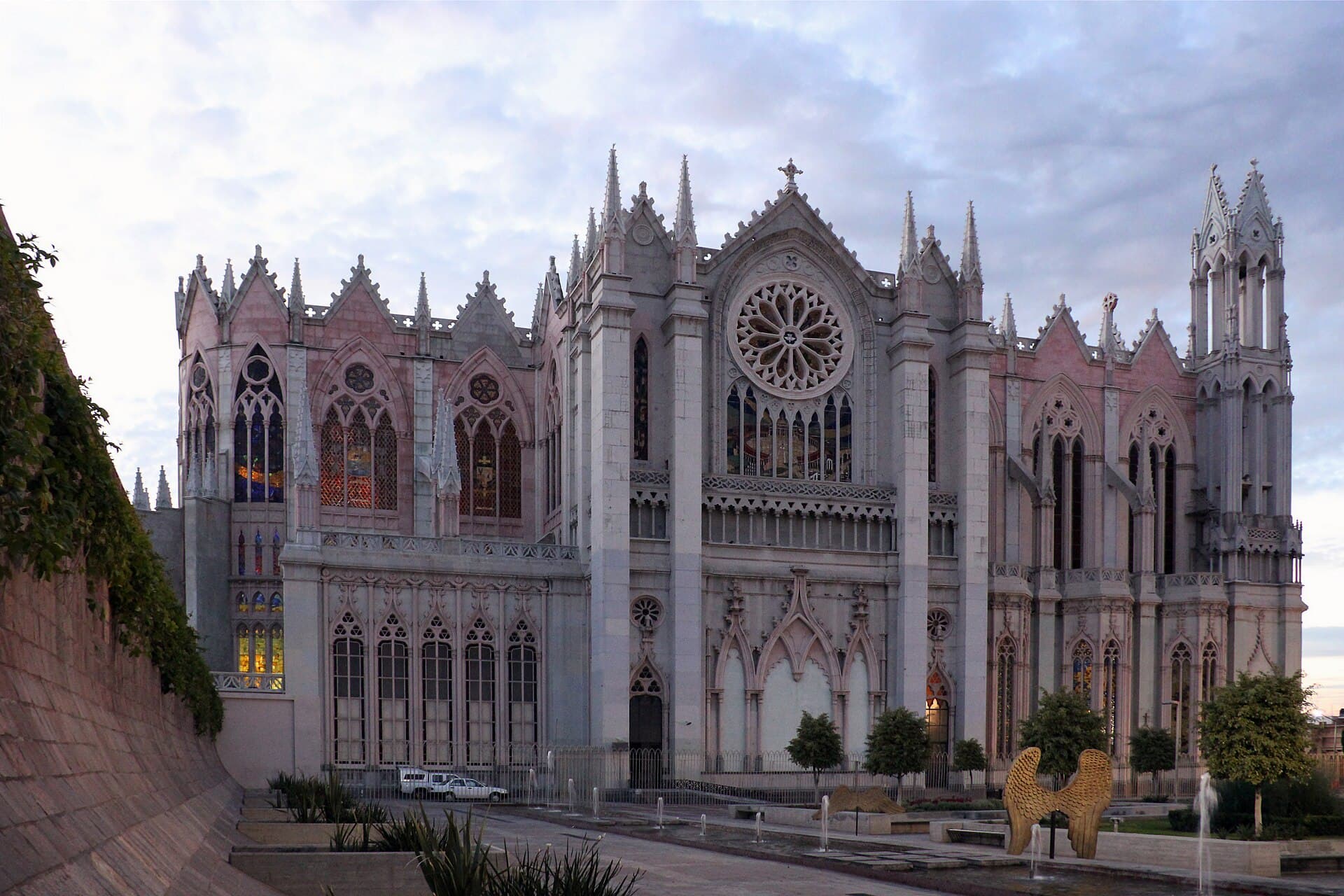 Cvmontuy / cc by-sa 3.0, via Wikimedia Commons
Self-guided audio walking tour of Parras — GPS route, offline playback, story-driven narration in 32 languages.
“Where desert springs nurture ancient vines and revolutionary spirits.”
Not the postcards. The stories even locals don't know — whispered in your ear, right where they happened.
Before California, before Napa Valley, there was a different kind of gold rush in the Americas, one that flowed red and white.
Imagine a time when the world was still largely lit by candlelight, yet one small Mexican town glowed with a revolutionary spark.
To glimpse the soul of Parras, you must ascend, not to a grand cathedral, but to a humble chapel atop an ancient geological wonder.
Discover every secret of Parras
Every address, every reveal in full — in your ear, right where it happened.
You pick your stops. You walk. The voice reveals what the others miss.


Your self-guided audio tour of Parras is ready — pick your landmarks, choose your language, and start the moment you arrive.
BuyLume has a built-in augmented-reality guide. Hold your phone up and its camera shows the street ahead of you, with a glowing arrow laid over the real view that always points to your next stop — no map to puzzle over, no wrong turns. Like everything in Lume, it works fully offline.
Parras de la Fuente, a designated Pueblo Mágico in the state of Coahuila, rises as a verdant oasis amidst the Chihuahuan Desert. It's a town where history runs as deep as its underground springs, which have sustained life and agriculture for centuries. Known as the "oasis of the semi-desert of Coahuila state," Parras is celebrated for its abundant vineyards, colonial architecture, and a peaceful atmosphere that invites leisurely exploration.
Travelers are drawn to Parras for its distinct blend of cultural heritage and natural splendor. From savoring exquisite local wines to exploring historic haciendas and admiring the intricate Baroque details of its churches, Parras offers a journey through time. The town's allure is further enhanced by the genuine hospitality of its people and a culinary scene that highlights regional flavors, including traditional sweets made from locally grown pecans.
This captivating destination promises an unforgettable experience, whether you're a history enthusiast, a wine connoisseur, or simply seeking a serene escape. Its picturesque landscapes and enduring traditions create a setting for discovery, where every corner reveals a story waiting to be told.
## The Cradle of American Viticulture Parras de la Fuente's story begins long before its official founding. Spanish explorers in the 1500s discovered a valley abundant with wild grapevines and natural springs, giving rise to its evocative name, which translates to "vineyards of the fountain." This natural bounty quickly attracted attention, and by 1594, Jesuit missionaries established the Misión de Santa María de las Parras.
The formal founding of Parras occurred on February 18, 1598, by Captain Antón Martín Zapata and Jesuit Father Juan Agustín de Espinoza. Just a year prior, in 1597, King Philip II of Spain granted Don Lorenzo García the land and permission to plant vines and produce wine and brandy. This pivotal moment marked the birth of Casa Madero, the oldest continually operating winery in the Americas, making Parras the true cradle of viticulture in the New World.
## Colonial Influences and Revolutionary Echoes The town's development was shaped by the arrival of Tlaxcalteca indigenous people and Spanish families, who, recognizing the potential of the flourishing vines, introduced European varieties that thrived in the unique climate. This led to a flourishing wine industry, though it faced challenges, including a 1699 Spanish Crown decree that largely restricted colonial wine production to sacramental purposes. Despite this, Parras' vineyards continued to supply the church until Mexico's independence.
Parras also played a significant role in Mexico's revolutionary history as the birthplace of Francisco I. Madero in 1873, a key leader in the Mexican Revolution and later president. The town even had an early brush with technological advancement, becoming one of the first places in Latin America to have electricity, thanks to a connection between the Madero family and Thomas Edison.
## A Pueblo Mágico Today In 2004, Parras de la Fuente was officially recognized as a Pueblo Mágico (Magical Town), a testament to its historical significance, colonial-era architecture, and distinct cultural offerings. The town's irregular and asymmetric layout, influenced by its undulating terrain and intricate hydrological system of streams, ponds, and ditches, further adds to its distinctive character. Today, Parras continues to honor its past while embracing its present as a lively center for wine, culture, and tourism.
Begin your exploration at the Chapel of Santo Madero, situated atop Sombreretillo Hill. The climb offers not only a glimpse into 19th-century religious architecture but also expansive views of the town and its surrounding desert-mountain landscape. Descend to the heart of Parras, the Plaza del Reloj, a charming square featuring a 1913 clock tower that pays tribute to Mexican revolutionary figures.
No visit to Parras is complete without immersing yourself in its winemaking heritage. Casa Madero Winery, the oldest in the Americas, offers tours and tastings, allowing you to sample its renowned wines and learn about its centuries-old production process. Beyond Casa Madero, explore other local vineyards like Viñedos Don Leo for a diverse tasting experience.
Delve into local history at the Monument to the Founders, a symbolic tribute to the indigenous people, Spanish settlers, and Jesuit missionaries who shaped Parras. Visit the San Ignacio de Loyola Church, a 1607 Jesuit structure showcasing elegant Baroque architecture. For a taste of local culture, stroll through the main square, visit the denim store "La Campana," and indulge in traditional sweets. The Estanque de la Luz offers a picturesque setting for enjoying mountain landscapes and open-air pools.
Parras de la Fuente is most pleasant during the spring (March to May) and autumn (September to November). These seasons offer agreeable weather, inviting landscapes, and a calendar full of local festivals. The grape harvest, celebrated each August with the Fiesta de la Vendimia, is a particularly lively and culturally rich time to visit, though it can be warmer. For warm-weather activities, mid-April to late June is also recommended, with a peak in late May. While summers are hot, they also bring the most rainfall, contributing to the oasis-like conditions.
Parras de la Fuente is accessible primarily by road. If flying, the nearest major airports are in Saltillo or Torreón, from which you can take a bus or rent a car. Once in town, the compact center is walkable, but taxis are readily available for getting around, especially to the wineries located on the outskirts. A typical taxi fare within the town center is around 20-25 pesos. There is no Uber or DiDi service.
Accommodation options range from charming boutique hotels to more budget-friendly guesthouses, many reflecting the region's rustic appeal. While there isn't extensive information in English, many locals are hospitable, and guided tours often offer services in both Spanish and English. Be sure to carry cash for smaller purchases and local markets.
Parras in Korean, in Chinese or in Hebrew — and 29 more languages, every stop narrated by a native voice. The widest language range of any self-guided audio tour.
Available in: