Goldie Mill Ruins
Guelph's most scenic ruins hold a secret about its foundational industry, and an unexpected reason for its current state.
Full story unlocks in the tour
 J. S. (Steve) Bond / CC BY-SA 4.0, via Wikimedia Commons
Self-guided audio walking tour of Guelph — GPS route, offline playback, story-driven narration in 32 languages.
“Where calculated design meets unexpected history.”
Not the postcards. The stories even locals don't know — whispered in your ear, right where they happened.
Guelph's most scenic ruins hold a secret about its foundational industry, and an unexpected reason for its current state.
The Sleeman family's brewing legacy in Guelph stretches back to the 1830s, but a notorious incident led to a decades-long hiatus.
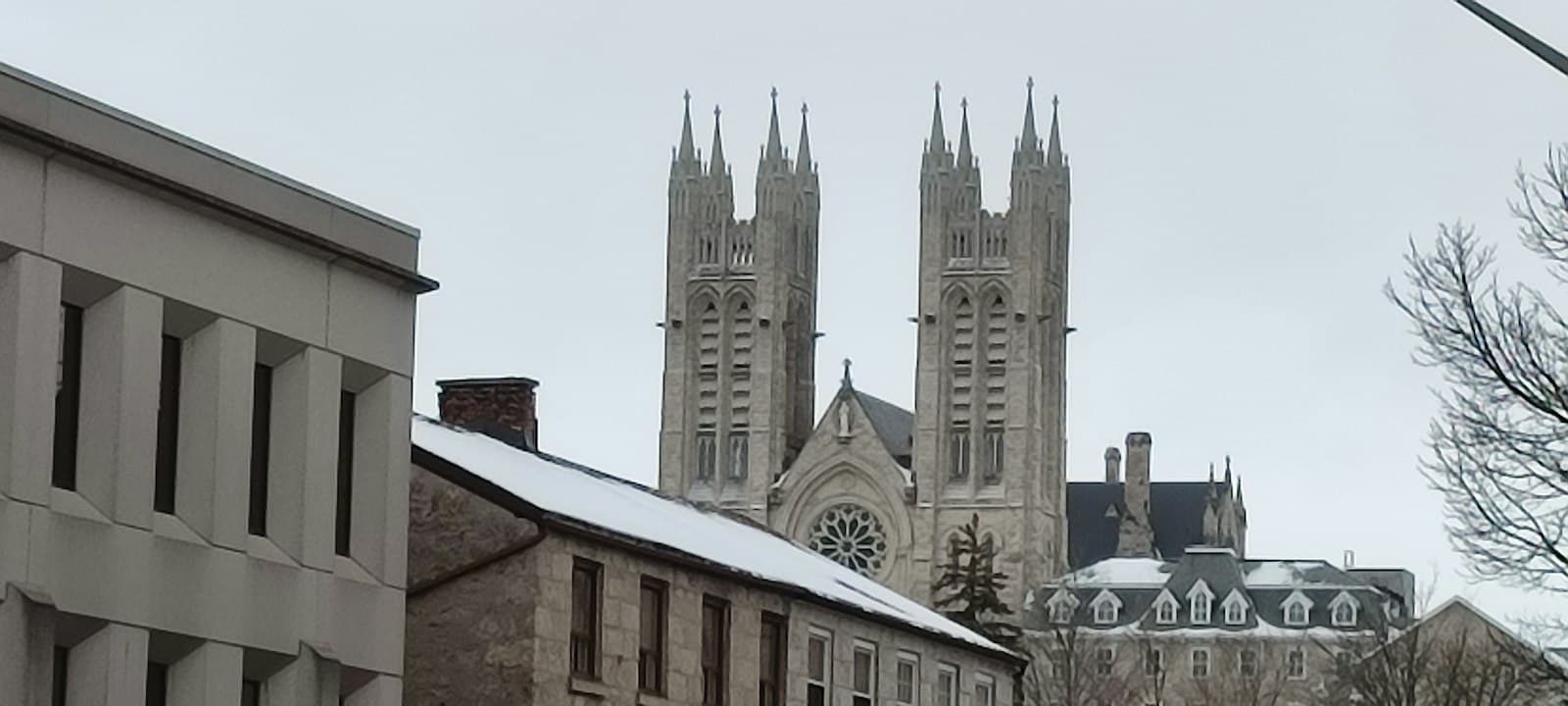
This commanding Gothic Revival church, a dominant feature of Guelph's skyline, was strategically placed by the city's founder with a grand vision in mind.
Discover every secret of Guelph
Every address, every reveal in full — in your ear, right where it happened.
You pick your stops. You walk. The voice reveals what the others miss.

Your self-guided audio tour of Guelph is ready — pick your landmarks, choose your language, and start the moment you arrive.
BuyLume has a built-in augmented-reality guide. Hold your phone up and its camera shows the street ahead of you, with a glowing arrow laid over the real view that always points to your next stop — no map to puzzle over, no wrong turns. Like everything in Lume, it works fully offline.
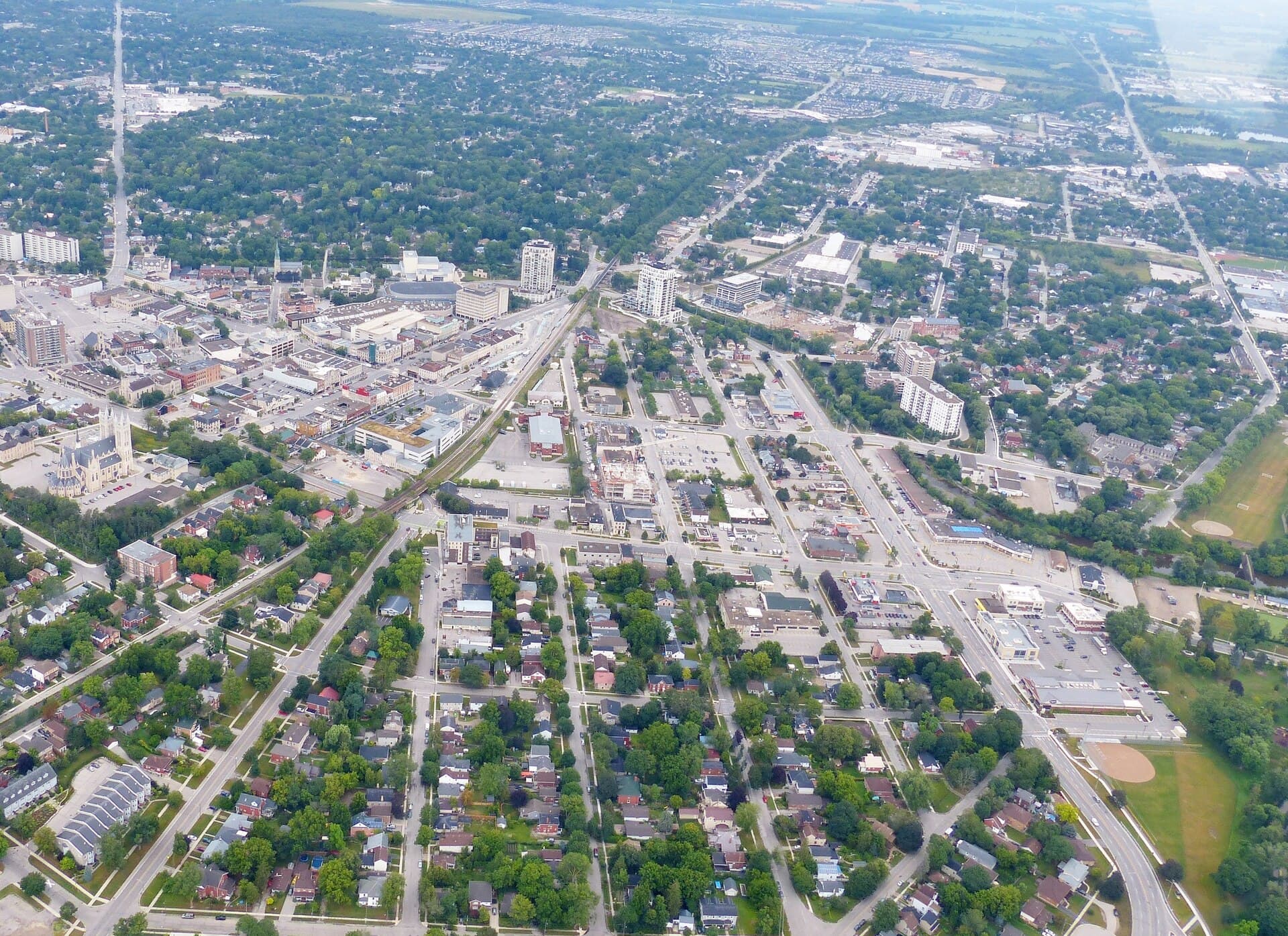
Guelph, often called "The Royal City," is an active urban center in Southwestern Ontario, distinguished by its unique radial street plan and a deep history. Founded in 1827 by Scottish novelist John Galt, Guelph was one of Canada's first planned towns, designed with a European sensibility. Its name honors the British Royal Family, specifically King George IV, whose lineage, the House of Welf (or Guelf), inspired the city's regal nickname.
This land is situated on treaty land with a deep Indigenous history, Guelph's story stretches back 11,000 years, being the traditional territory of the Mississaugas of the Credit First Nation of the Anishinaabek Peoples. Today, it’s a city that balances its historical roots with a forward-thinking spirit, evident in its diverse economy, low unemployment rates, and a strong sense of community.
As you explore Guelph, you'll encounter a captivating blend of heritage limestone architecture and scenic natural attractions, particularly along the Speed River. From its grand Basilica overlooking the city to the unexpected stories embedded in its industrial past and innovative achievements, Guelph offers a journey through time and ingenuity.
Guelph's story begins with a ceremonial felling of a maple tree on St. George's Day, April 23, 1827, by Scottish novelist John Galt. As the first superintendent of the British development firm, the Canada Company, Galt envisioned Guelph as a strategically planned town to attract settlers to the surrounding countryside. His design was innovative for its time, featuring streets radiating from a central focal point at the Speed River, reminiscent of a European city center with its mix of squares, broad main streets, and narrower side streets. The name "Guelph" itself was a nod to the British Royal Family, specifically the House of Welf, the ancestral family of King George IV, hence the enduring nickname "The Royal City."
However, the land Galt planned to settle was not an empty wilderness. Guelph is situated on Treaty 3 Territory, the traditional land of the Mississaugas of the Credit First Nation of the Anishinaabek Peoples, with archaeological evidence indicating Indigenous presence in the area as early as 11,000 years ago. Early interactions between Galt and Indigenous leaders, such as John Brant of the Mohawk, even led to First Nations workers constructing some of Guelph's initial buildings. Despite Galt's ambitious plans, Guelph's growth remained slow until the Grand Trunk Railroad arrived from Toronto in 1856.
The mid-19th century saw a period of significant development. Guelph was incorporated as a village in 1851, then a town in 1856, and finally as a city in 1879. During its inauguration as a city, Mayor George Howard first publicly used the term "Royal City." Many of Guelph's prominent limestone buildings, a defining architectural feature, were erected during this era. The city's industrial heritage also blossomed, with sites like Goldie Mill playing a crucial role in its prosperity. Beyond its physical growth, Guelph became a hub of innovation, offering North America's first cable TV system and Canada's first municipal motorcycle patrol. The establishment of the Ontario Agricultural College in 1874, which later became a cornerstone of the University of Guelph, further cemented the city's importance as a center for education and research.
Begin your exploration at the Basilica of Our Lady Immaculate, a Gothic Revival masterpiece that dominates Guelph's skyline. Its intricate carvings and stained glass are a testament to skilled craftsmanship, and its prominent position was intentionally chosen by the city's founder. Just a short walk away, discover the Goldie Mill Ruins, the limestone remains of an 1800s industrial complex by the Speed River. These picturesque ruins offer a glimpse into Guelph's early manufacturing past.
Stroll through Downtown Guelph, where you can appreciate the city's unique radial street plan and its characteristic limestone architecture. The Old City Hall, built in 1856, is another notable example of this local stone. For a taste of local history and culture, visit the McCrae House, the birthplace of Lieutenant Colonel John McCrae, author of "In Flanders Fields."
Experience the city's natural beauty at the University of Guelph Arboretum, offering a serene escape with various gardens and walking trails. If you're visiting in warmer months, consider a paddle along the Speed River. And for those interested in Guelph's brewing heritage, a visit to Sleeman Breweries offers insight into one of Canada's largest breweries.
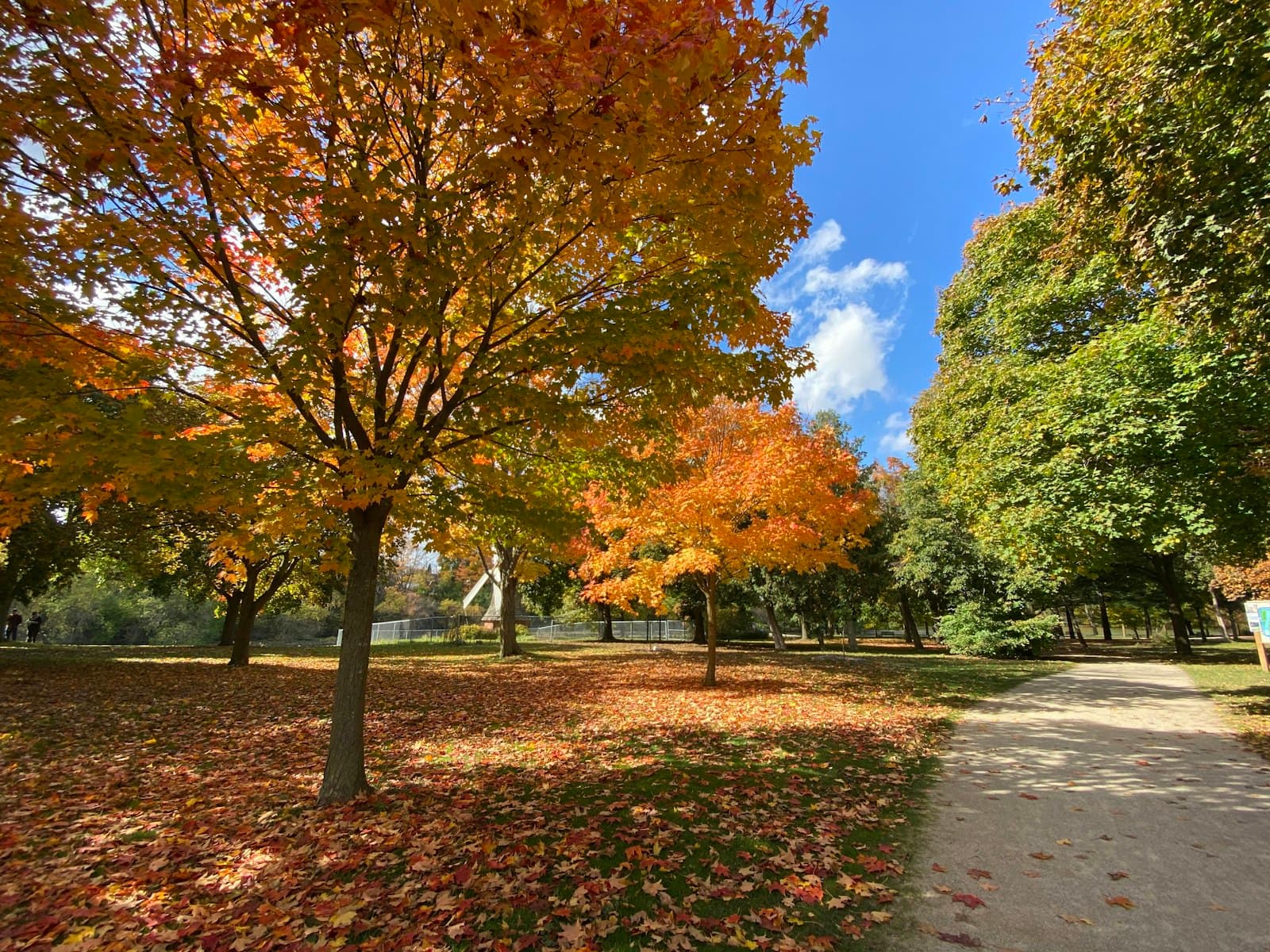
Guelph offers distinct charms throughout the year. For warm-weather activities, late June to early September is ideal, with comfortable temperatures perfect for exploring parks, trails, and outdoor dining. May is also a favorite for blooming neighborhoods and active trails. Autumn brings colorful foliage and a quieter atmosphere, perfect for exploring historic sites without summer crowds. If you're seeking holiday charm, the first two weekends of December host the "Spirit of the Season" with free markets and events. Winters are cold, snowy, and windy, with January being the coldest month.
Guelph is easily accessible, located approximately 70 kilometers (43 miles) west of Downtown Toronto. The city is well-connected by major highways, including Highway 6 and Highway 7. For getting around the city, Guelph offers practical transit access, making it easy to explore by train or local bus services. While a day or two allows for a good overview of key attractions, a more relaxed trip of three to four days is recommended to fully immerse yourself in the local cuisine and broader exploration. Public parking is available, including a parking garage across from the Basilica of Our Lady Immaculate at 10 Wilson Street. Always check the official websites of attractions for current hours and any special event schedules, especially around holidays.
Guelph in Korean, in Chinese or in Hebrew — and 29 more languages, every stop narrated by a native voice. The widest language range of any self-guided audio tour.
Available in: