Pacific Mall
North America's largest indoor Asian shopping mall has a reputation that extends beyond its impressive size and diverse offerings.
Full story unlocks in the tour
 Mhsheikholeslami / CC BY-SA 4.0, via Wikimedia Commons
Self-guided audio walking tour of Markham — GPS route, offline playback, story-driven narration in 32 languages.
“Where historic villages meet Canada's high-tech future.”
Not the postcards. The stories even locals don't know — whispered in your ear, right where they happened.
North America's largest indoor Asian shopping mall has a reputation that extends beyond its impressive size and diverse offerings.
Markham's former civic heart, a grand Victorian building, underwent a surprising transformation after its municipal duties ended.
This serene park, a beloved spot for locals, holds a secret beneath its calm waters that speaks to its industrial past.
Discover every secret of Markham
Every address, every reveal in full — in your ear, right where it happened.
You pick your stops. You walk. The voice reveals what the others miss.


Your self-guided audio tour of Markham is ready — pick your landmarks, choose your language, and start the moment you arrive.
BuyLume has a built-in augmented-reality guide. Hold your phone up and its camera shows the street ahead of you, with a glowing arrow laid over the real view that always points to your next stop — no map to puzzle over, no wrong turns. Like everything in Lume, it works fully offline.
Markham, a dynamic city just north of Toronto, offers a compelling blend of historic charm and modern innovation. Often referred to as "Canada's High-Tech Capital" or "Canada's Silicon Valley," it's a hub for numerous technology and life science companies. Yet, amidst this forward-thinking energy, Markham carefully preserves its past, evident in its picturesque heritage districts and open-air museum.
With a population exceeding 350,000, Markham is one of Canada's most diverse cities, a rich blend of cultures reflected in its architecture, festivals, and especially its renowned culinary scene. From authentic Asian cuisine to international gourmet dishes, the city offers a global gastronomic journey. Beyond its urban pulse, Markham also provides abundant green spaces, including sprawling parklands and extensive trail systems, offering tranquil escapes for nature lovers.
The history of the Markham area stretches back approximately 10,000 years, with Indigenous peoples, including the Huron-Wendat and later the Haudenosaunee, inhabiting the land since the end of the last Ice Age. Archaeological evidence, such as stone tools, pottery fragments, and burial pits, confirms the presence of semi-permanent Indigenous villages in the Rouge Valley long before European arrival.
Modern Markham's story began in 1791 when John Graves Simcoe, the first Lieutenant-Governor of Upper Canada, initiated land grants and the clearing of Yonge Street, significantly influencing the region's development. Simcoe named the township after his friend, William Markham, the Archbishop of York, who never actually visited the area. The first European settlement occurred in 1794, led by German artist and developer William Moll Berczy, who brought approximately 64 German families to settle 64,000 acres known as the "German Company Lands." These early years were marked by the harsh realities of homesteading, with severe winters and crop failures leading many original settlers to depart. However, Pennsylvania German and Mennonite settlers, arriving around 1803, successfully established agricultural communities.
Markham's early economy was driven by agriculture and complementary industries like milling, with numerous water-powered saw, grist, and woolen mills springing up along its rivers and streams. Small hamlets such as German Mills, Almira, Buttonville, Cedar Grove, and Unionville developed around these mill sites. By 1857, Markham Village, initially known as Reesorville, was a bustling center with factories, shops, and dwellings. The arrival of the railway in 1871 brought renewed prosperity and rapid development, leading to the incorporation of the Village of Markham in 1873. However, increased communication with Toronto via rail, telegraph, telephone, and automobile eventually led to the decline of local industries, as they struggled to compete with larger city suppliers, and Markham reverted to a largely agricultural community.
After World War II, Markham experienced significant urban encroachment from Toronto, fueled by industrialization and a post-war baby boom. This period saw waves of new immigrants from around the world, transforming the township into a multicultural mosaic. In 1971, the Regional Municipality of York was established, and a large portion of the township was incorporated into the Town of Markham. The opening of Highway 404 in the mid-1970s further accelerated urban development and population growth.
Today, Markham is recognized as one of Canada's fastest-growing and most diverse cities, with a population of over 350,000 residents. It has evolved into a leading high-tech hub, home to over 1,000 high-tech and life science companies, earning it the moniker "Canada's High-Tech Capital." The city's commitment to cultural diversity, economic growth, and preserving its natural beauty continues to shape its identity as a welcoming community.
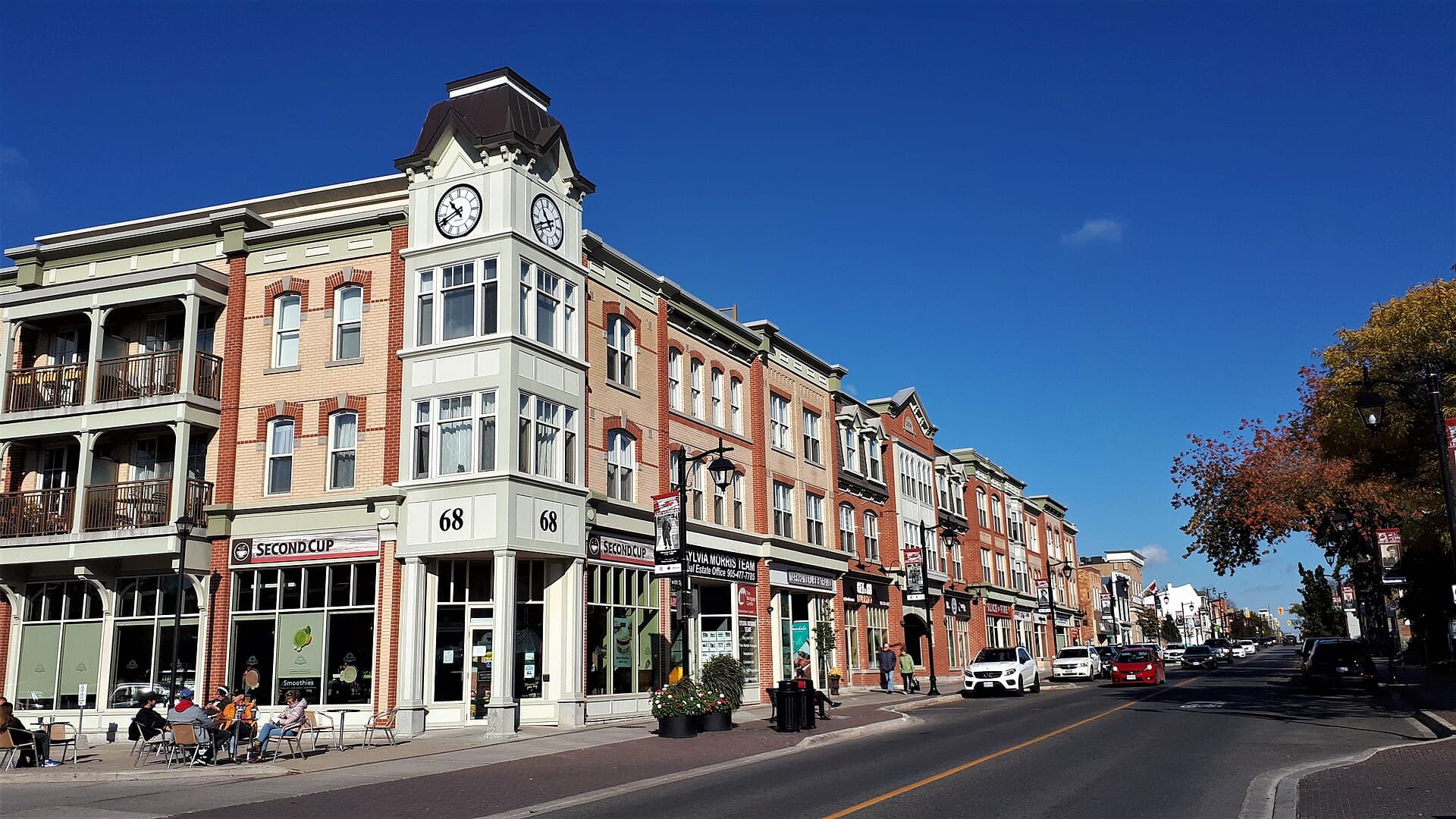
Begin your exploration in Main Street Unionville, a historic village that feels like a step back in time with its preserved 19th-century Victorian architecture, quaint boutiques, art galleries, and cozy cafes. Stroll along the brick-lined street, admire the floral decorations in warmer months, and perhaps catch a festival. Nearby, Toogood Pond Park offers a serene escape with walking trails, boardwalks, and tranquil pond views, perfect for a leisurely stroll or birdwatching.
For a deeper dive into local history, visit the Markham Museum, an open-air museum spanning 10 hectares with nearly 30 heritage buildings, including a general store, church, schoolhouse, and historic train station. Interactive exhibits and guided tours bring the city's agricultural and industrial past to life. Art enthusiasts should not miss the Varley Art Gallery of Markham, located in Unionville, which features permanent and rotating exhibitions of Canadian art, including works by Group of Seven artist Frederick Varley.
Experience a unique shopping adventure at Pacific Mall, North America's largest indoor Asian shopping mall. This bustling multi-level complex offers a treasure trove of electronics, jewelry, fashion, cosmetics, and a diverse food court in its Heritage Town section. For outdoor recreation, Milne Dam Conservation Park provides vast green spaces for walking, jogging, cycling, picnicking, and birdwatching along the Rouge River. And for a touch of whimsy, visit the Pride of Canada Carousel in Downtown Markham, an iconic, solar-powered carousel featuring 44 sculptural characters made from recycled materials.
The best time to visit Markham for warm-weather activities is from May through September. During these months, temperatures are pleasant, ranging from mildly cool to warm, with average highs between 16.4°C (61.5°F) and 24.8°C (76.6°F). This period also offers the longest daylight hours, peaking in June, making it ideal for exploring outdoor attractions and attending local festivals. While September can be the wettest month, the overall conditions remain comfortable for sightseeing. For those seeking fewer crowds and a different experience, the quieter months from December to March offer opportunities for winter activities, though temperatures are much colder.
Markham is easily accessible, located approximately 30 kilometers northeast of downtown Toronto. Travelers can reach the city by car, with major highways providing good access, or by public transit options including GO Transit, VIVA bus rapid transit, and the Toronto Transit Commission (TTC). The nearest major airport is Toronto Pearson International Airport (YYZ).
Getting around Markham itself is straightforward, with public transit provided by York Region Transit (YRT) and the TTC. Car rentals are available for more flexibility, particularly if you plan to explore surrounding areas. Parking is available throughout the city, though costs may vary.
Markham is known for being a safe and welcoming city. Tipping in restaurants is customary, typically 15-20% for good service. Most cafes, restaurants, and hotels offer free Wi-Fi.
Markham in Korean, in Chinese or in Hebrew — and 29 more languages, every stop narrated by a native voice. The widest language range of any self-guided audio tour.
Available in: