Heshun Laundry Pavilions
Along the Sanhe River, small pavilions appear to be for washing clothes. Their true purpose, however, reveals a deeply touching aspect of Heshun's story.
Full story unlocks in the tour
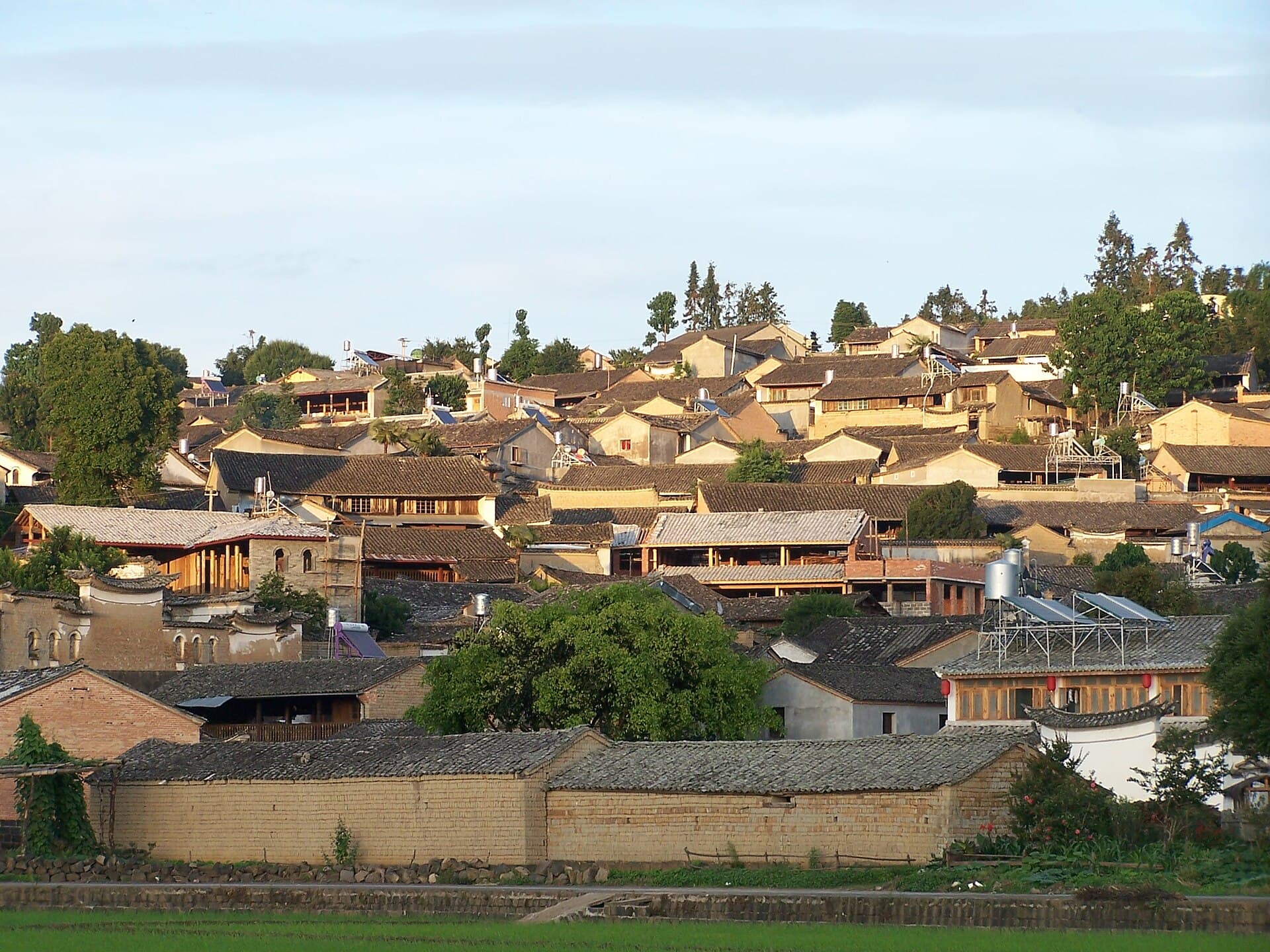 oldhouse.yin / CC BY-SA 3.0, via Wikimedia Commons
Self-guided audio walking tour of Heshun — GPS route, offline playback, story-driven narration in 32 languages.
“Where ancient trade routes met scholarly pursuits and families spanned continents.”
Not the postcards. The stories even locals don't know — whispered in your ear, right where they happened.
Along the Sanhe River, small pavilions appear to be for washing clothes. Their true purpose, however, reveals a deeply touching aspect of Heshun's story.
Behind Heshun Library stands a grand mansion, once home to Western Yunnan's wealthiest family. Their story speaks to Heshun's global connections, which persist even today.
Heshun holds China's largest rural library, a testament to the town's profound dedication to education. The story of its funding and continued use is particularly singular.
Discover every secret of Heshun
Every address, every reveal in full — in your ear, right where it happened.
You pick your stops. You walk. The voice reveals what the others miss.


Your self-guided audio tour of Heshun is ready — pick your landmarks, choose your language, and start the moment you arrive.
BuyLume has a built-in augmented-reality guide. Hold your phone up and its camera shows the street ahead of you, with a glowing arrow laid over the real view that always points to your next stop — no map to puzzle over, no wrong turns. Like everything in Lume, it works fully offline.
Heshun Ancient Town, situated four kilometers west of Tengchong City in Yunnan Province, is a place where history breathes. For over 600 years, this town has been a confluence of cultures, blending influences from China's Central Plains, local ethnic groups, and South and Southeast Asia. Its name, drawn from a poetic phrase meaning 'clouds surge with auspiciousness, winds blow gently,' reflects the community's desire for a harmonious existence. Recognized as one of China Daily's 'Top Ten Charming Towns' in 2006, Heshun maintains a deliberate pace of life amidst its well-preserved architecture and serene natural surroundings.
The town's distinct character is deeply rooted in its past as a significant stop on the ancient 'Southwest Silk Road' and the Tea Horse Road. This strategic location fostered a strong tradition of international commerce, with many Heshun residents venturing to countries like Myanmar, India, and Thailand for business. These global connections have shaped Heshun into a 'hometown of overseas Chinese,' with a remarkable number of its descendants living abroad, often outnumbering those who reside in the town itself. This enduring legacy is apparent in the town's distinctive blend of architectural styles and its profound cultural depth.
Heshun's story extends back over 600 years to the Ming Dynasty, when Han Chinese from central provinces were settled here as a military and trading outpost. Its strategic position along the ancient 'Southwest Silk Road' and the Tea Horse Road made it a vital center for commerce, linking China with South and Southeast Asia. Merchants from Heshun engaged in extensive trade with neighboring countries like Myanmar and India, dealing in goods such as jade, silk, tea, and alcohol.
This long history of overseas trade led to Heshun becoming a celebrated 'hometown of overseas Chinese' (侨乡). Many residents traveled abroad to seek their fortunes, establishing strong ties with communities in Myanmar, India, Thailand, Indonesia, Singapore, Japan, Canada, and the United States. The wealth and knowledge brought back by these overseas Chinese deeply influenced Heshun, leading to the construction of elaborate mansions, ancestral halls, and public facilities. They also introduced advanced technologies, such as printing presses, and supported educational institutions, including the establishment of China's first match factory. The town's architecture reflects this convergence, exhibiting a unique blend of traditional Chinese styles, particularly from the Ming and Qing dynasties, with elements from South Asia and the West.
During the Anti-Japanese War, Tengchong, where Heshun is located, played a significant role in the Yunnan-Burma Campaign. The Yunnan-Burma Anti-Japanese War Museum in Heshun stands as a memorial to this period, located at the former command center of the Chinese Expeditionary Force. Despite the passage of centuries and various historical events, Heshun has largely safeguarded its traditional culture and architectural heritage. The town's remoteness helped preserve many of its ancestral temples during the Cultural Revolution, allowing them to retain their original grandeur. Today, Heshun remains a place where ancient customs and traditions are maintained, offering a window into a rich and enduring past.
Heshun presents a captivating fusion of historical architecture, cultural sites, and tranquil natural beauty. Begin your exploration at the Heshun Library, China's largest rural library, established in 1924 by overseas Chinese. Ascend to the second floor for a sweeping view of the ancient town. Meander through the town's intricate alleyways, paved with blue basalt stone, to uncover over 100 well-preserved Qing Dynasty homes and ancestral halls. The Ancestral Halls of the Cun, Liu, and Li families are particularly striking, displaying intricate carvings and a solemn atmosphere.
Do not overlook the Laundry Pavilions along the Sanhe River, distinctive structures built by Heshun men for their wives. Visit the Former Residence of Ai Siqi, a renowned modern Chinese philosopher, to gain insights into his life and legacy. The Wanlouzi Museum, an architectural complex of three courtyards, offers a glimpse into the life of a prominent 'multinational enterprise' from the late Qing Dynasty. Beyond the town's core, explore the peaceful Wild Duck Lake and the Thousand-Hand Guanyin Tree, five ancient banyan trees whose intertwining branches resemble the mythical figure. The surrounding Xianhe Wetland provides scenic views of lotus ponds in summer and a resting place for migratory birds in winter.
Heshun enjoys a pleasant climate throughout the year, making it suitable for visits in all seasons. Spring is particularly lovely, with golden rapeseed flowers contrasting against the ancient architecture. In summer, the blooming lotus flowers add another layer of allure to the landscape. To experience the town at its most peaceful, consider arriving before 9 AM to avoid crowds. The period between 5 PM and 7 PM offers enchanting sunset views as the town lights begin to shimmer. Avoid national holidays like Golden Week (early October) and Spring Festival (January or February) if you prefer a quieter experience, as these periods see large domestic tourist crowds.
Heshun Ancient Town is situated approximately 3-4 kilometers southwest of Tengchong County. To reach Heshun, first travel to Tengchong. Direct flights to Tengchong from Kunming take about one hour. Alternatively, long-distance buses are available from Baoshan Bus Station to Tengchong Bus Station, with a journey of about four hours. From downtown Tengchong, you can take bus No. 6 or a taxi for a 15-minute ride to Heshun's entrance.
The admission fee for Heshun Ancient Town is CNY 55 (approximately $8 USD), and the ticket is valid for three days. A scenic area sightseeing bus is available for CNY 10, and a water impression boat ticket costs CNY 60. The town is generally open 24/7, with most indoor exhibitions open from 8:00 AM to 5:30 PM. Heshun is a pedestrian-only town, encouraging a deliberate pace of exploration. While there are a few cafes and small bars, Heshun is not known for its nightlife; its appeal lies in daytime exploration and quiet evenings.
Heshun in Korean, in Chinese or in Hebrew — and 29 more languages, every stop narrated by a native voice. The widest language range of any self-guided audio tour.
Available in: