Puente Navarro
Este puente perdurable, un hito local, comparte un inesperado linaje de ingeniería con un célebre cruce de San Francisco.
La historia completa se desbloquea en el tour
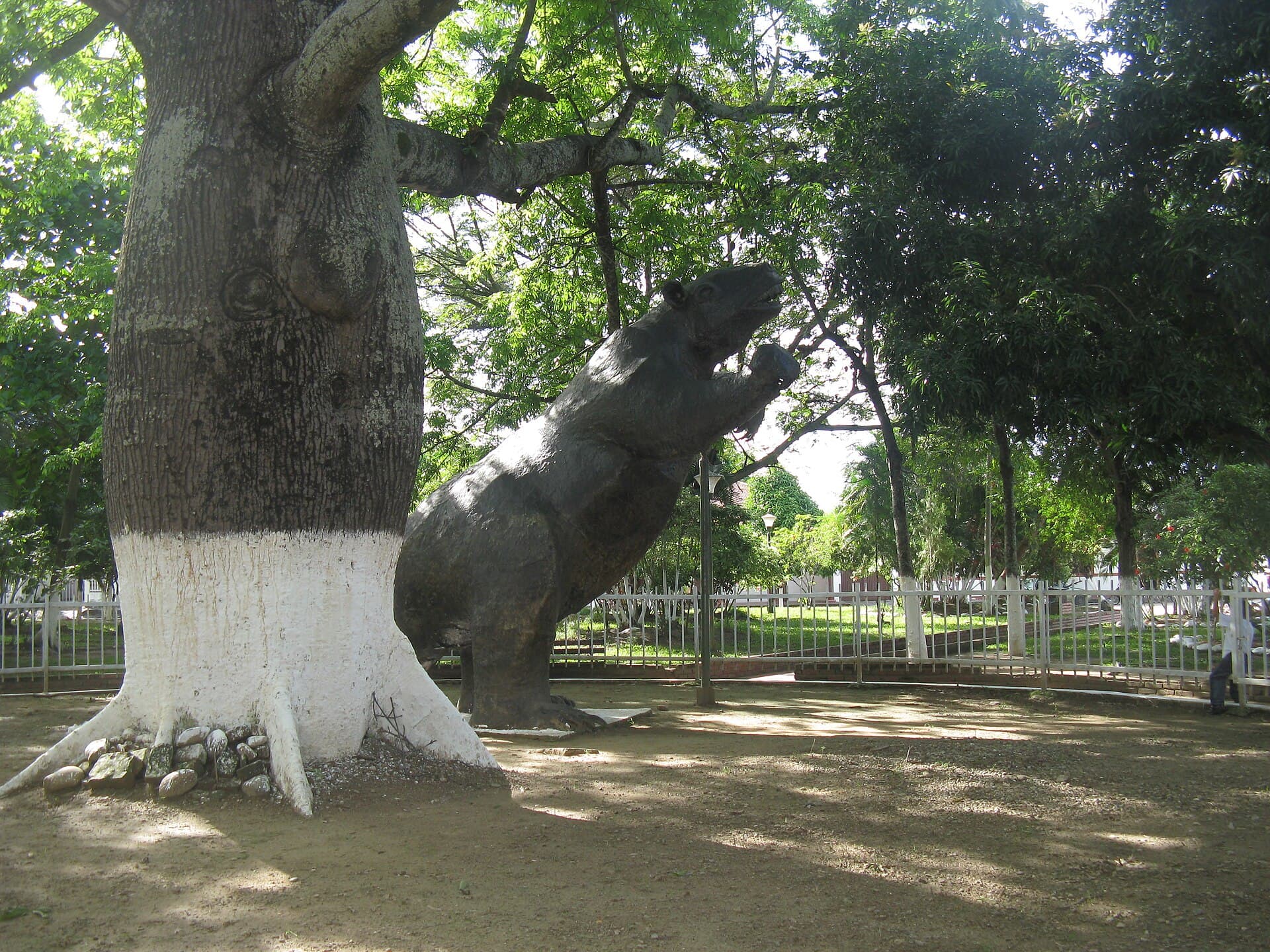 Jameselliot / CC BY 3.0, via Wikimedia Commons
Tour de audio autoguiado de Honda — ruta GPS a pie, reproducción offline, narración en 32 idiomas.
“Donde los ecos coloniales se encuentran con el fluir del Magdalena.”
No las postales. Las historias que ni los locales conocen — al oído, justo donde ocurrieron.
Este puente perdurable, un hito local, comparte un inesperado linaje de ingeniería con un célebre cruce de San Francisco.
Paseando por estas calles antiguas y desgastadas, un visitante podría sentir una curiosa sensación de familiaridad, como si fuera transportado a una costa lejana y bañada por el sol.
Antaño un establecimiento notorio, este modesto edificio atrajo a las figuras más influyentes de Colombia a través de sus puertas.
Descubre todos los secretos de Honda
Cada dirección, cada revelación al completo — a tu oído, justo donde ocurrió.
Eliges tus paradas. Caminas. La voz te revela lo que los demás ignoran.

Tu tour de audioguía por Honda te espera — elige tus lugares, tu idioma y empieza al llegar.
ComprarLume incluye una guía de realidad aumentada. Levanta el móvil y su cámara muestra la calle que tienes delante, con una flecha luminosa sobre la imagen real que siempre apunta a tu próxima parada — sin mapas que descifrar, sin giros equivocados. Como todo en Lume, funciona completamente sin conexión.
Honda, un Pueblo Patrimonio designado en el departamento de Tolima, Colombia, ofrece un viaje a través del tiempo a lo largo de las orillas del río Magdalena. Venerada como "la Ciudad de los Puentes" por sus más de 40 cruces sobre los ríos Magdalena, Gualí, Guarinó y Quebrada Seca, esta ciudad colonial fue alguna vez el corazón económico de Colombia. Su posición estratégica la convirtió en el último puerto navegable del Magdalena, funcionando como un nexo vital para el comercio y el transporte entre la costa Caribe y Bogotá desde 1850 hasta 1910.
Hoy, el centro histórico meticulosamente conservado de Honda, con sus grandes edificios coloniales y de la época republicana, invita a los visitantes a pasear por sus calles empedradas y descubrir su profundo pasado. A pesar de su importancia histórica, Honda sigue siendo un destino a menudo pasado por alto por los viajeros, proporcionando una auténtica experiencia colombiana lejos de las zonas turísticas más concurridas.
La tierra donde ahora se encuentra Honda fue habitada por primera vez por los pueblos indígenas Ondaima y Gualí. Exploradores españoles, bajo el mando de Gonzalo Jiménez de Quesada, reclamaron el territorio en 1539. La ciudad de Honda fue establecida formalmente el 24 de agosto de 1539 por Francisco Núñez Pedroso. A mediados del siglo XVII, Honda había florecido hasta convertirse en un componente importante y próspero de la empresa colonial, convirtiéndose en una parada obligatoria para todas las embarcaciones que navegaban por el río Magdalena.
La "edad de oro" de Honda se desarrolló entre 1850 y 1910, un período en el que el río Magdalena sirvió como la arteria principal para el transporte entre la costa Caribe y la ciudad interior de Bogotá. Como principal puerto fluvial de la nación, todas las mercancías y artículos importados con destino a Bogotá pasaban por Honda. Los barcos de vapor cargados de textiles y maquinaria atracaban aquí, y las mercancías eran luego transportadas a Bogotá en mula. Este bullicioso comercio impulsó la expansión de Honda y desempeñó un papel crucial en la colonización de la región cafetera de Colombia.
Una parte sustancial de la ciudad fue devastada por un fuerte terremoto en 1805, aunque su núcleo colonial resistió en gran medida. Tras la independencia de Colombia, Honda recibió oficialmente el estatus de ciudad el 15 de junio de 1830. La llegada de los ferrocarriles en 1910 disminuyó la importancia del puerto interior, redirigiendo el enfoque económico de Honda. En 2010, reconociendo su peso histórico, Honda fue designada Pueblo Patrimonio de Colombia, una distinción que ostenta como el único municipio en la región del Valle del Magdalena Medio. La ciudad también fue en gran parte perdonada durante la violenta década de 1950, lo que le valió el apodo de "la ciudad de la paz".
Comience su exploración en el centro histórico, un museo al aire libre de arquitectura colonial. Pasee por la Calle de las Trampas, una calle estrecha y empedrada bordeada de antiguas casas pintadas y balcones. Visite el Museo del Río Magdalena, ubicado en un almacén de la época colonial, para aprender sobre el papel fundamental del río en el desarrollo de la región. La Plaza de Mercado, construida entre 1917 y 1935, es un monumento nacional definido por 148 columnas dóricas verdes y blancas. La Catedral de Nuestra Señora del Rosario, con su inmaculada fachada blanca, se erige como un gran ejemplo de arquitectura colonial.
Honda es conocida por sus numerosos puentes; asegúrese de experimentar el icónico Puente Navarro, el puente de hierro más antiguo de Sudamérica, que ofrece vistas panorámicas del río Magdalena. Considere un paseo en barco por el río Magdalena para observar la flora y fauna local y ver la ciudad desde el agua. Para vistas expansivas, ascienda al Cerro de la Cruz o al Cerro Cacao. También puede visitar el Museo Alfonso López Pumarejo, lugar de nacimiento de un expresidente colombiano, que exhibe fotografías y discursos.
Honda mantiene temperaturas cálidas constantes durante todo el año, con temperaturas medias anuales que oscilan entre 25-27°C (77-81°F). Febrero es típicamente el mes más cálido, con máximas diurnas que alcanzan los 32.8°C (91°F). Si bien no hay cambios significativos de temperatura estacionales, la ciudad experimenta una intensidad de lluvia variable. Los meses de marzo a junio y de septiembre a noviembre generalmente ven más lluvia, siendo abril, mayo y octubre los meses con más días de lluvia. Los períodos más secos ocurren en enero, febrero, julio, agosto y diciembre. Para actividades al aire libre y disfrutar del clima cálido, los momentos más favorables para visitar son de mediados de junio a principios de septiembre y de mediados de diciembre a principios de febrero.
Honda sirve como un nexo de transporte, con una importante estación de autobuses que ofrece rutas a ciudades de toda Colombia, incluyendo Bogotá, Medellín, Cali y Bucaramanga. El viaje desde Bogotá en autobús suele durar aproximadamente 4 horas. El aeropuerto más cercano está en Mariquita, ubicado a unos 18 kilómetros de distancia.
El centro colonial de Honda se considera generalmente seguro para los visitantes, incluso por la noche. Sin embargo, es prudente tener precaución con los objetos de valor fuera del centro histórico y evitar ciertos barrios, especialmente después del anochecer. Se recomienda tomar un taxi para viajar por la noche más allá del centro colonial. Hay muchos hoteles y hostales encantadores disponibles dentro del colorido centro histórico. El clima es cálido y húmedo, así que empaca ropa ligera y transpirable.
Honda en coreano, en chino o en hebreo — y 29 idiomas más, cada parada narrada por una voz nativa. La mayor variedad de idiomas de cualquier audioguía autoguiada.
Disponible en: