Les Ateliers de Carriels
Le *carriel*, ce sac en cuir colombien distinctif, recèle un espace secret qui en dit long sur son propriétaire.
L'histoire complète se débloque dans le tour
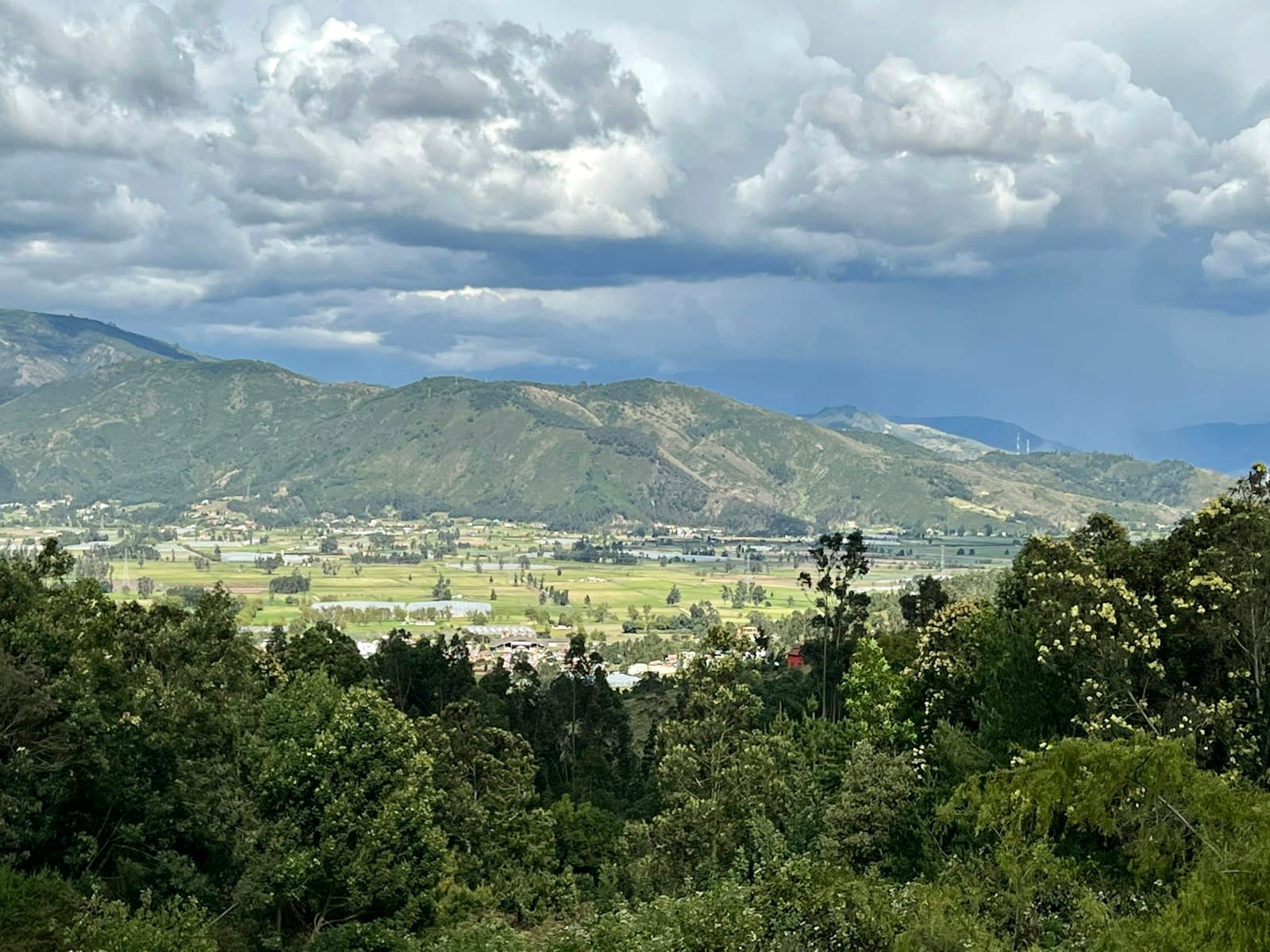 Photo: Mariana Baptiste / Unsplash
Visite audio autoguidée de Jericó — parcours GPS à pied, lecture hors ligne, narration en 32 langues.
“Là où les couleurs vives rencontrent les coutumes ancestrales.”
Pas les cartes postales. Les histoires que même les habitants ignorent — soufflées à l'oreille, là où elles se sont passées.
Le *carriel*, ce sac en cuir colombien distinctif, recèle un espace secret qui en dit long sur son propriétaire.
La douceur la plus célébrée de Jericó n'est pas ce à quoi l'on s'attendrait dans une pizzeria.
La grande cathédrale de la ville n'a pas toujours eu sa teinte rose distinctive.
Découvrez tous les secrets de Jericó
Chaque adresse, chaque révélation en entier — dans ton oreille, là où elle s'est passée.
Tu choisis tes lieux. Tu marches. La voix te révèle ce que les autres ignorent.


Votre visite audioguidée de Jericó vous attend — choisissez vos lieux, votre langue, et lancez-vous dès votre arrivée.
AcheterLume intègre un guide en réalité augmentée. Levez votre téléphone : sa caméra montre la rue devant vous, avec une flèche lumineuse posée sur l'image réelle qui pointe toujours vers votre prochain arrêt — aucune carte à déchiffrer, aucun mauvais virage. Comme tout dans Lume, ça fonctionne entièrement hors-ligne.
Jericó, un Pueblo Patrimonio (Ville Patrimoine) désigné en Colombie, offre un éventail vivant de couleurs, de coutumes et de paysages montagneux tranquilles. Située dans la partie sud-ouest de l'Antioquia, à environ trois heures de Medellín, cette charmante ville repose à une altitude de 1 910 mètres au-dessus du niveau de la mer. Son architecture coloniale méticuleusement préservée, avec des maisons peintes dans un spectre de teintes vives et ornées de balcons en bois, crée une atmosphère accueillante pour la découverte. Jericó est un lieu où le rythme de l'existence quotidienne se déroule sur la place centrale, où les habitants se rassemblent et où le parfum du café flotte dans l'air.
Au-delà de son attrait visuel, Jericó revêt une importance culturelle et religieuse significative. Elle est célébrée comme le lieu de naissance de Sainte Laura Montoya Upegui, la première et unique sainte canonisée de Colombie, ce qui en fait une destination de pèlerinage clé. Les pentes verdoyantes environnantes, caractéristiques des Andes du nord, sont parsemées de plantations de café, offrant un aperçu de l'héritage agricole de la région. Jericó offre une expérience colombienne authentique, se sentant souvent plus locale et moins fréquentée par les visiteurs que certaines de ses homologues.
La zone aujourd'hui occupée par Jericó a été initialement explorée par les conquistadors espagnols en 1540. Cependant, ils sont partis lorsqu'aucun or, leur objectif principal, n'a été trouvé. La région est restée une nature sauvage largement inexploitée jusqu'en 1835 environ, lorsque de grands propriétaires terriens ont reconnu son potentiel agricole et ont commencé à attirer des paisas (paysans d'Antioquia) pour cultiver la terre.
Jericó a été officiellement fondée le 28 septembre 1850 par Santiago Santamaría Bermúdez de Castro, initialement nommée Aldea de Piedras. Un an plus tard, en 1851, elle a été constituée en municipalité. Pendant une brève période entre 1908 et 1911, Jericó a même servi de capitale de son propre département lors d'une réorganisation territoriale en Colombie. En 1853, la ville a été renommée Jericó, en l'honneur de l'ancienne ville de Jéricho.
La signification religieuse de Jericó s'est profondément accrue avec la naissance de Laura Montoya Upegui en 1874. Elle a dédié sa vie au travail avec les communautés indigènes appauvries et a fondé un ordre religieux qui s'est étendu internationalement. En 2013, elle a été canonisée par le Pape François, devenant la première sainte de Colombie, ce qui a transformé Jericó en un site de pèlerinage religieux majeur. La ville abrite de nombreuses églises, reflétant ses profondes fondations catholiques.
En 2013, Jericó a reçu la reconnaissance officielle de Pueblo Patrimonio, l'une des villes patrimoniales de Colombie, reconnaissant son héritage culturel préservé et ses maisons traditionnelles du XIXe siècle. Aujourd'hui, elle est souvent appelée l'« Athènes du Sud-Ouest » pour sa richesse culturelle.
Commencez votre exploration sur la place centrale de Jericó, un point focal animé encerclé par des bâtiments coloniaux colorés et l'imposante Cathédrale Nuestra Señora de las Mercedes. Cette cathédrale, de style roman moderne, se dresse sur le site d'une église antérieure et sert de siège épiscopal du diocèse catholique romain de Jericó.
Pour une compréhension plus approfondie de l'héritage religieux de la ville, visitez le Santuario de Santa Laura, une église de style gothique dédiée à la première sainte de Colombie. Sa maison d'enfance est également un musée et un sanctuaire, offrant un aperçu de sa vie et de son œuvre.
Montez au point de vue du Cristo Redentor, accessible par un sentier traversant le Jardín Botánico Los Balsos, pour des vues imprenables sur Jericó et les sommets andins environnants. Le jardin botanique lui-même est une étendue verte agréable. Pour ceux qui apprécient la nature, le Parque Las Nubes est une réserve naturelle protégeant plus de 100 hectares de forêt, avec des sentiers pour l'observation des oiseaux et de la faune locale.
Jericó est également le lieu de naissance du carriel, un sac en cuir traditionnel d'Antioquia. Explorez les ateliers locaux pour observer les artisans fabriquer ces sacs distinctifs et d'autres articles en cuir. Ne manquez pas l'occasion de vivre une visite de café dans l'une des nombreuses fermes familiales de la région, en apprenant le processus de culture et de production, de la graine à la tasse.
Jericó bénéficie d'un climat doux et tempéré toute l'année, avec des températures diurnes variant généralement entre 20°C et 25°C. Les mois les plus ensoleillés s'étendent généralement de mi-décembre à mi-mars et de mi-juin à mi-août, ce qui en fait des périodes idéales pour les activités de plein air. Bien que la pluie survienne toute l'année, les mois les plus humides sont généralement d'avril à juin et de septembre à novembre ; cependant, les averses sont souvent brèves et suivies de soleil. Pour découvrir Jericó avec moins de visiteurs, envisagez de venir en semaine, car de nombreux Colombiens se rendent en ville pendant les week-ends et les jours fériés, en particulier la Semaine Sainte.
Jericó est à environ 3 à 3,5 heures de bus du terminal sud de Medellín. Pour ceux qui voyagent entre Jericó et Jardín, un autre Pueblo Patrimonio, un trajet en chiva (bus coloré) à ciel ouvert à travers la ville d'Andes offre une excursion mémorable, bien que sur une route non pavée.
Une fois à Jericó, la ville est facilement traversable à pied, avec ses dimensions compactes et ses rues attrayantes. Des tuk-tuks et des moto-taxis sont également disponibles pour de courtes distances ou des trajets vers des points de vue en dehors du centre-ville. Les options d'hébergement vont des hôtels coloniaux dans le village aux maisons de campagne traditionnelles dans les plantations de café juste à l'extérieur de la ville. Un écran solaire à indice élevé et un chapeau à larges bords sont conseillés en raison de l'altitude élevée.
Jericó en coréen, en chinois ou en hébreu — et dans 29 autres langues, chaque étape narrée par une voix native. La plus large gamme de langues de tous les audioguides autoguidés.
Disponible en :