Poste frontière de Sarp
Hopa se trouve à un carrefour important, mais cela n'a pas toujours été si ouvert.
L'histoire complète se débloque dans le tour
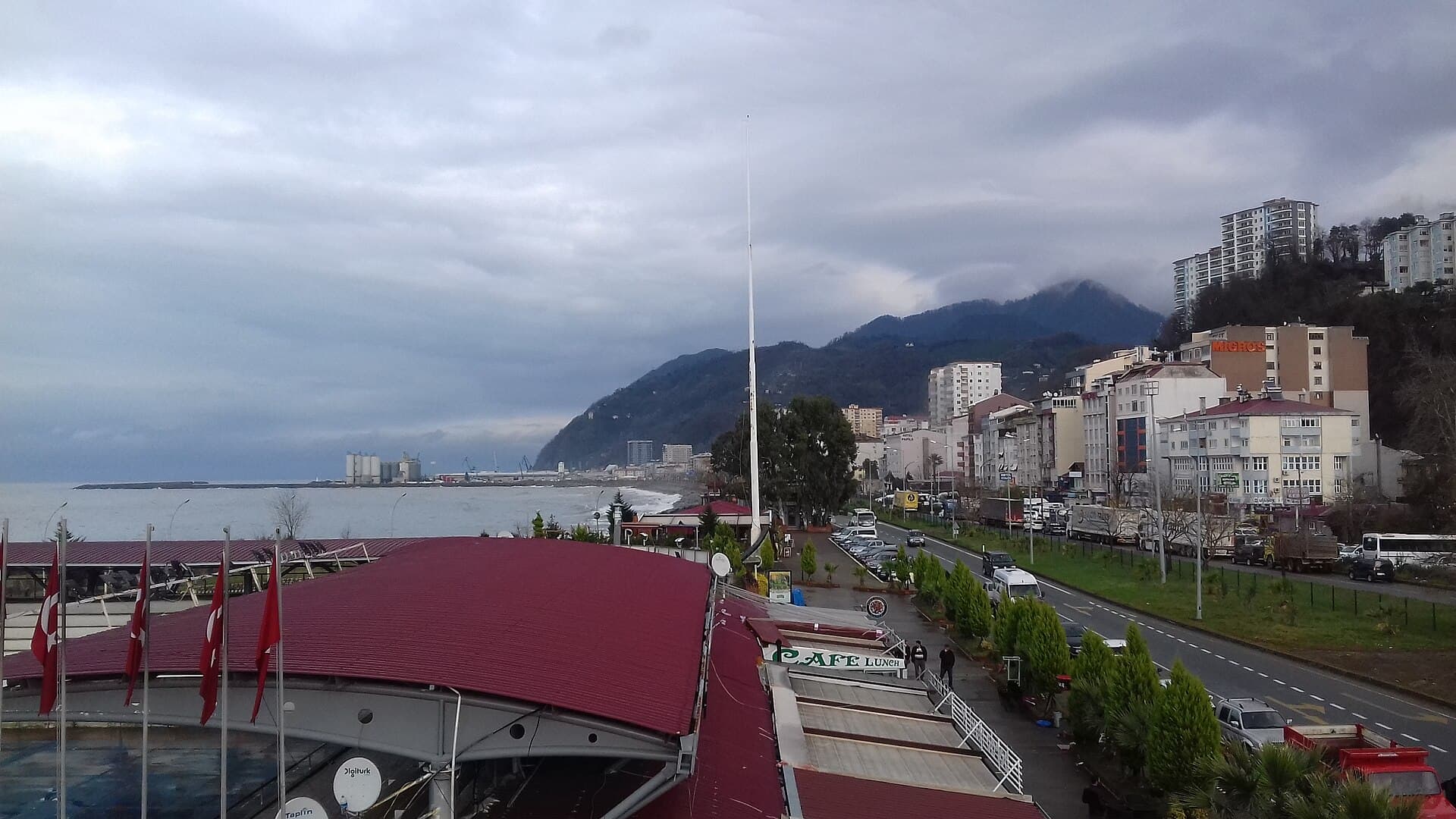 Aksungur Bursuki / CC BY-SA 4.0, via Wikimedia Commons
Visite audio autoguidée de Hopa — parcours GPS à pied, lecture hors ligne, narration en 32 langues.
“Là où la Mer Noire rencontre les montagnes émeraude, et les anciennes routes commerciales murmurent de nouvelles histoires.”
Pas les cartes postales. Les histoires que même les habitants ignorent — soufflées à l'oreille, là où elles se sont passées.
Hopa se trouve à un carrefour important, mais cela n'a pas toujours été si ouvert.
Le nom 'Hopa' a une origine surprenante et poétique, liée à une figure historique puissante.
Cette mosquée d'apparence modeste au centre-ville recèle un secret animé entre ses murs.
Découvrez tous les secrets de Hopa
Chaque adresse, chaque révélation en entier — dans ton oreille, là où elle s'est passée.
Tu choisis tes lieux. Tu marches. La voix te révèle ce que les autres ignorent.


Votre visite audioguidée de Hopa vous attend — choisissez vos lieux, votre langue, et lancez-vous dès votre arrivée.
AcheterLume intègre un guide en réalité augmentée. Levez votre téléphone : sa caméra montre la rue devant vous, avec une flèche lumineuse posée sur l'image réelle qui pointe toujours vers votre prochain arrêt — aucune carte à déchiffrer, aucun mauvais virage. Comme tout dans Lume, ça fonctionne entièrement hors-ligne.
Hopa, un district captivant de la province d'Artvin en Turquie, est l'endroit où les pentes escarpées de la région de la mer Noire orientale plongent dans le bleu profond. À seulement 18 kilomètres de la frontière géorgienne, elle sert de porte d'entrée vitale vers le Caucase et de ville portuaire animée. Le paysage est une étendue dramatique de verdure, avec des terres s'élevant brusquement du niveau de la mer jusqu'au sommet du mont Yavuz Sultan Selim, culminant à 1 513 mètres. Cette géographie singulière assure un climat doux et humide de la mer Noire, gardant la région luxuriante et verdoyante tout au long de l'année.
Plus qu'un simple point de transit, Hopa est un lieu où l'histoire, le commerce et la splendeur naturelle s'entremêlent. Son économie prospère grâce à l'agriculture, en particulier le thé, les noisettes et le kiwi, ainsi qu'à une forte industrie de la pêche et un commerce frontalier robuste. La ville elle-même, avec ses vieilles maisons et son caractère côtier, offre un aperçu de l'authentique culture de la mer Noire. Que vous soyez attiré par l'appel des montagnes, l'attrait de la mer ou les échos des anciennes routes commerciales, Hopa présente une expérience distincte et enrichissante sur la côte la plus orientale de la mer Noire turque.
L'histoire de Hopa remonte à des milliers d'années, la région ayant autrefois fait partie de l'ancien Royaume de Colchide. Au fil des siècles, elle fut habitée par diverses civilisations, notamment les Romains, les Byzantins et les Seldjoukides, chacune laissant sa marque sur cette zone côtière stratégique.
Le processus d'intégration de Hopa à l'Empire ottoman a commencé à la fin du XVe et au début du XVIe siècle. Le sultan Selim Ier, alors qu'il était gouverneur de Trabzon, mena des campagnes militaires qui placèrent Hopa sous contrôle ottoman entre 1490 et 1512. Une étape importante fut la conquête du château de Gönye en 1509, qui incorpora officiellement Hopa au système administratif ottoman en tant que partie d'un sanjak (district). Plus tard, en 1578, Lala Mustafa Pacha fit de Hopa une partie du nouvellement formé Eyalet de Childir.
Tout au long du XIXe siècle, la position stratégique de Hopa près de la frontière russe a entraîné des périodes de contrôle fluctuant. Suite au traité d'Edirne de 1829, qui céda Ahıska à la Russie, Hopa devint une partie du Sanjak de Batoumi au sein de la province de Trabzon. La guerre russo-turque de 1877-1878 vit la région, y compris Hopa, capturée par la Russie, incitant de nombreux habitants à se déplacer vers l'ouest. Cependant, avec le traité de Brest-Litovsk en 1917 et le retrait ultérieur des troupes russes, l'armée turque réentra à Hopa le 14 mars 1918, la réincorporant formellement au territoire turc.
Au début de la République turque, Hopa fut initialement administrée comme un district de la province de Rize. Cela changea en 1936 lorsqu'elle fut annexée à la province d'Artvin. Le poste-frontière de Sarp, une connexion cruciale avec la Géorgie, ouvrit en 1988, donnant un coup de fouet significatif à l'économie de Hopa grâce à l'augmentation du commerce et du tourisme. Aujourd'hui, Hopa continue de prospérer en tant que port et centre commercial important, équilibrant ses racines historiques avec les activités économiques modernes.
Hopa offre un mélange de beauté naturelle et d'aperçus culturels. Commencez votre exploration au Port de Hopa, un centre animé où les paysages montagneux impressionnants rencontrent la côte de la mer Noire. C'est un endroit idéal pour les promenades côtières et l'observation du rythme du commerce local.
Pour un aperçu du patrimoine architectural de la ville, promenez-vous dans les quartiers avec les Vieilles Maisons de Hopa, qui reflètent la culture distincte de la mer Noire. Ne manquez pas la Mosquée Orta Hopa, une structure du XIXe siècle remarquable pour son dôme et ses carreaux de plafond intérieurs complexes et ses décorations en bois.
Les amoureux de la nature apprécieront le Parc Naturel de Çamburnu, offrant des paysages sereins. Les Plages de Hopa à proximité, y compris Kemalpaşa et Kopmuş Beach, offrent des opportunités de profiter de la mer et du soleil pendant les mois les plus chauds, le tout sur fond de beauté naturelle unique.
Pour une immersion plus profonde dans la vie locale, explorez le Bazar de Hopa et le Bazar de Kemalpaşa. Ces marchés animés sont parfaits pour trouver des produits locaux, des souvenirs comme des articles en cuivre fabriqués à la main et des paniers tressés, et goûter des spécialités régionales telles que le thé local, le miel et les noix.
Hopa, avec son climat doux de la mer Noire, accueille les visiteurs toute l'année, mais le meilleur moment dépend de vos intérêts. Pour explorer les sites naturels et historiques, et pratiquer des activités de plein air comme la randonnée, le printemps (avril-mai) et l'été (juin-août) sont idéaux. Le printemps apporte des paysages fleuris et des températures agréables, tandis que l'été offre un temps chaud parfait pour les plages et la mer Noire. Si vous préférez un temps plus frais et moins de monde, l'intersaison de l'automne (septembre-octobre) est également excellente pour le tourisme. L'hiver (décembre-février) offre des paysages enneigés pittoresques, adaptés à ceux qui s'intéressent au ski et à l'exploration de la nature hivernale. Cependant, préparez-vous à la pluie en toutes saisons à Hopa.
Hopa n'a pas son propre aéroport ; le plus proche est l'aéroport de Batoumi en Géorgie. Les citoyens turcs peuvent voyager en Géorgie sans visa, et des navettes gratuites opèrent de l'aéroport de Batoumi au centre de Hopa, s'arrêtant au poste-frontière de Sarp et au port de Hopa. Pour les visiteurs internationaux, les règles d'entrée avec visa turc s'appliquent. Une fois à Hopa, vous pouvez vous déplacer dans le centre du district en utilisant les bus municipaux et les minibus, ou les taxis pour des trajets plus rapides. Des options de location de voiture sont également disponibles pour une exploration plus flexible.
La monnaie locale est la livre turque, et l'indicatif téléphonique est (+90) 466. Des prises européennes de type C standard sont utilisées. Compte tenu du climat constamment pluvieux de la mer Noire à Hopa, il est conseillé d'emporter un imperméable et un parapluole quelle que soit la saison. Bien que de nombreux habitants des zones touristiques puissent parler un anglais de base, se familiariser avec quelques phrases turques de base peut améliorer votre expérience. Hopa est généralement considérée comme sûre, mais les précautions de voyage standard sont toujours recommandées.
Hopa en coréen, en chinois ou en hébreu — et dans 29 autres langues, chaque étape narrée par une voix native. La plus large gamme de langues de tous les audioguides autoguidés.
Disponible en :