Jurisics Castle
The bells of Kőszeg sound at 11 AM each day, but their chime marks more than a typical midday hour.
Full story unlocks in the tour
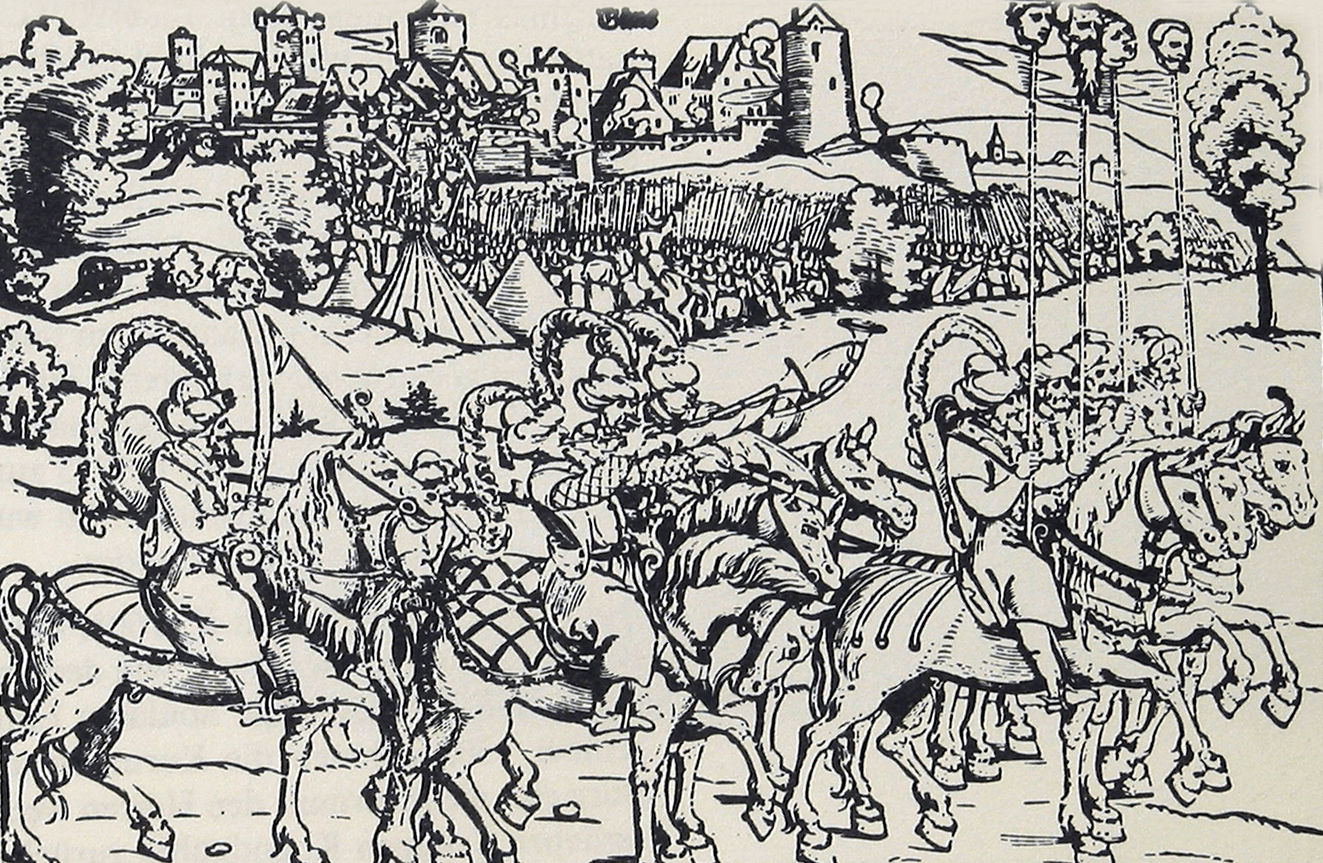 Eduard Schön / Public domain, via Wikimedia Commons
Self-guided audio walking tour of Kőszeg — GPS route, offline playback, story-driven narration in 32 languages.
“Kőszeg: Where ancient stones recall defiance and quiet beauty unfolds.”
Not the postcards. The stories even locals don't know — whispered in your ear, right where they happened.
The bells of Kőszeg sound at 11 AM each day, but their chime marks more than a typical midday hour.
One of Kőszeg's most striking buildings displays intricate patterns that are not painted onto its surface.
Kőszeg is home to two historic pharmacy museums, a rare distinction for any town.
Discover every secret of Kőszeg
Every address, every reveal in full — in your ear, right where it happened.
You pick your stops. You walk. The voice reveals what the others miss.

Your self-guided audio tour of Kőszeg is ready — pick your landmarks, choose your language, and start the moment you arrive.
BuyLume has a built-in augmented-reality guide. Hold your phone up and its camera shows the street ahead of you, with a glowing arrow laid over the real view that always points to your next stop — no map to puzzle over, no wrong turns. Like everything in Lume, it works fully offline.
Kőszeg, sometimes called the “Small Chest of Hungary,” is a captivating medieval town in western Hungary, near the Austrian border. Its well-preserved historic core, framed by ancient walls and embraced by the Kőszeg Mountains, offers a compelling journey into the past. The town's paved streets, colorful Baroque buildings, and the imposing Jurisics Castle recount centuries of events, from fierce Ottoman sieges to periods of quiet prosperity.
Beyond its architectural beauty, Kőszeg is a place of gentle rhythms and unexpected customs. It is a town where church bells sound daily at 11 AM to commemorate a legendary victory, where winemaking traditions are meticulously recorded in a unique historical book, and where a deep sense of community is evident in its local practices. Kőszeg offers a delightful blend of cultural heritage and natural beauty, making it an ideal destination for those seeking a peaceful and historically profound experience away from more crowded tourist paths.
## From Roman Roads to Royal Charters Kőszeg's strategic position at the base of the Kőszeg Mountains, near the Amber Road of the Roman Empire, granted it early importance, with archaeological finds dating back 6,000 years. Before the Hungarian conquest in the 9th century, a settlement, castle, and church already existed here. The town's official beginnings date to the third quarter of the 13th century, established by the Volfer branch of the Héder clan. Kőszeg achieved free royal town status in 1238, a designation solidified in 1328 by Charles of Anjou.
## The Resilient Spirit of 1532 The 16th century brought Kőszeg its most defining moment: the Ottoman siege of 1532. Sultan Suleiman the Magnificent, with an army estimated between 50,000 and 120,000, intended to advance on Vienna. However, the small border fort of Kőszeg, defended by a modest force of 700-800 Croatian soldiers and Hungarian villagers under Captain Miklós Jurisics, stood in their path. For nearly a month, from August 5th to 30th, Jurisics's forces, despite lacking heavy artillery, repelled nineteen full-scale assaults and incessant bombardment. The exact outcome remains debated, with some accounts suggesting a nominal surrender or a truce, but the result was clear: the Ottoman advance was delayed, and Suleiman eventually withdrew, turning homeward. This extraordinary defense became a symbol of resistance, and to this day, the city's bells sound at 11 AM, commemorating the moment the Turks traditionally departed.
## Fires, Rebuilding, and Baroque Flourishes Following the Ottoman wars, Kőszeg entered a period of relative calm, though it encountered numerous difficulties. The town was devastated by fire 14 times during the 17th and 18th centuries, leading to extensive reconstruction. This explains the prevalence of Baroque architecture in the inner city, as many structures were rebuilt in this style after the great fire of 1777. Despite these calamities, Kőszeg managed to retain its historic character and architectural integrity, earning it the Hild Prize for architectural preservation in 1978. The town's history also includes periods under the Esterházy family and a role in Rákóczi's War of Independence, underscoring its enduring significance in Hungarian history.
Begin your exploration in Jurisics Square, the heart of Kőszeg's historic center. Here you will find the impressive Jurisics Castle, a 13th-century fortress that houses a museum detailing the town's past and the legendary 1532 siege. Admire the Renaissance Sgraffito House with its unique scraped plaster decorations, and the Town Hall, Hungary's oldest continuously functioning municipal building. Do not miss the Heroes' Gate, constructed in 1932 to commemorate the 400th anniversary of the siege, which also contains the Town Museum.
Just off the main square, the Sacred Heart Church, a striking Neo-Gothic edifice from 1894 with a 57-meter tower, defines the skyline. Stroll through the narrow, paved streets of the Old Town, observing the preserved medieval houses and facades. Delve into the past of pharmacology at the Golden Unicorn Pharmacy Museum, an 18th-century pharmacy maintained in its original state. For expansive views, hike to the Óház Lookout Tower, built on the foundations of the original Kőszeg castle, or venture further to the Írottkő Lookout Tower, which straddles the Hungarian-Austrian border.
The most pleasant times to visit Kőszeg are during the spring (April-May) and autumn (September-October) months. During these seasons, the weather is agreeable, and visitor numbers are generally lower than in the peak summer months. Summers (June-August) are warm, with July being the hottest month, but can be quite busy with tourists. Winters (November-March) are cold and snowy, with fewer attractions open, making it the quietest season. For outdoor activities like hiking in the Kőszeg Mountains, late spring and early autumn provide ideal conditions.
Kőszeg is accessible by car, with parking available in the downtown area. If traveling by public transport, the bus station is closer to the town center than the train station, offering services to regional towns like Szombathely. The nearest international airports are in Vienna and Graz, both less than 100 km away. The town center is compact and best explored on foot, so comfortable shoes are recommended for the paved streets. Many local cafés and restaurants offer authentic Hungarian cuisine. It is advisable to visit popular attractions like Jurisics Castle early in the day to avoid larger groups.
Kőszeg in Korean, in Chinese or in Hebrew — and 29 more languages, every stop narrated by a native voice. The widest language range of any self-guided audio tour.
Available in: